
As a professional aluminum foil manufacturer, we produce 1235 aluminum foil for electrolytic capacitors with controlled alloy chemistry, stable rolling properties, clean surfaces, and consistent coil geometry. This material is supplied as a base foil for further capacitor electrode processing, including surface etching, chemical formation, slitting, and winding.
Electrolytic capacitor manufacturing requires aluminum foil with reliable thickness uniformity and low surface contamination. These factors directly affect etching consistency, effective electrode area, oxide film formation, and the processing stability of the capacitor production line. Our 1235 aluminum foil is manufactured through controlled melting, casting, hot rolling, cold rolling, annealing, inspection, and precision slitting processes.
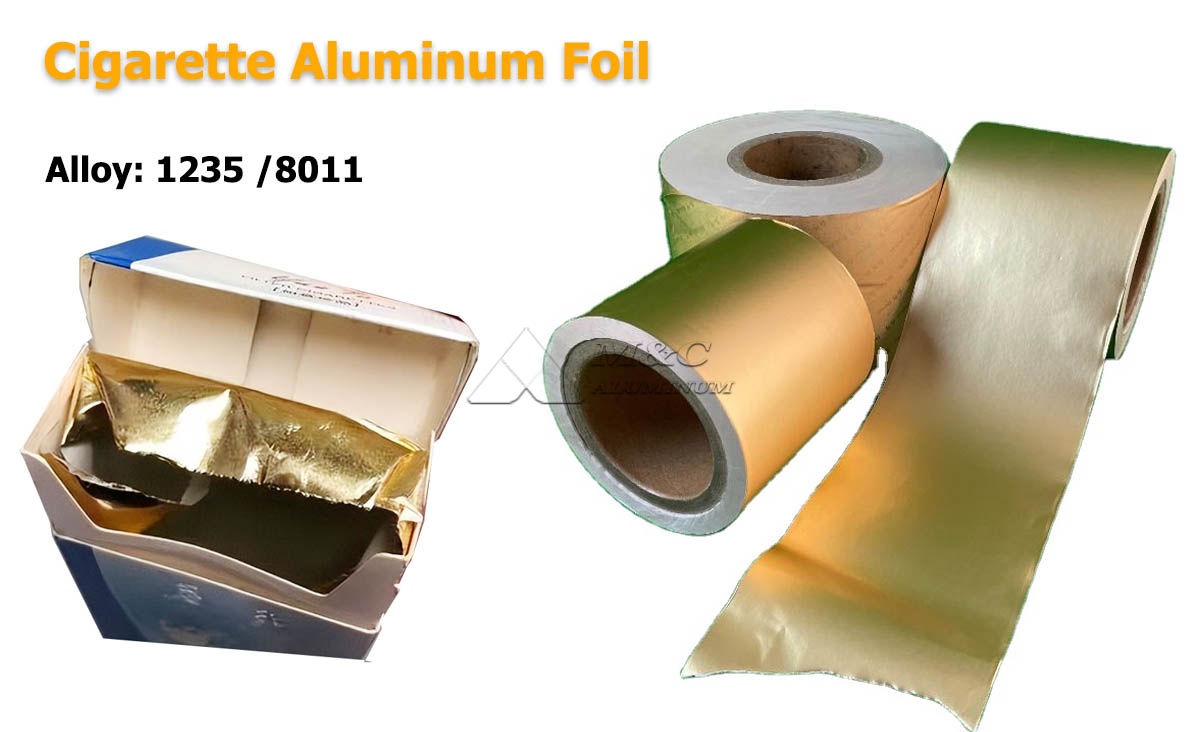
What Is 1235 Aluminum Foil?
1235 aluminum foil is a commercially pure aluminum alloy with a minimum aluminum content of 99.35 percent. It offers good electrical conductivity, excellent workability, low density, and stable rolling behavior. For capacitor applications, 1235 alloy foil can be selected as a substrate material where the downstream etching and forming process has been validated for the specified composition, temper, and thickness.
Compared with general-purpose foil, electrolytic capacitor aluminum foil requires more stringent control of thickness deviation, pinholes, edge quality, residual rolling oil, surface cleanliness, and coil winding tension. We manufacture each order according to the technical agreement between our factory and the customer, with inspection items adjusted for the intended capacitor process.
Our 1235 Aluminum Foil product range is available in bare foil coils for industrial conversion. Material can be supplied in slit coils or jumbo rolls, depending on the customer's etching line, slitting equipment, and final capacitor design.
Role of 1235 Aluminum Foil in Electrolytic Capacitors
In an aluminum electrolytic capacitor, aluminum foil functions as the fundamental current-carrying electrode substrate. The foil is normally subjected to electrochemical etching to increase its effective surface area. It is then formed to create a dielectric aluminum oxide layer. The resulting electrode foil is combined with separator paper and electrolyte before winding and sealing.
The quality of the original foil affects several downstream operations:
Etching response: A uniform substrate supports more consistent pit initiation and etching distribution.
Formation stability: Controlled composition and clean surfaces help maintain stable oxide film formation conditions.
Winding performance: Flatness, edge condition, and stable coil tension reduce the risk of breaks and wrinkles during high-speed processing.
Electrical consistency: Thickness and material uniformity contribute to predictable resistance and capacitance performance after conversion.
Yield control: Low levels of surface defects, oil residues, and edge damage help reduce processing losses.
It is important to note that capacitor foil performance is determined by the complete processing route. The suitability of 1235 aluminum foil should be confirmed against the customer's etching chemistry, formation voltage, electrolyte system, and finished capacitor requirements.
Technical Parameters of 1235 Aluminum Foil
The following table shows typical supply parameters for 1235 aluminum foil for electrolytic capacitors. Final values are subject to the purchase specification, applicable standard, and technical agreement.
| Item | Typical Specification | Notes |
|---|---|---|
| Alloy | AA 1235 | Minimum aluminum content 99.35 percent |
| Temper | O, H14, H18, or customized | O temper is commonly selected where further processing is required |
| Thickness | 0.015 mm to 0.100 mm | Other gauges can be reviewed for project requirements |
| Thickness tolerance | As agreed by thickness range | Controlled by online gauge measurement and final inspection |
| Width | 20 mm to 1,600 mm | Slit width and jumbo width available |
| Coil inner diameter | 150 mm, 300 mm, 505 mm, or customized | Selected according to customer equipment |
| Coil outer diameter | Up to 1,300 mm, subject to weight | Based on safe handling and transport requirements |
| Coil weight | 100 kg to 2,500 kg | Customized coil weight available |
| Surface | Mill finish, clean, oil-controlled | No visible oxidation, corrosion, or foreign inclusions |
| Edge condition | Slit edge or mill edge | Burr level controlled according to application |
| Pinholes | Controlled according to thickness and agreement | Inspected by transmitted-light or online systems where required |
| Tensile properties | According to temper and agreed standard | Verified by batch testing |
Typical Chemical Composition
| Element | Typical Limit, Percent |
|---|---|
| Aluminum, Al | 99.35 min |
| Silicon, Si | 0.65 max |
| Iron, Fe | 0.65 max |
| Copper, Cu | 0.05 max |
| Manganese, Mn | 0.05 max |
| Magnesium, Mg | 0.05 max |
| Zinc, Zn | 0.10 max |
| Titanium, Ti | 0.06 max |
| Other elements, each | 0.03 max |
| Other elements, total | 0.10 max |
Why is 1235 aluminum foil chosen for electrolytic capacitors?
1.High Purity: High aluminum content and strict control over impurity elements facilitate stable electrical performance.
2.Good Conductivity: Low resistivity effectively reduces the capacitor's equivalent series resistance (ESR).
3.Excellent Etching Characteristics: Suitable for the electrochemical etching of anode foil, enabling the formation of a large effective specific surface area and increased capacitance.
4.Good Formation Properties: A uniform, stable oxide film readily forms on the surface, enhancing voltage resistance and insulation performance.
5.Uniform Thickness: Precise control over thickness and flatness facilitates capacitor manufacturing and ensures performance consistency.
6.Good Machinability: Appropriate strength and elongation properties facilitate subsequent processing steps such as winding and stamping.
7.Stable Performance: Suitable for producing anode and cathode foils for aluminum electrolytic capacitors, meeting diverse requirements regarding capacitance, voltage resistance, and service life.
Manufacturing Process and Quality Control
Our production process begins with controlled raw material selection and melt composition management. Molten aluminum is cast into slabs or coils, followed by homogenization where required, hot rolling, cold rolling, intermediate annealing, final rolling, and precision slitting. Process parameters are monitored to maintain consistent mechanical properties and surface condition throughout the coil.
For 1235 aluminum foil intended for capacitor processing, we focus on the following quality-control points:
Chemical Composition Control
We verify alloy composition through spectrometric analysis. Stable control of iron, silicon, copper, and other trace elements is important because impurity levels may influence the customer's downstream electrochemical process. Mill certificates can be supplied with each production batch where specified.
Thickness and Profile Control
Thickness uniformity is monitored during rolling through automatic gauge control and final measurement. A stable cross-width profile helps the customer maintain consistent etching and formation conditions across the foil width. We also inspect coil-to-coil consistency for repeat orders.
Surface Cleanliness
Surface residues can interfere with etching, chemical treatment, and oxide film formation. Our rolling and annealing process is managed to control residual rolling oil and prevent contamination from handling, storage, or packaging. Surface requirements can be defined by visual standard, wettability method, residual oil target, or customer-specific testing procedure.
Edge and Coil Geometry
Capacitor manufacturing lines require foil coils that unwind smoothly. We control slit quality, coil alignment, telescoping, camber, and winding tension. Slit coils are packaged with protective materials to minimize edge damage during transport and loading.
Defect Inspection
Our inspection procedures cover visible surface defects, scratches, dents, wrinkles, oil spots, oxide marks, edge cracks, and pinholes. The inspection level is selected according to foil thickness and application requirements. Any special acceptance criteria should be agreed before production so that testing methods are aligned with the customer's process needs.
Selecting the Right Specification for Capacitor Production
When sourcing 1235 aluminum foil for electrolytic capacitors, purchasers should provide complete technical information rather than specifying only alloy and thickness. The correct material selection depends on the capacitor type, etching system, formation voltage, and equipment configuration.
We recommend confirming the following items before issuing a purchase order:
Required alloy and chemical composition limits.
Foil thickness, allowable tolerance, and width tolerance.
Required temper and mechanical property range.
Surface cleanliness or residual rolling oil requirement.
Pinhole inspection method and acceptance level.
Edge burr, camber, and coil flatness requirements.
Coil inner diameter, outer diameter, and maximum unit weight.
Packaging method, pallet requirement, and destination conditions.
Required test certificates and third-party inspection requirements.
Whether samples are needed for etching and formation trials.
For applications requiring alternative purity levels, strength, or processing characteristics, our factory also supplies related industrial foil grades, including 1100 Aluminum Foil. Our technical team can review the practical differences between alloy options based on the customer's production route.
Packaging and Export Supply
We package capacitor aluminum foil coils to protect the material from moisture, dust, deformation, and handling damage. Standard export packaging includes protective paper, plastic film, moisture barrier wrapping, reinforced edge protection, and fumigated wooden pallets or wooden cases when required.
Each coil can be identified with alloy, temper, dimensions, net weight, production batch, and customer reference number. For overseas supply, we arrange packaging according to container loading conditions and port handling requirements. Dry, covered storage is recommended to avoid oxidation and surface contamination before use.
Why Source Directly From Our Factory?
As a manufacturer, we control the production route from alloy preparation through rolling, annealing, slitting, inspection, and packaging. This direct manufacturing control allows us to align foil specifications with the customer's capacitor processing requirements and maintain traceability across production batches.
Our engineering and quality teams support B2B customers with sample evaluation, specification confirmation, production planning, and documentation. For repeat projects, we maintain agreed process parameters to improve consistency between deliveries.
Conclusion
1235 aluminum foil for electrolytic capacitors is a precision industrial material that must provide dependable composition, thickness control, surface cleanliness, and coil quality. When properly matched to the customer's etching and formation process, 1235 alloy foil can serve as a stable base material for capacitor electrode production.
We manufacture 1235 aluminum foil in customized thicknesses, widths, tempers, and coil formats for industrial capacitor applications. Contact our factory with your target specification, processing conditions, and quality requirements for a technical review and production proposal.