
In lithium-ion battery manufacturing, the cathode current collector is a critical bridge between the active material and the external circuit. It plays an essential role in battery conductivity, cycle life, safety, and energy density.
Aluminum foil is an indispensable cathode current collector material for lithium-ion batteries because of its good electrical conductivity, excellent processability, cost-effectiveness, and ability to form a dense protective aluminum oxide (Al₂O₃) film on its surface. Among the commonly specified industrial pure aluminum materials, 1060 aluminum foil and 1100 aluminum foil are two frequently consulted and selected options.
So, what are the differences between 1060 and 1100 aluminum foil? How should manufacturers select the appropriate aluminum foil for lithium-ion battery cathode current collectors?
Product Overview
Features and Applications of 1060 Aluminum Foil
1. Material Composition and Properties
Composition: 1060 aluminum foil contains at least 99.6% aluminum. It is a typical industrial pure aluminum material with excellent electrical conductivity, oxidation resistance, and mechanical properties.
Thickness: It can be produced in different thickness ranges according to application requirements. Battery-grade foil is commonly supplied in ultra-thin gauges, while thicker materials may be used in other electrical applications.
Surface Treatment: Various surface treatments are available, including aluminum oxide coating, to enhance corrosion resistance and surface compatibility.
2. Application Areas
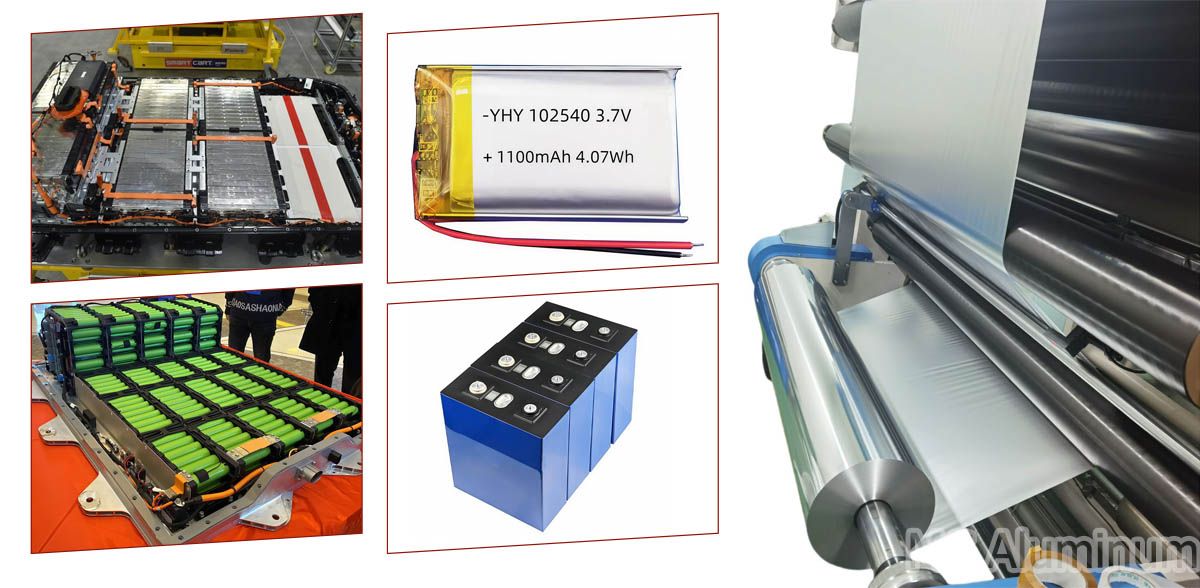
Wide range of applications: Due to its cost efficiency and reliable performance, 1060 aluminum foil is widely used in lithium-ion batteries for electric vehicles, consumer electronics such as smartphones and laptops, and energy storage systems.
Advantages: It is suitable for applications requiring high conductivity and stable performance. Its oxidation and corrosion resistance enable good performance in relatively humid environments.
3. Selection Recommendation
Suitable for: Projects that are cost-sensitive but do not require exceptionally high mechanical strength.
Considerations: For high-temperature or high-humidity environments, the stability of the surface oxide film and the overall battery design should be evaluated.
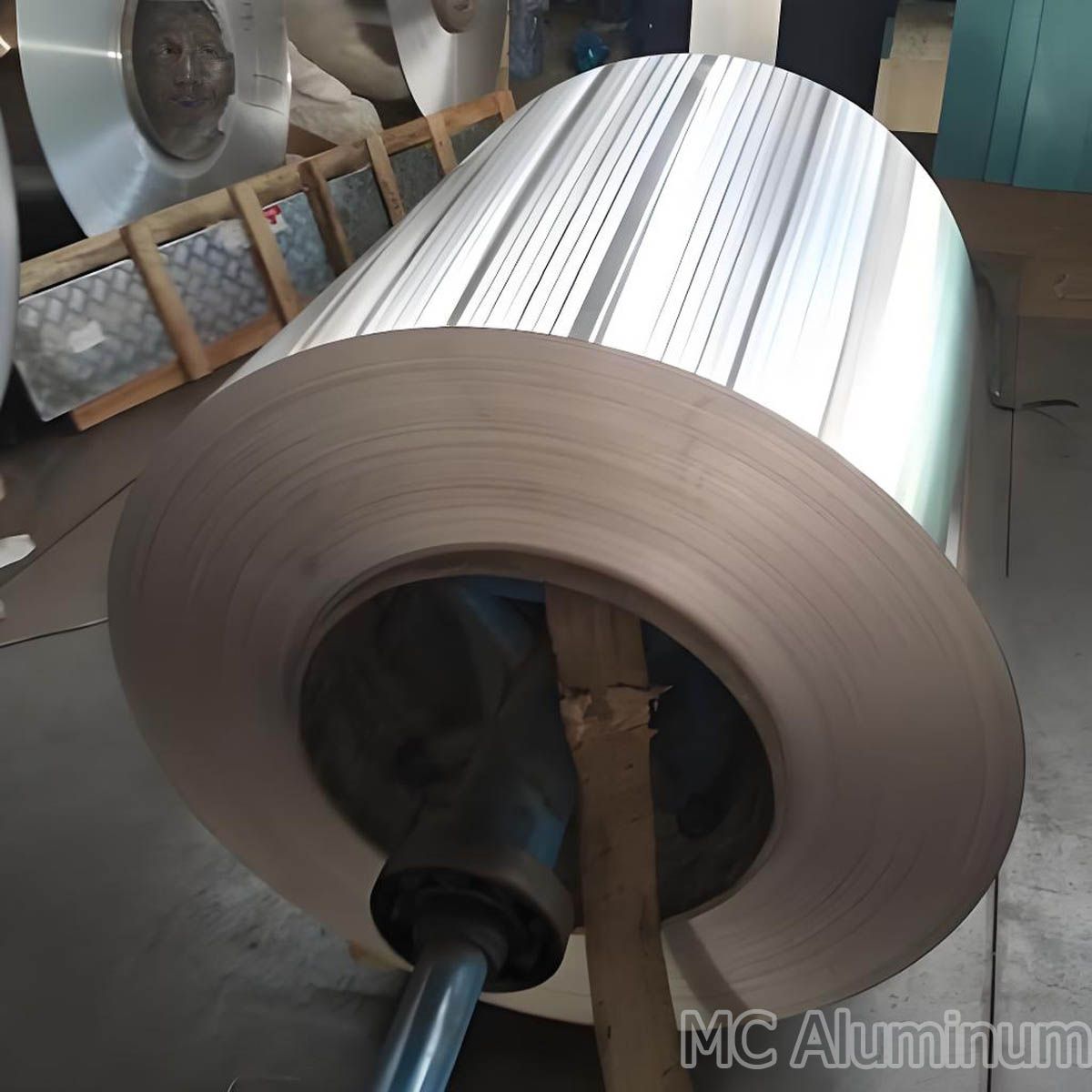
Features and Applications of 1100 Aluminum Foil
1. Material Composition and Properties
Composition: 1100 aluminum foil has a slightly lower aluminum content than 1060 and contains small amounts of copper and other elements, providing improved mechanical strength and impact resistance.
Thickness: It can also be customized in different thicknesses and is commonly used in battery applications with higher mechanical requirements.
Surface Treatment: Similar surface treatments can be applied to further improve surface performance and coating compatibility.
2. Application Areas
Applications requiring higher strength: With enhanced mechanical strength, 1100 aluminum foil is suitable for applications requiring greater structural stability, such as electric vehicles, high-speed rail applications, and large-scale energy storage systems.
Advantages: Under relatively high pressure and elevated temperatures, its structure can offer improved stability and help reduce stress-related issues inside the battery.
3. Selection Recommendation
Suitable for: Projects requiring higher mechanical strength and structural stability.
Considerations: Its cost may differ from 1060 depending on market conditions, specifications, and quality requirements. For applications requiring high reliability, it can offer favorable overall cost performance.
Why Is Aluminum Foil Commonly Used as a Lithium-Ion Battery Cathode Current Collector?
The cathode side of a lithium-ion battery operates at a relatively high potential. Therefore, the current collector must provide reliable conductivity while withstanding the electrolyte environment, coating and drying processes, calendering, slitting, and winding operations.
Aluminum foil offers the following major advantages as a lithium-ion battery cathode current collector:
1. Good Electrical Conductivity
Aluminum has relatively high electrical conductivity. It can efficiently collect and transmit electrons from the cathode active material, reduce internal ohmic resistance, and contribute to improved rate capability and energy efficiency.
2. Low Weight, Supporting Higher Energy Density
Aluminum has a density of approximately 2.71 g/cm³. Using ultra-thin aluminum foil as a current collector reduces the proportion of inactive materials in the cell and helps improve gravimetric energy density.
3. Suitable for the High-Voltage Cathode Environment
In conventional lithium-ion batteries, aluminum foil remains relatively stable within the cathode potential range. Therefore, aluminum foil is widely used as the cathode current collector. At the low potential of the anode, however, aluminum may alloy with lithium; therefore, copper foil is generally used as the anode current collector.
4. Suitable for Continuous, High-Volume Battery Manufacturing
Aluminum foil can undergo coating, drying, calendering, die-cutting, slitting, and winding processes. It is well suited to large-scale, automated battery production for power batteries, energy storage batteries, and consumer electronics batteries.
Key Differences Between 1060 and 1100 Aluminum Foil
1. Chemical Composition
Both 1060 and 1100 belong to the 1000-series industrial pure aluminum family, with aluminum purity above 99.0%. However, their control of trace alloying elements differs.
1060 Pure Aluminum Foil — Aluminum Content ≥99.60%
1060 is known for its high purity. Impurity elements such as Fe, Si, and Cu are controlled more strictly. Its high aluminum content helps maintain excellent electrical conductivity and ductility.
1100 Pure Aluminum Foil — Aluminum Content ≥99.00%
1100 allows small amounts of copper, typically Cu: 0.05%–0.20%, along with relatively higher levels of iron and silicon. The solid-solution strengthening effect of copper and the microstructural distribution of Fe-Si phases contribute to higher mechanical strength and tensile performance.
2. Comparison of Key Performance Parameters
For lithium-ion battery cathode current collectors, aluminum foil needs to withstand high-temperature coating drying, high-pressure calendering, and tension during high-speed web handling.
Performance Indicator | 1060 Cathode Aluminum Foil | 1100 Cathode Aluminum Foil | Impact on Battery Performance and Processing |
| Electrical Conductivity (% IACS) | ≥61.5% | 60.0%–61.0% | Higher conductivity can reduce internal resistance and support high-rate charging/discharging performance and heat control. |
Tensile Strength (Rm / MPa) | 140-180 | 160-210 | Higher strength improves resistance to tensile breakage during coating and slitting, helping reduce foil-break frequency. |
| Yield Strength (R0.2 / MPa) | 110-140 | 130-170 | Higher yield strength helps resist deformation or fracture during high-pressure calendering. |
Elongation (A / %) | ≥2.5%–3.5% | 2.0%–3.0% | Good elongation helps absorb stress caused by electrode expansion and contraction during battery cycling. |
| High-Temperature Annealing Resistance | Standard | Better | After coating drying at approximately 130°C–150°C, 1100 may exhibit a smaller reduction in strength than 1060. |
Note: Actual performance varies according to thickness, temper, rolling process, surface condition, and the supplier's quality-control standards. Final selection should be based on samples and validation testing.
3. Surface Characteristics and Coating Compatibility
Both grades can be produced as battery-grade single-side bright or double-side bright aluminum foil, meeting lithium battery requirements for high surface tension, low aluminum powder, and no oil stains.
1060 Aluminum Foil
1060 has a relatively uniform and softer substrate. After calendering, it can provide good electrode interfacial contact and stable slurry adhesion. It is widely used in lithium iron phosphate battery systems.
1100 Aluminum Foil
1100 generally has a harder substrate. Its calendering process window may be narrower; excessive calendering pressure may increase the risk of brittle cracking. However, its higher strength can help resist tensile deformation during high-speed coating operations.
4. Cost and Supply Considerations
Under the same thickness and surface-quality conditions, 1100 aluminum foil may be priced slightly lower than 1060 in some markets. Because 1060 requires stricter purity control, its melting and rolling costs may be higher. However, 1060 can offer advantages in conductivity and electrochemical stability for certain battery systems.
Actual pricing depends on aluminum market conditions, foil thickness, width, surface requirements, mechanical properties, order quantity, and quality specifications.
5.Application Recommendations
When to Prioritize 1060 Cathode Aluminum Foil
1060 aluminum foil is generally recommended for:
Power batteries: Ternary lithium-ion and LFP battery cells for passenger vehicles and commercial vehicles requiring fast charging, low heat generation, and high safety.
Long-duration energy storage batteries: Grid-scale and residential energy storage systems targeting long cycle life.
High-voltage battery systems: Such as 4.35 V or 4.4 V high-voltage ternary cathode systems and lithium-rich manganese-based cathode materials.
Projects sensitive to impurities: Applications that must pass stringent reliability testing, including high-temperature storage, cycling, and thermal box tests.
Conventional foil thicknesses: Such as 12 μm–20 μm foil used on production lines with stable web tension.
When to Prioritize 1100 Cathode Aluminum Foil
1100 aluminum foil may be considered for:
Ultra-thin foil applications: Such as 9 μm or 10 μm current collectors used on high-speed coating lines where frequent tension fluctuations and foil breakage are concerns.
Certain low-rate digital batteries and small-capacity cells: Applications with moderate cycle-life requirements and strong cost-control targets.
Carbon-coated aluminum foil substrates: Carbon-coating processes may benefit from the higher tensile strength of 1100 foil, helping reduce web-break risks during coating.
Projects with limited budgets and moderate cycle-life requirements: Where yield, process stability, and material cost need to be balanced.
Additional Selection Tips and Common Mistakes to Avoid
1. Alloy Grade Does Not Equal Finished Product Performance
Even if both products are labeled as 1060 aluminum foil, battery-grade foil and ordinary decorative or packaging-grade aluminum foil are entirely different products. Battery aluminum foil has stringent requirements for pinholes, aluminum powder, surface oil contamination, surface tension, thickness tolerance, and roll quality. Ordinary industrial aluminum foil should not be used as a substitute.
2. Confirm the Correct Temper
Lithium-ion battery cathode aluminum foil is generally supplied in a cold-rolled hard temper rather than O temper soft aluminum. When purchasing, always confirm that the material is specifically intended for battery current collector applications and verify the required H temper.
3. Lower Impurity Content Is Not Always Better
Impurities should be controlled within qualified battery-grade standards. Excessively pursuing ultra-high purity can significantly increase cost. The material should be selected according to the requirements of the specific battery chemistry and manufacturing process.
4. Validation Testing Comes First
When introducing a new alloy grade or supplier, testing should include high-temperature storage, cycling performance, impedance, coating adhesion or peel strength, and process compatibility. Purchase decisions should not be based on mechanical properties alone.
5. Evaluate Coating Compatibility
For carbon-coated aluminum foil, the strength advantage of 1100 can be beneficial. However, electrolyte compatibility and long-term corrosion resistance should also be evaluated simultaneously.
FAQ
Q1: Can 1100 aluminum foil be used for LFP energy storage batteries?
A: It is generally not the first choice for long-cycle energy storage batteries. The core requirement of energy storage batteries is often very long cycle life. Because 1100 contains relatively more copper and other impurities, its long-term electrolyte compatibility and corrosion resistance should be carefully verified. For demanding long-cycle energy storage applications, 1060 battery aluminum foil is generally preferred.
Q2: If 1100 aluminum foil has higher strength at the same thickness, does that mean it is always less likely to break?
A: Not necessarily. Its higher strength can offer advantages on high-speed production lines with unstable web tension. However, if calendering or processing parameters are unsuitable, higher-strength 1100 foil may be more susceptible to brittle fracture because its process window can be narrower.
Q3: What is the difference between 1060 and 1235 aluminum foil?
A: 1235 aluminum foil has an aluminum content of at least 99.35% and is one of the most widely used general-purpose battery aluminum foils. Its conductivity, strength, and cost are generally balanced between those of 1060 and 1100. A detailed comparison of 1060, 1100, and 1235 aluminum foil can also be provided upon request.