
Aluminum foil is an essential functional material in both capacitor manufacturing and battery manufacturing. Although capacitor foil and battery foil are both produced from aluminum and may appear similar in coil form, they serve different electrical roles and require different material designs, manufacturing routes, and inspection standards.
As an aluminum foil manufacturer, we produce foil materials according to downstream forming, coating, winding, and assembly requirements. The main difference between capacitor foil and battery foil is not simply alloy selection. It lies in the relationship between foil purity, thickness uniformity, surface condition, mechanical properties, corrosion behavior, and electrochemical performance.
This article explains the difference between capacitor foil and battery foil from a manufacturing and engineering perspective.
What Is Capacitor Foil?
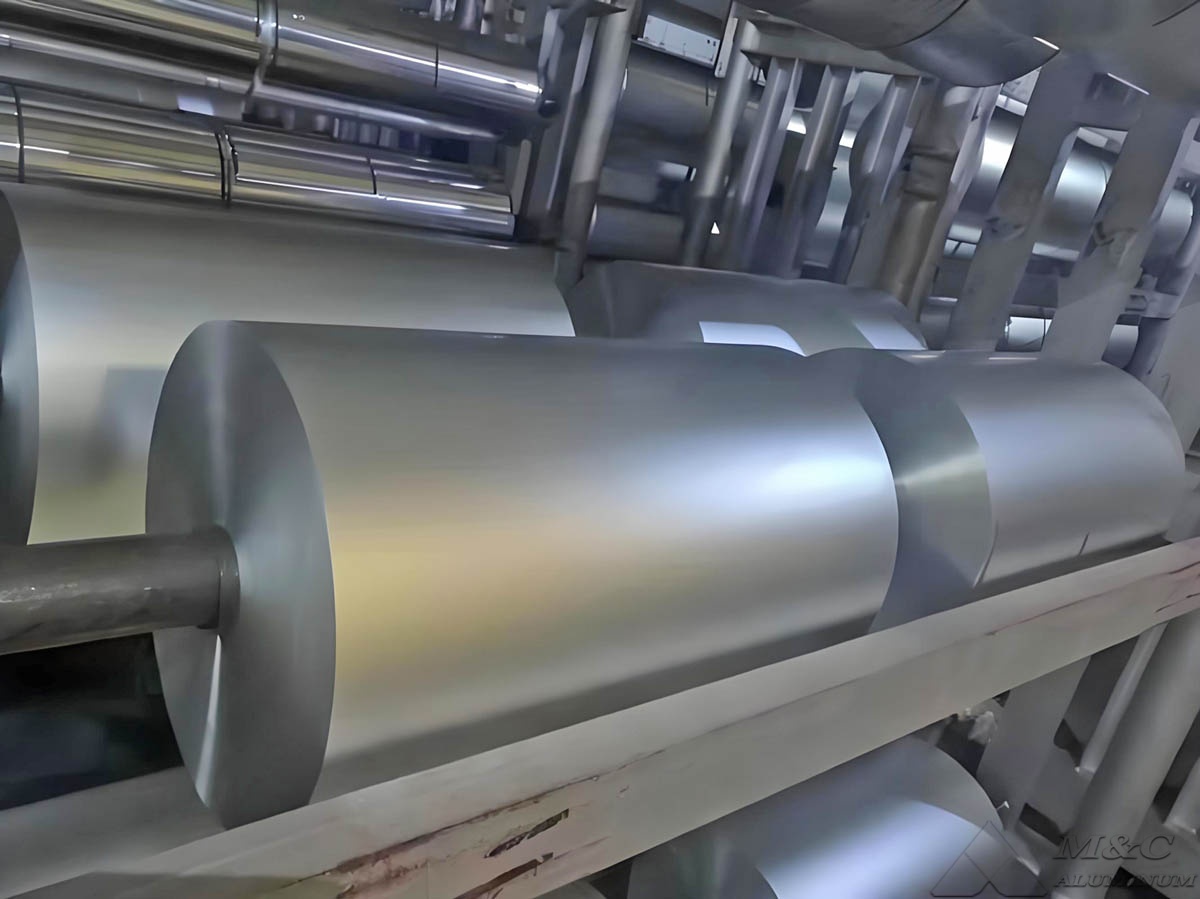
Capacitor foil is aluminum foil used to manufacture electrolytic capacitors. In most cases, it is supplied as plain aluminum foil for subsequent etching, chemical formation, and winding by capacitor producers. The foil becomes an electrode material that stores electrical charge through an aluminum oxide dielectric layer.
The most important feature of aluminum capacitor foil is its ability to develop a large effective surface area after etching. A controlled etched structure increases capacitance per unit volume. For this reason, capacitor foil requires high aluminum purity, stable metallurgical structure, and carefully controlled surface quality.
Capacitor foil is commonly divided into the following types:
Anode foil, used for the positive electrode and normally subjected to deeper etching and formation.
Cathode foil, used for the negative electrode and often designed for lower voltage requirements.
High-voltage capacitor foil, requiring controlled grain structure and formation stability.
Low-voltage capacitor foil, emphasizing etching efficiency and capacitance density.
In our rolling process, capacitor-grade aluminum foil is controlled for inclusions, pinholes, edge condition, thickness tolerance, and annealing consistency. These factors directly affect etching uniformity and final capacitor reliability.
What Is Battery Foil?
Battery aluminum foil usually refers to aluminum foil used as the cathode current collector in lithium-ion batteries, sodium-ion batteries, lithium polymer batteries, and other rechargeable energy-storage systems. The foil carries electrical current between the active electrode coating and the battery tab or external circuit.
For lithium-ion battery production, aluminum foil is generally used on the cathode side, while copper foil is commonly used on the anode side. Battery aluminum foil must provide stable conductivity, sufficient tensile strength for high-speed coating and slitting, and reliable adhesion to cathode materials such as lithium iron phosphate, lithium nickel manganese cobalt oxide, and lithium nickel cobalt aluminum oxide.
Battery aluminum foil can be supplied as bare aluminum foil or as carbon-coated aluminum foil. Carbon coating may improve contact resistance, coating adhesion, electrolyte wettability, and cycling consistency in specific battery designs.
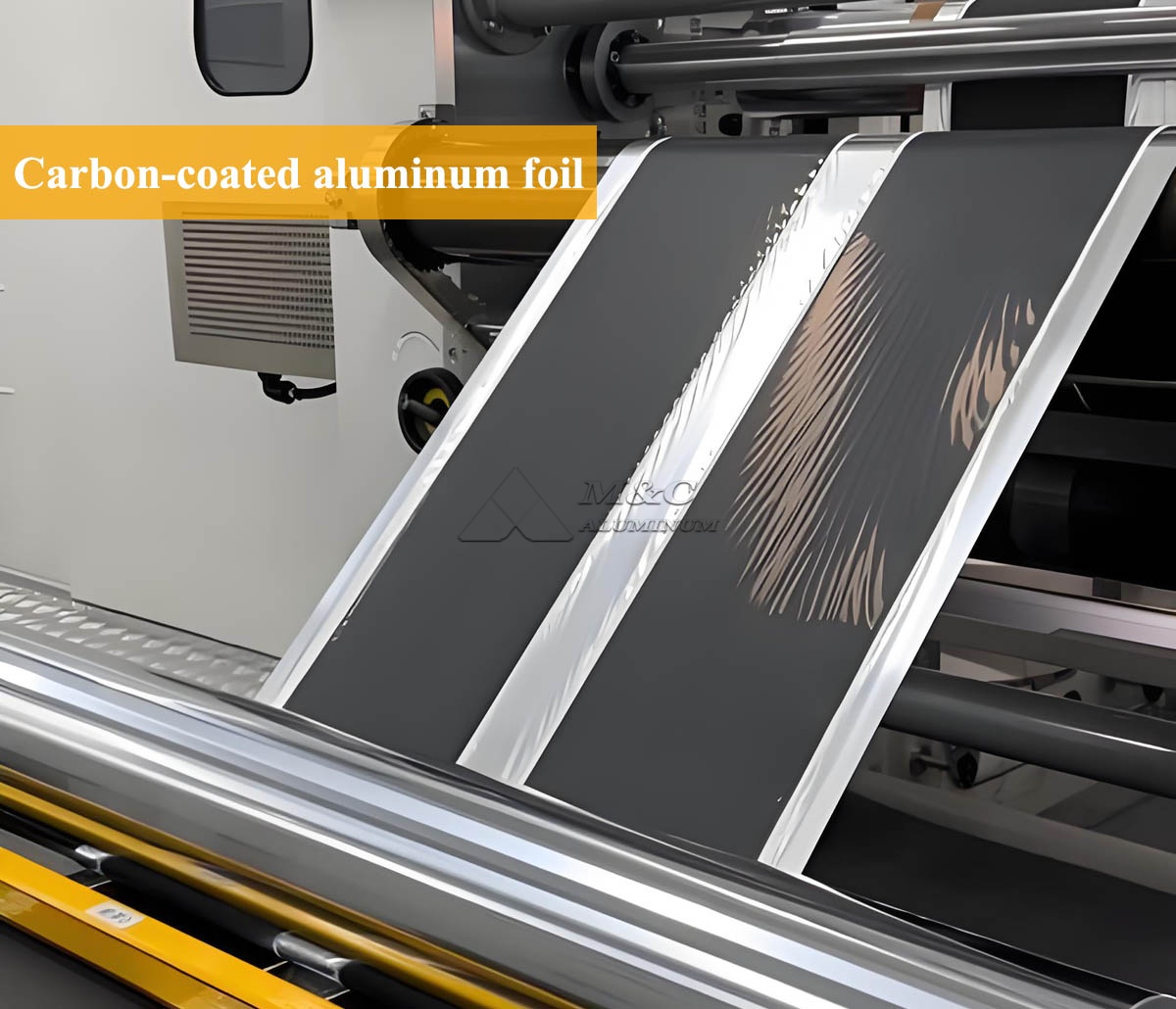
Unlike capacitor foil, battery foil is not normally chemically etched to create a high-surface-area electrode structure. Instead, its surface must support uniform slurry coating and stable electrical contact throughout repeated charge and discharge cycles.
Core Difference Between Capacitor Foil and Battery Foil
The primary difference between capacitor foil and battery foil is their functional purpose.
Capacitor foil is designed to be etched and formed into an electrode with high capacitance. Battery foil is designed to act as a lightweight, conductive current collector for coated active materials.
| Item | Capacitor Foil | Battery Foil |
|---|---|---|
| Main application | Electrolytic capacitors | Lithium-ion, sodium-ion, and polymer batteries |
| Electrical role | Etched and formed electrode material | Cathode current collector |
| Main performance focus | Etching response, formation behavior, capacitance stability | Coating adhesion, conductivity, tensile strength, thickness consistency |
| Typical surface treatment | Etching and chemical formation by capacitor producer | Bare surface, roughened surface, or carbon coating |
| Common thickness range | 20-120 microns before etching, depending on voltage and design | 10-25 microns for many rechargeable battery applications |
| Key quality concern | Metallurgical uniformity and etching consistency | Coating compatibility, cleanliness, flatness, and pinhole control |
| Typical downstream process | Etching, formation, cutting, winding | Slitting, coating, drying, calendering, winding or stacking |
Alloy and Purity Requirements
High purity is important for both products, but the reason for high purity differs.
For capacitor foil, purity and microstructure strongly influence the electrochemical etching process. Impurities and coarse intermetallic particles can cause uneven etching, local corrosion, reduced formation stability, and inconsistent capacitance. Therefore, capacitor foil commonly uses high-purity aluminum grades with tightly controlled trace elements.
For battery foil, aluminum purity supports conductivity and corrosion resistance, but mechanical performance is also important. Battery electrode production involves coating, drying, calendering, precision slitting, and high-speed winding or stacking. The foil must maintain adequate strength without excessive brittleness.
Common battery foil materials include 1050, 1060, 1070, 1100, and 1235 aluminum foil grades, selected according to thickness, coating process, and cell design. Our 1100 Aluminum Foil can be processed for applications that require balanced formability and electrical conductivity. For thinner current collector applications, 1235 Aluminum Foil is also widely used where stable gauge control and surface cleanliness are required.
| Parameter | Capacitor Foil | Battery Foil |
|---|---|---|
| Typical aluminum purity | Usually high purity aluminum, often 99.5% or higher | Commonly 99.0% or higher, depending on alloy grade |
| Common alloy families | 1050, 1060, 1070, high-purity capacitor grades | 1050, 1060, 1070, 1100, 1235 |
| Temper condition | H18, H19, or customized annealed condition | H18, H19, H22, H24, or customized condition |
| Thickness tolerance | Strict control for uniform etching and formation | Strict control for coating weight and cell consistency |
| Surface requirement | Suitable for controlled etching | Clean, smooth, coating-compatible, and low contamination |
Thickness and Mechanical Property Differences
Capacitor foil is often thicker than battery foil because it must retain structural integrity during etching and formation. The specific thickness depends on capacitor voltage, etching depth, and electrode design. High-voltage capacitor applications may require thicker foil to maintain sufficient remaining metal after processing.
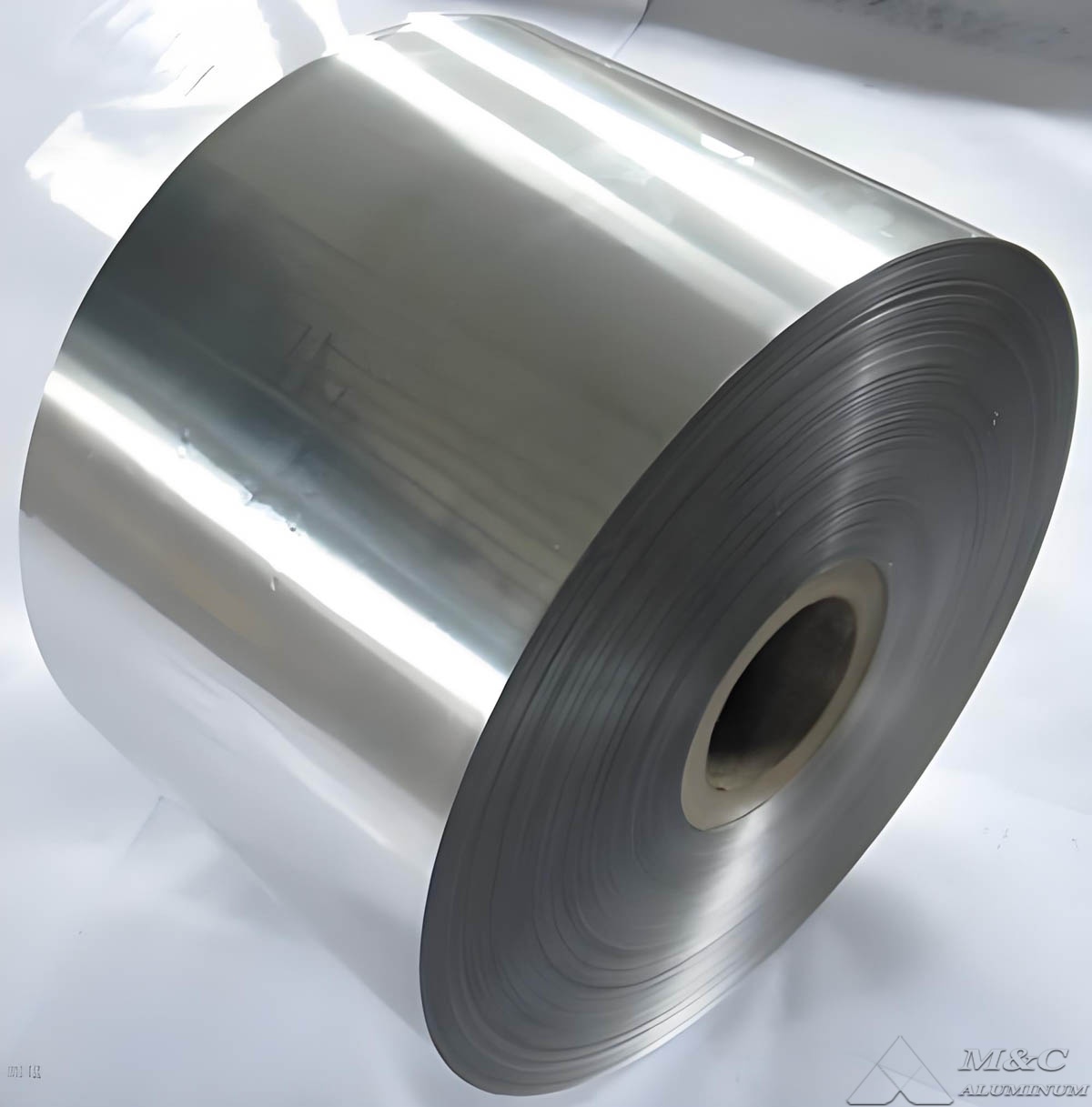
Battery aluminum foil is generally thinner because battery manufacturers seek higher energy density and lower cell weight. However, reducing thickness increases manufacturing difficulty. Thin battery foil must remain flat, free from wrinkles, and resistant to tearing during coating and winding.
In our factory, thickness control is managed through rolling force, flatness measurement, online gauge monitoring, tension control, and final inspection. For battery foil, even small thickness variations can influence coating uniformity and volumetric energy density. For capacitor foil, unstable thickness may lead to uneven etching behavior and variation in capacitance.
Surface Condition and Cleanliness
Surface quality requirements are another major difference between capacitor foil and battery foil.
Capacitor foil requires a stable and uniform surface for chemical etching. Surface defects, rolling marks, inclusions, oil residues, and pinholes can affect the etching profile. A non-uniform etched structure may reduce the usable surface area or create localized weak points during oxide formation.
Battery foil requires excellent cleanliness because it is coated with electrode slurry. Residual rolling oil, dust, moisture, oxide particles, or surface contamination can reduce adhesion between the aluminum current collector and the cathode coating. Poor adhesion may cause delamination, increased internal resistance, or capacity degradation during battery cycling.
For battery-grade aluminum foil, our production control includes degreasing evaluation, surface tension monitoring, coil-edge inspection, pinhole inspection, and packaging protection. For carbon-coated foil, coating uniformity and electrical resistance are additionally verified according to customer specifications.
Manufacturing Process Comparison
Both capacitor foil and battery foil begin with aluminum melting, casting, hot rolling, cold rolling, annealing, slitting, and final packing. However, their process priorities are different.
For aluminum capacitor foil, the production focus is on metallurgical consistency. We control grain structure, impurity distribution, recrystallization behavior, and annealing performance to support downstream electrochemical etching. The capacitor manufacturer then completes etching and formation according to its voltage and capacitance requirements.
For battery aluminum foil, the production focus is on thin-gauge rolling stability, mechanical strength, flatness, and surface compatibility with electrode coating. The material must run efficiently on automated coating lines without frequent web breaks, edge cracking, or coating defects.
| Manufacturing Stage | Capacitor Foil Priority | Battery Foil Priority |
|---|---|---|
| Melting and casting | Purity and inclusion control | Purity, conductivity, and stable alloy composition |
| Cold rolling | Uniform metallurgical deformation | Tight gauge control at thin thickness |
| Annealing | Etching and formation response | Strength-elongation balance and flatness |
| Surface inspection | Etching suitability and defect control | Cleanliness, coating compatibility, and low pinholes |
| Slitting | Edge quality for winding | Burr control and stable narrow-width coils |
How to Select the Correct Aluminum Foil
Buyers should not select capacitor foil and battery foil based only on thickness or aluminum grade. The final application process must be considered first.
Choose capacitor foil when the downstream process includes chemical etching and oxide formation for electrolytic capacitor electrodes. In this case, request information about purity, temper, grain structure, etching performance, and formation stability.
Choose battery foil when the aluminum foil will be coated with cathode slurry and used as a current collector. Important specifications include thickness tolerance, tensile strength, elongation, surface cleanliness, pinhole level, wettability, coil dimensions, and compatibility with coating equipment.
For battery projects using conductive surface modification, carbon-coated aluminum foil may be specified to improve electrical contact and coating performance. For conventional cathode production, bare battery aluminum foil may be sufficient when surface and mechanical requirements are properly controlled.
Conclusion
Capacitor foil and battery foil are both engineered aluminum materials, but they are designed for different electrochemical systems. Capacitor foil is optimized for etching and dielectric formation, while battery foil is optimized for electrode coating and current collection.
As a manufacturer, we recommend confirming the end-use process before defining alloy, temper, thickness, coil dimensions, and surface condition. A foil suitable for capacitor etching is not automatically suitable for lithium-ion battery coating, and a thin battery current collector foil will not necessarily provide the metallurgical response required for capacitor production. Proper material selection improves processing stability, electrical performance, and finished-product consistency.