
In a sodium-ion battery, the current collector not only conducts electrical current but also directly affects electrode adhesion, interfacial impedance, cycle life, rate capability, and manufacturing yield.
As an important base material for sodium-ion battery cathodes and certain specific electrode systems, carbon-coated aluminum foil creates a uniform conductive carbon layer on the surface of high-quality battery-grade aluminum foil. This functional coating effectively improves contact between active materials and the aluminum foil substrate, providing a more stable and efficient pathway for current collection and electron transport.
Carbon-coated aluminum foil for sodium-ion batteries is also known as carbon-coated Al foil, conductive carbon-coated aluminum foil, carbon-coated current collector, or Carbon Coated Aluminum Foil. It is a critical functional material for the manufacture of high-performance sodium-ion battery electrodes.
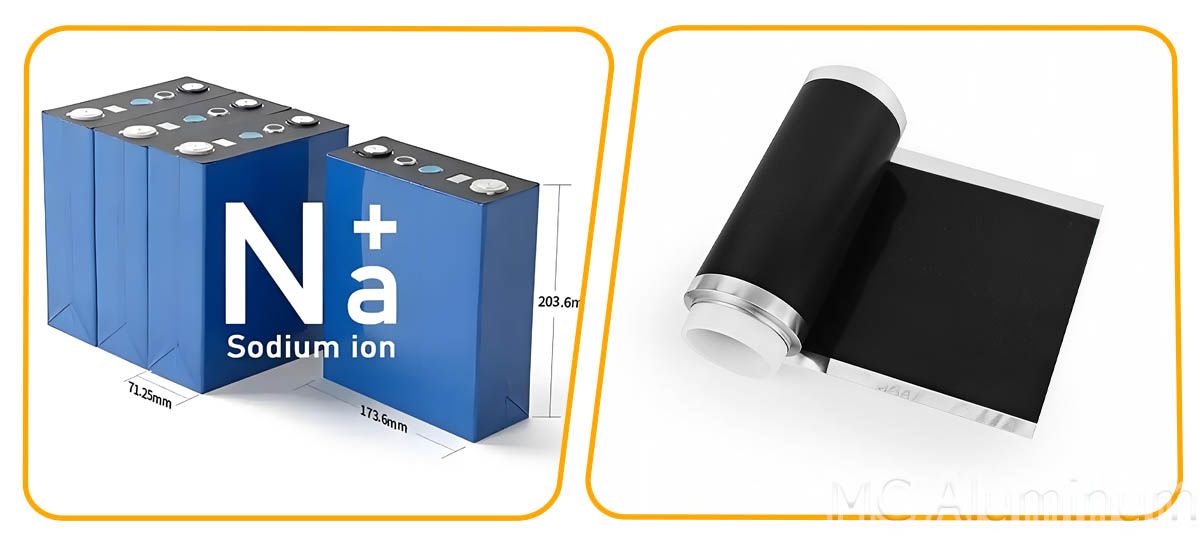
What Is Carbon-Coated Aluminum Foil for Sodium-Ion Batteries?
Carbon-coated aluminum foil is a high-performance composite current collector produced by applying a nano-scale conductive carbon slurry uniformly onto one or both sides of high-purity battery-grade aluminum foil, such as 1050, 1145, or 1235 aluminum foil. The coating is typically applied using micro-gravure coating technology and then dried and cured at elevated temperatures.
A major difference between sodium-ion batteries and lithium-ion batteries is that sodium does not alloy with aluminum at low potentials. Therefore, aluminum foil can be used as the current collector for both the cathode and anode in sodium-ion batteries, whereas lithium-ion battery anodes generally require copper foil.
As a result, aluminum foil plays a more important role and is used in greater quantities in sodium-ion batteries. The introduction of carbon-coated aluminum foil creates an efficient conductive network and a protective interfacial layer for stable sodium-ion battery operation.
Carbon-Coated Aluminum Foil Specifications
| Item | Specification |
| Base Material | Battery-grade high-purity aluminum foil: 1050-H18 / 1060 / 1145 / 1235 |
| Thickness | 8 μm, 10 μm, 12 μm, 14 μm, 16 μm, 20 μm, or customized |
| Coating Type | Single-side carbon coating / double-side carbon coating |
| Special Coating Options | Dense carbon layer or microporous carbon layer, suitable for anode-free or anode-lean battery designs |
| Carbon Coating Weight | 0.4–2.0 g/m², customizable |
| Coating Weight Tolerance | ±0.1 g/m² |
| Width Range | 10–1300 mm, available in customized slit widths |
| Core Inner Diameter | 3 inch / 6 inch |
| Peel Strength | ≥12 N/m between electrode coating and aluminum foil; strong adhesion with low risk of powder shedding |
| Coating Appearance | Black or dark gray; uniform coating with no particles, exposed foil, pinholes, or obvious defects |
| Surface Roughness | Rz ≥1.6 μm |
| Electrode Peel Strength | ≥0.2 N/20 mm |
| Alkali Resistance | Soaking resistance ≥2 minutes |
| MOQ | 3 tons |
Key Advantages of Carbon-Coated Aluminum Foil in Sodium-Ion Batteries
1. Significantly Reduces Contact Resistance and Improves Rate Performance
The conductive carbon coating creates closer microscopic contact with active materials, such as Prussian blue-based cathodes and hard carbon anodes. It can significantly reduce interfacial contact resistance between the current collector and active material layer.
As a result, electrode polarization is reduced, electron transport is improved, and the battery can achieve more stable high-rate charging and discharging performance.
2. Improves Electrode Adhesion and Prevents Active Material Delamination
During long-term charge and discharge cycling, sodium-ion battery electrode materials may undergo volume expansion and contraction. The carbon coating provides excellent flexibility and mechanical buffering capability.
It can significantly improve the peel strength between the active material layer and the aluminum foil substrate, helping prevent powder shedding, cracking, and delamination that may otherwise lead to capacity fading.
3. Helps Suppress Current Collector Corrosion and Extend Cycle Life
In sodium-ion battery electrolyte systems—especially those containing certain sodium salts such as NaPF₆ or NaClO₄—bare aluminum foil may be exposed to electrochemical corrosion at higher operating voltages or under specific conditions.
A dense conductive carbon coating acts as a protective barrier, reducing direct contact between the electrolyte and the aluminum foil substrate. This helps improve interfacial stability and can contribute to longer battery cycle life.
4. Supports Thermal Management and Battery Safety
The carbon coating can support heat transfer within the electrode structure and help improve thermal uniformity during high-power operation. By reducing localized heat accumulation and improving electrical contact, it can contribute to enhanced battery safety and lower thermal risk in energy storage and power battery applications.
Product Structure and Composition
Carbon-coated aluminum foil for sodium-ion batteries generally consists of the following components:
1. Battery-Grade Aluminum Foil Substrate
The substrate is typically high-quality battery-grade aluminum foil. Common alloys include 1xxx series aluminum foils, such as 1050, 1060, 1145, and 1235, as well as other aluminum foil grades suitable for battery current collectors.
The base foil should feature:
Uniform thickness
Low pinhole density
Clean surface condition
Stable mechanical properties
Good elongation and flexibility
Excellent flatness and coil shape
Typical foil thicknesses include 8 μm, 10 μm, 12 μm, 15 μm, 16 μm, and 20 μm, with customized specifications available.
Different sodium-ion battery formats—including prismatic cells, cylindrical cells, pouch cells, and large-scale energy storage cells—may require different combinations of foil thickness, tensile strength, elongation, and surface quality.
2. Conductive Carbon Coating
The conductive carbon layer is the core functional layer of carbon-coated aluminum foil. Its main functions are to improve electron transport, enhance adhesion, and optimize the electrode interface.
The carbon coating may include the following materials:
Conductive carbon black
High-conductivity graphite
Carbon nanotubes
Graphene or other carbon nanomaterials
Water-based or solvent-based resin binder systems
Dispersants, wetting agents, and other functional additives
Different carbon material systems affect coating conductivity, roughness, electrolyte resistance, adhesion, flexibility, and cost. The final coating formulation should be optimized according to the cathode or anode material system, battery performance targets, and customer processing conditions.
3. Binder and Curing System
The resin binder system determines the bonding strength between the carbon layer and aluminum foil substrate, as well as the bonding strength among carbon particles.
An ideal binder system should balance the following characteristics:
Strong adhesion
Electrolyte resistance
High-temperature resistance
Flexibility
Low interfacial resistance
Low impurity content
Stable electrochemical performance
For sodium-ion battery applications, moisture residue, volatile content, ionic impurities, and electrochemical stability must also be carefully controlled to avoid negative effects on cell performance and long-term cycle life.
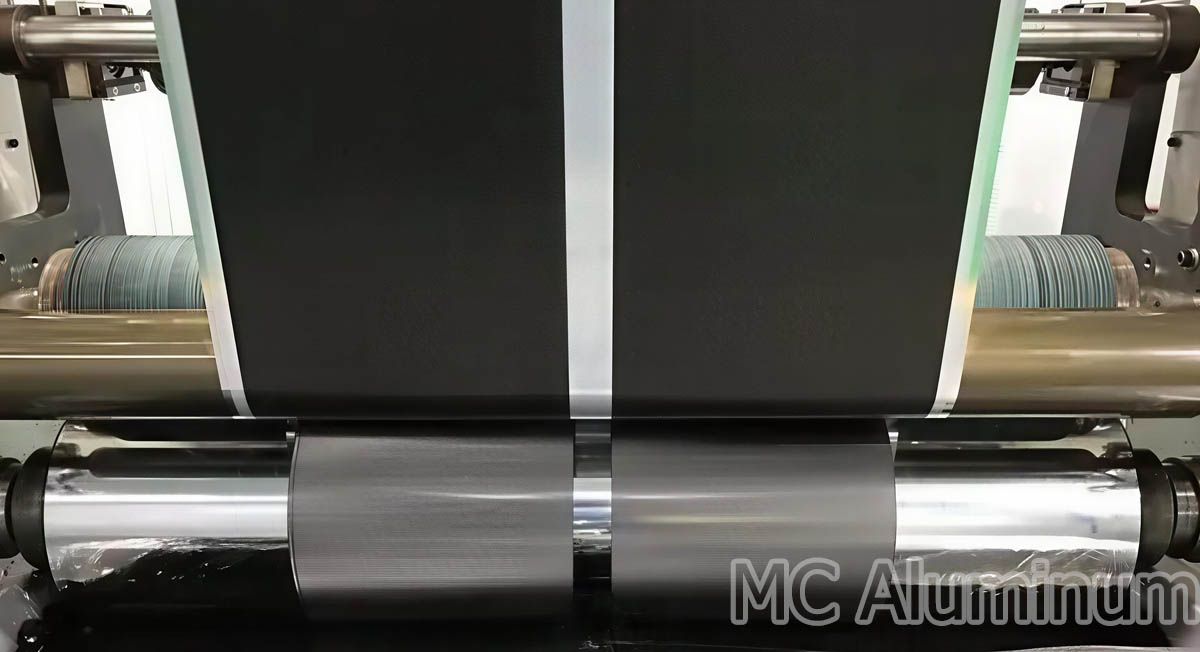
Main Performance Features
1. High Electrical Conductivity
A uniform and continuous conductive carbon coating forms an effective electron transport network on the aluminum foil surface. It reduces contact resistance between the active material layer and the current collector, thereby improving the overall conductivity of the electrode.
2. High Adhesion Strength
With optimized carbon slurry formulation and coating-curing technology, the carbon layer can bond tightly to the aluminum foil substrate while improving the adhesion of the subsequently coated electrode slurry.
This reduces the risk of delamination during calendaring, slitting, winding, and charge-discharge cycling.
3. Excellent Coating Uniformity
High-precision coating equipment enables stable control of coating weight, coating thickness, and surface condition. A uniform carbon layer helps reduce localized current density variation and improves the consistency of electrochemical reactions across the electrode.
4. Excellent Flexibility and Folding Resistance
Sodium-ion battery electrodes generally undergo calendaring, die cutting, winding, or stacking during production. Carbon-coated aluminum foil should maintain good bending and folding resistance to avoid coating cracks, powder shedding, or large-area delamination during processing.
5. Suitable for High-Speed Electrode Coating
High-quality carbon-coated aluminum foil offers good surface wettability and can be compatible with water-based or solvent-based electrode slurry systems. Under high-speed production conditions, it helps improve slurry spreading, edge quality, and coating consistency after drying.
6. Customizable Product Development
Products can be customized according to different sodium-ion battery cathode materials, electrode loading levels, cell formats, and performance requirements. Available options include:
Single-side carbon coating
Double-side carbon coating
Partial carbon coating
Stripe carbon coating
Different coating weights
Different coating thicknesses
Different surface resistance levels
Microporous modified carbon coatings
Special surface tension versions for anode-free or anode-lean sodium-ion battery systems
Typical Application Areas
1. Grid-Scale and Commercial & Industrial Sodium-Ion Energy Storage Batteries
Large energy storage containers require long cycle life, low gas generation, and high operational reliability. Carbon-coated aluminum foil is widely used in sodium-ion batteries based on Prussian blue, Prussian blue analogues, and layered oxide cathode systems.
2. Sodium-Ion Batteries for Low-Speed Electric Vehicles and Two-Wheelers
These applications require a balance between rate capability, low-temperature performance, safety, and cost. Carbon-coated aluminum foil can improve electrode stability during high-current charging and discharging.
3. UPS Backup Power and Telecom Base Station Energy Storage
UPS systems and telecom backup power batteries require wide-temperature operation, long-term reliability, and stable storage performance. Carbon-coated aluminum foil can help reduce interfacial degradation and mitigate long-term gas generation risks.
4. Anode-Free and Anode-Lean Sodium-Ion Battery Development and Production
Microporous carbon-coated aluminum foil can be used as a current collector for metallic sodium deposition in anode-free or anode-lean sodium battery designs. It is considered an important material for next-generation high-energy-density sodium battery technologies.
5. Specialized Energy Storage and Portable Sodium-Ion Battery Cells
Carbon-coated aluminum foil is also suitable for specialty energy storage devices, portable energy storage products, and other sodium-ion battery applications requiring stable electrode interfaces and high manufacturing consistency.
FAQ
Q1: Can carbon-coated aluminum foil for sodium-ion batteries be used interchangeably with carbon-coated aluminum foil for lithium-ion batteries?
A: Direct interchange is not recommended.
Sodium-ion batteries differ significantly from lithium-ion batteries in electrolyte chemistry, operating voltage range, interfacial gas-generation mechanisms, and electrode reactions. Carbon-coated aluminum foil designed for sodium-ion batteries uses a carbon coating formulation compatible with sodium salt electrolytes and is optimized for interfacial stability and gas-generation control.
Using lithium-battery carbon-coated aluminum foil directly in sodium-ion battery systems may increase the risk of side reactions, gas generation, swelling, or rapid cycle performance degradation. Compatibility testing should always be conducted before use.
Q2: How should I choose between single-side and double-side carbon coating?
A:
Single-side carbon coating:
Lower cost
Suitable for conventional cathode applications
High electrode coating efficiency
Commonly used in sodium-ion energy storage batteries
Double-side carbon coating:
Conductive carbon layers on both sides
Better overall conductivity and slurry adhesion
Suitable for high-loading thick electrodes and high-rate cells
Recommended for certain anode-lean or hard carbon anode systems, especially when a microporous coating structure is required
The final selection should be based on cell design, electrode structure, coating process, and performance targets.
Q3: Will the carbon layer shed after calendaring and cause internal short circuits?
A: Qualified carbon-coated aluminum foil undergoes dedicated adhesion testing to ensure strong bonding between the carbon coating and aluminum substrate. Under normal calendaring and slitting conditions, the coating should not experience large-area powder shedding.
Before shipment, adhesion can be verified through tape testing and other agreed inspection methods. However, if calendaring pressure is excessively high or the electrode compaction density exceeds the designed process range, there may still be a risk of coating damage or powder shedding. It is recommended to match the foil specification with the customer’s processing parameters in advance.
Q4: Can you provide samples for cell prototyping and testing? How are samples charged?
A: Yes. Small trial rolls, typically ranging from several meters to several tens of meters, can be supplied for laboratory evaluation and cell prototyping.
Small quantities may be provided free of charge, with the customer responsible for freight costs.
Larger trial quantities are charged based on the actual product price.
Test samples can be supplied with relevant inspection reports, depending on project requirements.
Q5: Can the base foil thickness and carbon coating weight be customized?
A: Yes. Customization is available.
Base foil thickness: 8–20 μm
Carbon coating weight: 0.4–2.0 g/m²
Coating structure: dense carbon layer, microporous carbon layer, or other modified functional layers
Surface properties: special surface tension and wettability versions are available for specific sodium-ion battery systems
Minimum order quantity will be confirmed based on the required specification and production process.
Q6: Are there special storage requirements? What is the shelf life?
A: Carbon-coated aluminum foil is sensitive to moisture and should be stored in vacuum-sealed aluminum-plastic packaging under dry, clean, and light-protected conditions.
Recommended storage conditions:
Temperature: approximately 25°C
Relative humidity: below 40%
Keep away from moisture, direct sunlight, dust, and corrosive gases
The recommended shelf life for unopened vacuum packaging is 6 months. After opening, the material should be used as soon as possible to prevent moisture absorption from affecting electrochemical performance.
Q7: Compared with bare aluminum foil, what battery performance improvements can carbon-coated aluminum foil provide?
A: Under the same electrode formulation and manufacturing conditions, carbon-coated aluminum foil may provide the following benefits:
Lower interfacial resistance
Improved rate capability
Reduced electrode powder shedding
Better high-temperature cycle retention
Reduced cell swelling and gas generation
Improved electrode manufacturing consistency and production yield
The actual level of improvement depends on the active material, electrode slurry formulation, compaction density, electrolyte system, cell design, and processing parameters.
Q8: Can the foil be slit into customized widths? What is the maximum width?
A: Yes. Precision slitting is available.
The maximum mother-roll width is 1300 mm, and the material can be slit into customer-specified widths, including narrow strips and special small-width formats. Slit edges are controlled to be smooth and low-burr, helping reduce the risk of separator damage during winding and cell assembly.