
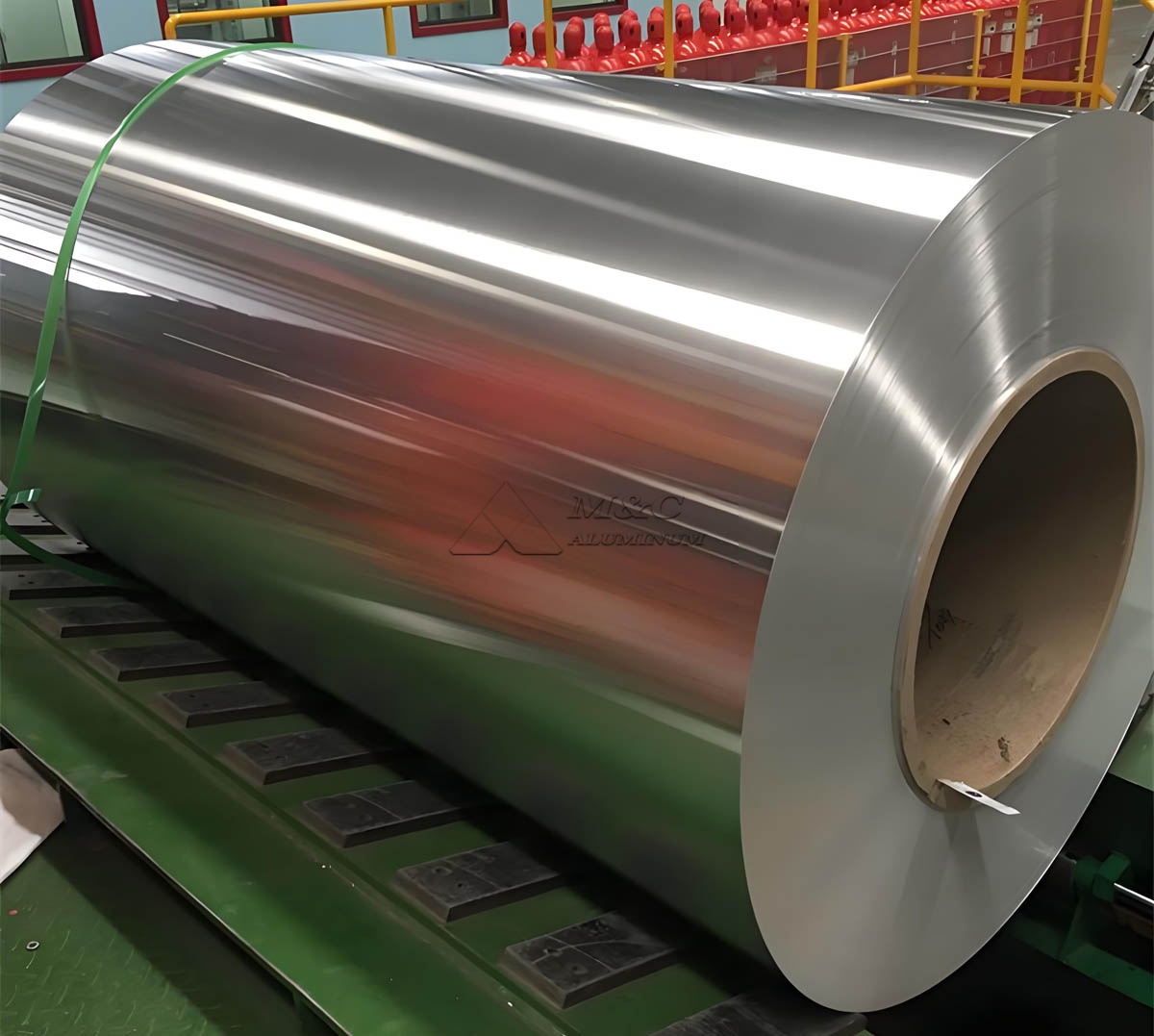
In lithium-ion battery manufacturing, aluminum foil functions as the cathode current collector. Although it does not directly store electrochemical energy, its thickness has a measurable influence on internal resistance, energy density, heat dissipation, coating stability, and production yield. For battery manufacturers, selecting the appropriate battery aluminum foil thickness is therefore a critical engineering decision rather than a simple material specification.
As an aluminum foil manufacturer, we produce rolled aluminum foil for demanding industrial applications where thickness uniformity, surface cleanliness, mechanical properties, and coil consistency must be controlled throughout the supply process. In battery applications, even a small thickness variation can affect electrode coating behavior and downstream cell performance.
The Function of Aluminum Foil in Lithium-Ion Batteries
In most lithium-ion battery designs, aluminum foil is used as the current collector for the positive electrode, or cathode. The foil provides an electrically conductive substrate for the active material coating and transfers electrons between the cathode layer and the external circuit.
A qualified cathode aluminum foil must provide the following characteristics:
Stable electrical conductivity.
Adequate tensile strength and elongation for electrode processing.
Consistent thickness across the full coil width.
Clean surface conditions for reliable slurry adhesion.
Low pinhole and defect levels.
Suitable flatness for coating, calendering, slitting, and winding.
The thickness of aluminum foil influences all of these factors to different degrees. A foil that is too thin may improve energy density but can reduce mechanical stability. A foil that is too thick can improve handling strength but may add unnecessary inactive weight and volume to the battery cell.
Typical Battery Aluminum Foil Thickness Range
Battery aluminum foil is commonly supplied in thicknesses from approximately 10 to 20 microns, depending on the battery type, electrode design, coating loading, and manufacturing process. High-energy-density cells may use thinner foil, while applications requiring stronger processing stability may select a moderately thicker gauge.
| Parameter | Typical Range | Effect on Battery Performance |
|---|---|---|
| Aluminum foil thickness | 10-20 microns | Influences energy density, resistance, and processability |
| Common alloy | 1050, 1060, 1100 series | Supports conductivity and electrode coating requirements |
| Temper | H18, H19, or customized | Determines strength, stiffness, and elongation balance |
| Tensile strength | Typically controlled by temper | Affects slitting, winding, and coating line performance |
| Thickness tolerance | Tight tolerance required | Supports coating uniformity and electrode consistency |
| Surface cleanliness | Low residual rolling oil | Improves active material adhesion and coating quality |
| Pinhole control | Application-dependent | Reduces the risk of local coating defects and electrical irregularities |
The final specification should be determined jointly by the battery producer, electrode designer, and aluminum foil manufacturer. Thickness alone is not sufficient; the foil must also match the required temper, roughness profile, width, coil diameter, and surface condition.
How Thinner Aluminum Foil Improves Energy Density
One of the main reasons battery producers consider thinner aluminum foil is the reduction of inactive material within the cell. The current collector occupies volume and adds weight, but it does not contribute directly to the cell's active energy storage capacity.
When aluminum foil thickness is reduced, more of the available cell volume can be allocated to active cathode material. This can increase gravimetric and volumetric energy density, particularly in compact battery formats for electric vehicles, consumer electronics, and energy storage systems.
For example, reducing foil thickness from 16 microns to 12 microns can lower the mass of the cathode current collector. However, the actual battery-level benefit depends on electrode loading, cell geometry, cathode chemistry, and the overall design of the battery pack.
Thinner foil may also support reduced material consumption. From a manufacturing perspective, this can improve aluminum utilization when the reduction in gauge does not create additional scrap, breakage, or coating defects. The best result is achieved when thickness reduction is supported by stable rolling quality and a controlled electrode process.
Electrical Resistance and Current Collection Efficiency
Aluminum foil thickness directly affects electrical resistance. A thicker foil has a larger cross-sectional area, which generally reduces electrical resistance along the current collector. Lower resistance helps reduce voltage loss and heat generation during charging and discharging.
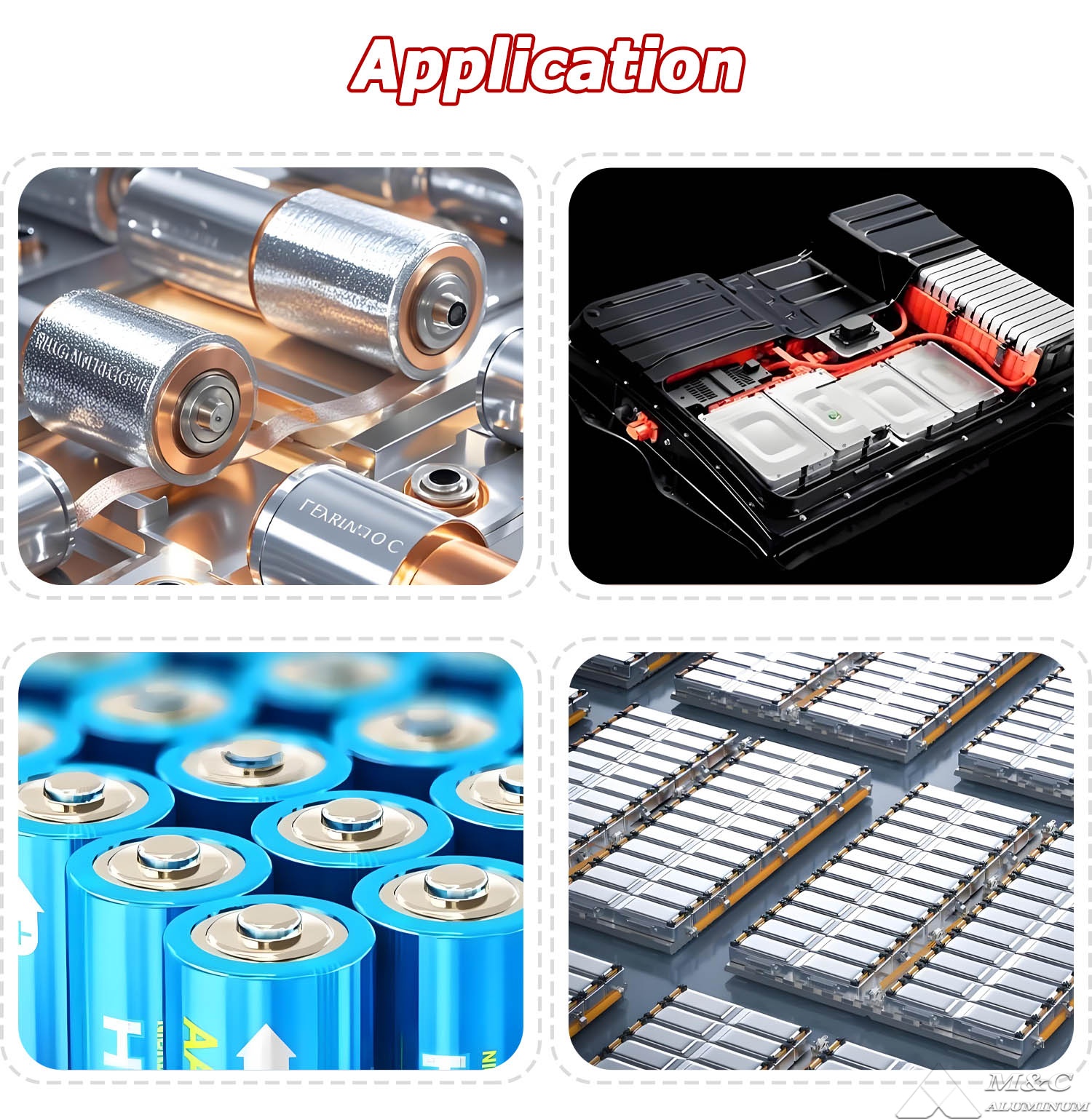
This relationship is particularly important in cells designed for high-power operation. Power tools, electric vehicles, hybrid systems, and rapid-charging applications may require current collectors that can efficiently manage higher current loads.
A thinner aluminum foil can have higher resistance, especially over longer current paths. If the foil is reduced excessively, local current distribution may become less uniform. This can contribute to uneven electrode utilization, localized heating, and increased internal resistance at high discharge rates.
The appropriate gauge must therefore balance energy density against conductivity. A thinner foil is not automatically better for every battery design. For high-rate cells, a slightly thicker current collector may provide a more stable electrical pathway.
Mechanical Strength During Electrode Manufacturing
Electrode production involves coating, drying, calendering, slitting, winding, stacking, and cell assembly. During these processes, battery aluminum foil is exposed to web tension, mechanical contact, bending stress, and thermal conditions.
Thin foil is more sensitive to wrinkles, edge damage, stretching, and web breaks. These issues can reduce line efficiency and increase scrap rates. In severe cases, foil instability can create coating defects or alignment problems that affect cell safety and long-term reliability.
As a manufacturer, we focus on stable mechanical properties across the coil. Tensile strength, elongation, flatness, and thickness uniformity must be coordinated rather than evaluated individually. A foil with a nominally correct thickness but unstable temper can still cause processing difficulties.
For applications where high-speed coating and winding are required, aluminum foil thickness should be selected with adequate safety margin for line tension and handling conditions. A consistent foil structure can help battery producers maintain stable operation at commercial production speeds.
Effect on Coating Uniformity and Adhesion
The surface and dimensional quality of aluminum foil affect how cathode slurry is applied and bonded to the current collector. Thickness variation can influence web tension and coating gap stability, leading to changes in coating weight across the electrode.
Uniform coating is essential because uneven active material distribution can create inconsistent capacity, resistance, and heat generation within the cell. A well-controlled aluminum foil substrate supports more predictable slurry application and calendering behavior.
The following foil properties work together with thickness to support coating performance:
| Foil Property | Importance for Electrode Coating |
|---|---|
| Thickness consistency | Helps maintain stable coating weight and electrode geometry |
| Surface roughness | Supports appropriate slurry wetting and adhesion |
| Cleanliness | Reduces the risk of poor bonding and localized coating defects |
| Flatness | Minimizes wrinkles and coating line tracking problems |
| Edge quality | Supports accurate slitting and reduces particle generation |
| Mechanical stability | Helps maintain web tension during coating and drying |
For battery-grade material, the surface must be clean and compatible with the customer's coating formulation. Rolling oil residue, surface contamination, or inconsistent roughness may reduce adhesion between the foil and cathode coating layer.
Thermal Management and Safety Considerations
Aluminum foil also contributes to heat distribution in the electrode. During high-rate charging and discharging, resistance-related heat is generated within the cell. A thicker current collector can provide improved heat spreading compared with a very thin foil, although thermal performance depends on the complete cell structure.
In practical battery design, the foil thickness should be considered together with active material loading, tab design, electrode dimensions, cooling strategy, and expected operating current. Increasing thickness solely for thermal performance may reduce energy density without delivering a proportional benefit.
The objective is to use a foil gauge that provides stable current collection and acceptable heat behavior under the intended duty cycle. This is particularly important for high-power batteries, fast-charging cells, and large-format battery modules.
Thickness Tolerance Matters as Much as Nominal Thickness
A battery foil specification should not focus only on the nominal gauge. Thickness tolerance across the coil width and along the coil length is equally important. Inconsistent thickness can create variation in electrical resistance, stiffness, and coating response.
For example, a nominal 15-micron foil with poor thickness control may cause more processing variability than a well-controlled 14-micron foil. This is why battery manufacturers should assess gauge uniformity through appropriate inspection methods and coil-level quality documentation.
At our manufacturing facility, thickness control is managed through rolling process control, online measurement, sampling inspection, and coil traceability. The objective is to provide stable material characteristics that support repeatable electrode manufacturing.
For customers requiring high-conductivity foil grades, our 1100 Aluminum Foil can be evaluated according to the required thickness, temper, width, and battery processing conditions.
Selecting the Right Aluminum Foil Thickness
The optimal aluminum foil thickness depends on the battery application's performance priorities. The following guidelines are commonly used during material selection:
Choose thinner foil when maximum energy density and lower inactive mass are primary goals.
Choose moderately thicker foil when high-current capability, mechanical strength, or thermal stability is more important.
Use tight thickness tolerance for high-precision coating and automated electrode production.
Match foil temper to the coating line tension, winding method, and cell configuration.
Evaluate thickness together with surface quality, flatness, conductivity, and mechanical properties.
Battery producers should validate the selected foil through pilot coating trials and electrochemical testing. Key evaluations may include peel strength, coating uniformity, electrode resistance, rate capability, cycle life, and manufacturing yield.
Manufacturing Control for Battery Aluminum Foil
As a factory, we understand that battery aluminum foil must perform consistently from the first meter of the coil to the last. Our production approach emphasizes alloy control, rolling stability, annealing management, surface inspection, slitting quality, and packaging protection.
The material is supplied according to customer requirements for thickness, width, coil weight, inner diameter, temper, and surface condition. Proper packaging is also important because moisture, dust, edge damage, and handling deformation can affect downstream battery manufacturing.
In addition to battery-related requirements, our broader Products range includes aluminum foil solutions for packaging, insulation, heat exchange, and industrial conversion applications.
Conclusion
The impact of aluminum foil thickness on battery performance is significant because the cathode current collector influences energy density, electrical resistance, mechanical stability, coating quality, and heat management. Thinner foil can improve cell-level energy density, while thicker foil can provide lower resistance and stronger manufacturing performance.
The most suitable battery aluminum foil thickness is not determined by gauge alone. It requires a balanced assessment of battery chemistry, electrode design, current demand, production equipment, and quality control requirements. By selecting foil with controlled thickness tolerance, stable mechanical properties, and clean surface quality, battery manufacturers can improve both electrode process consistency and finished cell performance.