
- Xin'an Industrial, Luoyang,Henan Province,China
- sales@alummc.com
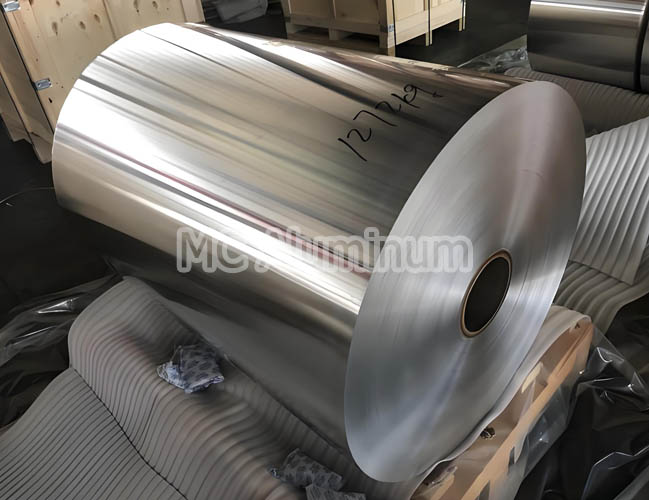
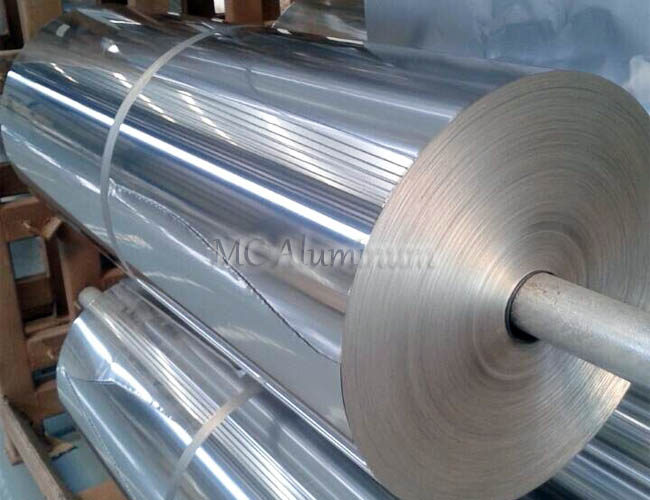
Battery Aluminum Foil
Alloy:1050, 1060, 1070, 1235, 8011
Temper:O, H18
Thickness:9–20 μm
Surface:One-side bright / two-side bright
MC Aluminum supplies high-quality 1060, 1070, and 1235 battery aluminum foil for lithium-ion batteries. Our products are ideal for electric vehicle batteries, consumer electronics, and power battery applications.
Request Quote


Battery aluminum foil is one of the core materials used as the cathode current collector in lithium-ion batteries. It is mainly applied in power batteries, energy storage batteries, and consumer lithium batteries. Its primary function is to support the cathode active material and rapidly, reliably transfer electrons generated during battery charging and discharging to the external circuit. This helps improve battery conductivity, energy density, and cycle life.
To date, battery foil production has been concentrated mainly in the Far East. China’s interest in battery foil began to grow significantly in the mid-2010s. With the rapid development of new energy vehicles, energy storage systems, and consumer electronics, demand for high-performance battery aluminum foil continues to increase.
High-quality battery aluminum foil features high electrical conductivity, high strength, excellent surface quality, good coating performance, and stable dimensional accuracy. It can meet the stringent requirements of high-speed coating, calendaring, and automated battery production lines.
As a professional aluminum foil manufacturer, MC Aluminum supplies battery aluminum foil products compliant with international standards. We support a variety of alloys, specifications, and customized services. Our products are exported to Europe, North America, Southeast Asia, the Middle East, South America, and other markets, providing reliable supply support for new energy, battery, and electronics manufacturers.
What Is Battery Aluminum Foil?
Battery aluminum foil is an ultra-thin aluminum foil produced through precision rolling, annealing, and surface treatment processes. It is usually made from high-purity aluminum alloys. It is primarily used as the cathode current collector in lithium-ion batteries, providing a stable electron transport path for cathode materials and ensuring good electrical conductivity and electrochemical stability.
Depending on the application, battery aluminum foil can be used in:
New energy vehicle power batteries
Energy storage systems (ESS)
Cylindrical lithium batteries
Prismatic lithium batteries
Pouch lithium batteries
3C consumer electronics batteries
Power tool batteries
Electric two-wheeler batteries
Materials and Alloy Grades
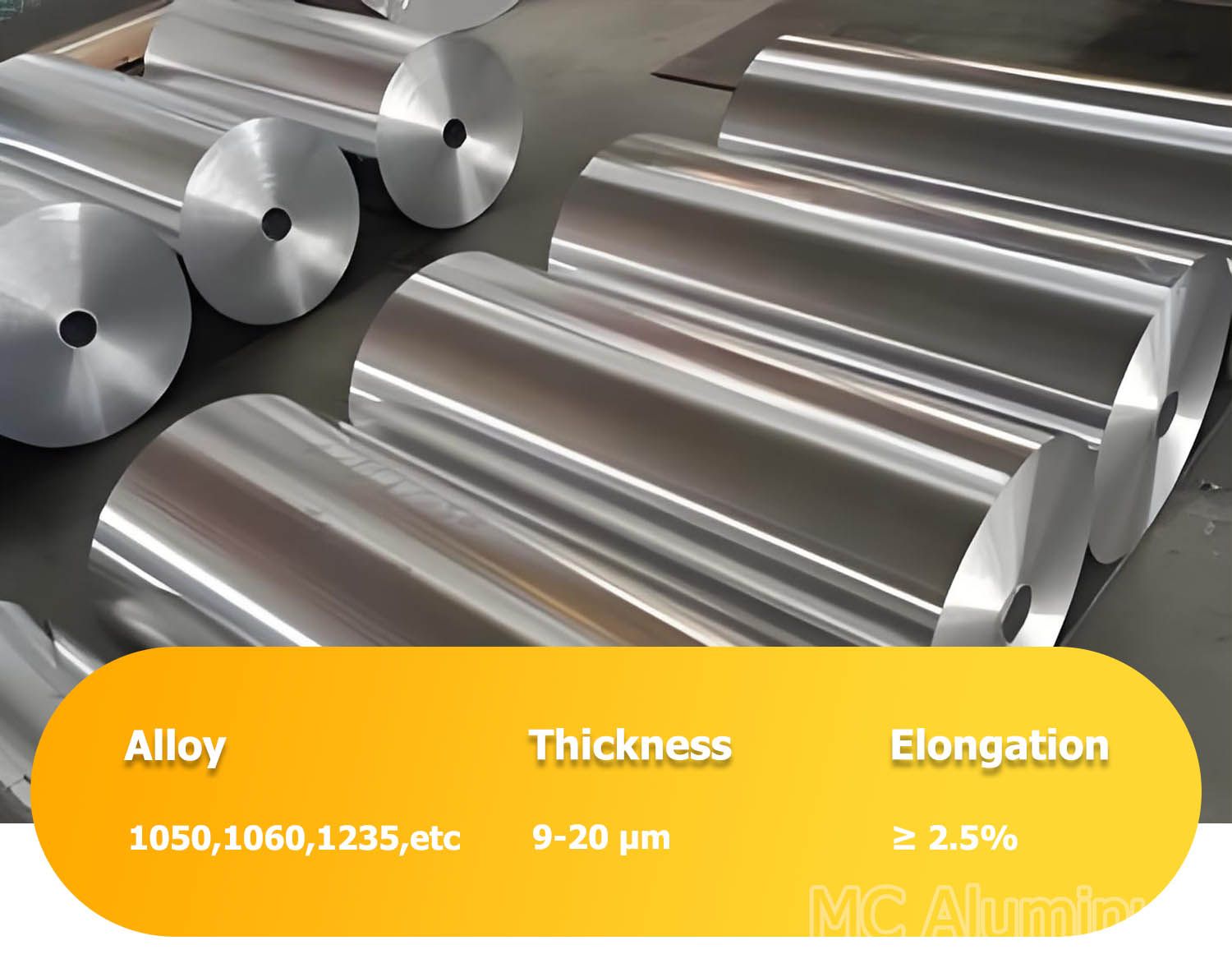
Battery aluminum foil is mainly produced from 1000-series pure aluminum alloys. These alloys have a high aluminum content, typically with purity above 99.00%. The mainstream battery foil products are generally made from 1XXX-series alloys in the hard H18 temper.
Common alloy grades include 1060, 1070, 1100, and 1235.
1060 Aluminum Foil
1060 aluminum foil contains at least 99.6% aluminum and very low levels of impurities. It offers excellent electrical conductivity, approximately 62% IACS, good ductility, and is easy to roll into ultra-thin foil. It also has strong resistance to electrolyte corrosion.
It is suitable for high-energy-density and long-cycle-life power batteries, especially where conductivity and safety are key requirements. It is one of the mainstream choices for power battery applications.
1100 Aluminum Foil
1100 aluminum foil contains at least 99.0% aluminum and a small amount of copper, generally 0.05%–0.20%. Its tensile strength can exceed 270 MPa, slightly higher than that of 1060 aluminum foil, which is typically around 230–250 MPa.
It is more suitable for thinning requirements, such as foil below 12 μm. However, its conductivity is slightly lower, approximately 59% IACS. In long-term electrolyte exposure, copper impurities may create a risk of micro-galvanic corrosion.
1070 Aluminum Foil
1070 aluminum foil has a higher aluminum content of at least 99.70%. It offers better purity, electrical conductivity, and corrosion resistance than 1060 aluminum foil, making it suitable for high-end battery systems with particularly demanding purity requirements.
1235 Aluminum Foil
1235 aluminum foil contains at least 99.35% aluminum and is widely used in battery foil applications. It offers a uniform color, clean surface, excellent flatness, tensile strength above 180 MPa, elongation above 1.5%, and wettability above 32 dynes. These properties can effectively improve the adhesion between active materials and the current collector.
In addition to 1000-series pure aluminum alloys, 3003 aluminum foil, 8011 aluminum foil, and 8021 aluminum foil may also be used in special applications or in materials associated with pouch battery packaging.
Battery Aluminum Foil Production Process
Battery aluminum foil is produced through strict melting, casting and rolling, cold rolling, foil rolling, annealing, slitting, and inspection processes.
A typical production process is as follows:
High-purity aluminum ingots/molten aluminum → Melting and composition control → Continuous casting and rolling or hot rolling → Cold rolling → Intermediate annealing → Foil rolling → Final annealing → Slitting → Quality inspection → Packaging and shipment
Main Functions of Battery Aluminum Foil in Lithium-Ion Batteries
1. Serving as the Cathode Current Collector for Electron Conduction
During charging and discharging, electrons must flow through the external circuit. Inside the battery, cathode active materials rely on the current collector to conduct electrons.
Aluminum has good conductivity, low density, and excellent processability, making it the mainstream material for lithium-ion battery cathode current collectors.
Battery aluminum foil efficiently collects electrons from the cathode coating and transfers them to the external circuit through tabs, connectors, and other components, ensuring normal battery charging and discharging.
2. Supporting the Cathode Coating
The cathode slurry must adhere stably and uniformly to the aluminum foil surface. High-quality battery aluminum foil should have suitable surface characteristics and wettability, allowing cathode slurry to be evenly coated while reducing defects such as coating skips, pinholes, streaks, powder shedding, and poor local adhesion.
If the foil has insufficient surface tension, excessive residual oil, or unstable roughness, the slurry coating may become uneven, affecting battery capacity, consistency, and cycle performance.
3. Reducing Battery Internal Resistance
The conductivity, thickness uniformity, and coating bonding condition of aluminum foil all affect the electrical resistance of the electrode sheet. High-quality battery aluminum foil can help reduce the resistance of the cathode current collector, improving rate capability and charge-discharge efficiency.
This is especially important for power batteries and large-scale energy storage batteries, where lower internal resistance helps reduce heat generation and improve stability under high-rate charging and discharging.
4. Supporting Electrode Processing and Cell Assembly
During battery manufacturing, electrode sheets undergo coating, drying, calendaring, slitting, die-cutting, winding, or stacking processes. Aluminum foil must have sufficient strength, elongation, and flexibility to meet the requirements of high-speed automated production equipment.
Insufficient tensile strength, excessive edge burrs, obvious thickness fluctuations, or unstable coil tension may lead to strip breakage, tracking deviation, wrinkling, and uneven winding, reducing production efficiency and finished-product yield.
5. Contributing to Battery Lightweighting
Aluminum has a density of approximately 2.7 g/cm³, much lower than steel. Ultra-thin battery aluminum foil can reduce the proportion of inactive material while maintaining current collection performance, creating more room for higher battery energy density.
Therefore, as electric vehicles demand longer driving range and lighter battery systems, battery aluminum foil is developing toward thinner gauges, higher strength, and greater consistency.
Battery Foil Surface Treatment Technologies
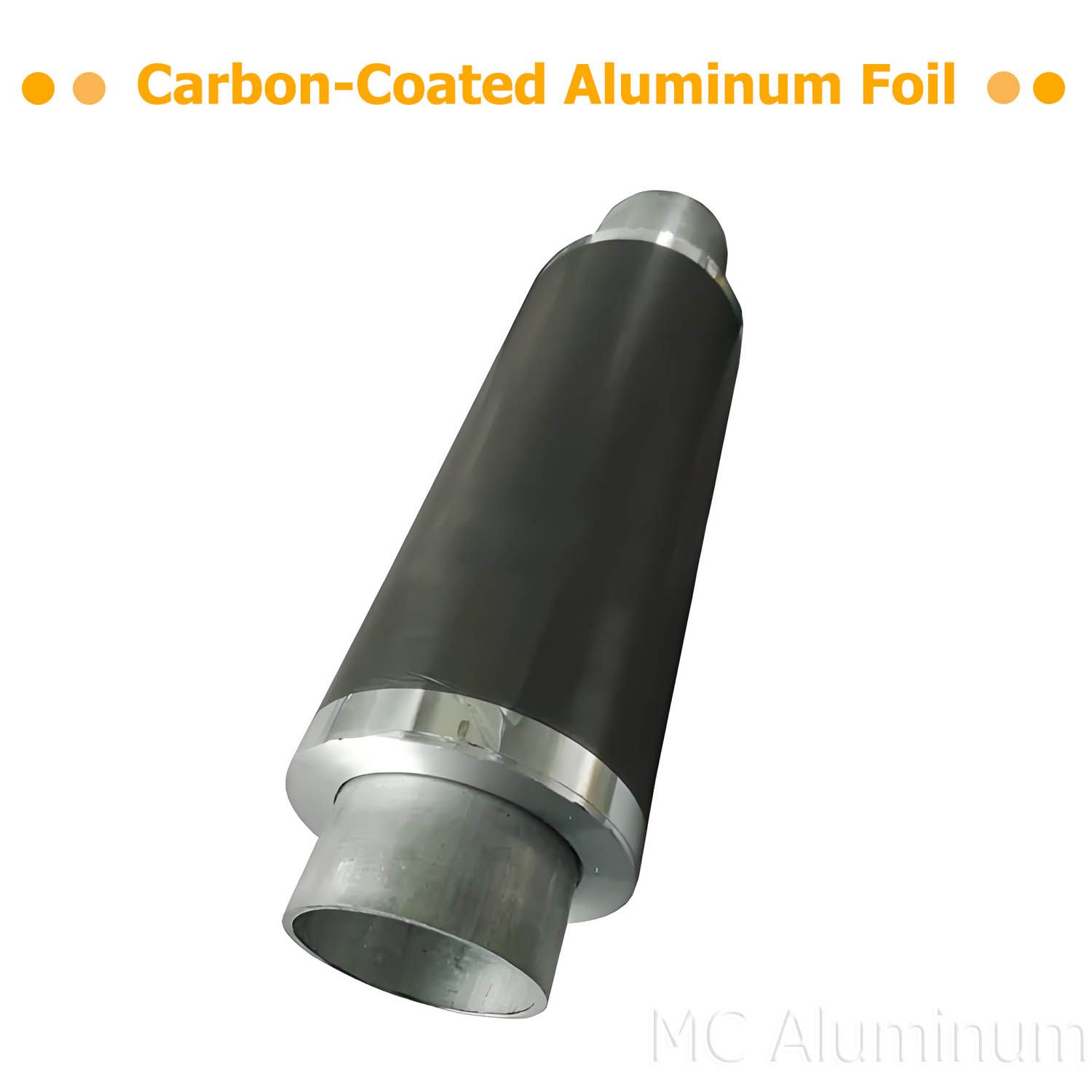
1. Carbon-Coated Aluminum Foil
Carbon-coated aluminum foil is produced by uniformly applying well-dispersed nano-conductive graphite and carbon-coated particles to the aluminum foil surface.
It provides excellent static conductivity and collects micro-currents from active materials. This significantly reduces contact resistance between the cathode material and the current collector, improves adhesion, and reduces binder consumption.
Carbon coating can significantly improve high-current discharge performance, reduce polarization, and enhance the discharge voltage platform.
2. Surface Roughening
Surface roughening increases the roughness of aluminum foil, improving mechanical anchoring strength and interfacial adhesion between the foil and active materials.
3. Composite Current Collectors
Composite current collectors use a three-layer structure of metal-polymer-metal. Materials such as biaxially oriented polyester film (BOPET), polypropylene film (BOPP), and polyimide film (PI) are used as substrates and processed through methods such as vacuum deposition.
Compared with conventional current collectors, composite current collectors offer lower metal consumption and weight reduction. Composite aluminum foil can improve energy density by approximately 4.5%.
Battery Aluminum Foil Advantage:
Why Is Aluminum Foil Commonly Used for Lithium-Ion Battery Cathodes?
In conventional lithium-ion batteries, aluminum foil is typically used as the cathode current collector, while copper foil is generally used as the anode current collector. This is mainly related to the stability of different metals under different electrochemical potential conditions.
Aluminum foil has good electrochemical stability within the operating voltage range of lithium-ion battery cathodes and can meet the requirements of most cathode chemistries.
In addition, aluminum offers the following benefits:
Good electrical conductivity
Low density, supporting battery lightweighting
Relatively controllable cost
Excellent processing performance
Suitable for ultra-thin rolling
A surface suitable for slurry coating
Good corrosion resistance
Easy slitting, stamping, welding, and laminating
However, the specific material selection should still be determined according to battery chemistry and manufacturing requirements. For certain special battery systems or high-voltage applications, carbon-coated aluminum foil, composite current collectors, or other functional current collector materials may be required.
Battery Aluminum Foil Specification:
| Item | Specification |
| Product Name | Battery Aluminum Foil |
| Alloy | 1060, 1070, 1235, 8011 |
| Temper | O, H18 |
| Thickness | 9–20 μm |
| Width | 100–1600 mm |
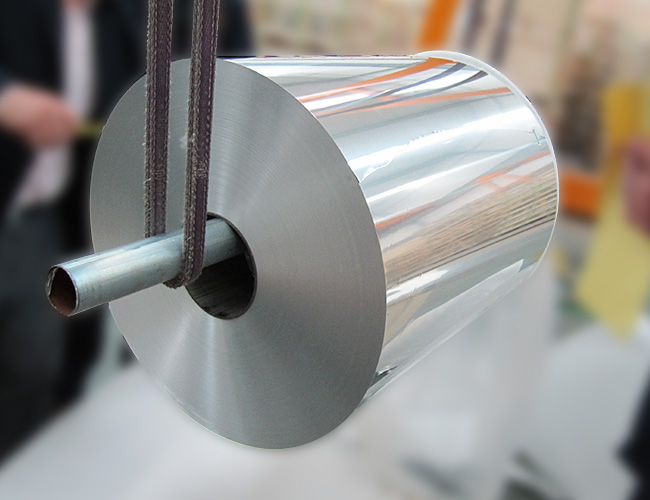
| Inner Diameter | 76 mm, 152 mm |
| Outer Diameter | According to customer requirements |
| Surface | One-side bright / two-side bright |
| Surface Quality | Free of wrinkles, oil stains, pinholes, and corrosion spots |
| Conductivity | Excellent |
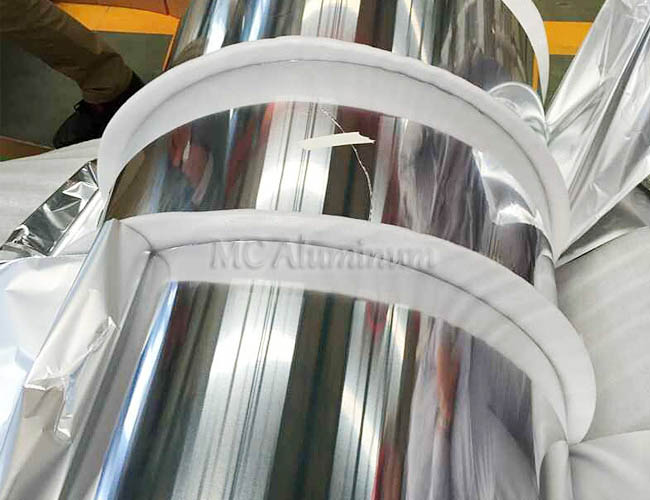
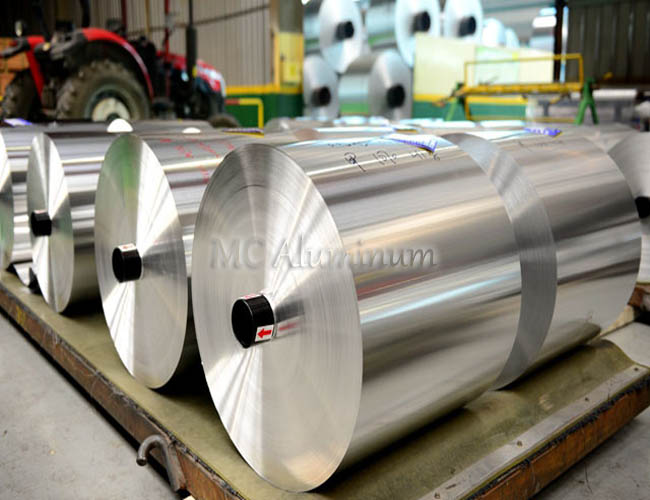
| Packaging | Dust-free, moisture-proof export packaging |
| MOQ | 3 Tons |
Mechanical Properties
| Alloy | Temper | Thickness Range (mm) | Thickness Tolerance | Tensile Strength (MPa) | Elongation | Dyne Value |
| 1235 | H18 | 0.012–0.016 | ±3% | 170–200 | ≥1.2% | ≥31 |
| 1235 | H18 | 0.0161–0.020 | ±3% | 170–200 | ≥1.4% | ≥31 |
| 1235 | H18 | 0.021–0.035 | ±3% | 170–200 | ≥1.6% | ≥31 |
| 1060 | H18 | 0.012–0.016 | ±3% | 165–190 | ≥1.2% | ≥31 |
| 1070 | H18 | 0.012–0.016 | ±3% | ≥180 | ≥1.2% | ≥31 |
Application of Battery Aluminum Foil:
1. Power Batteries
Battery aluminum foil is widely used as the cathode current collector in ternary lithium batteries and lithium iron phosphate batteries for new energy vehicles. Together with cathode materials such as lithium iron phosphate, lithium cobalt oxide, and lithium manganese oxide, aluminum foil forms the cathode section of lithium-ion batteries.
As power batteries continue to demand higher energy density and better safety, performance requirements for battery aluminum foil are also increasing.
2. Energy Storage Systems
Battery aluminum foil is used in battery packs for large-scale energy storage power stations and residential energy storage equipment. Energy storage cells are rapidly moving toward larger capacities, expanding from conventional 280 Ah cells to 314 Ah cells.
3. 3C Consumer Electronics
It is used in lightweight, high-capacity batteries for smartphones, laptop computers, tablets, and other consumer electronic devices.
4. Sodium-Ion Batteries
In sodium-ion batteries, aluminum foil can be used as both the cathode and anode current collector. This results in higher aluminum foil consumption per battery and further expands market potential.
5. Battery Pouches
8021 aluminum foil offers excellent deep-drawing performance, electrolyte corrosion resistance, and high heat-sealing strength. It is therefore the preferred material for pouch battery aluminum foil.
Relevant products can comply with GB/T 22648-2023, Aluminum Foil for Aluminum-Plastic Composite Tubes and Battery Pouches.
Packing & Delivery:
Quality Requirements for Aluminum Battery Foil
Compared with conventional aluminum foil, battery aluminum foil has much stricter requirements for the following key properties.
1. Thickness and Precision
The mainstream thickness of battery aluminum foil is 10–20 μm, and the industry is moving toward thinner gauges of 8 μm and even 6 μm. Thickness deviation is generally required to be controlled within ±2%.
Thickness control and flatness directly affect lithium battery charge-discharge efficiency and long-term reliability.
2. Mechanical Properties
Battery aluminum foil generally requires both high tensile strength and good elongation. Standard-grade foil commonly requires tensile strength of at least 160–180 MPa. Power battery aluminum foil generally requires tensile strength of at least 180 MPa, while some applications may require 200 MPa, or even 300 MPa.
To meet downstream processing requirements, elongation is often required to be at least 3%.
3. Surface Wettability: Dyne Value
Surface wettability is commonly measured by dyne value. To ensure coating quality, the surface dyne value is generally required to be at least 32 mN/m, while some applications require 36 mN/m.
The surface wetting tension of composite aluminum foil should not be lower than 38 × 10⁻³ N/m.
4. Surface Cleanliness
Battery aluminum foil has extremely stringent requirements for surface cleanliness:
Aluminum ash, iron particles, black oil lines, bright spots on matte surfaces, and similar defects are not permitted.
Surface pits larger than 1 mm in diameter are not allowed.
Pits between 0.5 mm and 1 mm must be fewer than 3 per square meter, and pits around 0.5 mm must not occur in clusters.
Foreign materials such as aluminum powder and iron powder must be strictly controlled, for example, to ≤50 mg per 300,000 m². Cross-section aluminum powder, tested by the adhesive tape method, should be no more than 25 particles per 10 cm.
Pinhole diameter should not exceed 400 μm.
5. Flatness and Edge Quality
Flatness is a critical technical indicator and must be precisely controlled, such as ≤10 I-units. Edge quality requirements are also high: no edge cracking or burrs are permitted. Under no tension, the edge wave height should be no more than 2 mm.
6. Production Environment
Battery aluminum foil should be manufactured in high-standard clean workshops to ensure exceptional surface cleanliness.
FAQ
Q1: What is battery aluminum foil mainly used for?
A: It is mainly used as the cathode current collector in lithium-ion batteries and is widely applied in new energy vehicle power batteries, energy storage batteries, and consumer electronics batteries.
Q2: What thicknesses are commonly available?
A: Common thicknesses include 9 μm, 10 μm, 12 μm, 15 μm, 16 μm, and 20 μm. Customized thicknesses are also available according to customer requirements.
Q3: What alloys are commonly used?
A: Common alloys include 1060, 1070, 1235, and 8011. Among them, 1235 and 8011 are widely used in power battery and energy storage battery applications.
Q4: Are customized specifications available?
A: Yes. We can provide customized thicknesses, widths, coil diameters, and packaging methods to meet the requirements of automated production lines.
Q5: How do you ensure product quality?
A: We use high-purity raw materials and advanced production processes, supported by a strict quality control system. This ensures stable electrical conductivity, dimensional accuracy, and surface quality for every batch of products.
informaer
Contact Us
Address
- Xin'an Industrial, Luoyang,Henan Province,China
- sales@alummc.com alummc@hotmail.com