
In air conditioners, heat pumps, chillers, refrigeration equipment, and automotive air-conditioning systems, heat exchangers are essential components responsible for cooling, heating, and energy transfer. As an important part of the heat exchanger, heat dissipation fins directly affect heat exchange efficiency, energy consumption, operating noise, service life, and corrosion resistance.
Among various aluminum alloy materials, 3003 H24 aluminum foil has become one of the most widely used materials for air-conditioning heat dissipation fins due to its balanced mechanical properties, excellent formability, and reliable corrosion resistance.
Product Introduction
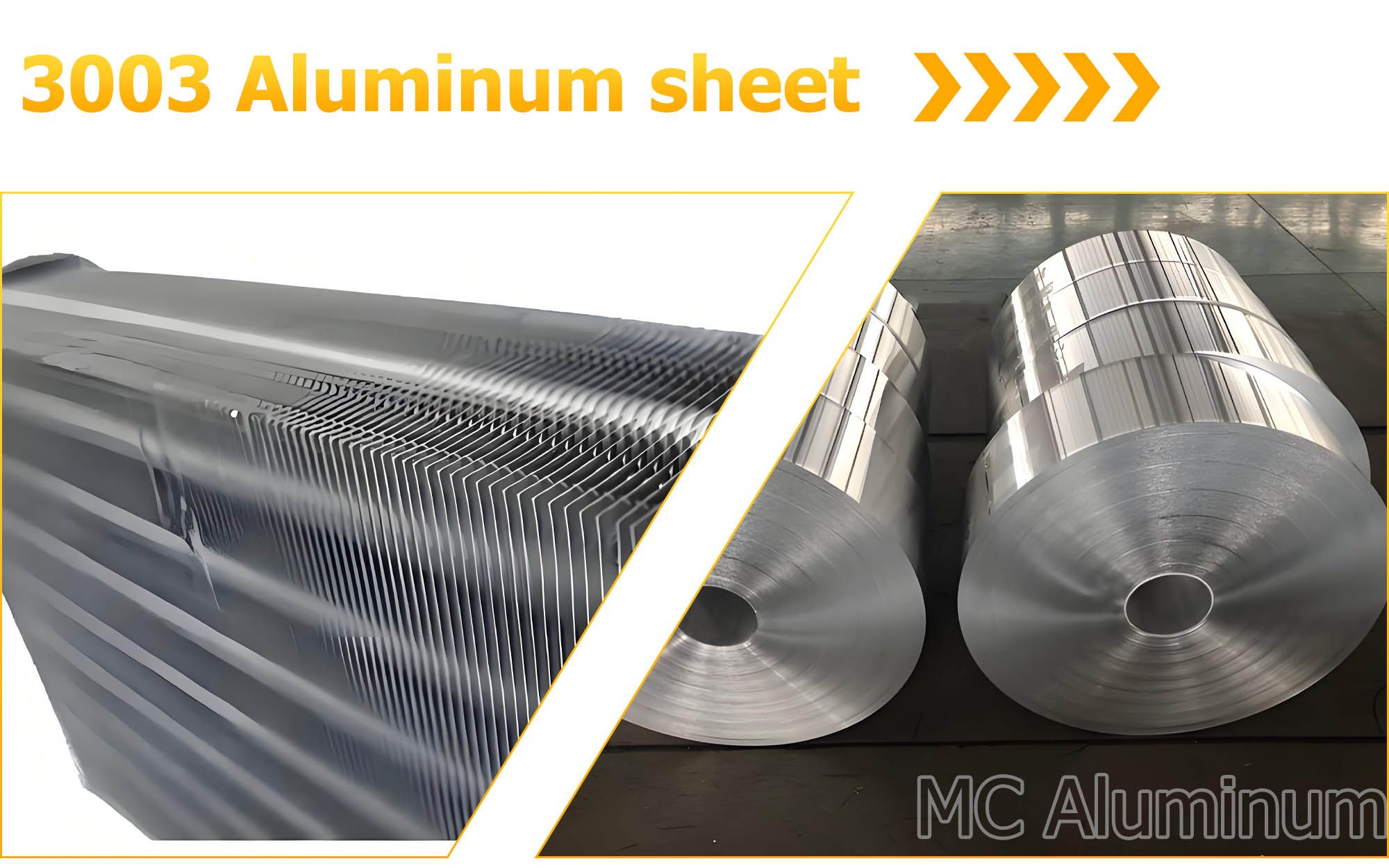
3003 aluminum foil is an aluminum-manganese alloy containing approximately 1.0%–1.5% manganese. It has higher strength than pure aluminum and is processed through rolling, annealing, leveling, slitting, and other production processes. It is mainly used to manufacture fins in air-conditioning heat exchangers.
The H24 temper generally refers to a material that has been strain-hardened and then partially annealed. It offers moderate strength, good elongation, and stable stamping and forming performance.
Compared with pure aluminum, 3003 aluminum alloy has higher mechanical strength. Compared with certain high-strength aluminum alloys, 3003 H24 retains excellent formability and ductility. Therefore, it is highly suitable for continuous stamping, drawing, flanging, and high-speed fin forming processes.
"Fins" are thin sheet structures installed around copper tubes, aluminum tubes, or other heat exchange tubes. By increasing the contact area between air and the heat exchanger, fins improve heat transfer efficiency and enable air-conditioning equipment to complete cooling or heating cycles more effectively.
The Role of 3003 H24 Aluminum Foil in Air-Conditioning Heat Exchangers
1. Increasing Heat Exchange Area
Fins significantly expand the contact area between the heat exchanger and the surrounding air. Compared with relying only on heat exchange tubes, densely and uniformly arranged aluminum fins can substantially improve heat transfer efficiency.
2. Improving Cooling and Heating Efficiency
Fin thickness, spacing, corrugation shape, louver design, and surface treatment all influence airflow and heat exchange performance. High-quality 3003 H24 fin aluminum foil provides excellent processing consistency, helping manufacturers produce heat exchange fins with uniform structures and stable dimensions, thereby improving the overall performance of air-conditioning systems.
3. Ensuring Stability During High-Speed Stamping
Air-conditioning fins are usually formed through continuous high-speed stamping. This process requires materials with suitable strength, elongation, thickness uniformity, surface quality, and lubrication performance.
3003 H24 aluminum foil provides a good balance between strength and formability, reducing the risk of cracking, wrinkling, burr formation, and strip breakage during stamping.
4. Supporting Lightweight Equipment Design
Aluminum has a relatively low density—approximately one-third that of steel. The use of aluminum alloy fins can effectively reduce the weight of heat exchangers, supporting lightweight designs for indoor units, outdoor units, heat pump systems, and transport refrigeration equipment.
5. Enhancing Corrosion Resistance
Air-conditioning heat exchangers are often exposed to humid conditions, repeated heating and cooling cycles, condensate, dust, and certain corrosive gases. 3003 aluminum alloy itself has good atmospheric corrosion resistance. When combined with hydrophilic coatings, anti-corrosion coatings, or special surface treatments, its corrosion resistance and service life can be further improved.
Product Specifications
| Item | Specification |
| Alloy | 3003 |
| Temper | H24 |
| Thickness | 0.08-0.2mm |
| Width | 100-1400mm |
| Length | 1000-16000mm |
| Inner Diameter | 150 mm / 300 mm / Customized |
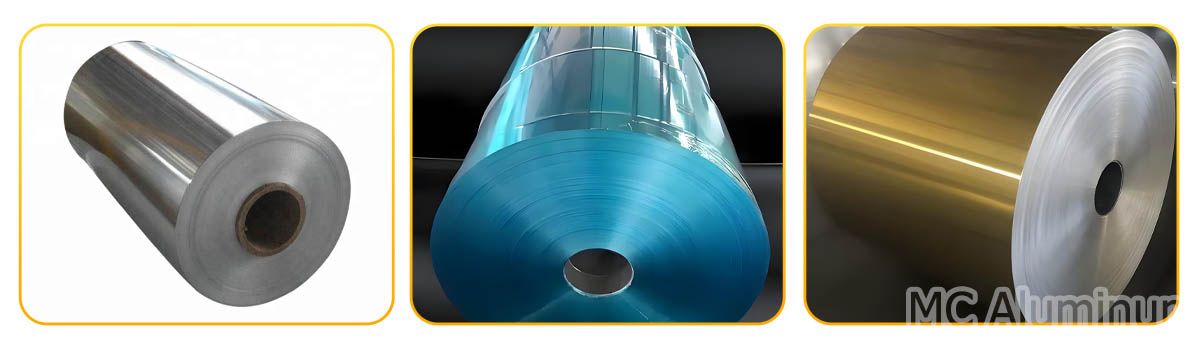
| Surface | Mill Finish, Hydrophilic Coated, Blue Fin, Gold Fin |
| Tensile Strength | Customized according to application |
| Standard | ASTM, EN, GB |
Mechanical Properties
| Tensile Strength | ≥180 MPa |
| Yield Strength | ≥145 MPa |
| Elongation | ≥12% |
| Electrical Resistivity | Approximately 35 nΩ·m |
| Density | Approximately 2.7 g/cm³ |
Why Choose 3003 H24 Aluminum Foil for Heat Dissipation Fins?
1. Lightweight with Good Strength
Lightweight: Aluminum has a density of only about one-third of steel, reducing the total weight of air-conditioning units and making installation and transportation easier.
Good strength: In the H24 temper, 3003 aluminum alloy provides reliable mechanical strength and can withstand mechanical stress and vibration during operation.
2. Excellent Thermal Conductivity
Aluminum has a thermal conductivity of approximately 160 W/(m·K), much higher than steel at around 50 W/(m·K). It can quickly transfer heat to the fin surface for efficient heat dissipation.
Although the thermal conductivity of 3003 aluminum alloy is slightly lower than that of high-purity aluminum, its heat dissipation potential can be fully utilized through optimized fin designs, such as increased fin spacing or corrugated structures.
3. Excellent Corrosion Resistance
The manganese contained in 3003 aluminum alloy helps form a dense oxide film on the aluminum surface, effectively resisting corrosion from atmospheric exposure, moisture, and industrial pollutants.
Even in humid environments, such as outdoor air-conditioning units, the material can maintain stable performance and help extend equipment service life.
4. Good Formability
3003 H24 aluminum foil has excellent plasticity and can be easily processed into heat dissipation fins through the following methods:
Stamping: Cutting and stamping aluminum foil into the required fin shape.
Embossing: Creating corrugations or grooves on the fin surface to increase heat transfer area and improve airflow.
Coating: Applying anti-corrosion or highly reflective coatings to improve oxidation resistance and appearance.
5. Significant Cost Effectiveness
Compared with stainless steel or copper, 3003 aluminum alloy has lower material costs and is suitable for large-scale production.
Its processing technology is mature and production cycles are relatively short, helping reduce the overall manufacturing cost of air-conditioning equipment.
Surface Treatment Options
To improve heat exchanger performance and corrosion resistance, 3003 H24 aluminum foil can be supplied with different surface treatments.
1. Bare Aluminum Foil
Bare aluminum foil is suitable for standard indoor air-conditioning applications.
Advantages include:
Excellent thermal conductivity
Lower production cost
Easy processing
2. Hydrophilic Aluminum Foil
Hydrophilic coatings help condensate spread evenly across the fin surface.
Benefits include:
Faster condensate drainage
Reduced airflow resistance
Improved cooling efficiency
Lower operating noise
Hydrophilic aluminum foil is widely used in residential and commercial air-conditioning systems.
3. Blue Hydrophilic Aluminum Foil
Blue-coated fin foil offers the following features:
Enhanced corrosion resistance
Improved appearance
Longer equipment service life
Better antibacterial performance
4. Gold Hydrophilic Aluminum Foil
Gold fin coatings provide superior protection against:
Salt spray corrosion
Acidic environments
Industrial pollution
They are particularly suitable for coastal areas and tropical climates.
5. Hydrophobic, Self-Lubricating, and Anti-Mildew Coatings
Functional coating solutions can also be developed for specific application environments and performance requirements.
Production Process and Quality Control
The production of 3003 H24 aluminum foil generally follows a process route of continuous casting and rolling, cold rolling, and annealing.
The main production steps include melting, furnace refining, alloying, holding, online purification and filtration, continuous casting and rolling, cold rolling, homogenization annealing, intermediate annealing, recoiling, edge trimming, inspection, and packaging.
Among these processes, annealing is particularly important to final product performance. Proper temperature and time settings can not only improve production efficiency but also ensure a fine microstructure and excellent overall performance of the aluminum foil.
In terms of quality control, thickness tolerances are tightly controlled at the micron level. Precision tension leveling is used to ensure excellent flatness, creating a strong foundation for consistent fin height and fin pitch during subsequent fin forming.
3003 aluminum foil generally complies with standards such as GB/T 3880 and ASTM B209.
Applications
Residential and Commercial Air Conditioners
3003 non-clad aluminum foil is widely used for outdoor-unit heat exchange fins, offering a balance of heat dissipation efficiency and long-term weather resistance. As a heat-conducting fin material for heat exchangers, air-conditioner aluminum foil features low density, good thermal conductivity, easy processability, odor-free performance, environmental friendliness, and cost advantages.
Automotive Air Conditioners
In automotive heat exchange systems, 3003 alloy foil is a basic material for manufacturing radiator fins used in automotive air-conditioning systems. The automotive industry often requires high-strength air-conditioner fin foil with a typical thickness of 0.06–0.10 mm, maintaining good yield strength and resistance to thermal deformation even at relatively thin gauges.
Heaters and Industrial Heat Dissipation
3003 aluminum alloy coil is also used in heater heat dissipation equipment, electronic equipment cooling, transformer cooling, and similar applications. Fin material with a thickness of 0.1–0.2 mm can support compact equipment design.