
Among the many materials used in lithium batteries, cathode materials, anode materials, electrolytes, and separators are often regarded as the "four key materials." However, there is another ultra-thin material that quietly supports the operation of the entire battery—aluminum foil.
As the cathode current collector in lithium batteries, aluminum foil accounts for only around 3% of the total battery cost, yet it performs essential functions: collecting current, conducting electrons, and supporting active materials. Behind this seemingly simple foil, the 99.5% purity threshold is a key factor that can influence battery performance, consistency, and service life.
What Role Does Aluminum Foil Play in Lithium Batteries?
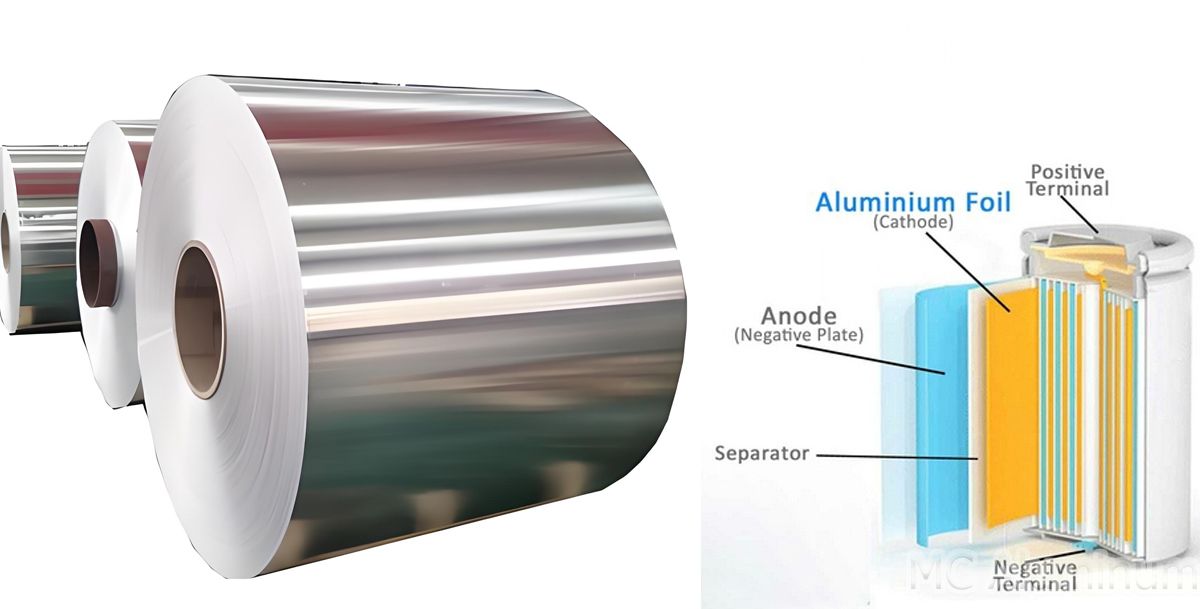
The cathode of a lithium battery is formed by coating active materials—such as lithium iron phosphate (LFP) or ternary cathode materials—onto the surface of aluminum foil. In this structure, aluminum foil functions as the current collector. Its role is to efficiently collect electrons generated during electrochemical reactions and transfer them to the external circuit, enabling the conversion of chemical energy into electrical energy.
Lithium battery cathodes operate at relatively high potentials. Copper can be oxidized under high-voltage conditions, making it unsuitable as a cathode current collector. Aluminum, however, naturally forms a dense oxide layer on its surface. This layer helps aluminum resist corrosion at high potentials and remain stable throughout the cathode operating voltage range.
Conversely, aluminum can alloy with lithium at low potentials, so it cannot be used as an anode current collector. Copper foil is therefore commonly used for lithium battery anodes. The principle of using aluminum for the cathode and copper for the anode is one of the fundamental design rules in lithium-ion battery engineering.
Understanding High Purity 99.5% Aluminum Foil
High purity 99.5% aluminum foil refers to industrial pure aluminum foil with an aluminum content of approximately 99.5% or higher. Compared with ordinary industrial aluminum materials, it contains a higher percentage of aluminum and relatively fewer alloying elements. As a result, it offers good electrical conductivity, formability, ductility, and corrosion resistance.
A higher aluminum purity helps ensure stable conductivity, flexibility, and surface performance. In the lithium battery industry, battery aluminum foil is commonly produced from 1xxx series aluminum alloys, including 1050, 1060, and 1070 aluminum foil.
Compared with conventional industrial aluminum foil, lithium battery aluminum foil requires much stricter quality control. In addition to high purity and good conductivity, it must meet demanding requirements for ultra-thin gauge, excellent flatness, low pinhole rate, suitable surface tension, and stable mechanical properties.
Why Is 99.5% Aluminum Foil Suitable for Lithium Batteries?
1. Good Electrical Conductivity
Aluminum has good electrical conductivity and can effectively reduce the resistance of the current collector itself. This provides a stable electron transport path inside the battery and supports efficient charging and discharging performance.
2. High Material Purity
An aluminum content of 99.5% indicates a relatively high purity level. Impurity elements may affect the grain structure, mechanical properties, electrical conductivity, rolling performance, and surface treatment behavior of aluminum foil.
Therefore, stable chemical composition control is an important foundation for manufacturing battery-grade aluminum foil.
3. Excellent Ductility
Aluminum has good plasticity and ductility. It can be processed into thin-gauge foil through casting and rolling, hot rolling, cold rolling, foil rolling, and slitting processes.
This excellent formability makes aluminum foil suitable for high-speed coating, calendering, slitting, winding, and other battery electrode manufacturing operations.
4. Good Corrosion Resistance
Aluminum naturally forms a dense oxide film when exposed to air. This protective oxide layer helps protect the base metal and improves its corrosion resistance to a certain extent.
This characteristic allows aluminum foil to maintain stable performance in the high-potential operating environment of lithium battery cathodes.
5. Lightweight Material for Battery Weight Reduction
The density of aluminum is significantly lower than that of copper. Therefore, using aluminum foil as a cathode current collector can reduce the weight of the current collector while meeting the structural and conductive requirements of the battery.
This lightweight advantage is especially valuable for electric vehicles, portable electronics, energy storage systems, and small power equipment.
6. Good Thermal Stability
High purity aluminum foil demonstrates good thermal stability under elevated-temperature conditions, helping support stable battery manufacturing and operation.
Aluminum Alloy Options for 99.5% Battery Aluminum Foil
| Alloy Grade | Typical Aluminum Content | Common Temper | Main Characteristics | Lithium Battery Applications |
| 1235 | ≥99.35% | H18 | High purity, good conductivity, excellent ductility and rolling performance | Cathode current collectors, battery aluminum foil |
| 1060 | ≥99.60% | H18, O | High purity, excellent electrical conductivity, good corrosion resistance | Lithium battery cathode current collectors |
| 1070 | ≥99.70% | H18, O | Higher purity, good conductivity, excellent processing performance | High-requirement battery aluminum foil |
| 1050 | ≥99.50% | H18, O | High purity, good elongation, reliable electrical conductivity | Selected battery and industrial foil applications |
Battery Aluminum Foil Specifications
| Item | Typical Specification / Range |
| Product | Lithium Battery Aluminum Foil |
| Alloy Grade | 1235 / 1050 / 1060 / 1070 |
| Aluminum Content | ≥99.5% depending on alloy grade |
| Temper | H18 / O |
| Thickness | 10–50 μm |
| Width | 100–1600 mm |
| Length | Jumbo Roll |
| Thickness Tolerance | According to customer technical requirements |
| Width Tolerance | According to customer technical requirements |
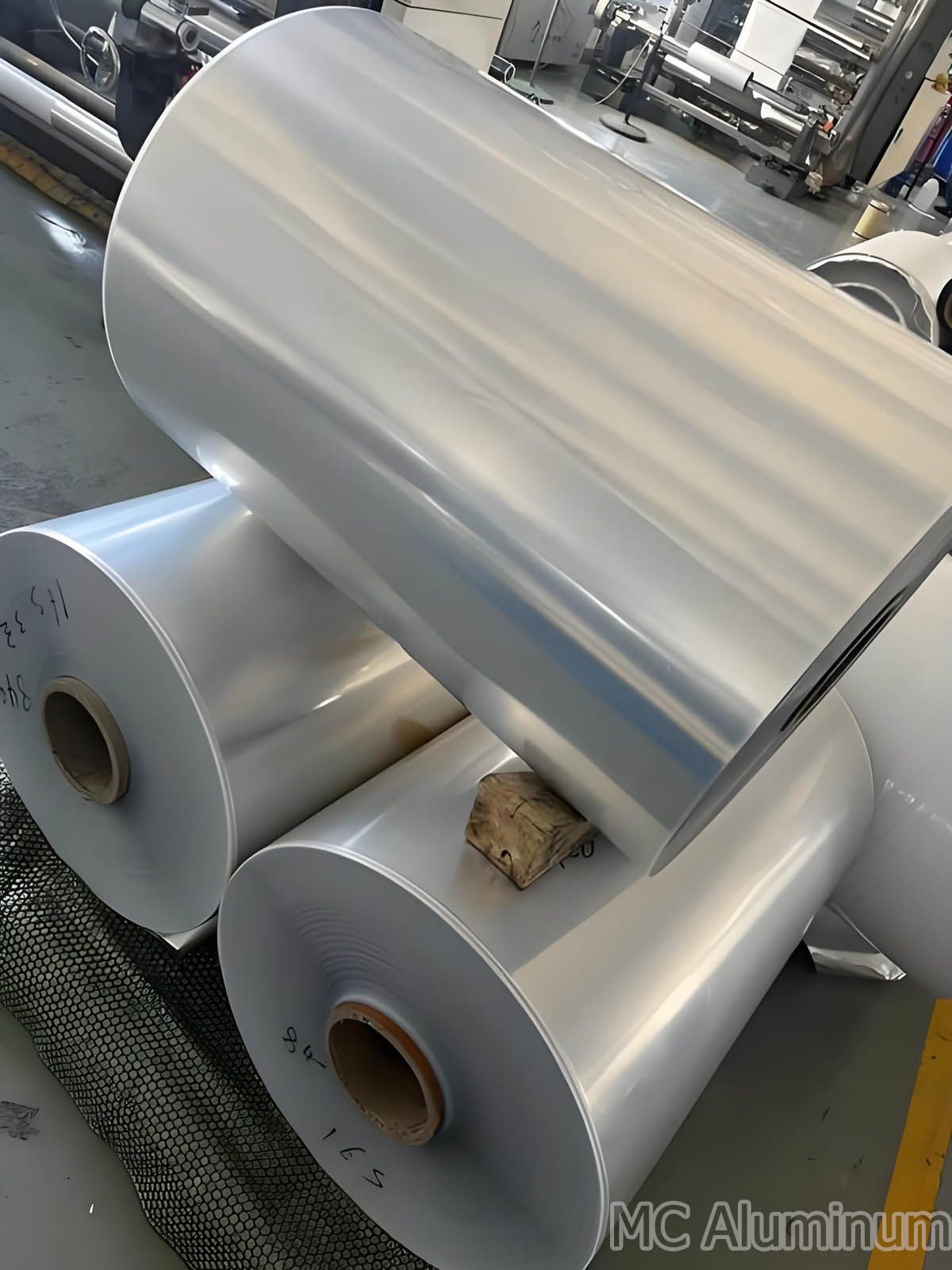
| Surface | Bright, clean, and flat |
| Main Application | Lithium battery cathode current collector |
| Processing Method | Cold rolling, foil rolling, slitting |
| Packaging | Wooden case / pallet / moisture-proof packaging |
| MOQ | 3 tons |
Key Performance Requirements for Lithium Battery Aluminum Foil
1. Thickness Accuracy
Battery aluminum foil is generally produced in thin gauges. Thickness uniformity directly affects the basis weight per unit area, coating consistency, and cell-to-cell uniformity.
If there are excessive transverse or longitudinal thickness variations, the following issues may occur:
Difficulty in controlling coating weight;
Uneven electrode thickness;
Reduced calendering process stability;
Lower battery cell consistency;
Reduced material utilization efficiency.
For this reason, high-precision rolling and online thickness measurement are important parts of battery aluminum foil production.
2. Surface Quality
Lithium battery aluminum foil typically requires a clean, flat, and low-oil surface.
Common defects that need to be controlled include:
Scratches;
Dents;
Pits;
Black spots;
Oxidation marks;
Oil contamination;
Blisters;
Severe waviness;
Edge cracks.
Good surface quality provides a stable foundation for the uniform coating of cathode slurry.
3. Pinhole Control
Pinhole count is an important quality indicator for thin-gauge aluminum foil.
If the foil contains too many pinholes or excessively large pinholes, it may affect material integrity and create problems during coating, slitting, and battery manufacturing.
Therefore, battery-grade aluminum foil production requires strict raw material cleanliness control, optimized rolling processes, and thorough inspection procedures to minimize pinhole defects.
4. Tensile Strength and Elongation
Aluminum foil must have appropriate tensile strength and elongation to ensure smooth operation on high-speed production lines.
If the strength is too low, foil breakage may occur during high-speed coating or slitting. If the ductility is insufficient, the risk of cracking during processing may increase.
Therefore, tensile strength and elongation should be properly matched to the specific battery electrode manufacturing process.
5. Edge Quality
Battery aluminum foil is often subjected to high-speed slitting during downstream processing, making edge quality especially important.
Stable rolling and precise slitting processes can reduce burrs, edge cracks, and edge curling, thereby improving the production efficiency of battery electrode sheets.
Main Applications of 99.5% Aluminum Foil in Lithium Batteries
Lithium-ion battery cathode current collector: In a typical lithium-ion battery structure, the cathode active material is coated onto aluminum foil, which serves the dual functions of providing mechanical support and collecting electric current.
1. Consumer lithium batteries: Used in mobile phones, laptops, portable power stations, and small digital device batteries; characterized by stable demand and cost sensitivity, 99.5% high-purity aluminum foil meets all performance requirements and sees widespread application.
2. Certain energy storage batteries: Cells for large-scale energy storage stations; many manufacturers select this specification of aluminum foil to balance cycle life and cost.
3. Specialized power sources and small-scale motive power equipment: Batteries for two-wheeled vehicles, robots, etc.
4. Can also serve as a substrate for carbon-coated aluminum foil: A conductive carbon layer is applied to the aluminum foil surface to further reduce interfacial impedance and enhance the adhesion of the electrode coating, making it suitable for high-performance battery cells.