
With the rapid development of new energy vehicles, consumer electronics, energy storage systems, and related industries, battery technology has become an essential part of the modern energy system. When people focus on battery capacity, charging speed, cycle life, and safety performance, they often overlook one seemingly ordinary but critically important component: battery packaging materials.
Especially in pouch-type lithium-ion batteries, aluminum foil is not merely an "outer package." It is an important functional layer responsible for isolating the battery from the external environment, preventing leakage, improving safety, and extending service life. A high-performance aluminum foil composite packaging material is therefore an important foundation for the long-term stable operation of battery cells.
What Is Aluminum Foil for Battery Packaging?
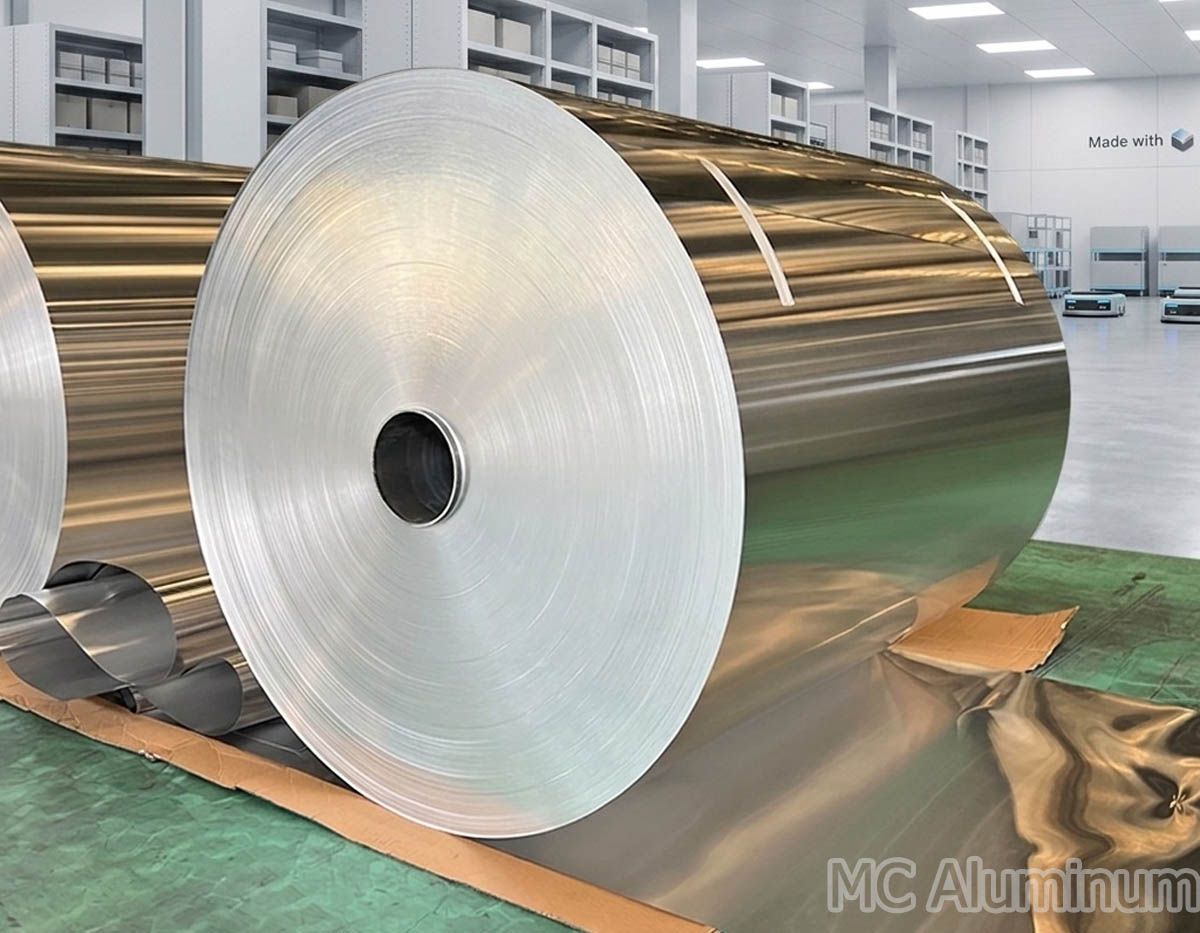
Battery packaging aluminum foil generally refers to aluminum foil used in the external sealing structure of batteries. Its most typical application is in the aluminum-plastic composite film used for pouch-type lithium-ion batteries, also known as Aluminum Plastic Film (APF).
Unlike conventional metal battery cases, pouch batteries generally use multilayer composite films as packaging materials. Within this structure, aluminum foil serves as the core barrier layer, while other polymer films provide external protection, electrical insulation, heat sealing, and bonding functions.
The most commonly used aluminum foil alloys for battery packaging include 8021, 8079, and 8011. Among them, 8021 and 8079 aluminum foil are widely used in aluminum-plastic films for high-end pouch lithium batteries because of their excellent deep-drawing performance, flexibility, and barrier properties.
A typical aluminum-plastic composite film generally consists of the following three functional layers:
1. Outer Protective Film
The outer layer is commonly made of nylon (PA) or other suitable polymer materials. It mainly provides abrasion resistance, puncture resistance, and mechanical protection, helping the packaging film withstand external stress during forming and use.
2. Intermediate Aluminum Foil Barrier Layer
As the key functional layer of the composite film, aluminum foil effectively blocks moisture, oxygen, and other external substances, reducing the risk of battery internal materials being affected by the environment.
3. Inner Heat-Sealing Layer
The inner layer is usually made of polypropylene (PP) or modified polyolefin materials. It faces the inside of the battery, provides heat-sealing performance, and offers the chemical resistance required for contact with the electrolyte.
These materials are combined through adhesives or other lamination processes to form a multifunctional packaging structure. The number of layers, material systems, and thickness configurations may vary among manufacturers. The specific design should be determined according to battery type, forming depth, and operating environment.
Core Functions of Aluminum Foil in Battery Packaging
1. Protection of Electrode Materials
In rechargeable batteries such as lithium-ion batteries, aluminum foil is commonly used as the current collector for the positive electrode. It provides the following advantages:
Electrical conductivity: As a current collector for the positive electrode, aluminum foil efficiently collects the current generated by electrode materials and transfers it to the external circuit.
Stability: Aluminum foil has good stability in battery electrolytes and generally does not react with the electrolyte under normal operating conditions, helping protect electrode materials from damage.
Thinness: The thin profile of aluminum foil can reduce the overall thickness of the battery and improve energy density.
2. Support for Anode Materials
In certain battery types, aluminum foil may also be used to support anode materials. For example, in aluminum-air batteries, aluminum foil itself is the main anode material.
Reaction surface: Aluminum foil provides a large reaction surface area, which is beneficial to oxidation reactions.
Structural support: Aluminum foil provides structural support for anode materials and helps prevent deformation during use.
3. Electrolyte Isolation
In batteries, the electrolyte is the conductive medium, but it can also cause corrosion to certain electrode materials. Aluminum foil can function as an isolation layer in specific battery structures.
Protective function: Aluminum foil can help prevent undesirable direct contact between electrolyte components and certain battery materials, reducing corrosion and degradation risks.
Selective permeability: Certain specially designed foil-based materials may offer selective permeability, allowing ions to pass while limiting the entry of impurities.
4. Thermal Management
Batteries generate heat during operation, and excessive temperature can negatively affect battery performance and safety. Aluminum foil can contribute to thermal management in the following ways:
Heat dissipation: Aluminum foil has good thermal conductivity and can help transfer heat generated by the battery outward, assisting the battery in remaining within a safer operating temperature range.
Heat reflection: The reflective surface of aluminum foil can reduce heat absorption on the battery surface and help lower battery temperature.
5. Anti-Static and Electric Field Protection
During use, batteries may generate static electricity or be exposed to electric fields, which can affect performance and safety. Aluminum foil can provide anti-static and electric field protection.
Conductivity: The conductivity of aluminum foil can help guide static charge or electric fields away, reducing the risks associated with electrostatic discharge or electrical interference.
Shielding effect: Aluminum foil can form an electromagnetic shielding layer, helping protect batteries from external electromagnetic interference.
6. Safety Protection
Under extreme conditions, batteries may encounter safety issues such as overheating, overvoltage, or short circuits. Aluminum foil can provide certain protective benefits:
Circuit interruption effect: At extremely high temperatures, aluminum foil may melt or lose structural integrity, potentially contributing to circuit interruption and helping limit dangerous reactions.
Flame resistance: Aluminum foil itself is nonflammable and can help slow the spread of flames, providing an additional degree of protection in fire-related situations.
7. Barrier Properties
Moisture is extremely sensitive to lithium-ion batteries. Moisture-related reactions can corrode electrode materials and current collectors, reduce battery capacity, increase internal resistance, and even cause swelling, electrolyte leakage, or safety incidents.
Aluminum foil provides excellent moisture-vapor and oxygen barrier properties. Compared with ordinary plastic films, the dense metal aluminum layer can almost completely block the permeation of water vapor and oxygen, creating a more stable internal environment for the battery cell.
Specifications of Battery Packaging Aluminum Foil
| Item | Typical Specification |
| Alloy | 8021, 8079, 8011, 1235 |
| Temper | O, H18 |
| Thickness | 0.025 mm–0.055 mm |
| Width | 100 mm–1600 mm |
| Length | 1000 mm–16000 mm |
| Thickness tolerance | Usually controlled within ±3% to ±5% |
| Coil inner diameter | 150 mm, 300 mm, 505 mm, etc. |
| Coil outer diameter | Usually no more than 1000 mm–1200 mm |
| Coil weight | 100 kg–5000 kg |
| Surface condition | Flat, clean, oil-free, without obvious scratches |
| MOQ | 1–3 tons |
Applications of Aluminum Foil in Different Battery Types
1. Lithium-Ion Batteries
Lithium-ion batteries are among the most widely used rechargeable battery types today. In lithium-ion batteries, aluminum foil is commonly used as the positive electrode current collector.
Cathode materials: Positive electrode materials usually include metal oxides such as lithium cobalt oxide (LiCoO₂) and lithium iron phosphate (LiFePO₄). These materials are commonly used with aluminum foil to improve battery performance.
Electrolyte: The electrolyte generally contains organic solvents and lithium salts. Aluminum foil has good stability in common lithium-ion battery electrolyte systems and can help maintain the stability of the positive electrode structure.
2. Aluminum-Air Batteries
Aluminum-air batteries are an emerging battery technology in which aluminum foil serves as the anode material.
Reaction principle: Aluminum foil reacts with oxygen to generate electrical energy. The reaction equation is:
2Al + 3O₂ + 6H₂O → 2Al(OH)₃ + 6e⁻
Advantages: Aluminum-air batteries offer high energy density and relatively low material cost. However, their service life is relatively short because the aluminum foil is gradually consumed during discharge.
3. Sodium-Ion Batteries
Sodium-ion batteries are an alternative to lithium-ion batteries. Their electrode and packaging material systems are similar to those used in lithium-ion batteries. In sodium-ion batteries, aluminum foil can also be used as the current collector for the positive electrode.
Cathode materials: Positive electrode materials commonly include sodium-containing compounds, such as sodium cobalt oxide (NaCoO₂) and sodium iron phosphate (NaFePO₄).
Electrolyte: The electrolyte generally contains organic solvents and sodium salts. Aluminum foil offers good compatibility with many sodium-ion battery positive electrode systems.
What Is the Difference Between Battery Packaging Aluminum Foil and Cathode Current Collector Aluminum Foil?
In the battery industry, aluminum foil is also widely used as a positive electrode current collector in lithium-ion batteries. Although both applications use aluminum foil, their purposes and technical requirements are quite different.
| Comparison Item | Battery Packaging Aluminum Foil | Cathode Current Collector Aluminum Foil |
| Main application | Barrier layer in aluminum-plastic composite films | Supports cathode active materials and collects electrical current |
| Core performance requirements | Barrier properties, formability, lamination compatibility | Electrical conductivity, coating compatibility, thickness uniformity |
| Typical materials | Packaging-grade aluminum foil selected according to composite film design | Commonly 1050, 1060, 1070, 1235 aluminum foil |
| Processing methods | Lamination, deep drawing, cutting, heat sealing | Coating, calendaring, slitting, electrode-sheet processing |
| Main quality concerns | Pinholes, forming cracks, delamination, and barrier performance | Surface cleanliness, thickness tolerance, flatness, and coating quality |
In practical applications, the main purpose of packaging aluminum foil is to form a stable and reliable barrier structure, while the main purpose of current collector aluminum foil is to conduct electricity, support active materials, and meet electrode manufacturing requirements.
Therefore, these two types of aluminum foil should not be simply substituted based only on thickness or alloy grade. When purchasing aluminum foil, users should clearly define material specifications and quality standards according to the final application.
Technical Development Trends of Battery Aluminum Foil
As the new energy industry continues to demand higher battery energy density, faster charging capability, and greater safety, aluminum foil for battery packaging and battery structures is also undergoing continuous technological development.
Thinner Foil with Higher Strength and Elongation
Current collector aluminum foil is evolving from the conventional thickness range of 12–15 μm toward 9 μm and even thinner. The objective is to maintain sufficient tensile strength while creating more space for active materials, thereby improving battery energy density.
Carbon-Coated Aluminum Foil
Carbon-coated aluminum foil is produced by coating an extremely thin, micron-level conductive carbon layer onto the aluminum foil surface. This coating can significantly reduce contact resistance, improve the adhesion of active materials to the foil, and help prevent surface oxidation.
Aluminum Foil for Deep-Drawn Aluminum-Plastic Films
To meet the deep-drawing requirements of power batteries, high-quality aluminum foil alloys such as 8021 and 8079 are being developed with uniform grain structures, high tensile strength, and good elongation performance. These materials are especially suitable for aluminum-plastic composite films requiring greater forming depth.