
As air conditioning and HVAC systems continue to evolve toward higher energy efficiency, longer service life, and lower maintenance costs, the performance of heat exchanger core materials has become increasingly critical. As one of the key materials for evaporator and condenser fins, blue hydrophilic coated aluminum foil has become a mainstream choice in the modern air conditioning industry due to its excellent hydrophilicity, corrosion resistance, and stable heat transfer performance.
Understanding Blue Hydrophilic Aluminum Foil
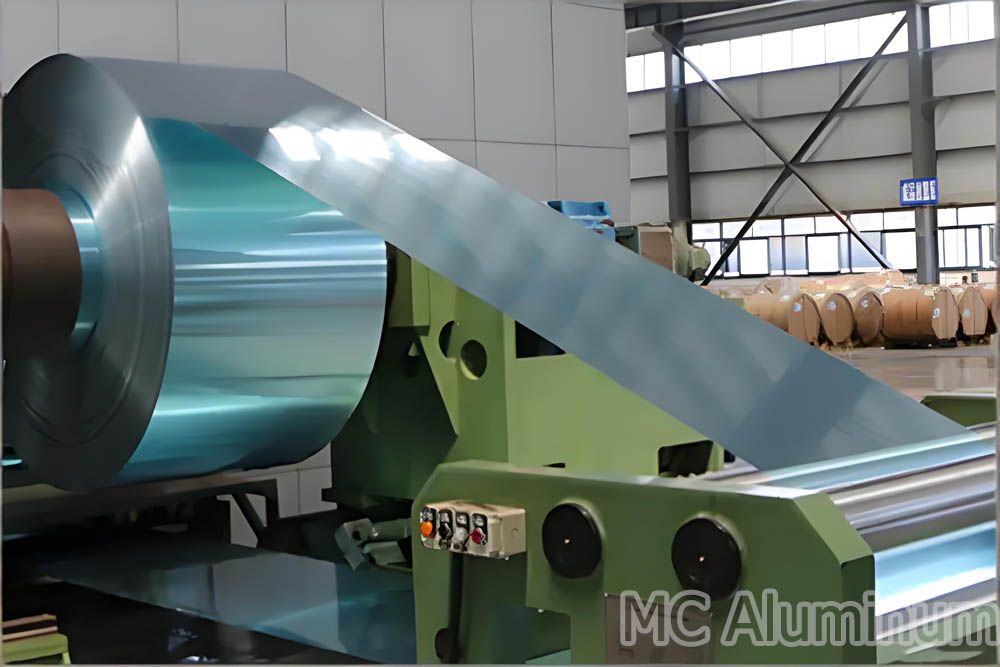
Blue hydrophilic coated aluminum foil is a functional aluminum foil produced by applying a hydrophilic anti-corrosion coating onto air-conditioner-grade aluminum foil substrates (commonly 1100, 3102, 3003, 8011 alloys) through a precision coating process. In the air conditioning sector, hydrophilic aluminum foil is widely used in condensers and evaporators to improve heat exchange efficiency, reduce icing, and extend equipment service life.
Functions and Characteristics of the Blue Coating
The blue coating is a defining feature of hydrophilic aluminum foil. Beyond aesthetic appeal and brand identification, it delivers several key functional benefits:
1.Enhanced Hydrophilicity
Blue coatings typically contain special hydrophilic molecules or nanostructures, such as silicon-based or phosphate compounds. These components significantly increase surface hydrophilicity, enabling the foil to more effectively absorb moisture from the air.
2.Corrosion and Rust Resistance
The coating often incorporates corrosion inhibitors, such as chromates or phosphates, which effectively prevent oxidation and corrosion in humid environments, ensuring long-term stability.
3.Improved Thermal Conductivity
Some blue coatings include thermally conductive fillers (such as alumina or silicon carbide), which help enhance heat transfer efficiency and optimize air conditioner cooling performance.

Technical Specifications of Air Conditioner Aluminum Foil
| Product Names | Air conditioner aluminum foil, blue hydrophilic aluminum foil, hydrophilic coated aluminum foil, aluminum fins |
| Alloy Grades | 1100 / 3102 / 3003 / 8011 |
| Temper | H18 / H24 / O |
| Thickness Range | 0.08 - 0.20 mm |
| Thickness Tolerance | ±0.005 mm |
| Width Range | 100 - 1,250 mm |
| Length Range | 100 - 8,000 mm |
| Coating Type | Blue hydrophilic anti-corrosion coating |
| Coating Structure | Single-sided or double-sided coating |
| Color | Blue |
| Coating Thickness | 1.0 - 2.0 μm |
| Coating Weight | 1.0 - 1.8 g/m² |
| Inner Diameter (ID) | 76 mm / 152 mm |
| Surface Quality | Free from oil stains, scratches, and dents |
| Applications | Air conditioners, HVAC systems, heat exchangers |
| MOQ | 1-3 tons |
Performance Advantages of Blue Hydrophilic Aluminum Foil for Air Conditioners
1.Improved Condensation Efficiency
When used in air conditioner condensers, hydrophilic aluminum foil allows absorbed moisture to evaporate rapidly, reducing icing and maintaining stable operation. The thermal conductivity of the blue coating further accelerates heat transfer, lowering energy consumption.
2.Extended Equipment Service Life
The corrosion-resistant properties of the blue coating effectively withstand humidity, salt spray, and other harsh environments, reducing surface oxidation and wear and providing long-term protection for air conditioning components.
3.Reduced Maintenance Costs
By minimizing icing and frost formation, hydrophilic aluminum foil reduces the need for frequent condenser cleaning, lowering maintenance frequency and overall costs.
4.Inhibition of Mold and Odors
Moist fins can become breeding grounds for bacteria and mold. High-quality blue hydrophilic coatings typically contain environmentally friendly anti-microbial agents that effectively inhibit microbial growth.
5.Excellent Formability
While maintaining coating stability, the aluminum foil retains excellent ductility. During stamping and forming processes, the coating is resistant to peeling and powdering.
Application Areas
Residential split air conditioners
Central air conditioning systems
Commercial air conditioning and VRF systems
Industrial cooling and heat exchange equipment
High-end export-oriented air conditioning products
Manufacturing Process Differences: Hydrophilic Aluminum Foil vs. Standard Aluminum Foil
The main difference between hydrophilic aluminum foil and standard aluminum foil lies in the additional surface treatment steps required for hydrophilic foil. A comparison is shown below:
| Production Step | Standard Aluminum Foil | Hydrophilic Aluminum Foil |
| Raw Material Preparation | High-purity aluminum ingots | High-purity aluminum ingots |
| Melting | Heated to molten state | Heated to molten state |
| Rolling | Multiple passes to target thickness | Multiple passes to target thickness |
| Annealing | Stress relief, improved ductility | Stress relief, improved ductility |
| Surface Treatment | Chemical cleaning, mechanical polishing | Degreasing, cleaning, drying, application of anti-corrosion and hydrophilic coatings |
| Cutting & Packaging | Cut and packaged as required | Cut and packaged as required |
How to Choose High-Quality Hydrophilic Aluminum Foil?
Initial and Durability Contact Angles: The smaller the angle, the better the hydrophilicity, and it should remain low even after hundreds of hours of operation.
Coating Corrosion Resistance: Whether it passes standard salt spray tests (e.g., 500 hours without white rust).
Appearance Uniformity: The blue coating should be uniform in color, with no missed coating, bubbles, or scratches.
MC Aluminum, as a professional aluminum foil manufacturer, offers a wide range of hydrophilic coated aluminum foil products in blue, gold, and black to meet various industrial and commercial needs. With stable quality, competitive pricing, export experience to many countries, and sample availability, we welcome your inquiries and look forward to cooperating with you.