Aluminum foil, as a lightweight, high-strength, and corrosion-resistant metal material, is widely used in packaging, construction, and industrial equipment. Among these materials, 3102 H24 hydrophilic lacquered aluminum foil has gradually become one of the mainstream materials for air-conditioner evaporator fins, condenser fins, and heat exchanger fins due to its unique performance advantages.
What is 3102 H24 Hydrophilic Coated Aluminum Foil?
Alloy: 3102
3102 is an Al-Mn series alloy (3xxx series). Compared with common pure aluminum grades such as 1100 or 1060, the addition of manganese improves both strength and corrosion resistance. It also maintains excellent thermal conductivity. Therefore, 3102 is widely used as a fin material in air-conditioning systems. It offers better strength than pure aluminum while maintaining a lower cost compared with higher-strength 8xxx series alloys.
Temper: H24
The H24 temper indicates that the aluminum foil has been strain hardened and partially annealed. This condition provides a balanced combination of strength and ductility, making it suitable for high-speed fin stamping processes.
Functional Layer: Hydrophilic Coating
This is the key feature that distinguishes hydrophilic aluminum foil from ordinary bare aluminum foil. Through a precise continuous roller-coating process, a special hydrophilic coating is applied to the surface of the 3102 aluminum foil.
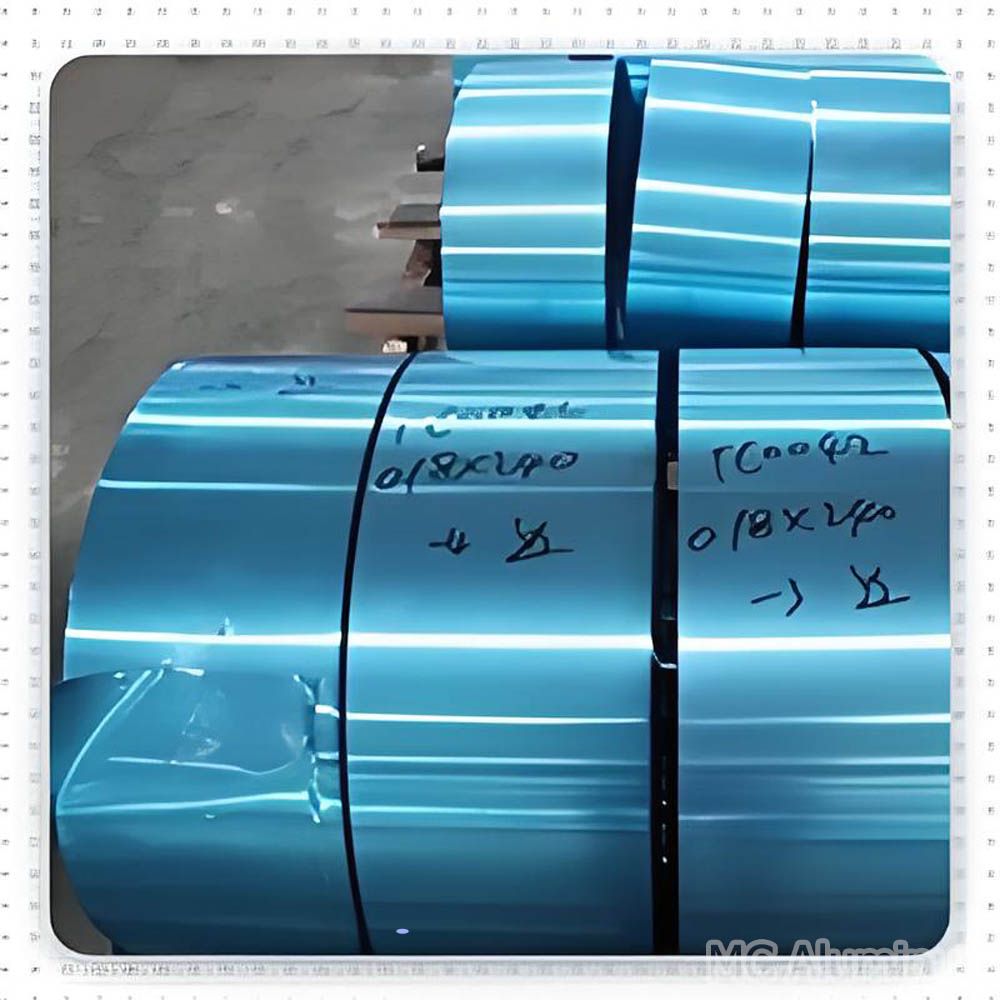
The coating typically appears blue, gold, or transparent, and its microstructure provides strong hydrophilic properties, which significantly improve the performance of heat exchanger fins.
Hydrophilic Coating Process
The coating process typically involves the following steps:
Degreasing → Cleaning → Drying → Roller Coating (organic/inorganic composite hydrophilic coating, usually blue or gold) → High-temperature curing
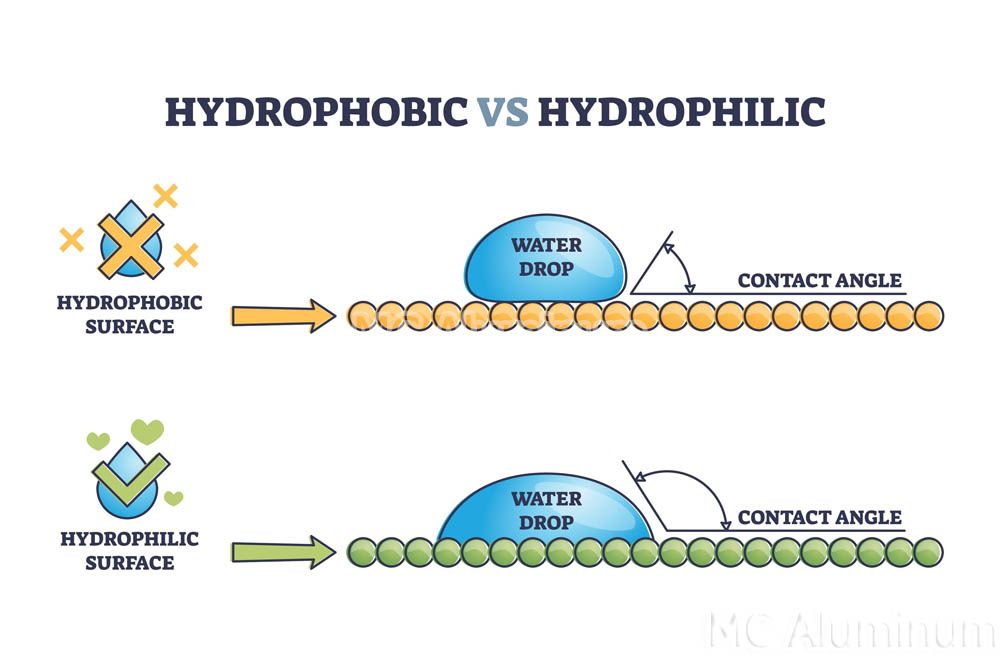
This coating significantly reduces the water contact angle (usually ≤15°), allowing condensed water to spread evenly across the surface instead of forming droplets.
Advantages of Hydrophilic Coating
Water Film Formation: The coating changes the surface tension of water droplets. Instead of forming beads, condensed water spreads rapidly into a thin water film that flows smoothly along the fin surface.
Reduced Airflow Resistance: By preventing the "water bridge effect," the airflow resistance within the heat exchanger is reduced, which improves cooling and heating efficiency and enhances energy savings.
Corrosion Resistance and Antibacterial Properties: High-quality hydrophilic coatings provide excellent salt spray resistance (some high-end products can withstand corrosion for up to 2000 hours) and can effectively inhibit the growth of mold and microorganisms, improving indoor air quality.
Hydrophilic Aluminum Foil Specifications
| Alloy | 3102 |
| Temper | H24 |
| Thickness | 0.08–0.20 mm |
| Width | 100–1250 mm |
| Length | 100–16000 mm |
| Coating Color | Blue / Gold / Transparent |
| Coating Type | Hydrophilic / Antibacterial Hydrophilic |
| Surface | Single-side or double-side coating |
| MOQ | 1-3 tons |
Key Performance Indicators
| Item | Typical Value |
| Thickness | 0.08–0.12 mm (common for AC fins) |
| Tensile Strength | 120–150 MPa |
| Elongation | ≥10% (ensures good stamping formability) |
| Initial Contact Angle | ≤10°, ≤20° after 300 wet-dry cycles |
| Neutral Salt Spray Resistance | ≥500 h, no obvious corrosion |
| Coating Adhesion | No peeling after 180° bending, passes cross-cut test |
| Thermal Conductivity | Approx. 190 W/(m·K) |
Advantages of 3102 H24 Hydrophilic Aluminum Foil
1. Excellent Corrosion Resistance
Due to the presence of manganese, 3102 aluminum alloy maintains stable corrosion resistance even in humid and condensation environments, making it highly suitable for air-conditioning and refrigeration equipment.
2. Good Formability
The H24 temper provides good ductility, allowing the foil to withstand high-speed fin stamping while maintaining efficient production.
3. Balanced Strength and Toughness
After strain hardening, 3102 H24 aluminum foil maintains sufficient strength while retaining adequate plasticity, reducing the risk of cracking during fin forming.
4. Excellent Thermal Conductivity
Aluminum naturally has high thermal conductivity, allowing heat to transfer quickly and improving overall heat exchanger efficiency.
5. Stable Coating Adhesion
Through special chemical pretreatment, the hydrophilic coating bonds tightly with the aluminum substrate. Even under high temperature, high humidity, or severe temperature cycling, the coating remains intact without peeling or powdering.
6. Environmentally Friendly and Odorless
Hydrophilic coatings are free of harmful volatile substances and comply with RoHS and REACH environmental regulations.
Applications of Hydrophilic Aluminum Foil
Residential and commercial air conditioners
Used in evaporators for indoor units and condensers for outdoor units.
Automotive air conditioning systems
Suitable for parallel-flow heat exchangers requiring lightweight materials and efficient heat dissipation.
Industrial refrigeration equipment
Widely used in cold storage systems and constant temperature and humidity equipment.
Dehumidifiers
Its efficient drainage performance improves dehumidification efficiency.
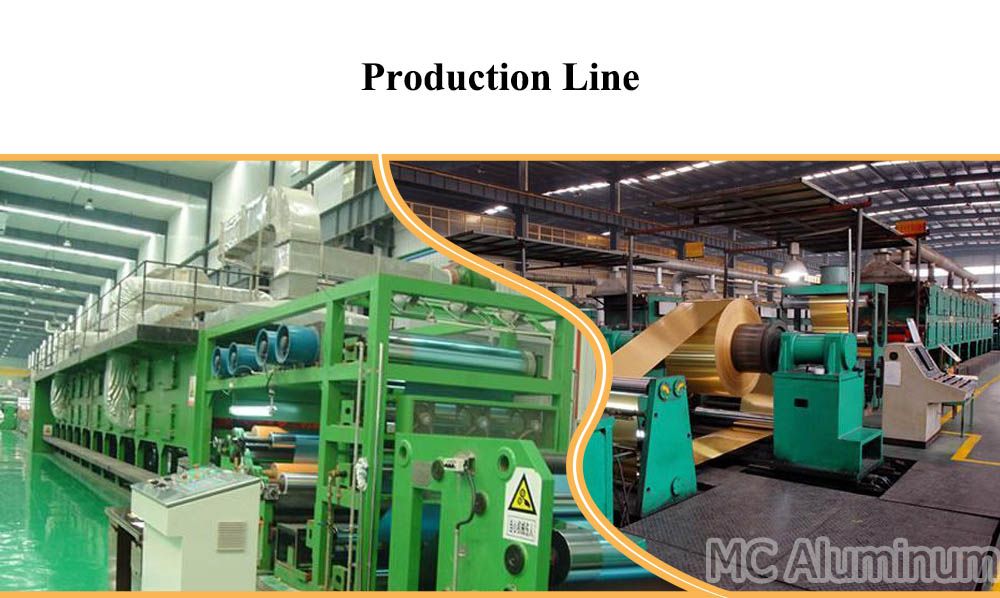
Hydrophilic Aluminum Foil Coating Production Line
On a hydrophilic coating production line, aluminum coils typically undergo two coating and drying processes to achieve high wear resistance and an attractive appearance.
Coil coating is a continuous automated process used to apply coatings to metal before it is further processed into finished products. The aluminum substrate is delivered from the rolling mill in coil form and coated before downstream manufacturing.