
As a dedicated aluminum foil manufacturer, we produce 1060 battery aluminum foil for lithium-ion battery cathode current collector applications. This high-purity aluminum foil is designed for stable conductivity, uniform surface quality, controlled thickness, and reliable winding performance during electrode manufacturing.
1060 aluminum foil contains a minimum of 99.6 percent aluminum. Its high aluminum content gives it good electrical conductivity, low density, excellent processability, and strong compatibility with battery electrode coating operations. It is commonly selected for cathode current collectors in lithium-ion batteries, energy storage cells, consumer electronics batteries, and selected power battery designs.
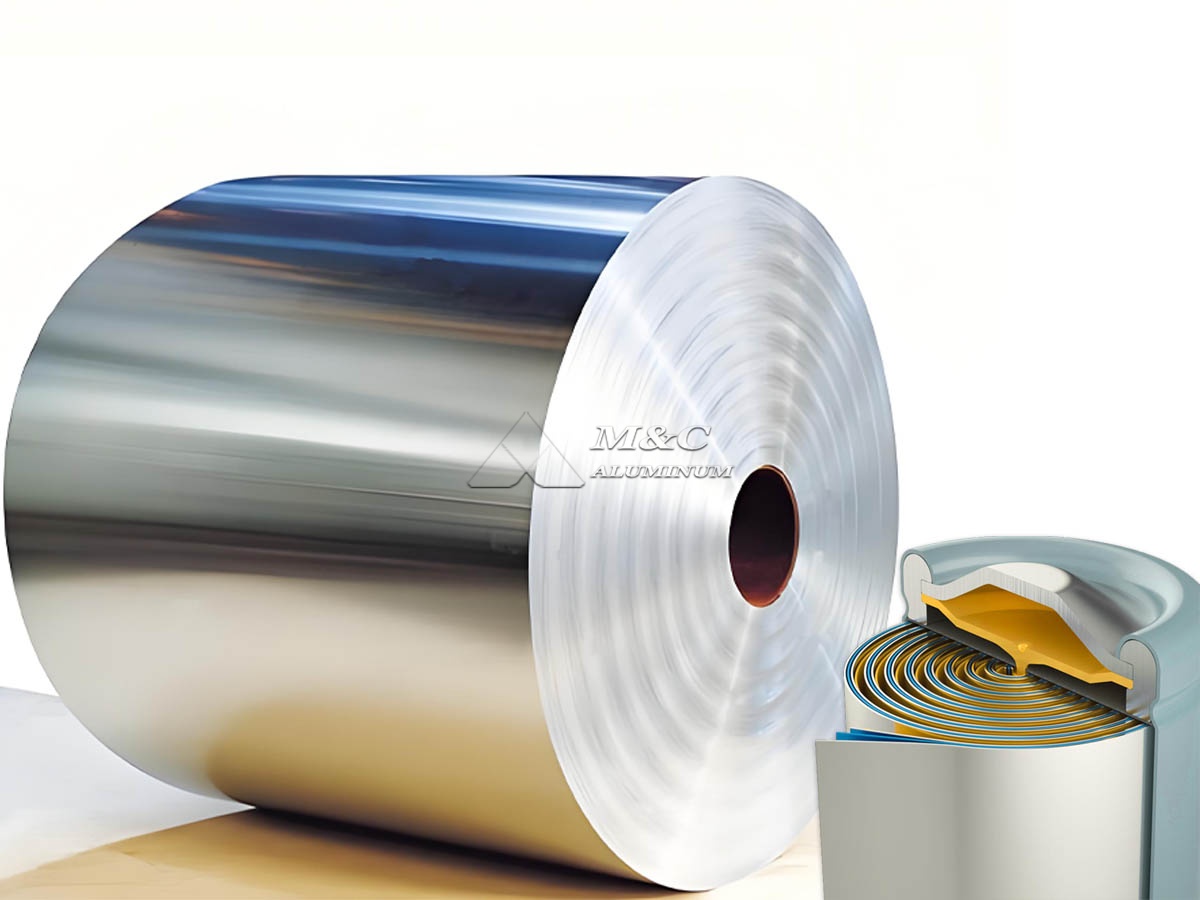
What Is 1060 Battery Aluminum Foil?
1060 battery aluminum foil is an aluminum foil material manufactured from 1060 aluminum alloy and supplied in soft annealed or controlled temper conditions. In a battery cell, aluminum foil functions as the current collector on the cathode side. It supports the active material coating, transfers electrical current through the electrode structure, and contributes to the dimensional stability of the coated electrode.
Compared with general-purpose aluminum foil, battery aluminum foil requires tighter control of thickness variation, surface cleanliness, pinhole level, edge condition, coil profile, and mechanical properties. These characteristics directly affect slurry coating uniformity, electrode rolling, drying, slitting, and final cell assembly.
Our factory controls the full manufacturing route from aluminum ingot selection and melting through rolling, annealing, slitting, inspection, and export packing. This production approach helps us maintain stable quality from trial coils to repeat production orders.
Main Properties of 1060 Aluminum Foil for Batteries
The principal advantage of 1060 aluminum foil is its high purity. The material has fewer alloying elements than many aluminum alloys, helping provide consistent electrical and thermal behavior. Its soft, ductile structure also supports processing steps such as electrode coating, calendering, slitting, and winding.
Key performance characteristics include:
High aluminum purity of 99.6 percent minimum.
Good electrical conductivity for cathode current collection.
Low weight, supporting higher battery energy density at the cell level.
Good elongation and flexibility for winding and stacking processes.
Smooth surface suitable for active-material slurry coating.
Consistent thickness and width control for automated electrode production.
Good resistance to normal storage and processing conditions when properly packed.
For customers requiring other high-purity foil grades, our 1060 Aluminium Foil product range can also be supplied for non-battery industrial applications with customized dimensions and coil parameters.
Technical Parameters
The following table presents typical parameters for our 1060 battery aluminum foil. Final specifications are confirmed according to the battery design, coating method, and customer quality standard.
| Item | Typical Specification | Notes |
|---|---|---|
| Alloy | 1060 | Aluminum content 99.6 percent minimum |
| Temper | O, H18, or customized | O temper is commonly used for flexible electrode processing |
| Thickness | 0.012-0.030 mm | Common battery ranges include 0.015 mm, 0.016 mm, and 0.020 mm |
| Thickness tolerance | Customized by thickness range | Controlled according to customer drawings or technical agreement |
| Width | 100-1,650 mm | Slit widths available for electrode production lines |
| Width tolerance | Customized | Based on slit coil and winding requirements |
| Coil inner diameter | 76 mm, 150 mm, 200 mm, 300 mm, or customized | Selected to match equipment configuration |
| Coil outer diameter | Customized | Determined by coil weight and line capacity |
| Surface condition | Clean, smooth, oil-controlled | Free from visible stains, scratches, and coating defects |
| Surface treatment | Mill finish or carbon coated | Carbon coating available for selected battery applications |
| Electrical conductivity | High conductivity aluminum | Suitable for cathode current collector use |
| Packaging | Export seaworthy packaging | Moisture protection and edge protection included |
Manufacturing Process and Quality Control
Producing battery-grade aluminum foil requires more than achieving the required alloy composition. Process consistency is essential because small variations can affect coating behavior, electrode resistance, and roll-to-roll handling efficiency.
Our 1060 battery aluminum foil manufacturing process includes controlled melting and casting, hot rolling, cold rolling, intermediate annealing, final rolling, tension leveling where required, precision slitting, inspection, and packaging. Each stage is managed to reduce thickness fluctuation, surface defects, residual rolling oil, and edge damage.
We inspect the material according to agreed technical requirements. Typical control items include:
Alloy composition verification.
Thickness measurement across the foil width.
Width and edge quality inspection.
Surface visual inspection under controlled lighting.
Pinholes and perforation control where specified.
Tensile strength and elongation testing.
Coil weight, coil profile, and winding tightness inspection.
Surface cleanliness and residual oil control for coating applications.
For battery customers, we can discuss additional requirements such as surface roughness, wettability, adhesion performance after coating, allowable splice quantity, coil joint marking, and cleanroom-compatible packaging.
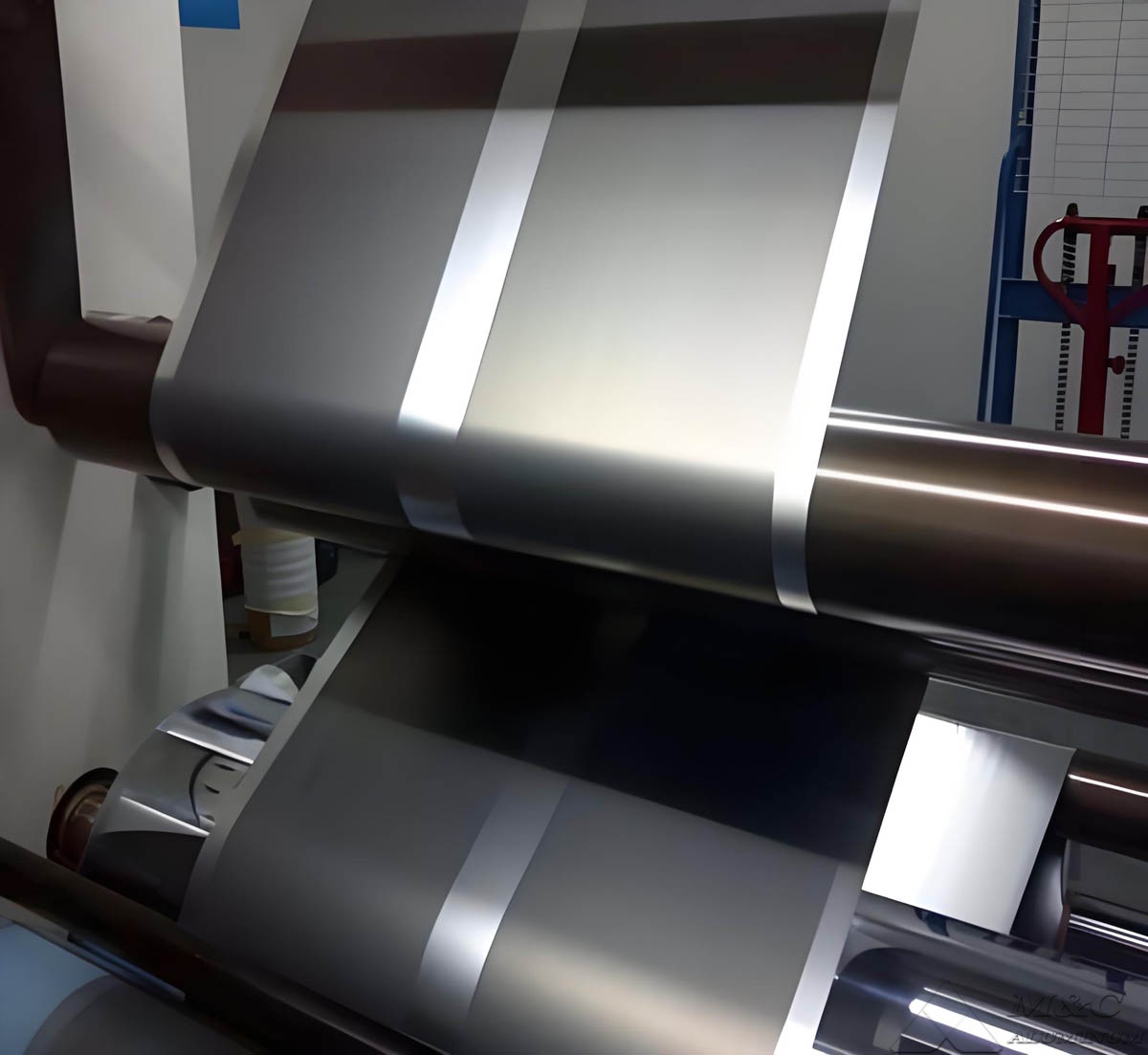
Carbon Coated 1060 Battery Aluminum Foil
For certain lithium-ion battery electrode structures, carbon coated aluminum foil can improve the interface between the current collector and cathode coating layer. A conductive carbon coating may help reduce contact resistance, improve adhesion, and support more uniform current distribution depending on the active material system and electrode design.
Our factory can provide carbon coated aluminum foil based on 1060 substrate foil when the project requires it. Coating weight, coating side, surface resistance, adhesion, and roll dimensions can be adjusted according to the customer's electrode process.
Carbon coated aluminum foil is commonly evaluated for applications involving lithium iron phosphate cathodes, high-rate battery designs, energy storage cells, and electrodes where stable interface contact is important. The appropriate coating configuration should be verified through customer-side slurry coating and cell performance testing.
Applications of 1060 Battery Aluminum Foil
1060 battery aluminum foil is primarily used as a cathode current collector. It provides a conductive substrate for coated cathode materials and supports electron transfer within the electrode assembly.
Typical application areas include:
Lithium-ion batteries for consumer electronics.
Energy storage batteries and stationary battery systems.
Cylindrical, prismatic, and pouch cell battery formats.
Lithium iron phosphate battery cathodes.
Selected electric vehicle and power battery electrode systems.
Supercapacitor and electrochemical energy storage components.
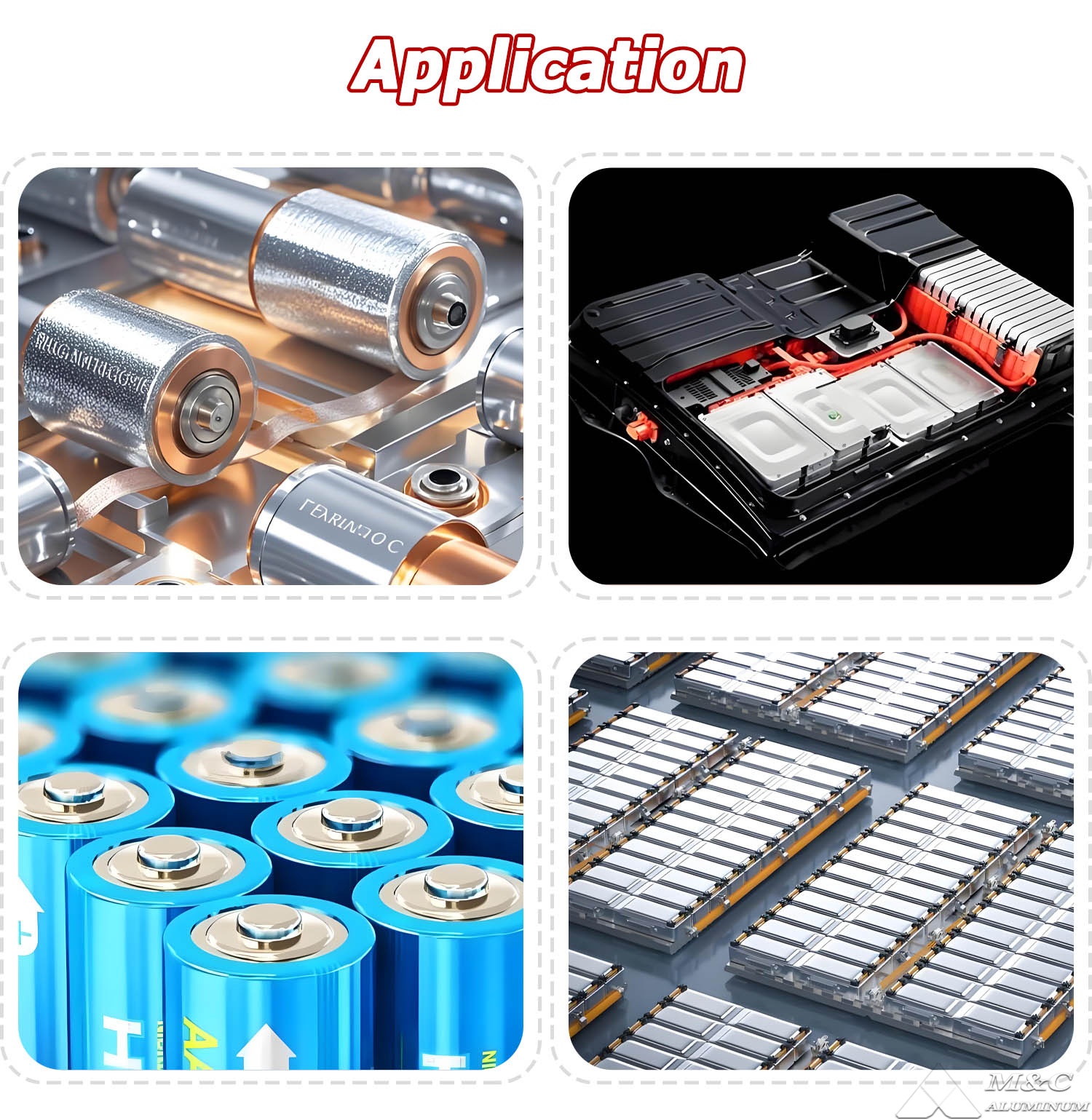
The final foil selection depends on the cell chemistry, electrode thickness, coating formulation, calendering pressure, and production equipment. Our technical team works with buyers to confirm the appropriate thickness, temper, surface condition, and coil configuration before production.
Why Thickness and Surface Quality Matter
Battery aluminum foil must maintain stable thickness across the coil width and throughout the coil length. Excessive thickness variation can cause uneven slurry loading, inconsistent electrode density after calendering, and unstable cell performance. Accurate foil thickness also helps battery manufacturers control material consumption and coating weight.
Surface quality is equally important. A clean and uniform foil surface supports predictable wetting by the cathode slurry. Surface contamination, deep rolling marks, scratches, or excessive residual oil may affect coating adhesion and lead to defects during electrode processing.
As an aluminum foil manufacturer, we focus on matching foil surface condition to the customer's downstream process. For standard mill-finish foil, we control rolling and annealing parameters to achieve a stable surface. For coated foil, we additionally control carbon coating uniformity, adhesion, and electrical properties.
Ordering Information for Battery Foil Buyers
To prepare an accurate quotation and technical proposal for 1060 battery aluminum foil, we recommend providing the following information:
Required alloy and temper.
Foil thickness and permitted tolerance.
Coil width and width tolerance.
Required coil inner diameter and maximum outer diameter.
Target coil weight.
Mill finish or carbon coated surface requirement.
One-side or two-side carbon coating requirement, if applicable.
Surface quality, pinhole, splice, and cleanliness standards.
Intended battery chemistry and electrode manufacturing process.
Required packing method and destination port.
For projects that require alternative foil grades, including higher-strength options for specialized processing conditions, we also manufacture 3003 Aluminum Foil for industrial applications where alloy strength and forming characteristics differ from high-purity 1060 foil.
Conclusion
1060 battery aluminum foil is a practical high-purity material for lithium-ion battery cathode current collectors. Its conductivity, low weight, ductility, and coating compatibility make it suitable for a broad range of battery electrode applications. However, successful battery foil supply depends on precise control of thickness, surface quality, mechanical properties, coil geometry, and packaging protection.
As a direct manufacturer, we supply 1060 aluminum foil in customized widths, thicknesses, tempers, and coil formats. We support both standard battery current collector foil and carbon coated aluminum foil solutions based on customer technical requirements.