
Battery aluminum foil is a precision-rolled aluminum product used primarily as the cathode current collector in lithium-ion batteries. As a battery aluminum foil manufacturer, we produce this material through a controlled process that combines alloy selection, melt treatment, rolling, annealing, surface management, slitting, and final inspection.
The purpose of battery aluminum foil is not simply to provide a thin metal layer. It must efficiently conduct electrical current, support the cathode coating, maintain dimensional stability during electrode production, and remain compatible with battery electrolyte and active materials. For this reason, the production of lithium-ion battery aluminum foil requires tighter process control than conventional packaging or household foil.
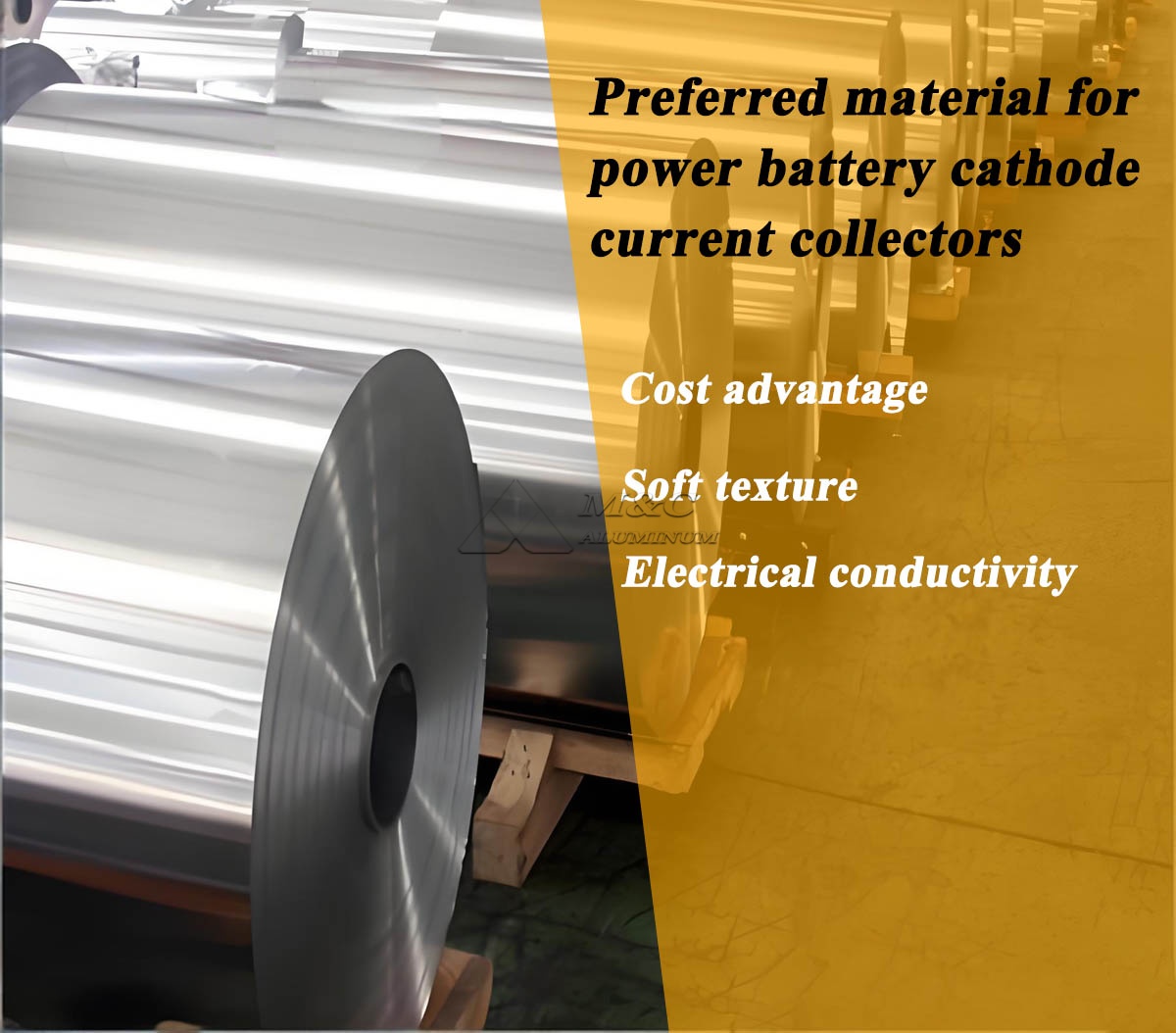
The Role of Aluminum Foil in Lithium-Ion Batteries
In a typical lithium-ion battery, aluminum foil is used on the positive electrode side. The foil acts as a current collector, transporting electrons between the cathode active material and the external circuit. Copper foil is generally used for the anode, while aluminum foil is selected for the cathode because of its low density, good conductivity, corrosion resistance, and stable performance within the normal cathode voltage range.
Battery cathode foil must have a clean, uniform, and suitably roughened surface to ensure reliable adhesion of the electrode slurry. It also needs stable mechanical properties so that it can pass through coating, drying, calendaring, slitting, winding, or stacking processes without tearing, wrinkling, or excessive edge cracking.
The main requirements for aluminum current collector foil include:
Consistent thickness across the full coil width.
High surface cleanliness with low residual oil.
Stable tensile strength and elongation.
Good wettability for cathode slurry coating.
Minimal pinholes, scratches, dents, and edge defects.
Reliable flatness and coil shape for high-speed electrode processing.
Performance Advantages of Battery Aluminum Foil
1. Excellent Electrical Conductivity: Offers high electrical conductivity, which effectively reduces internal battery resistance and enhances current transmission efficiency.
2. Lightweight: Due to the low density of aluminum, it helps reduce battery weight and increase energy density.
3. Good Corrosion Resistance: Exhibits strong resistance to corrosion, making it suitable for use as a cathode current collector in lithium-ion batteries.
4. High Surface Quality: Features a smooth surface and uniform thickness, facilitating the even application and adhesion of cathode coatings.
5. Superior Processability: Possesses excellent ductility and rolling characteristics, making it well-suited for high-speed, continuous coating processes and battery manufacturing.
6. Good Chemical Stability: Maintains high stability within the appropriate operating potential ranges and electrolyte systems of batteries.
7. High Production Efficiency: Well-suited for large-scale, continuous manufacturing, which helps improve production efficiency and ensures product consistency.
Typical Alloys for Battery Aluminum Foil
Our factory selects aluminum alloys according to the battery producer's electrode design, thickness requirement, coating system, and downstream processing conditions. High-purity aluminum grades are commonly applied because they offer good electrical conductivity and stable rolling performance.
Among the commonly used materials, 1235 Aluminum Foil is widely used for battery foil production due to its high aluminum content, good ductility, and suitability for ultra-thin rolling. Other applicable grades may include 1050, 1060, 1070, and 1100 aluminum alloy, depending on the technical specification.
| Parameter | Typical Battery Aluminum Foil Range | Production Significance |
|---|---|---|
| Alloy | 1050, 1060, 1070, 1100, 1235 | Determines conductivity, ductility, and impurity control |
| Aluminum content | 99.3% to 99.7% or higher | Supports electrical conductivity and rolling quality |
| Thickness | 10 to 20 microns | Matches cathode coating and cell design requirements |
| Standard widths | 200 to 1,650 mm | Adapted to customer coating and slitting lines |
| Temper | O, H18, H19, customized | Selected for forming behavior and mechanical stability |
| Tensile strength | Approximately 80 to 180 MPa | Controlled according to temper and thickness |
| Elongation | Typically 1% to 8% | Helps prevent fracture during processing |
| Surface residual oil | Controlled to customer specification | Important for slurry wettability and coating adhesion |
| Surface quality | No critical pinholes, scratches, oil marks, or dents | Ensures electrode consistency and yield |
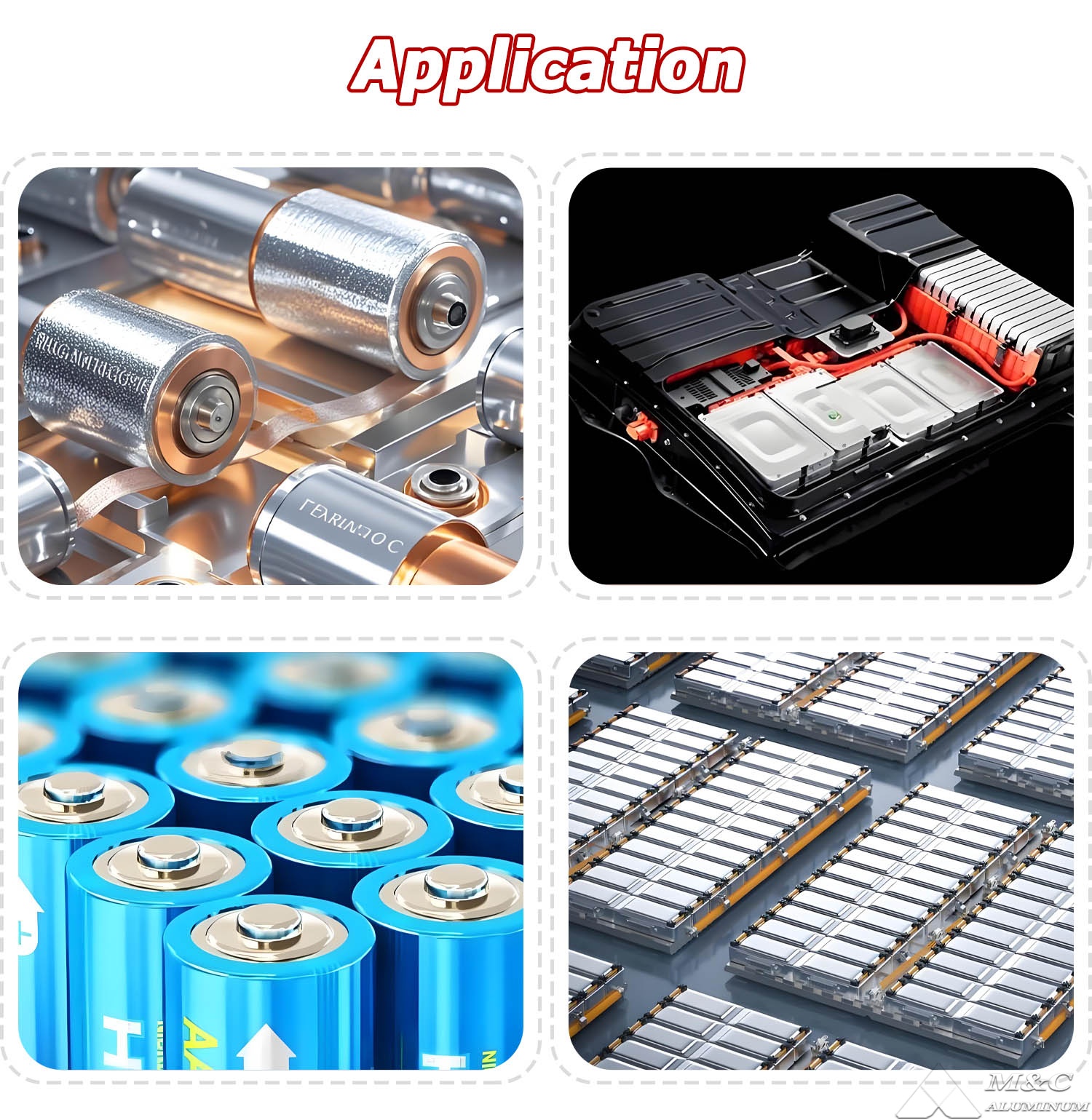
Actual technical parameters are defined according to the customer's battery type, including cylindrical, prismatic, pouch, energy-storage, or power battery applications.
Step 1: Aluminum Melt Preparation and Composition Control
The process begins with primary aluminum ingots and qualified return material that meets our internal recycling controls. We melt the charge in a furnace and adjust the chemical composition to the required alloy standard. For battery aluminum foil, impurity control is particularly important because excessive iron, silicon, copper, or other elements can affect conductivity, rolling behavior, surface appearance, and final foil consistency.
During melting, we conduct chemical analysis to verify the alloy composition. The molten aluminum is then refined through degassing and filtration. Degassing reduces dissolved hydrogen and non-metallic inclusions, while ceramic foam filtration helps remove oxide particles and other contaminants. These steps reduce the risk of defects that may later appear as pinholes, cracks, or surface imperfections in thin-gauge foil.
After melt treatment, the aluminum is cast into slabs or coils, depending on the manufacturing route. Both direct chill casting followed by hot rolling and continuous casting followed by rolling may be used, provided the material meets the required metallurgical quality.
Step 2: Hot Rolling to Produce Intermediate Gauge Material
Cast aluminum slabs are preheated and processed through a hot rolling mill. Hot rolling reduces the thickness substantially and develops a uniform internal structure for later cold rolling. Temperature control is essential at this stage. Insufficient temperature can increase rolling load and produce uneven deformation, while excessive temperature may affect surface quality and grain structure.
We monitor thickness, crown, flatness, and surface condition throughout the hot rolling process. The resulting hot-rolled coil is typically much thicker than the final battery aluminum foil, but it provides the stable starting material needed for subsequent precision reduction.
For some specifications, intermediate material may also be supplied from our controlled 1100 Aluminum Foil production system when the specified alloy and mechanical-property range are appropriate for the customer's battery foil program.
Step 3: Cold Rolling for Precision Thickness Reduction
Cold rolling is the core process for producing thin battery aluminum foil. The hot-rolled coil is passed through multi-stand or reversible rolling mills at room temperature. Each pass gradually reduces thickness while improving dimensional accuracy and surface finish.
Battery foil rolling requires highly stable mill conditions. We control rolling force, strip tension, rolling speed, lubricant condition, work roll surface, and automatic gauge control. These variables directly influence thickness deviation, strip flatness, edge quality, and the risk of breaks.
As the foil becomes thinner, precision requirements become more demanding. A small thickness variation can influence coating weight and electrode capacity consistency. For this reason, our online measurement systems continuously monitor gauge performance across the strip width. Any deviation is corrected through automatic mill adjustments and process feedback.
Step 4: Intermediate Annealing and Final Annealing
Cold rolling hardens aluminum. To restore ductility and obtain the required temper, the coil undergoes annealing in controlled furnaces. Intermediate annealing may be used between rolling stages, while final annealing establishes the mechanical properties of the finished battery aluminum foil.
The annealing cycle is carefully controlled by temperature, holding time, heating rate, cooling rate, coil weight, and furnace atmosphere. Proper annealing helps achieve a uniform grain structure and stable elongation. It also assists in removing rolling oil residues, which is important for battery electrode coating.
For soft-temper battery foil, full annealing is generally required. For harder tempers, the reduction schedule and final thermal treatment are adjusted to meet tensile-strength and elongation targets. Our quality team verifies the temper through mechanical testing and process records before release.
Step 5: Surface Control and Cleanliness Management
Surface quality is one of the most important characteristics of lithium-ion battery aluminum foil. During cathode manufacturing, the foil is coated with a slurry containing active material, conductive carbon, and binder. If the aluminum surface contains excess rolling oil, particles, moisture, or unstable oxide contamination, coating adhesion and wetting performance may be affected.
Our production process therefore includes strict lubrication management, roll cleaning, annealing control, and protected coil handling. Surface cleanliness is evaluated through methods such as wetting-tension testing, residual-oil testing, visual inspection, and customer-specific surface evaluation procedures.
Depending on the application, battery aluminum foil can be supplied with a mill-finished surface or a surface condition optimized for coating performance. We confirm the required surface characteristics during technical communication before production.
Step 6: Slitting, Edge Trimming, and Coil Winding
After the foil reaches its final thickness and temper, it is slit into customer-required widths. Precision slitting is necessary because irregular edges can create dust, burrs, or winding problems during electrode processing. Our slitting lines are adjusted to maintain clean edges, stable width tolerance, and controlled coil tension.
The foil is rewound into coils with specified inner diameters, outer diameters, coil weights, and winding directions. Uniform winding prevents telescoping, loose coils, edge damage, and transportation deformation. Interleaving materials or protective packaging may be used when required by the customer's handling process.
| Inspection Item | Typical Control Method | Purpose |
|---|---|---|
| Thickness | Online gauge measurement and laboratory verification | Ensures coating and capacity consistency |
| Width | Precision slitting measurement | Matches electrode production requirements |
| Flatness | Visual inspection and shape monitoring | Prevents coating and winding difficulties |
| Surface cleanliness | Residual oil and wettability testing | Supports cathode slurry adhesion |
| Mechanical properties | Tensile and elongation testing | Confirms temper stability |
| Pinholes and surface defects | Light inspection and visual examination | Reduces electrode defect risk |
| Edge quality | Burr and edge-condition inspection | Supports safe, clean slitting and winding |
| Coil packaging | Final packaging inspection | Protects foil during export and storage |
Step 7: Final Quality Inspection and Export Packaging
Before shipment, each batch of battery aluminum foil is inspected against the agreed technical specification. Our quality documentation can include alloy composition, thickness results, width tolerance, mechanical properties, surface condition, coil identification, and packaging details.
For export delivery, coils are protected against moisture, dust, impact, and deformation. Typical packaging includes moisture-barrier wrapping, desiccant, protective edge guards, wooden pallets, and reinforced export-grade cases. Storage conditions are also important: battery foil should be kept in a clean, dry warehouse away from corrosive chemicals and significant temperature fluctuations.
Conclusion
Battery aluminum foil production is a precision manufacturing process rather than a simple foil conversion operation. From alloy preparation and melt purification to rolling, annealing, surface control, slitting, and inspection, every stage affects the final performance of the aluminum current collector foil.
As a manufacturer, we tailor battery aluminum foil specifications to the customer's cathode process, including alloy, thickness, temper, width, surface cleanliness, and coil configuration. This controlled approach helps battery producers obtain consistent foil performance for lithium-ion power batteries, energy-storage systems, and other advanced electrochemical applications.