
1235 belongs to the 1xxx series of high-purity industrial aluminum, with an aluminum content of ≥99.35%. Impurity elements—such as silicon, iron, copper, and zinc—are strictly controlled (Si+Fe ≤ 0.65%; Cu ≤ 0.05%) to prevent harmful impurities from triggering electrochemical side reactions, localized corrosion, or fluctuations in internal resistance. This alloy meets the national standard requirements for aluminum foil used as current collectors in lithium-ion batteries.
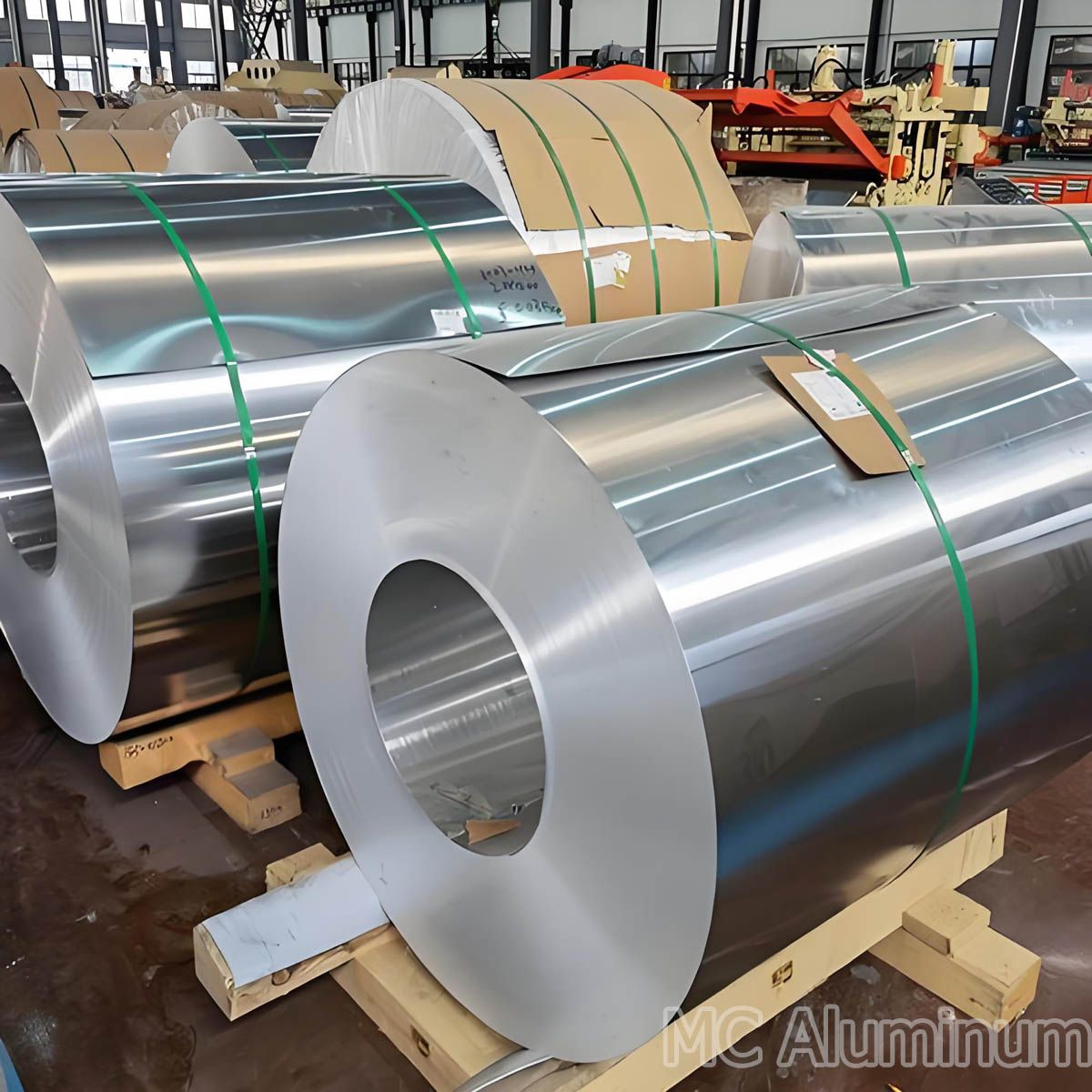
1235 O temper annealed aluminum foil is a high-precision foil material for lithium-ion battery positive-electrode current collectors, cathode substrates, and carbon-coated aluminum foil processing. It is manufactured from high-quality 1235 aluminum alloy through melting, continuous casting and rolling, cold rolling, foil rolling, annealing, slitting, and surface inspection.
The product features high purity, uniform thickness, a clean surface, good flexibility, low pinhole density, and excellent coil flatness.
In lithium-ion batteries, aluminum foil is typically used as the current collector and coating substrate for cathode active materials. Its main functions include carrying the cathode active material, conducting current, reducing battery internal resistance, and providing a stable substrate for subsequent electrode coating, calendering, slitting, winding, and stacking processes.
Therefore, the surface quality, thickness accuracy, mechanical properties, and processing consistency of aluminum foil can directly affect electrode-coating adhesion, electrode-sheet consistency, and battery-cell manufacturing yield.
Product Specifications
| Item | Specification |
| Alloy | 1235 |
| Temper | O |
| Standard Thickness Range | 0.010–0.050 mm |
| Common Thicknesses | 0.012 mm, 0.015 mm, 0.016 mm, 0.020 mm |
| Thickness Tolerance | Precision-controlled; available according to customer requirements |
| Width Range | 80–1600 mm |
| Supply Form | Jumbo coils or slit finished coils, cut to customer electrode-width requirements |
| Electrical Resistivity | ≤0.025 Ω·mm²/m |
| Tensile Strength | 70–90 MPa |
| Elongation | ≥12% |
| Pinhole Density | ≤200 holes/m² |
| Coil Flatness | Flat and straight, without wavy edges, layer shifting, or telescoping beyond control requirements |
| Surface | Clean bright foil on both sides; free from oil stains and corrosion spots; low pinhole rate |
| Surface Customization | Specific roughness substrates can be customized for carbon-coating pretreatment |
| Core ID | Ø150 mm, Ø300 mm, Ø400 mm, Ø505 mm; standard paper or steel cores for the lithium battery industry |
| Standards | GB/T 3190; GB/T 36186 aluminum foil standard for lithium-ion batteries |
| Inspection Documents | Material certificate, electrical conductivity report, and mechanical-property test report supplied with shipment; third-party inspection supported |
| Applications | Lithium-ion battery cathode current collectors, carbon-coated aluminum foil, electrode coating substrates, etc. |
| MOQ | 1–3 tons |
Technical Advantages of 1235 Aluminum Foil for Lithium Batteries
1. Low Electrical Resistance
Through controlled refining, rolling, and annealing processes, the foil maintains low electrical resistivity, helping improve current collection efficiency and battery energy utilization.
2. Excellent Electrical Conductivity
Good conductivity helps ensure more uniform current distribution across the electrode, reducing localized heating and resistance variation.
3. Good Formability
The fully annealed O temper provides good softness, ductility, and flexibility. The foil is suitable for electrode calendering, slitting, winding, stacking, pouch-cell bending, and other complex forming processes.
4. Stable Corrosion Resistance
The aluminum foil can maintain stable performance in the internal chemical environment of properly designed lithium-ion batteries, contributing to long-term battery reliability.
5. Clean Surface and Low Pinhole Density
The clean foil surface and controlled pinhole density help support consistent coating quality, reduce coating defects, and improve electrode production yield.
6. Suitable for Carbon Coating and Thick Coating
The foil can be used as a substrate for carbon-coated aluminum foil and is suitable for applications requiring thick cathode coatings, subject to validation with the customer’s coating formulation and production process.
7. Environmentally Responsible Material Option
Aluminum has high recyclability and can support green-manufacturing and sustainable-material objectives.
Typical Applications
1235 aluminum foil is widely used in the following industries and products:
Lithium-ion battery cathode current collectors
Cathode electrode substrates for power batteries
Cathode coating substrates for energy-storage batteries
Electrode materials for consumer lithium-ion batteries
Cathode aluminum foil for lithium iron phosphate (LFP) batteries
Cathode aluminum foil for ternary lithium batteries
Current collectors for lithium cobalt oxide and lithium manganese oxide cathode systems
Substrates for carbon-coated aluminum foil processing
Aluminum foil for supercapacitors and electrochemical devices
Raw materials for battery electrode composite materials and deep-processing applications
Comparison: 1235 O Temper Aluminum Foil vs. Other Common Battery Aluminum Foils
| Comparison Item | 1235 O Temper Aluminum Foil | 1050 Aluminum Foil | 1060 Aluminum Foil |
| Aluminum Content | Typically ≥99.35% | Typically ≥99.50% | Typically ≥99.60% |
| Electrical Conductivity | Good | Good | Typically higher |
| Ductility | Generally good in O temper | Depends on temper | Depends on temper |
| Processing Suitability | Suitable for validated thin-foil processing applications | Widely used in various industrial and electrical applications | Widely used in conductive and electrical applications |
| Battery Application | Requires validation based on the specific battery system | Can be used for qualified cathode current collector applications | Can be used for qualified cathode current collector applications |
| Key Purchasing Factors | Purity, surface quality, pinholes, thickness, and process compatibility | Conductivity, dimensional accuracy, and surface quality | Conductivity, dimensional accuracy, and surface quality |
Production Quality Control and Packaging Delivery
1. Impurity Control
The molten aluminum is refined and purified to strictly control metallic inclusions and foreign particles. This helps reduce potential risks associated with contamination and self-discharge.
2. Controlled Annealing Process
Protective-atmosphere annealing is used to reduce oxidation, blackening, and surface color variation during the annealing process.
3. Comprehensive Batch Inspection
Samples from every batch are tested for:
Electrical conductivity
Tensile strength and elongation
Pinhole density
Residual oil
Surface appearance and cleanliness
4. Moisture-Proof and Dust-Proof Packaging
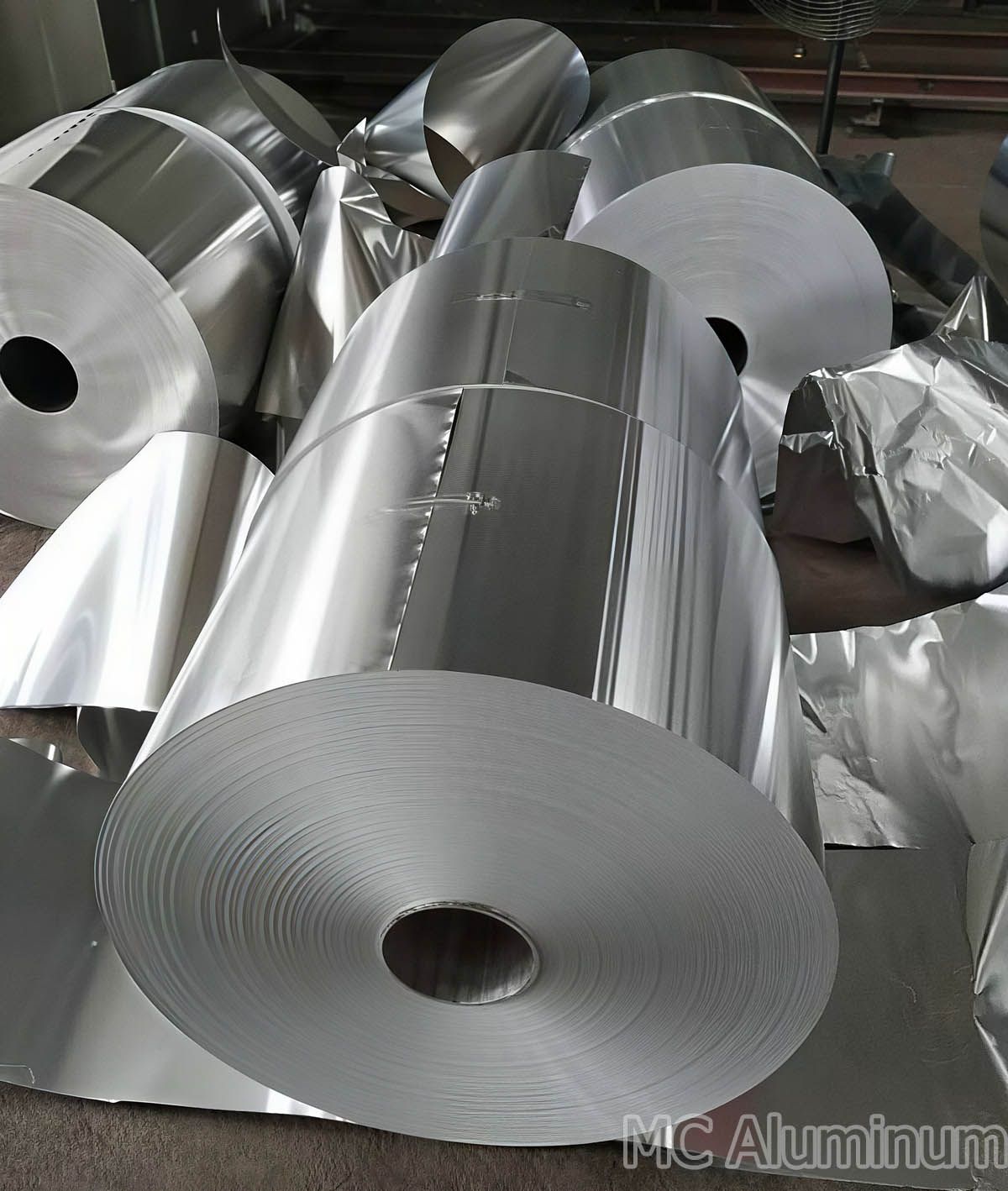
The foil is protected with anti-static and moisture-proof film, protective boards, and reinforced cartons or wooden pallets. This packaging helps prevent scratching, moisture exposure, oxidation, and contamination during transportation.
5. Flexible Supply and Delivery
We support:
Sample testing
Small-batch trial production
Stable large-volume supply
Customized non-standard specifications for customer R&D and product development
Customized slit widths, coil weights, core sizes, and packaging requirements