
Why is it that some tablets in a medicine box must be pushed out with a finger, while others can be peeled open directly?
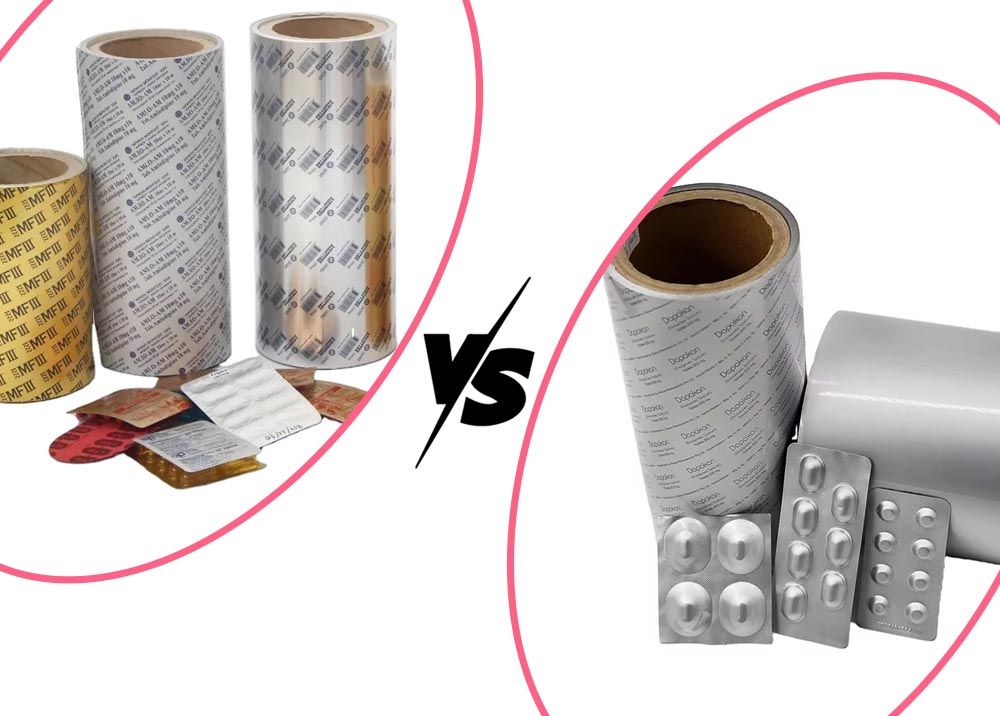
Behind this difference are two distinct pharmaceutical packaging materials at work: cold forming aluminum (ALU-ALU) and PTP aluminum foil.
Although both are aluminum-based packaging materials, they differ fundamentally in structure, performance, and application.
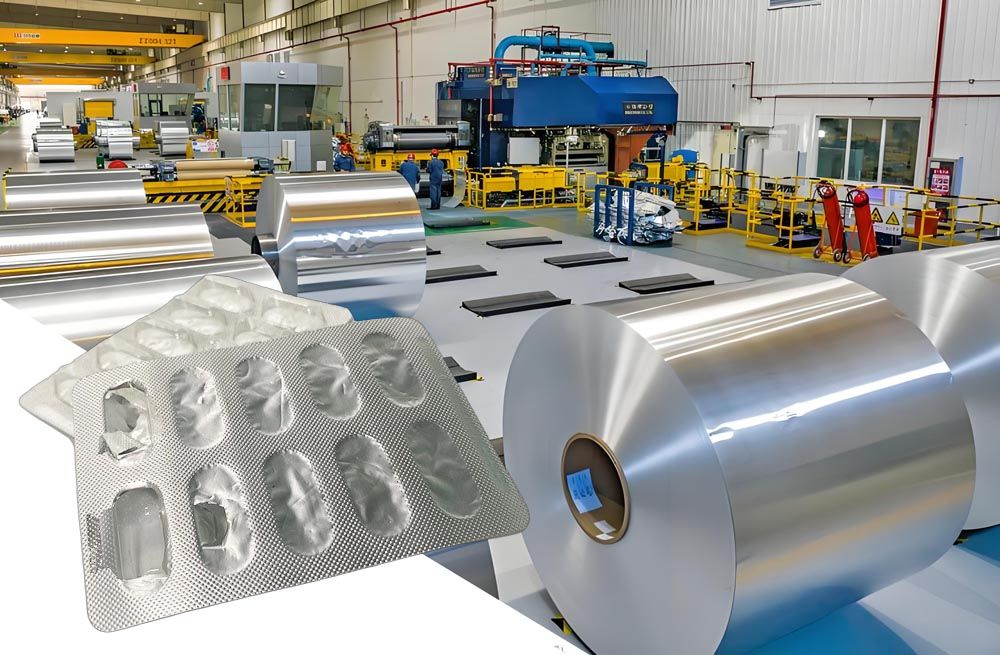
1. What Are ALU-ALU and PTP?
Cold Forming Aluminum (ALU-ALU)
Cold forming aluminum (ALU-ALU) is a multi-layer laminated rigid material. Its typical structure is OPA/AL/PVC (nylon/aluminum/PVC).
Through a cold forming process, blister cavities are formed directly in the laminate without heating, allowing the material to retain its superior barrier properties.
PTP Aluminum Foil
PTP aluminum foil (Push-Through Packaging Foil) is a single-layer pharmaceutical aluminum foil.
Its standard structure consists of a protective layer (OP), an aluminum foil base (AL), and a heat-sealing layer (VC), with a typical thickness range of 0.016-0.04 mm.
It is mainly used for heat sealing with PVC or PVDC plastic films to form blister packaging.
2. Key Differences Between ALU-ALU and PTP
1. Barrier Performance
ALU-ALU:
With aluminum foil on both the forming side and the lidding side, ALU-ALU provides 100% protection against water vapor, oxygen, and ultraviolet light.
For highly moisture-sensitive, oxidation-prone, or light-sensitive medicines, ALU-ALU is a true physical “safe haven.”
PTP Combination (PVC/Alu):
Although the PTP aluminum foil offers excellent barrier performance, the plastic base film (PVC) is microporous, allowing moisture and oxygen to slowly permeate.
Even when coated with PVDC to enhance barrier properties, it cannot achieve the same protection level as an all-aluminum system.
2. Forming Process
Cold Forming (ALU-ALU):
At room temperature, the aluminum laminate is mechanically pressed into blister cavities using forming dies.
This process requires very high material ductility, as insufficient elongation may lead to cracking.
Thermoforming (PTP with Plastic Base Film):
The plastic film is heated until softened and then formed into cavities using air pressure or vacuum.
3. Visibility and Appearance
PTP Packaging:
The transparent plastic base allows patients to clearly see the tablets’ color, shape, and condition, making verification easier.
ALU-ALU Packaging:
Both sides are metallic silver and completely opaque.
While it looks more premium, the medicine cannot be visually inspected until the blister is opened.
4. Cost and Efficiency
ALU-ALU:
Higher cost. In addition to the higher material price, cold forming requires larger blister cavity dimensions to prevent foil tearing.
As a result, package size is typically 30–50% larger than PTP packaging, increasing storage and transportation costs.
PTP Packaging:
Cost-effective and highly efficient, making it the most widely used blister packaging format on the market.
5. Typical Applications
ALU-ALU is suitable for:
Highly hygroscopic medicines
Oxidation-sensitive active ingredients
Light-sensitive drugs
Products exported to tropical or high-humidity regions
Long-acting or high-value formulations
PTP Aluminum Foil is suitable for:
Standard tablets and capsules
Formulations with moderate moisture and oxygen sensitivity
High-volume, cost-sensitive products
OTC medicines
6. User Experience
PTP Aluminum Foil:
Tablets can be pushed out directly, offering a user-friendly experience.
ALU-ALU:
Usually requires peeling or higher push-through force, which may be less convenient for elderly patients.
How Should You Choose?
When should ALU-ALU be selected?
If your product contains highly active pharmaceutical ingredients or is intended for distribution in hot and humid climates, the “fortress-like” protection of ALU-ALU is often the only reliable way to ensure product stability and shelf life.
When should PTP packaging be selected?
For most chemically stable medicines, the traditional combination of PTP aluminum foil and plastic blister film offers clear advantages in cost control, production efficiency, and user convenience, especially due to its visibility.