
With the rapid development of new energy vehicles worldwide, power battery production has increased significantly. As one of the key materials used in power batteries, demand for battery aluminum foil is growing accordingly.
Lithium batteries are among the most widely used rechargeable batteries today. They are extensively used in mobile electronic devices, electric vehicles, and energy storage systems. Aluminum foil for lithium batteries plays an essential role in electron conduction and current collection, and its market prospects are closely linked to the development of the lithium battery industry.
What Is Lithium Battery Aluminum Foil?
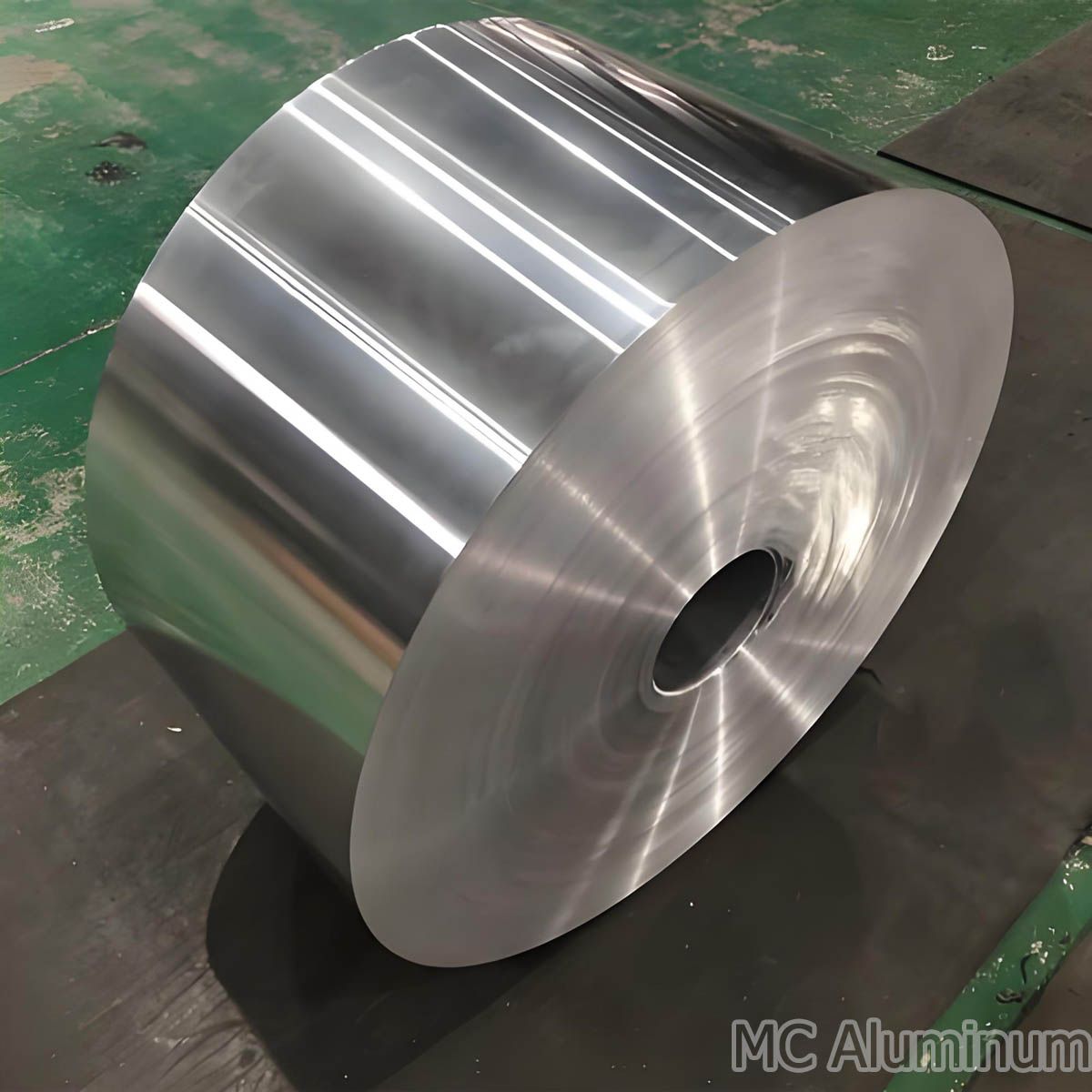
Lithium battery aluminum foil generally refers to high-performance aluminum foil used as the cathode current collector in lithium-ion batteries. It is also known as battery aluminum foil, lithium battery foil, or cathode current collector aluminum foil.
In a lithium-ion battery, electrode materials are responsible for storing and releasing lithium ions, while the transfer of electrons relies on current collectors. The primary function of aluminum foil is to quickly collect and conduct electrons generated or received by the cathode active material to the external circuit.
A power battery can be broadly understood as consisting of the following components:
Cathode material: Such as lithium iron phosphate (LFP) and ternary lithium materials, which provide sites for lithium-ion insertion and extraction.
Anode material: Usually graphite, silicon-carbon materials, or similar materials.
Electrolyte and separator: Allow lithium ions to move between the cathode and anode.
Current collectors: Aluminum foil is typically used for the cathode, while copper foil is generally used for the anode.
Therefore, aluminum foil is not an ordinary packaging material. It is a critical functional material inside a battery cell.
Why Is Aluminum Foil Commonly Used for Power Battery Cathodes?
1. Good Electrical Conductivity
Aluminum has good electrical conductivity and can meet the requirements for rapid electron transport at the cathode. Although copper has higher electrical conductivity than aluminum, aluminum offers an excellent balance of conductivity, weight, cost, and electrochemical stability for cathode applications.
2. Low Density
Aluminum has a much lower density than copper. At the same area and thickness, aluminum foil weighs less, helping reduce the proportion of inactive materials in the battery.
This lightweight advantage helps improve the gravimetric energy density of power batteries, allowing more of the battery’s total mass to be allocated to energy-storing active materials.
3. Electrochemical Stability
Within the operating voltage range of lithium-ion battery cathodes, aluminum can form a relatively stable oxide layer. It provides good corrosion resistance and electrochemical stability under normal cathode operating conditions.
By comparison, copper is prone to oxidation at the high potentials present on the cathode side, which is why it is generally used as the anode current collector instead.
4. Good Processability
Aluminum foil offers sufficient strength and ductility to withstand stress and deformation during battery electrode manufacturing, cell assembly, and service.
It can be processed through high-speed coating, calendering, slitting, winding, and stacking operations, making it suitable for large-scale battery production.
5. High Purity
Battery-grade aluminum foil has high purity, which helps minimize the impact of impurities on battery performance, consistency, and long-term reliability.
Common Materials for Battery Aluminum Foil
1. 1xxx Series Pure Aluminum Foil
The 1xxx series is the dominant material category for battery aluminum foil. Common grades include 1060, 1070, 1235, 1145, 1050, and 1100. Their main differences lie in aluminum purity and impurity content.
1235 Aluminum Foil
1235 aluminum foil is one of the most widely used grades for lithium-ion battery current collectors. Its aluminum content is generally required to be no less than 99.35%.
With appropriate control of iron (Fe), silicon (Si), and other elements, 1235 foil can achieve improved mechanical properties. Its tensile strength can typically reach 110–150 MPa, with good heat resistance and stamping formability.
1060 Aluminum Foil
1060 aluminum foil has an aluminum content of at least 99.60%. Its higher purity provides better electrical conductivity and corrosion resistance than 1235 aluminum foil.
It also has more stable chemical properties, making it suitable for applications with higher durability and performance requirements.
1070 Aluminum Foil
1070 aluminum foil has an aluminum content of at least 99.70%, making it one of the highest-purity grades commonly used in the market.
Its very high purity contributes to lower electrical resistivity and excellent conductivity, making it suitable for high-performance battery applications.
1050 Aluminum Foil
1050 aluminum foil contains at least 99.00% aluminum. It is an entry-level high-purity aluminum foil grade with relatively low cost.
1100 Aluminum Foil
1100 is also a 1xxx series pure aluminum grade. In the industry standard Aluminum and Aluminum Alloy Foil for Lithium-Ion Power Batteries (T/ZZB 1203—2019), 1100 is listed as an applicable grade together with 1060 and 1070.
2. Carbon-Coated Aluminum Foil
In recent years, carbon-coated aluminum foil has become an important industry focus.
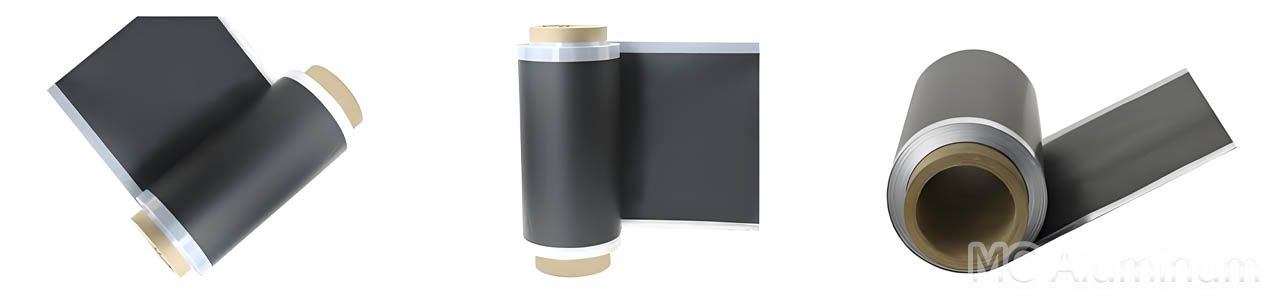
Carbon-coated aluminum foil is produced by applying a conductive carbon coating to the surface of aluminum foil. This coating can improve the interface contact between the aluminum foil and cathode material, reduce contact resistance, and enhance coating adhesion.
It can also improve the rate performance and cycle stability of the battery to a certain extent. As demand for high-power, high-rate charging and discharging, and long-cycle-life batteries continues to grow, carbon-coated aluminum foil is expected to see broader application.
3. Composite Aluminum Foil
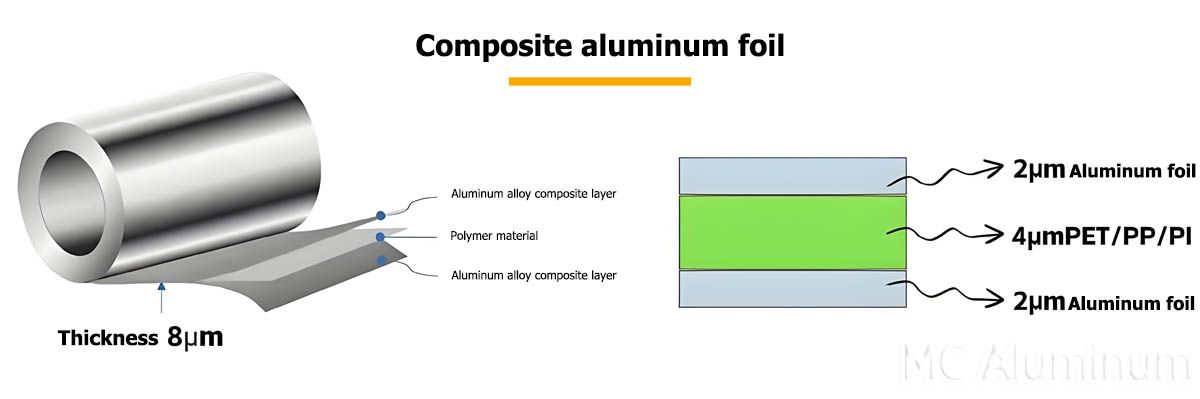
Composite aluminum foil is a new material with a three-layer “sandwich” structure. It generally consists of a polymer film, such as PET, in the middle, with an ultra-thin aluminum layer deposited on both sides.
Compared with conventional pure aluminum foil, composite aluminum foil offers several potential advantages:
Lower weight, which can further improve battery energy density;
Improved safety under nail penetration or internal short-circuit conditions;
The polymer layer can melt or disconnect under extreme conditions, helping reduce the risk of continuous short-circuit conduction.
Composite aluminum foil is considered a promising direction for next-generation lightweight and high-safety battery current collectors.
Common Temper Conditions
The temper condition of aluminum foil is also important. Common tempers include:
O temper: Soft annealed condition;
H temper: Strain-hardened condition;
H18: Full-hard condition;
H24: Half-hard condition.
At present, H18 hard temper is one of the mainstream conditions for power battery aluminum foil, as it offers suitable strength and processing stability.
Position and Function of Aluminum Foil in Battery Structure
In a lithium-ion battery, aluminum foil is typically used as the cathode current collector. It is located beneath the cathode material coating and is closely bonded with cathode active materials, such as lithium iron phosphate and ternary cathode materials.
The main functions of aluminum foil include:
Current Collection
Aluminum foil efficiently collects current from the cathode active material and conducts electrons to the external circuit.
Mechanical Support
It provides structural support for the cathode coating and helps prevent deformation or damage to the electrode during charging and discharging cycles.
Electrochemical Interface
A stable interface between the aluminum foil and cathode coating promotes electron transport and supports efficient electrochemical reactions.
Thermal Management
Aluminum foil can assist with heat transfer and heat dissipation within the electrode structure, contributing to improved battery safety and thermal stability.
Production Process of Lithium Battery Aluminum Foil
The production of battery-grade aluminum foil involves strict control over purity, thickness, surface quality, flatness, strength, and cleanliness.
1. Aluminum Ingot Melting
High-purity aluminum raw materials are melted and refined to reduce hydrogen content and control impurity levels, ensuring material purity and consistency.
2. Continuous Casting and Rolling
The molten aluminum is processed through continuous casting and rolling to form aluminum strip, which serves as the base material for subsequent rolling processes.
3. Cold Rolling and Foil Rolling
The aluminum strip undergoes multiple cold rolling and foil rolling operations to reduce thickness while improving flatness, grain structure, surface quality, and mechanical properties.
For example, 12 μm lithium battery aluminum foil requires highly precise rolling control to ensure uniform thickness and stable performance.
4. Surface Treatment
Surface treatment may be used to improve coating adhesion, corrosion resistance, wettability, and electrochemical stability. Depending on customer requirements, the foil surface may also be optimized for cathode slurry coating.
5. Slitting and Packaging
The finished aluminum foil is slit according to the required width, coil diameter, and coil weight. Proper packaging is essential to ensure compatibility with automated battery production lines and to prevent damage, moisture exposure, or surface contamination during transportation.
Comparison Between Aluminum Foil and Copper Foil
In lithium-ion batteries, aluminum foil is typically used as the cathode current collector, while copper foil is normally used as the anode current collector. The use of aluminum foil on the cathode side is based on its specific physical and electrochemical properties.
Electrochemical Stability
Aluminum foil has good stability in the high-potential cathode environment of lithium-ion batteries. Copper, on the other hand, is more suitable for the lower-potential anode side.
Electrical Conductivity
Copper has higher electrical conductivity than aluminum. However, aluminum offers sufficiently high conductivity for cathode current collection while providing important advantages in weight, cost, and high-voltage electrochemical compatibility.
Cost Efficiency
Aluminum foil generally has a lower material cost than copper foil, making it more suitable for large-scale battery manufacturing.
Lightweight Advantage
Aluminum is significantly lighter than copper. Using aluminum foil on the cathode side helps reduce battery weight and supports higher energy density.
Application Prospects of Aluminum Foil for New Energy Batteries
Lithium-Ion Batteries
Lithium-ion batteries are among the most widely used rechargeable battery technologies. They are commonly used in consumer electronics, electric vehicles, electric buses, energy storage systems, power tools, and other applications.
As a key cathode current collector material, battery aluminum foil is closely tied to the growth of the lithium-ion battery industry.
Lithium Polymer Batteries
Lithium polymer batteries are high-energy-density batteries known for their flexible form factor and good safety potential. Aluminum foil used in lithium polymer batteries is often thinner to accommodate lightweight and flexible battery designs.
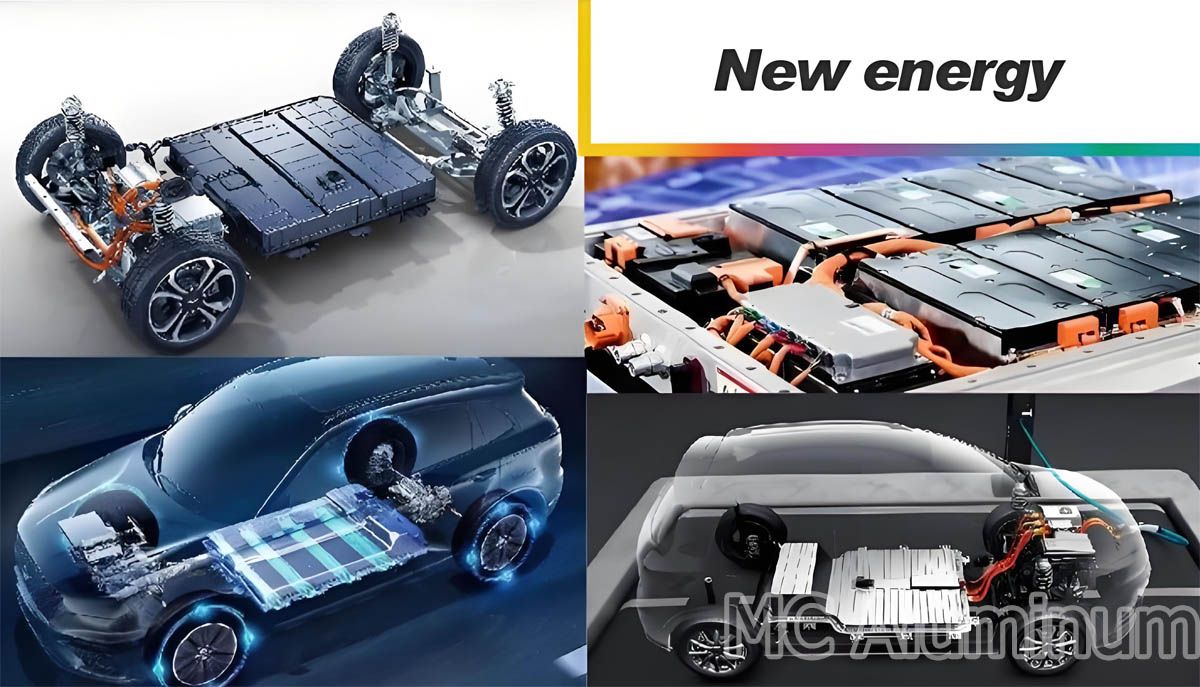
Growing Demand from New Energy Vehicles and Energy Storage
As markets for electric vehicles, renewable energy systems, grid-scale energy storage, and portable electronic devices continue to expand, the lithium battery industry is expected to maintain long-term growth.
As a result, demand for battery-grade aluminum foil will continue to increase. At the same time, advances in rolling technology, surface treatment, carbon coating, composite current collectors, and quality control will further improve the performance of lithium battery aluminum foil.
Future battery aluminum foil will continue to develop toward:
Thinner thickness;
Higher purity;
Better surface quality;
Improved strength and processing stability;
Lower internal resistance;
Enhanced coating adhesion;
Greater compatibility with fast-charging and long-cycle-life battery systems;
Lower-carbon and more sustainable manufacturing.
Battery-grade aluminum foil may be thin, but it is a critical material supporting the performance, safety, lightweight design, and large-scale production of new energy vehicle power batteries.