
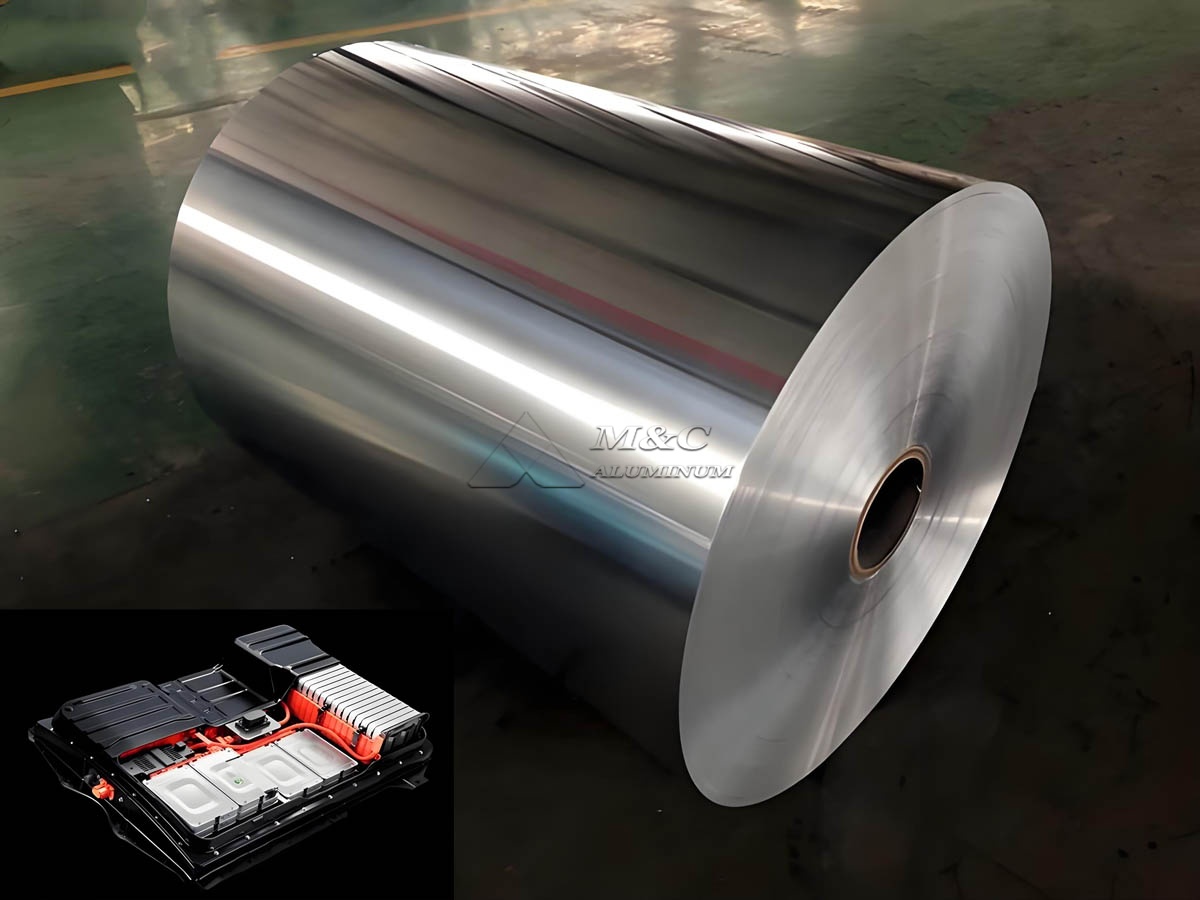
As a manufacturer of battery aluminum foil, we control surface treatment as an integral part of foil production rather than as a secondary finishing operation. For lithium-ion battery cathode current collectors, surface condition directly affects coating adhesion, electrical contact, electrolyte wetting behavior, corrosion resistance, and the consistency of downstream electrode manufacturing.
Battery aluminum foil is commonly produced from high-purity aluminum alloys such as 1235, 1100, and selected 1xxx series grades. The foil must provide stable mechanical properties, low surface contamination, controlled roughness, and uniform surface energy before slurry coating. A well-designed battery aluminum foil surface treatment process helps electrode manufacturers achieve more stable coating quality and reduce risks such as peeling, pinholes, uneven coating weight, and excessive contact resistance.
Why Surface Treatment Is Required for Battery Aluminum Foil
During rolling, annealing, slitting, and handling, aluminum foil may retain rolling oil, fine aluminum particles, oxide residues, moisture, or airborne contaminants. Even when these residues are present at very low levels, they can affect the interaction between the aluminum substrate and cathode slurry.
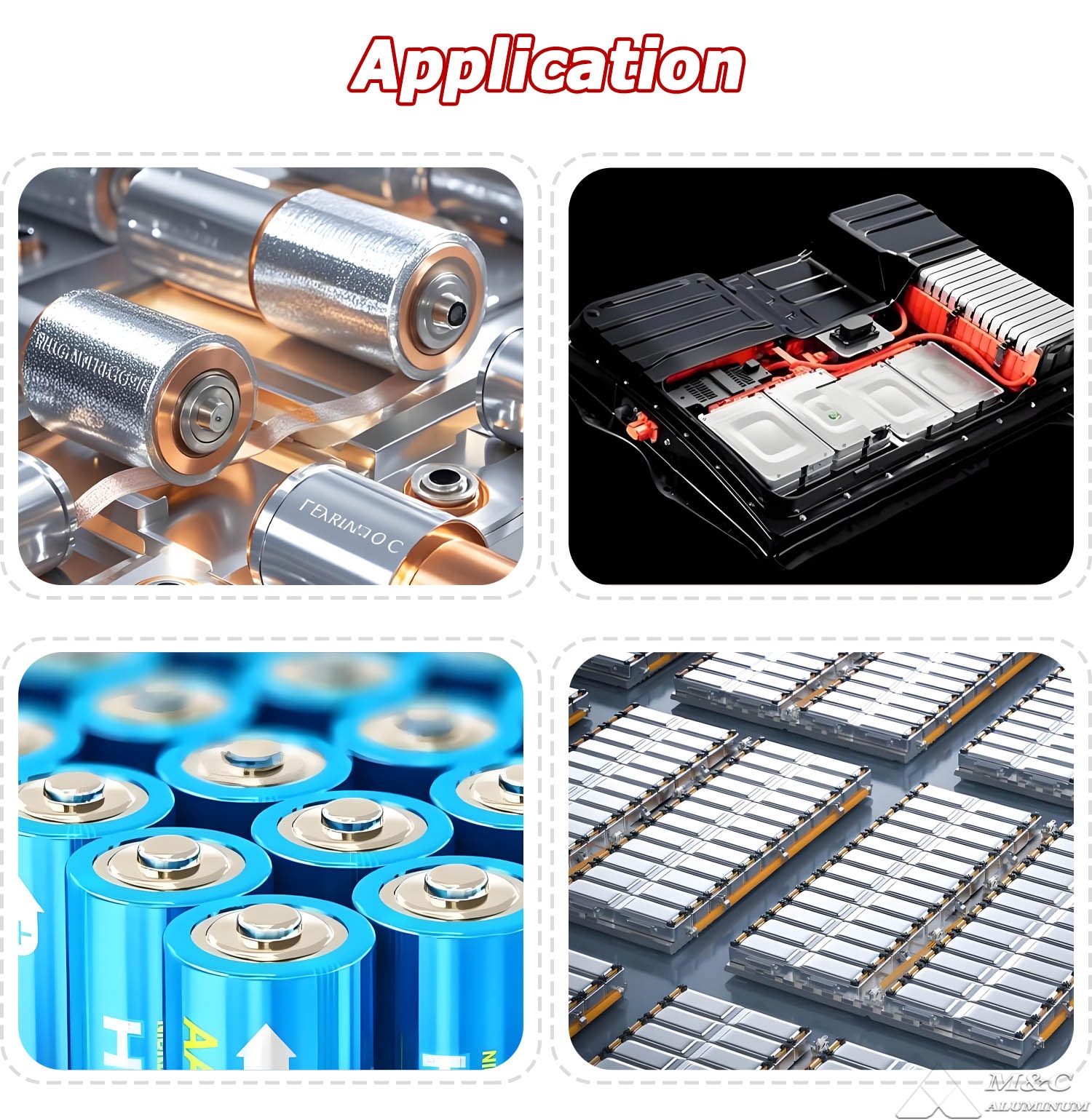
In a typical lithium-ion cathode manufacturing line, the foil is coated with an active material slurry containing lithium metal oxides, conductive carbon, binder, and solvent. If the foil surface has insufficient cleanliness or poor surface energy, the slurry may not spread evenly. This can lead to localized coating defects, reduced peel strength, and unstable electrical performance after calendaring and cell assembly.
Our surface treatment process for battery aluminum foil is designed to achieve the following objectives:
Remove rolling oil and fine surface contamination.
Maintain uniform and controlled oxide characteristics.
Improve surface wettability for water-based or solvent-based electrode slurries.
Create suitable micro-roughness for mechanical anchoring of the coating layer.
Avoid excessive chemical attack that could reduce foil strength or generate surface pits.
Deliver stable coil-to-coil and batch-to-batch surface consistency.
Base Foil Selection Before Surface Treatment
Surface treatment performance begins with the base aluminum foil. The alloy, temper, thickness tolerance, surface quality, and residual oil level must be controlled before any chemical or physical treatment is applied.
For cathode current collector applications, 1235 Aluminum Foil is widely selected because of its high aluminum content, good electrical conductivity, and stable rolling performance. Depending on customer requirements, we also manufacture battery foil using 1100 alloy and other suitable grades with controlled impurity content.
The foil is generally supplied in soft temper for electrode coating and calendaring operations. Our manufacturing process includes melting, casting, hot rolling where applicable, cold rolling, intermediate annealing, final rolling, cleaning, slitting, and inspection. Surface treatment is integrated with these production stages to prevent recontamination before packaging.
Typical Technical Parameters for Battery Aluminum Foil
| Parameter | Typical Range or Requirement | Process Significance |
|---|---|---|
| Alloy | 1235, 1100, or specified 1xxx alloy | Supports conductivity and corrosion resistance |
| Thickness | 10-20 microns, customized | Must match electrode design and coating equipment |
| Temper | O or customer-specified soft temper | Supports coating, winding, and calendaring |
| Surface cleanliness | Low residual rolling oil | Improves slurry wetting and coating adhesion |
| Surface roughness, Ra | Typically 0.20-0.80 microns | Supports anchoring without excessive roughness |
| Tensile strength | According to alloy and thickness specification | Ensures stable handling during coating and slitting |
| Elongation | Controlled for downstream processing | Reduces risk of foil breakage |
| Pinholes | Controlled according to thickness and application | Prevents localized electrode defects |
| Surface tension | Verified after treatment where required | Indicates wettability and surface activation |
The actual specification is confirmed according to the cathode chemistry, coating method, line speed, slurry system, and the customer's electrode process window.
Main Steps in the Battery Aluminum Foil Surface Treatment Process
1. Incoming Surface Inspection
Before treatment, we inspect the foil for rolling marks, scratches, wrinkles, edge cracks, oil stains, pinholes, and uneven gloss. We also verify thickness, width, coil geometry, and surface cleanliness. A stable incoming surface is essential because chemical cleaning cannot fully correct defects caused by poor rolling or handling.
Surface inspection may include visual examination under controlled lighting, residual oil testing, roughness measurement, contact angle evaluation, and sampling for microscopic analysis. Our production team uses these results to select appropriate cleaning intensity and process parameters.
2. Alkaline or Neutral Degreasing
Degreasing is the primary cleaning stage in the aluminum foil coating process. The purpose is to remove residual rolling oil, fingerprints, dust, and organic contaminants without damaging the foil surface.
Depending on foil alloy and customer requirements, we use carefully controlled alkaline, neutral, or low-alkaline aqueous cleaning systems. The cleaning bath composition, concentration, temperature, dwell time, and spray pressure are adjusted to achieve effective removal of organic residues while minimizing etching.
Excessive alkalinity or prolonged exposure can cause uneven etching, surface darkening, or reduced foil integrity. Insufficient degreasing can leave oil residues that reduce slurry spreading and bonding strength. Therefore, bath chemistry and contamination levels are monitored continuously during production.
3. Water Rinsing and Conductivity Control
After degreasing, the foil passes through multiple rinse stages. Rinsing removes cleaner residues and dissolved contaminants from the foil surface. Inadequate rinsing may leave sodium, potassium, chloride, or other ionic residues that can negatively affect battery electrode performance.
We control rinse-water conductivity, pH, temperature, and replacement frequency. Final rinsing is generally performed using treated water with low ionic contamination. This stage is particularly important for battery-grade aluminum foil because trace residues can affect the stability of the electrode interface.
4. Controlled Surface Etching or Micro-Roughening
For applications requiring enhanced coating adhesion, the foil may undergo controlled micro-roughening. This process modifies the surface topography at a microscopic level, increasing the effective contact area between the aluminum foil and electrode coating.
The objective is not to create a visibly rough or damaged surface. Instead, the treatment produces a uniform micro-texture that improves mechanical interlocking with the binder and active material layer. Surface roughness must remain within a controlled range because excessive roughness can increase coating variation or create localized stress points during calendaring.
Our engineers determine the appropriate roughness target according to the slurry formulation and electrode loading. Water-based PVDF-free systems and conventional solvent-based systems may require different surface energy and roughness conditions.
5. Surface Activation or Conversion Coating
Some battery aluminum foil applications require additional surface activation or a thin conversion layer. These treatments can improve coating adhesion, corrosion resistance, and stability during electrode processing.
Possible methods include non-chromium conversion treatments, inorganic surface activation, or specialized functional coatings developed for cathode current collector applications. The selected treatment must be compatible with battery materials and must not introduce undesirable ionic contaminants.
The coating weight of a conversion layer is tightly controlled. A layer that is too thin may not provide sufficient functional improvement, while an excessive layer can increase electrical resistance or interfere with electrode conductivity. We evaluate conversion coating uniformity through process monitoring, surface analysis, adhesion testing, and electrical performance checks.
6. Drying and Moisture Removal
After aqueous treatment, controlled drying is necessary to remove moisture and prevent water spots. Drying temperature and residence time must be optimized to ensure a dry, uniform surface without changing the foil temper or causing oxidation defects.
For battery applications, moisture control is particularly important because residual water can affect slurry preparation, coating stability, and subsequent cell manufacturing. Our drying section uses controlled hot air and tension management to maintain flatness and avoid wrinkles, edge waves, or thermal distortion.
7. Final Inspection, Slitting, and Packaging
After treatment and drying, the battery aluminum foil is inspected again for surface uniformity, cleanliness, roughness, dimensional accuracy, and winding quality. The finished coil is slit according to customer width requirements under controlled tension.
We use protective packaging materials to prevent dust, moisture, and mechanical damage during storage and export transportation. Coil labels include alloy, temper, thickness, width, net weight, production batch, and traceability information. This enables customers to link incoming foil coils with their own electrode coating records.
Process Control Parameters
The following table summarizes the main control points in our battery aluminum foil surface treatment line.
| Process Stage | Key Control Item | Typical Control Purpose |
|---|---|---|
| Degreasing | Bath concentration, temperature, spray pressure | Removes rolling oil and organic residues |
| Rinsing | Water conductivity, pH, flow rate | Prevents cleaner and ionic residue carryover |
| Etching | Chemical activity, exposure time, surface loss | Produces consistent micro-roughness |
| Surface activation | Coating concentration and pickup amount | Improves adhesion and surface functionality |
| Drying | Temperature, air volume, residence time | Removes moisture without surface damage |
| Slitting | Tension, edge condition, burr control | Maintains coil quality for electrode coating |
| Final inspection | Roughness, cleanliness, visual defects | Confirms conformance before shipment |
Quality Verification for Treated Battery Foil
Our quality control program combines online monitoring with laboratory testing. The exact test plan is adjusted according to each customer's technical agreement, but common verification methods include surface tension testing, contact angle testing, residual oil analysis, roughness measurement, peel strength evaluation, pinhole inspection, and coating trial assessment.
For customers producing high-loading cathodes, we can support evaluation of coating uniformity and adhesion under representative processing conditions. This approach helps confirm that the treated electrode aluminum foil performs consistently with the customer's slurry, coating head, drying profile, and calendaring pressure.
We also maintain traceability from raw material through finished coil shipment. Production data, inspection records, and coil identification are retained to support consistent supply management.
Selecting the Appropriate Surface Treatment
There is no single surface treatment suitable for every battery aluminum foil application. The optimal process depends on the cathode material, binder system, solvent system, coating thickness, electrode density, and required adhesion level.
For standard cathode current collectors, a clean and uniformly degreased surface may be sufficient. For demanding high-speed coating lines, high-loading electrodes, or specialized aqueous slurry systems, controlled roughening and functional surface activation may provide additional process stability.
As a foil manufacturer, we recommend confirming the target parameters through coating trials rather than selecting treatment solely by appearance. Surface chemistry, cleanliness, and microstructure should be evaluated together with the actual electrode process.
Conclusion
The surface treatment process for battery aluminum foil is essential for producing reliable cathode current collectors. Effective degreasing, rinsing, micro-roughening, surface activation, drying, and final inspection create a clean and consistent substrate for electrode coating.
Our manufacturing process is designed to deliver battery aluminum foil with controlled surface cleanliness, wettability, roughness, and coil quality. By matching surface treatment parameters to the customer's electrode formulation and coating conditions, we help support stable production of lithium-ion battery electrodes and reduce downstream coating-related defects.