
Battery-grade aluminum foil is specifically developed and manufactured for lithium-ion batteries. It serves as the cathode substrate and current collector—essentially the framework that supports active materials and conducts electrons. The foil is clean and uniform, with a defect-free surface that does not compromise coating adhesion or electrical performance.
Traditional cathode current collectors use plain aluminum foil. However, as batteries move toward ultra-fast charging, high-rate discharge, and extended cycle life, the contact resistance and delamination risk between bare aluminum foil and cathode active materials have gradually become performance bottlenecks. Carbon-coated aluminum foil addresses these challenges by applying an ultra-thin conductive carbon layer to the surface of micron-scale aluminum foil.
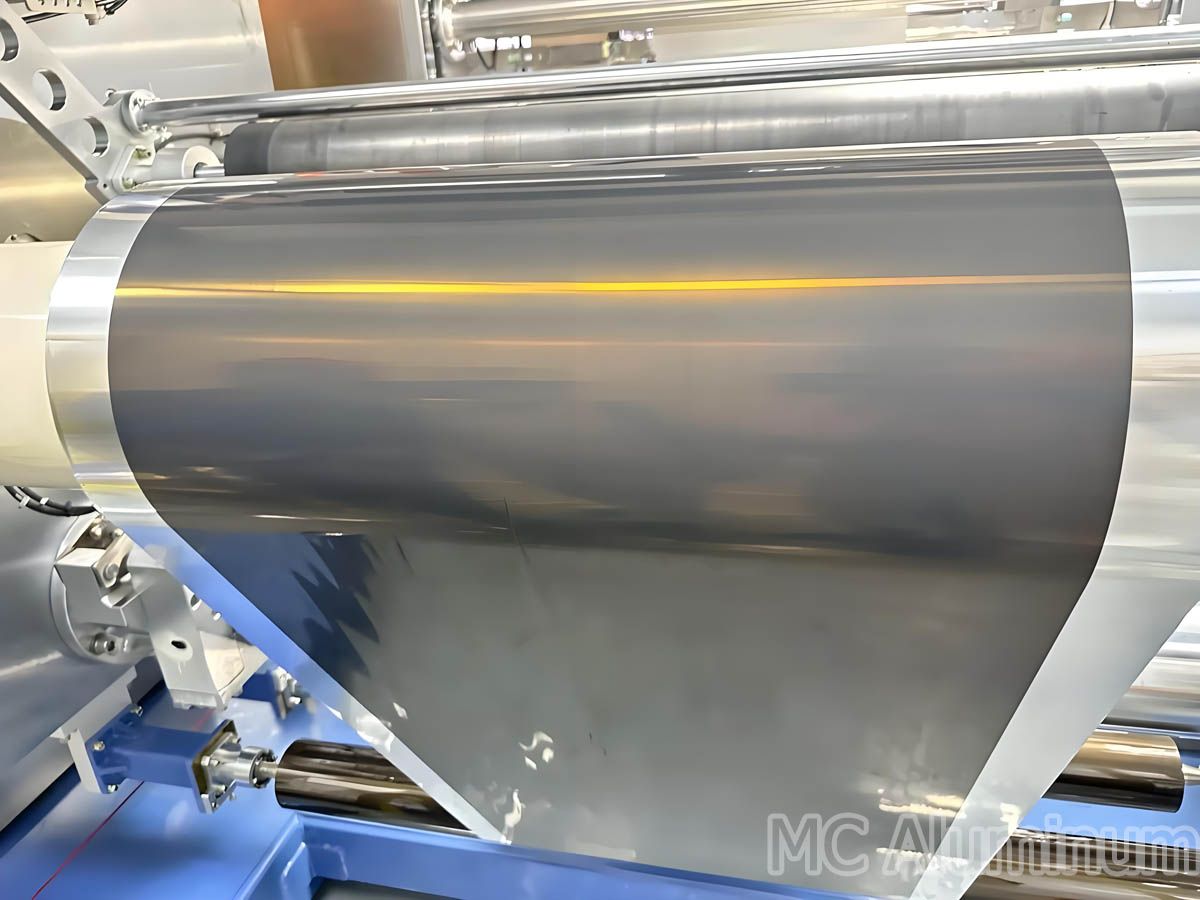
What Is Carbon-Coated Aluminum Foil?
Carbon-coated aluminum foil for lithium-ion batteries refers to aluminum or aluminum alloy foil used as a cathode current collector in lithium-ion batteries. Together with cathode materials such as lithium iron phosphate (LFP), lithium cobalt oxide (LCO), and lithium manganese oxide (LMO), it forms part of the lithium-ion battery cathode.
Depending on the manufacturing process and materials used, battery aluminum foil can be classified into plain foil, coated foil, and composite aluminum foil.
Carbon-coated aluminum foil is produced by uniformly coating one or both sides of battery-grade plain aluminum foil with a composite conductive layer made of nanoscale conductive carbon particles, such as conductive carbon black, graphene, or carbon nanotubes—and specialized binders.
The coating is typically only 0.5–2 μm thick, yet it forms a high-performance "microscopic bridge" between active materials, such as lithium iron phosphate (LFP) and ternary NCM/NCA materials and the aluminum foil substrate.
Carbon-coated aluminum foil can significantly reduce the internal resistance of lithium iron phosphate batteries. It improves contact between active materials and the foil, as well as current conduction within the electrode, thereby enhancing rate capability, low-temperature performance, cycling performance, and storage performance.
Compared with ternary lithium batteries, LFP batteries have lower electrical conductivity and energy density. Carbon coating can improve the cycling performance of LFP batteries; therefore, aluminum foil used for LFP batteries generally requires carbon coating.
This product is available in Type A and Type B, each with distinct characteristics:
Type A: Black appearance; standard total coating thickness on both sides is 4-8 μm. It offers more prominent conductive performance.
Type B: Light gray appearance; standard total coating thickness on both sides is 2–3 μm. The coating area can retain relatively small welding zones and supports intermittent coating gaps recognizable by coating equipment.
Functions of Carbon-Coated Aluminum Foil
For new energy vehicle lithium batteries, higher product value is generally associated with stronger performance. Carbon-coated aluminum foil contributes to battery performance in the following ways:
Suppresses battery polarization, reduces thermal effects, and improves rate performance;
Reduces battery internal resistance and significantly lowers the increase in dynamic internal resistance during cycling;
Improves consistency and extends battery cycle life;
Enhances adhesion between active materials and the current collector, reducing electrode manufacturing costs;
Protects the current collector from electrolyte corrosion;
Improves high- and low-temperature performance of LFP batteries and enhances the processability of LFP and lithium titanate materials.
Aluminum Foil Specifications for Battery Substrates
| Item | Specification |
| Aluminum foil alloy | 1060, 1070, 1235, etc. |
| Thickness | 0.01–0.025 mm |
| Width | 200–1,500 mm, customizable |
| Tensile strength | 40–150 MPa |
| Elongation | >1% |
| Roll core inner diameter | 30–76.2 mm, customizable |
| Purity | >99.8% |
| Carbon coating thickness | 0.2–2 μm, single-sided or double-sided |
| Surface treatment | Single-sided carbon coating or double-sided carbon coating |
| Coating pattern | Continuous coating or intermittent coating |
| Surface color | Black or dark gray |
| Application | Cathode current collector |
Key Performance Advantages of Carbon-Coated Aluminum Foil
1. High Electrical Conductivity
Carbon materials provide excellent electron conductivity, helping reduce battery polarization and improve charge/discharge efficiency.
2. Excellent Interfacial Stability
The carbon coating improves contact between the aluminum foil and cathode materials, enhancing electrode structural stability.
3. Good Corrosion Resistance
The carbon layer protects the aluminum foil surface, reducing corrosion risks in electrolyte environments and improving battery safety.
4. Improved Coating Processability
After carbon coating treatment, the aluminum foil surface has improved roughness and wettability, which helps to:
Ensure uniform cathode slurry coating;
Reduce coating defects;
Improve production consistency.
5. Compatibility with Multiple Cathode Chemistries
Carbon-coated aluminum foil can be widely used in mainstream lithium-ion battery systems, including:
Lithium iron phosphate batteries (LFP);
Ternary lithium batteries (NCM);
Lithium cobalt oxide batteries (LCO);
Lithium manganese oxide batteries (LMO).
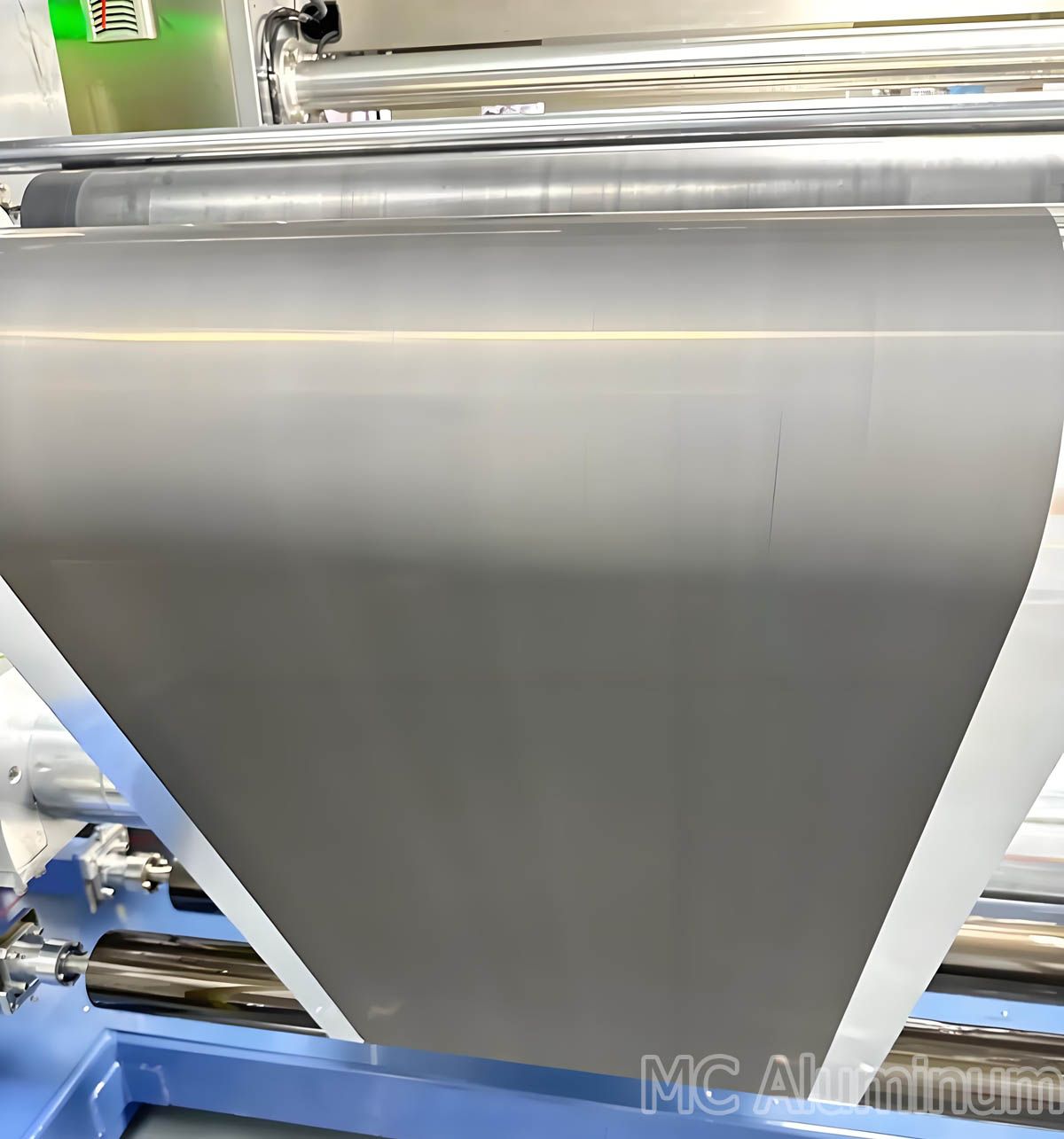
Applications of Carbon-Coated Aluminum Foil
High-power lithium-ion batteries using fine-particle active materials;
Lithium iron phosphate cathodes;
Fine-particle ternary material or lithium manganese oxide cathodes;
Supercapacitors;
Primary lithium batteries, including lithium thionyl chloride, lithium manganese dioxide, lithium iron, and coin-cell batteries, where it can replace etched aluminum foil.
Production Process of Carbon-Coated Aluminum Foil
Carbon-coated aluminum foil is generally manufactured using a continuous coating process. Although formulations and equipment may differ among manufacturers, the overall process typically includes the following stages.
1. Aluminum Foil Surface Treatment
Before coating, the aluminum foil surface must be clean, uniform, and have suitable surface energy. Depending on product requirements, degreasing, cleaning, surface activation, or other pretreatment processes may be used to improve bonding strength between the carbon layer and the aluminum foil.
2. Conductive Slurry Preparation
Conductive carbon materials, binders, solvents, and functional additives are mixed, dispersed, and milled to produce a stable conductive carbon slurry.
3. Precision Coating
Gravure coating, micro-gravure coating, comma-bar coating, or other continuous coating methods are used to apply the conductive slurry uniformly to the aluminum foil surface.
Depending on application requirements, carbon-coated aluminum foil may be designed as:
Single-sided carbon coated;
Double-sided carbon coated;
Partially carbon coated;
Stripe-coated or patterned-coated.
Double-sided carbon coating is suitable for common electrode designs in which cathode material is coated on both sides. Partial or stripe coating helps retain specific areas for welding, electrical connection, or other processing functions.
4. Drying and Curing
After coating, the aluminum foil passes through drying ovens to evaporate solvents and cure the coating. Drying temperature, airflow, web tension, and line speed all affect coating quality.
Excessively rapid drying may cause high internal stress within the coating. Insufficient drying may result in residual solvent, inadequate adhesion, and other quality issues.
5. Online Inspection and Slitting
Finished products generally undergo visual inspection, thickness measurement, coating weight measurement, surface resistance testing, adhesion testing, pinhole inspection, and roll flatness inspection.
For battery materials, consistency is critical. Even minor localized defects may be amplified during subsequent electrode manufacturing or cell cycling, affecting product yield, safety, and reliability.
Performance Comparison: Conventional Plain Aluminum Foil vs. Carbon-Coated Aluminum Foil
| Performance Indicators | Conventional Plain Aluminum Foil | Carbon-Coated Aluminum Foil | Performance Improvement |
| Interface contact resistance | Relatively high (approx. 10–30 Ω·cm²) | Extremely low (approx. 1–5 Ω·cm²) | Reduce by 60%–80% |
| Electrode Peel Strength | Baseline (1.0×) | Doubled (2.0× – 3.0×) | Increased by over 100% |
| High-rate discharge capacity retention rate | Poor (high polarization at high rates) | Excellent (low polarization, flat discharge plateau) | Improved by 5%–15% |
| Capacity retention after 1,000 cycles | Moderate | Significant improvement | 15%–30% longer lifespan |
| Binder content | High requirement | Can be appropriately reduced | Indirectly increases energy density |