
Battery pouch aluminum foil is one of the core materials used in lithium-ion battery pouch-cell packaging. It is generally used as the metallic substrate of aluminum laminated film, also known as aluminum-plastic film. In practical applications, the thickness uniformity and surface quality of aluminum foil directly affect battery sealing performance, production yield, and safety.
This article provides a comprehensive overview of this essential battery material.
What Is Battery Pouch Aluminum Foil?
Unlike conventional steel-case or aluminum-case batteries, pouch cells rely on aluminum laminated film for overall packaging and sealing.
Aluminum laminated film is a multilayer composite material. It typically consists of:
An outer nylon protective layer;
A middle aluminum foil barrier layer;
An inner heat-sealing layer, usually cast polypropylene (CPP).
The middle aluminum foil layer is commonly referred to as battery pouch aluminum foil. It serves as the core barrier and forming layer of the aluminum laminated film.
The aluminum foil layer, typically around 35–50 μm thick, is the most critical component of the laminated film because it provides:
Near-Zero Permeability: The foil layer blocks external moisture and oxygen, helping prevent electrolyte deterioration, internal contamination, gas generation, and battery swelling.
Excellent Ductility and Deep-Drawability: During cold-forming or deep-drawing processes, aluminum laminated film is stamped into cavities that accommodate the cell stack or jelly roll. The aluminum foil must resist cracking, pinholes, excessive thinning, and delamination during this process.
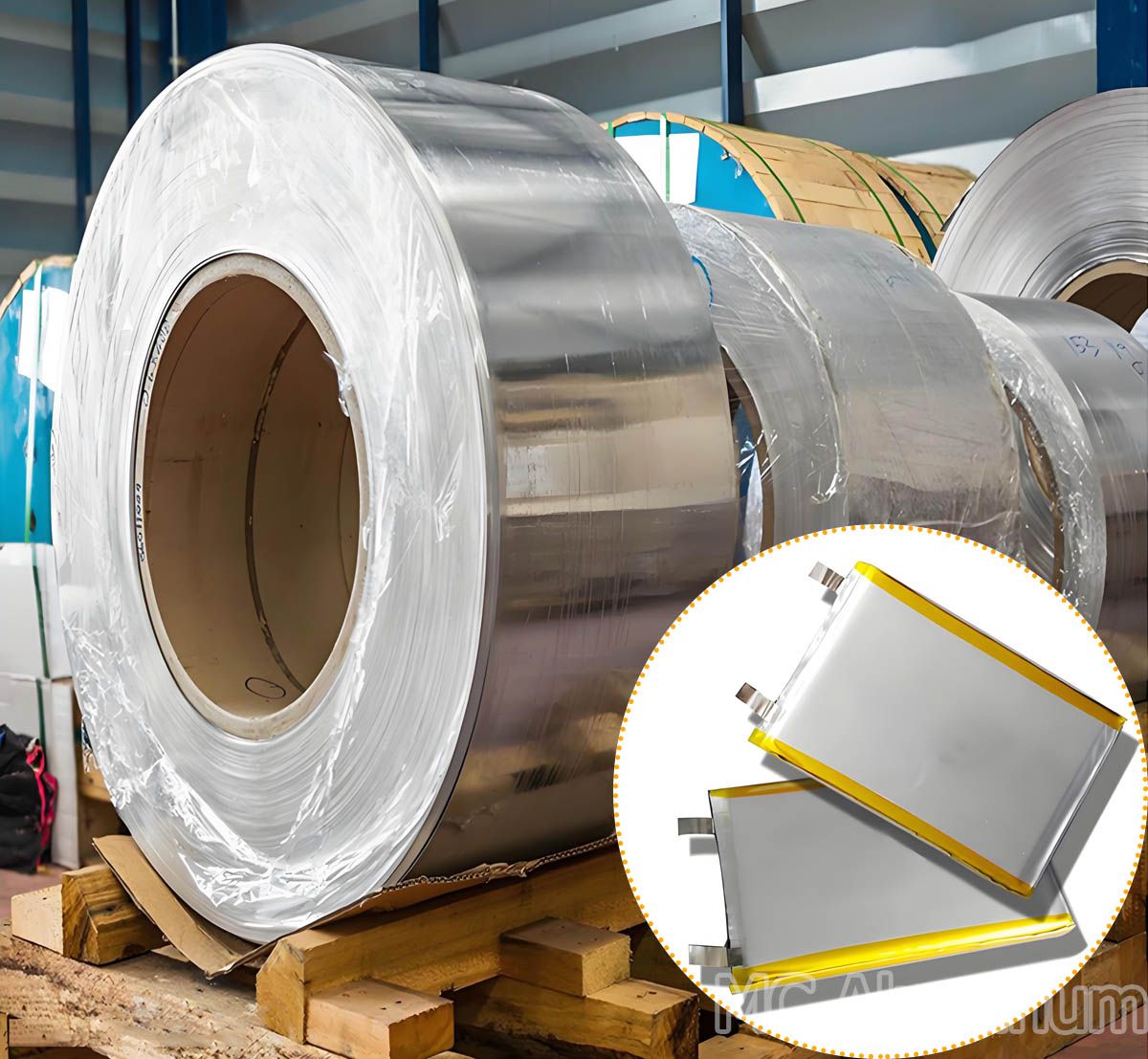
The Role of Aluminum Foil in Pouch Batteries
1. Structural Support
The aluminum foil layer provides a certain level of mechanical strength and dimensional stability to the pouch package. It helps the pouch cell withstand moderate compression, vibration, handling impact, and deformation during daily use.
2. Barrier Protection
This is the foil's primary function in aluminum laminated film. Aluminum foil effectively prevents moisture, oxygen, and contaminants from entering the battery, while also reducing the risk of electrolyte vapor loss or leakage.
3. Light Shielding
Aluminum foil is opaque and can block ultraviolet and visible light. This helps minimize potential light-induced degradation of electrolyte components and other sensitive battery materials.
4. Thermal Transfer Support
Aluminum has relatively good thermal conductivity. Although the aluminum foil layer is not the main thermal-management component of a battery pack, it can contribute to heat distribution within the pouch structure and assist in transferring heat away from the cell under certain conditions.
Important clarification: The aluminum foil used in aluminum laminated film is a packaging barrier layer. It should not be confused with aluminum foil used as a positive-electrode current collector inside the battery. The two materials have entirely different functions and performance requirements.
Core Material Properties of Battery Pouch Aluminum Foil
Ultra-high barrier properties: Water vapor transmission rate ≤0.1g/(m²·24h); prevents external moisture ingress and electrolyte leakage, avoiding swelling;
Excellent deep-drawability: 8021 aluminum foil elongation of 13%–18% and an Erichsen cupping value of 7.3mm ensure no rupture during cold forming;
Superior light-shielding performance: Opaque aluminum foil effectively blocks UV and visible light, minimizing the impact of light exposure on battery material stability;
Superior pinhole control: Achieves "zero pinholes" at a thickness of tens of microns, ensuring barrier integrity;
Ease of forming: The aluminum-plastic film can be processed via deep drawing and heat sealing to create cell packaging in various sizes and shapes;
Electrolyte corrosion resistance: Resists corrosion and perforation even during prolonged immersion;
High surface cleanliness: Clean, flat surface with excellent wettability ensures strong bonding with nylon and heat-seal layers, preventing delamination or material separation.
Common Aluminum Alloys for Lithium Battery Pouch Film
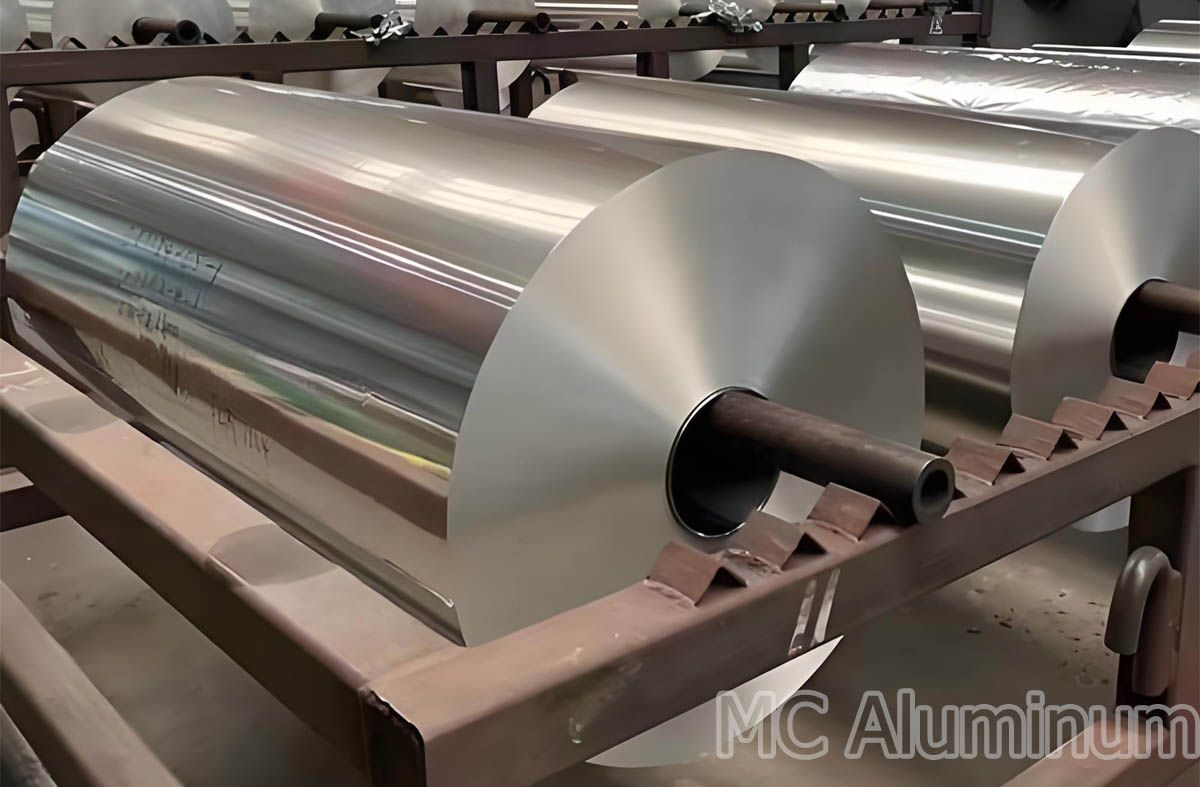
At present, 8021 aluminum foil and 8079 aluminum foil are the two most commonly used alloy grades for battery aluminum laminated film.
8021 Aluminum Foil—The "Key Player" in Pouch Batteries
8021 aluminum foil is currently the preferred and most widely used material for battery pouches. It is available in thicknesses ranging from 0.018 mm to 0.2 mm and widths from 100 mm to 1650 mm. Its popularity stems primarily from three key advantages:
Excellent deep-drawing performance: Meets packaging requirements for complex shapes
High resistance to electrolyte corrosion: Ensures long-term stability during use
High heat-seal strength: Effectively enhances packaging reliability
Additionally, 8021 aluminum foil features a fine grain structure and uniform material composition, offering strong overall compatibility. Its tensile strength typically ranges from 80 to 120 MPa (O-temper), with an elongation of 13%–18%.
8079 Aluminum Foil
8079 aluminum foil is another alloy commonly used for aluminum-plastic films. Its typical composition consists of 99.3% aluminum, 0.05% iron, and 0.1% silicon. For 8079-O temper products, tensile strength typically ranges from 60 to 100 MPa, with an elongation of ≥2%. Regarding deep-drawing performance, 8079 exhibits an elongation of 12%–15%, which is slightly lower than that of 8021.
Typical Specifications for Battery Pouch Aluminum Foil
| Item | Typical Specification |
| Alloy | 8021, 8079, etc. |
| Temper | O |
| Thickness | 0.018–0.50 mm |
| Width | 100–1,700 mm |
| Length | Customized / coil supply |
| Inner Diameter | 76 mm / 152 mm |
| Pinhole Density | ≤ 1 pinhole/m², diameter ≤ 0.03 mm |
| Residual Oil | ≤ 5 mg/m² |
| Surface Roughness, Ra | ≤ 0.2 μm |
| 180° Peel Strength | ≥ 3 N/15 mm |
| Moisture Vapor Transmission Rate | ≤ 0.1 g/(m²·24 h) |
Mechanical Properties
| Property | 8021 Aluminum Foil, O Temper | 8079 Aluminum Foil, O Temper |
| Tensile Strength | 85–105 MPa | ≥75 MPa; typically 80–110 MPa |
| Elongation | 13–18% | ≥10%; typically 12–15% |
| Erichsen Cupping Value | ≥7.0 mm, up to approximately 7.3 mm | Subject to specification |
Chemical Composition
| Element (%) | 8021 | 8079 |
| Si | ≤0.15 | 0.05-0.30 |
| Fe | 1.2–1.7 | 0.7-1.3 |
| Cu | ≤0.05 | ≤0.05 |
| Zn | - | ≤0.10 |
| Other Elements, Each / Total | ≤0.05 / ≤0.05 | ≤0.05 / ≤0.05 |
| Al | remainder | remainder |
Main Applications of Battery Pouch Aluminum Foil
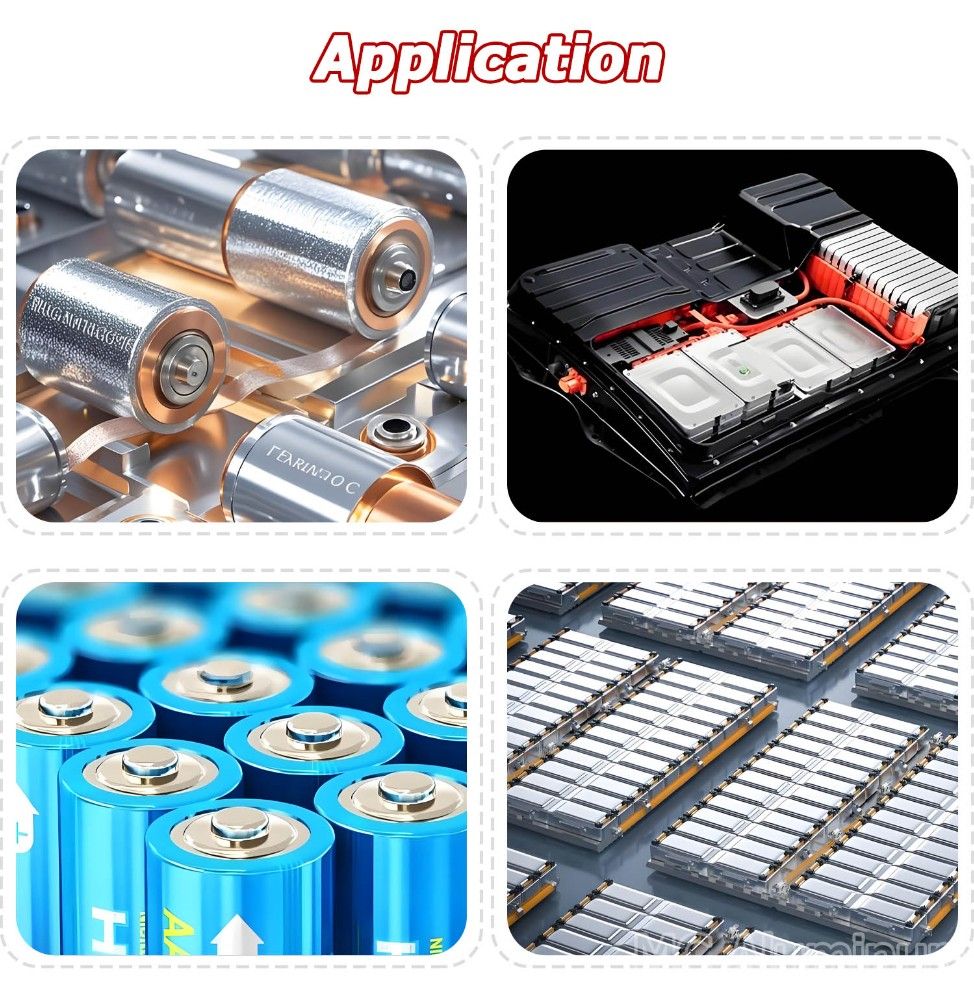
Aluminum foil for pouch-type batteries is primarily used for the encapsulation of lithium-ion pouch cells and serves as a core component of aluminum-plastic film. In the power battery sector, pouch cells are widely used in new energy vehicles due to their high energy density and safety advantages.
In the consumer electronics sector, pouch cells are extensively utilized in portable devices such as smartphones and tablets, thanks to their lightweight, thin, and flexible nature. Additionally, energy storage batteries are increasingly adopting pouch designs to enhance energy density and cycle life.
What Is the Difference Between Battery Pouch Aluminum Foil and Positive Current Collector Aluminum Foil?
The core difference between the two lies in their completely distinct roles and functions:
Positive electrode current collector foil: Acts as the battery's "internal skeleton" and "conductive pathway." Made from aluminum alloys such as 1050, 1060, 1070, or 1235, it supports the positive active material (e.g., lithium iron phosphate) and collects and conducts current. Typically 10–50 microns thick, it requires high conductivity and purity, as well as a surface that allows for the firm adhesion of the active material.
Battery pouch foil:Serves as the battery's "external protective shell" (a key component of the aluminum-plastic film). It acts as a barrier layer, blocking the ingress of moisture and oxygen to prevent battery swelling and failure. Typically made from 8021 aluminum foil with a thickness of around 40 microns, it requires exceptional barrier properties, a pinhole-free structure, and excellent deep-drawing formability to ensure the battery is securely encapsulated.
What Should You Consider When Selecting Battery Pouch Aluminum Foil?
If you are an aluminum-plastic film manufacturer or a battery company, it is recommended to focus on the following aspects when selecting a supplier:
1. Thickness Tolerance
Consistent thickness control is a crucial foundation for continuous lamination production.
Do not focus solely on nominal thickness; pay attention to the actual thickness tolerance the supplier can provide, as well as batch-to-batch consistency.
2. Elongation
If the product requires deep-draw forming, prioritize the material's elongation and formability.
3. Pinhole Control
Pinhole density is a key indicator of quality for thin-gauge aluminum foil.
It is advisable to request relevant quality inspection data from the supplier.
4. Surface Quality
High-quality aluminum foil should have a uniform, clean surface, free from defects such as noticeable oil stains, scratches, black spots, or indentations.
5. Flatness (Shape)
Poor coil flatness can lead to:
Misalignment during lamination;
Unstable tension;
Wrinkling;
Slitting difficulties;
Reduced efficiency in high-speed production.
Therefore, flatness is a factor that cannot be overlooked.
6. Batch Consistency
For battery materials, consistency is often more important than the performance of a single batch.
A supplier must not only provide compliant products on a one-off basis but also maintain long-term stability in:
Alloy grade;
Thickness;
Mechanical properties;
Surface quality.