
15 μm etched cathode foil is a specialized aluminum foil material designed for the manufacture of aluminum electrolytic capacitors. Through a controlled electrochemical etching process, the foil develops a porous and enlarged surface structure, increasing its effective surface area and improving its electrical performance in capacitor applications.
With a nominal thickness of 15 microns, this cathode foil combines lightweight construction, uniform thickness, good electrical conductivity, and an optimized etched surface. It can be used as the cathode material in aluminum electrolytic capacitors and is suitable for conventional leaded capacitors, SMD capacitors, snap-in capacitors, screw-terminal capacitors, and other capacitor configurations.
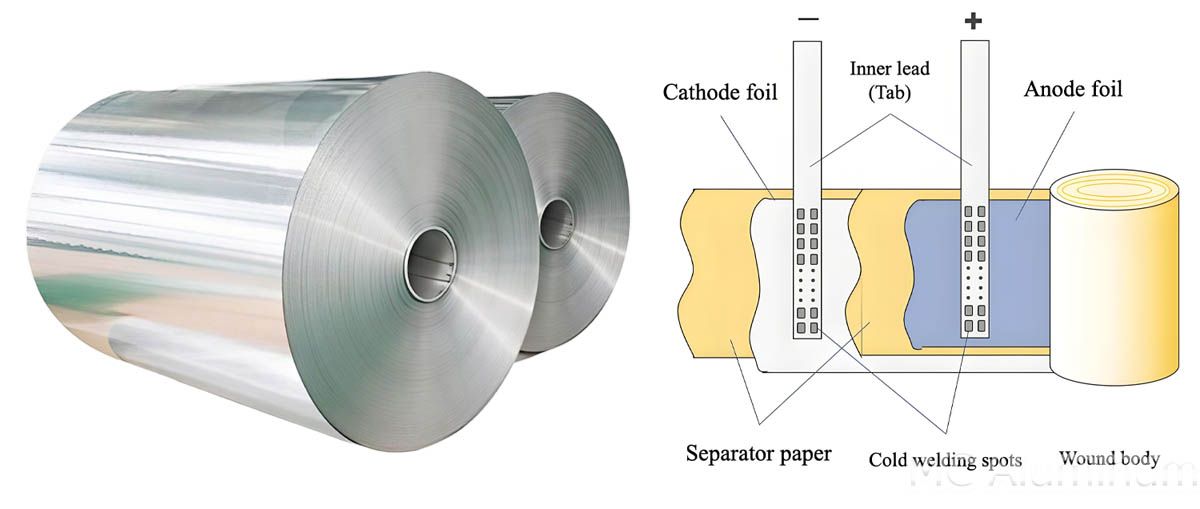
In summary, cathode foil performs three main functions in an electrolytic capacitor:
Current Collection and Electrical Conduction
The foil contacts the electrolyte, collects current on the cathode side, and conducts it to the external electrode terminal.Surface Enlargement and Charge Storage Support
Its etched porous structure provides a larger effective surface area, allowing the foil to work with the electrolyte to support cathode-side capacitance.Stable Electrical Contact
The foil maintains a stable surface condition and good electrolyte wettability, helping reduce contact resistance and supporting capacitor performance throughout its operating temperature range and service life.
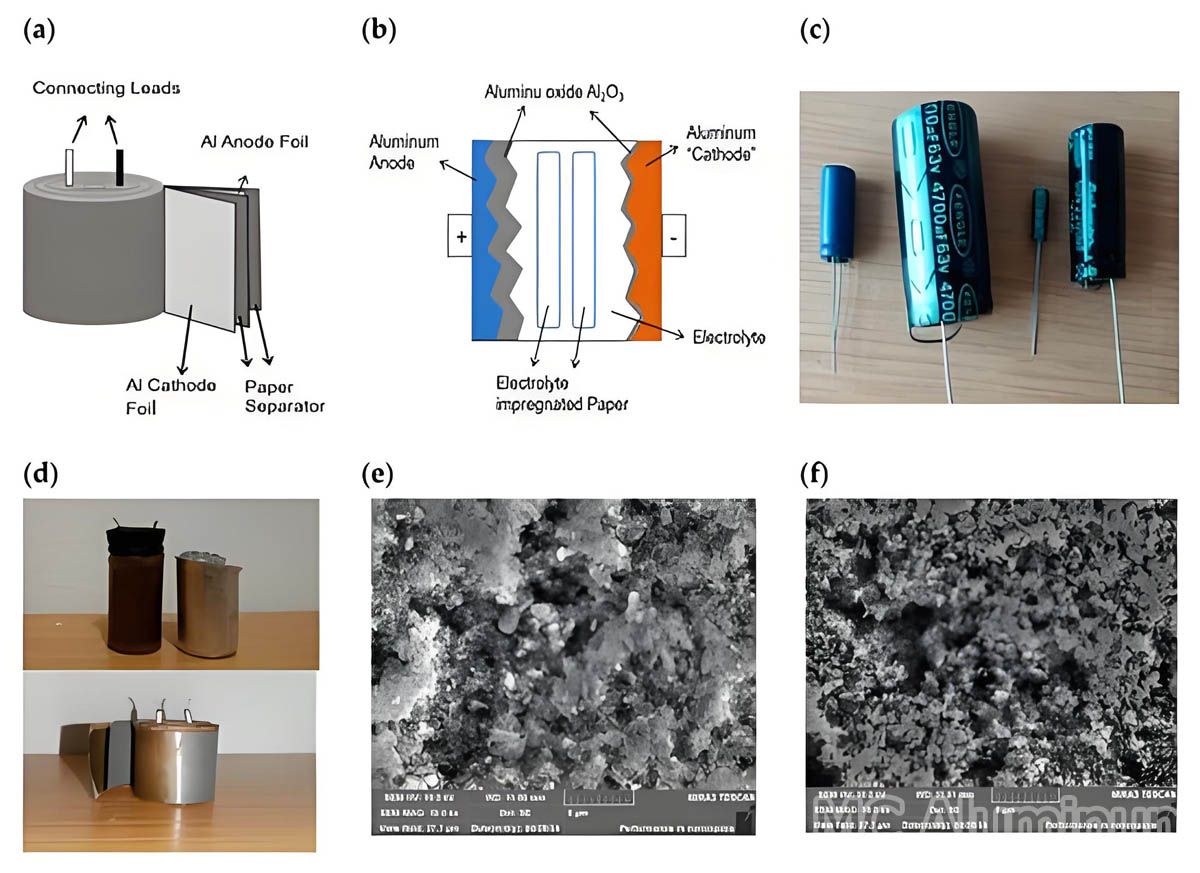
During capacitor operation, the cathode foil works together with the anode foil and electrolyte to form the capacitor electrode system. The surface condition, electrical characteristics, and material consistency of the cathode foil directly affect capacitor performance and manufacturing stability.
Common Alloy Systems
The alloy selection of cathode foil directly affects etching behavior, mechanical properties, and electrochemical stability. For 15 μm thin-gauge foil, commonly used alloy systems include the following:
1. 1050/1060 Commercially Pure Aluminum (1N30)
With an aluminum content of ≥99.30%, this alloy system primarily controls iron and silicon as impurity elements. It provides uniform etching pore distribution, stable capacitance enhancement, and cost-effective performance.
It is a mainstream choice for general-purpose cathode foil, especially for consumer-grade capacitors that require moderate specific capacitance, good consistency, and reliable processing performance.
2. 1100 Pure Aluminum (1N00)
With an aluminum content of ≥99.00%, 1100 aluminum contains slightly more impurities than 1N30 aluminum but offers good rolling and processing performance as well as responsive etching behavior.
It demonstrates good ductility during thin-gauge rolling and is suitable for process routes requiring deeper etched tunnel structures.
Key Features of Capacitor Aluminum Foil
1. Thin-Gauge Design for Compact Capacitors
The 15 μm cathode foil reduces material thickness while maintaining the mechanical strength and processing performance required for capacitor manufacturing. It improves internal space utilization and supports the miniaturization needs of consumer electronics, power modules, communication equipment, and other compact electronic products.
2. Uniform Etching for Increased Surface Area
A stable etching process creates a uniform surface structure and increases the effective contact area. This promotes charge exchange and electrolyte wetting while reducing localized performance variations, helping improve the consistency of finished capacitors.
3. Good Electrical Conductivity
Made from high-quality aluminum foil and processed under controlled conditions, the cathode foil provides stable electrical conductivity. It can meet the requirements of aluminum electrolytic capacitors used in power filtering, energy buffering, and high-frequency circuit applications.
4. Excellent Flexibility and Process Adaptability
The foil balances etching performance with flexibility. It is suitable for slitting, winding, stacking, stamping, and automated production lines. This helps improve manufacturing efficiency while reducing losses caused by foil breakage, wrinkling, and other processing defects.
5. Stable Performance and Good Batch Consistency
Quality control is applied throughout raw material selection, etching control, and final inspection. Thickness, appearance, etched surface condition, and processing performance are managed to ensure consistency between batches, supporting stable process control in large-scale capacitor production.
Specifications of 15 μm Etched Cathode Foil
| Item | Typical Specification |
| Alloy | 1060, 1070, 1100 |
| Thickness | 15 μm |
| Width | 100–1600 mm |
| Length | 1000–16000 mm |
| Purity | ≥99.9% Al |
| Etched Specific Capacitance | 246.9–268.5 μF/cm² |
| Electrical Conductivity | ≥3.5 × 10⁷ S/m |
| Surface Roughness | ≤0.5 μm |
| Corrosion Resistance Temperature | ≤150°C |
Tensile Strength | Customized according to temper, such as H18 or annealed temper |
| Surface Condition | Electrochemically etched and surface-enlarged |
| Applicable Electrolyte | Medium- and high-voltage as well as low-voltage electrolyte systems |
Why Is Etching Important for Cathode Foil?
Etching is an essential surface-treatment process in the production of aluminum electrolytic capacitor foil. It uses controlled electrochemical reactions to form microscopic pits, pores, or tunnel-like structures on the aluminum surface.
Compared with untreated aluminum foil, etched aluminum foil has a significantly larger effective surface area. This enlarged surface structure increases the contact area between the aluminum electrode and the electrolyte, helping optimize the electrical characteristics of the capacitor.
For cathode foil, the etching process must be carefully controlled. Etching depth, pore distribution, surface uniformity, and residual mechanical strength can all affect the quality of the final material.
For 15 μm cathode foil, maintaining a balance between surface development and foil integrity is especially important, as the thin aluminum substrate requires careful handling throughout production and downstream processing.
Applications of Etched Cathode Foil
Power Supply Equipment: Used in filtering and energy-storage circuits of switching power supplies.
Industrial Electronics: Applied in motor drives, industrial control systems, automation equipment, and power conversion systems.
Consumer Electronics: Used in power circuits for household appliances and electronic devices.
Automotive Electronics: Suitable for capacitor manufacturing in automotive electronic systems, subject to the required performance specifications.
Communication Equipment: Used in power management and filtering circuits for communication and networking equipment.
Renewable Energy Systems: Applied in capacitor components for solar inverters, energy-storage systems, and other power-conversion equipment.
Why Choose 15 μm Etched Cathode Foil?
As electronic equipment continues to move toward higher integration, greater efficiency, and smaller dimensions, conventional materials may no longer fully meet the manufacturing requirements of high-performance capacitors.
With its thin-gauge structure, enlarged etched surface, and stable performance, 15 μm etched cathode foil provides a flexible material solution for the capacitor industry.
Key benefits include:
Optimized Internal Capacitor Structure
Thin foil provides more available space for compact, high-capacitance capacitor designs.
Improved Material Utilization
The etched surface-enlargement process increases the effective surface area and supports improved capacitor performance.
Enhanced Manufacturing Stability
Uniform thickness control and stable surface conditions make the material suitable for continuous and automated production processes.
Compatibility with Multiple Industries
Suitable for consumer electronics, industrial power supplies, communications, renewable energy, and automotive electronics.
Improved Reliability of End Products
Strict material and process control provides a reliable foundation for stable capacitor operation.
Quality Control and Supply Capability
To ensure product quality, 15 μm etched cathode foil typically undergoes multiple quality-control procedures, including:
Raw material inspection
Thickness measurement
Surface-condition inspection
Etching uniformity evaluation
Appearance inspection
Slitting inspection
Coil and packaging inspection
Different widths, coil diameters, coil weights, and packaging formats can be supplied according to customer production requirements. Material selection guidance and supporting services can also be provided based on the customer's capacitor manufacturing process, performance requirements, processing methods, and application conditions.
During transportation and storage, the foil should be protected from moisture, excessive pressure, and contamination. Direct contact with corrosive substances should be avoided to maintain a stable surface condition and ensure downstream processing quality.
FAQ
Q1: What is 15 μm etched cathode foil used for?
It is primarily used as the cathode electrode material in aluminum electrolytic capacitors for power supplies, industrial electronics, automotive electronics, communication equipment, and consumer electronic devices.
Q2: Why does cathode foil need to be etched?
Etching creates microscopic pores and tunnel structures on the aluminum surface. This increases the effective surface area and improves the interaction between the electrode and the electrolyte.
Q3: Can the width of 15 μm cathode foil be customized?
Yes. Foil width, coil diameter, coil weight, and other coil specifications can be customized according to customer requirements and production equipment.
Q4: What factors affect the quality of etched cathode foil?
Important factors include aluminum purity, foil thickness uniformity, etching depth, surface structure, mechanical strength, electrical properties, and batch consistency.
Q5: How should 15 μm aluminum cathode foil be stored?
It should be stored in a clean, dry, and well-ventilated environment. Avoid moisture, corrosive substances, direct contact with contaminants, and excessive mechanical pressure.