
As a manufacturer of aluminum foil for lithium-ion battery applications, we produce cathode current collector foil to controlled thickness, flatness, surface, and mechanical-property requirements. The standard thickness of aluminum foil for battery cathodes is commonly 12 to 20 microns, with 15 microns and 16 microns among the most widely specified gauges for conventional lithium-ion cells.
The appropriate thickness is not determined by a single industry rule. It depends on battery chemistry, cell design, electrode loading, coating method, energy-density target, and downstream processing capability. We therefore manufacture battery cathode aluminum foil according to the customer's technical specification, including gauge tolerance, alloy, temper, coil geometry, surface treatment, and cleanliness requirements.
What Is Battery Cathode Aluminum Foil?
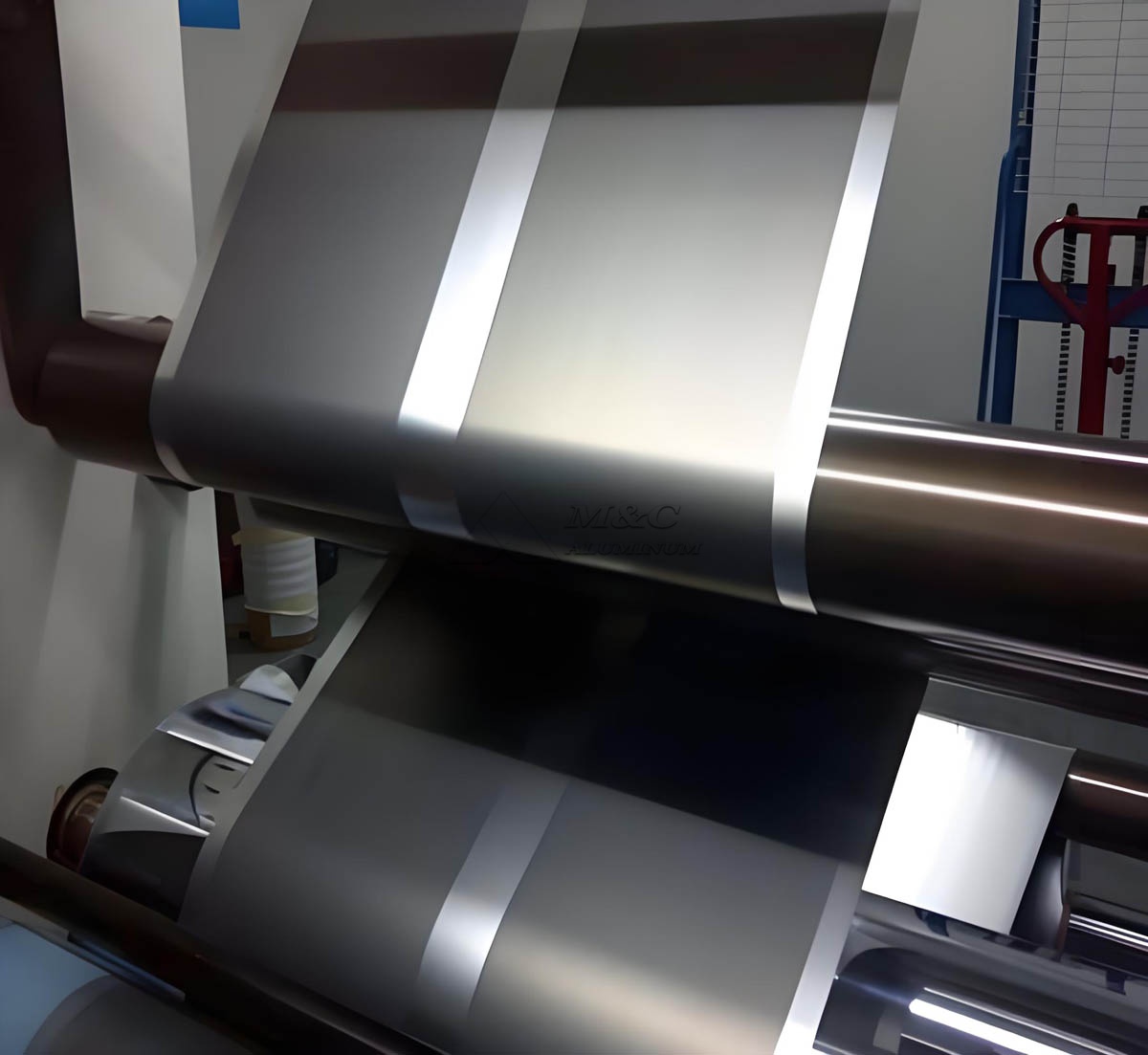
Battery cathode aluminum foil is the metallic current collector used on the positive electrode of lithium-ion batteries. During electrode manufacturing, cathode active material slurry is coated onto one or both sides of the aluminum foil. After drying, calendaring, slitting, and cell assembly, the foil provides an efficient electrical conduction path between the cathode coating and the battery tab system.
Aluminum is selected for the cathode side because it provides good electrical conductivity, low density, corrosion resistance within normal cathode operating potentials, and reliable processability. Unlike copper foil, which is generally used for anodes, aluminum foil is stable for common cathode systems such as LFP, NMC, NCA, LCO, and LMFP within their intended voltage windows.
Our production process focuses on the characteristics that affect electrode coating uniformity and cell consistency: stable thickness, low pinhole risk, controlled tensile behavior, clean surface condition, and uniform coil winding.
Performance Advantages of Battery Aluminum Foil
1.Excellent electrical conductivity: Efficiently collects and conducts current, ensuring high charge-discharge efficiency; its conductivity reaches approximately 62% IACS (International Annealed Copper Standard).
2.Outstanding chemical stability and corrosion resistance: Forms a dense aluminum oxide (Al₂O₃) passivation layer on the surface, providing resistance to oxidation and electrolyte corrosion in high-potential cathode environments, thereby ensuring stable long-term cycling.
3.Lightweight, enhancing energy density: Its density (2.7 g/cm³) is significantly lower than that of copper (8.9 g/cm³), helping to reduce battery weight and increase energy density.
4.Good mechanical properties and processability: Features high tensile strength and elongation; its excellent ductility allows it to withstand expansion stresses during processing and cycling, and it is easily rolled into ultra-thin foils (12–20 μm or thinner).
5.High cost-effectiveness: Lower cost compared to metals like silver or gold, making it suitable for large-scale applications.
6.Excellent surface wettability and adhesion: Surface characteristics ensure strong adhesion to cathode active material slurries, effectively preventing material delamination or powder shedding.
7.Good thermal stability: High thermal conductivity aids in heat dissipation and reduces the risk of thermal runaway, while performance remains stable across a wide temperature range.
8.Good weldability: Facilitates the formation of stable connections with low contact resistance during battery assembly.
Standard Thickness Range for Battery Cathode Aluminum Foil
For most commercial rechargeable lithium-ion battery cathodes, standard aluminum foil thickness falls between 12 and 20 microns. The choice of gauge must balance energy density with mechanical reliability and coating-line yield.
| Application or Cell Requirement | Common Foil Thickness | Typical Consideration |
|---|---|---|
| High-energy-density pouch and cylindrical cells | 12-15 microns | Reduces inactive material weight and supports higher gravimetric energy density |
| General lithium-ion battery cathodes | 15-16 microns | Provides a practical balance of strength, conductivity, and process stability |
| Power cells and robust electrode designs | 16-20 microns | Offers greater handling strength and resistance to processing damage |
| Thick cathode coatings or high-loading electrodes | 18-20 microns | Supports coating weight and reduces risk of foil deformation |
| Carbon-coated aluminum foil substrates | 12-20 microns | Base foil is selected according to the electrode design and coating process |
Among these options, 15 micron battery aluminum foil is widely used where manufacturers require reduced collector mass while maintaining good coating and slitting performance. 16 micron aluminum foil is also a frequent specification for applications that need slightly higher mechanical stability during roll-to-roll processing.
Ultra-thin gauges below 12 microns may be used in specialized high-energy designs, but they require more stringent control of pinholes, tension, edge quality, and handling. Thicker gauges above 20 microns may be appropriate for selected industrial, high-power, or experimental electrode structures, although they increase inactive material content in the cell.
Recommended Technical Parameters
Thickness alone does not define the suitability of aluminum current collector foil. In our factory, battery foil is manufactured and inspected as a complete technical package. The following values represent common reference ranges. Final values should be confirmed against the buyer's battery-cell design and electrode process.
| Parameter | Typical Specification Range | Importance for Cathode Processing |
|---|---|---|
| Alloy | 1235, 1100, 1070, 1060 | Determines purity, conductivity, formability, and mechanical response |
| Thickness | 12-20 microns | Influences energy density, handling strength, and electrode resistance |
| Common thickness | 15 or 16 microns | Standard choice for many lithium-ion cathode designs |
| Thickness tolerance | Typically within +/- 3% to +/- 5% | Supports uniform coating weight and stable electrode quality |
| Temper | H18, H19, or customer-defined | Affects tensile strength, elongation, and wrinkle resistance |
| Tensile strength | Approximately 120-220 MPa | Must suit coating, calendaring, slitting, and winding operations |
| Elongation | Approximately 1.0%-4.0% | Helps prevent tearing during high-speed processing |
| Width | Commonly 200-1,500 mm | Selected according to coating and slitting equipment |
| Surface condition | Clean, oil-controlled, uniform | Promotes consistent slurry adhesion and coating appearance |
| Pinhole control | Subject to agreed thickness and inspection standard | Essential for electrical reliability and coating continuity |
| Coil inner diameter | 150 mm, 300 mm, 400 mm, or customized | Must match the customer's unwinding equipment |
For customers requiring conventional high-purity collector stock, our 1235 Aluminum Foil can be manufactured to battery-oriented thickness and coil requirements. We also provide alloy selection support where electrical conductivity, tensile strength, or surface response requires adjustment.
Why 15 Micron and 16 Micron Foil Are Common
The widespread use of 15 micron and 16 micron aluminum foil for battery cathodes results from their balance of competing requirements. A thinner foil lowers the weight of inactive battery components, which can improve cell-level gravimetric energy density. However, reducing thickness also lowers stiffness and increases the sensitivity of the foil to handling defects, tension variation, edge damage, and pinholes.
At 15-16 microns, aluminum current collector foil generally provides sufficient durability for coating, oven drying, calendaring, slitting, vacuum drying, and winding or stacking. These thicknesses can also support common cathode coating weights without excessive deformation when process conditions are properly controlled.
The final selection should consider electrode coating thickness and density. A high-loading cathode can place greater stress on the collector foil, particularly during calendaring. In such cases, a 16-20 micron foil may offer a more stable manufacturing window than a thinner grade. Conversely, a cell designed for maximum energy density may specify 12-15 microns, with tighter control of foil quality and downstream process tension.
Alloy Selection for Cathode Current Collectors
High-purity aluminum alloys are generally preferred for battery cathode aluminum foil because they provide stable electrical conductivity and suitable rolling performance. The most commonly requested alloys include 1235 and 1100, while 1060 and 1070 can also be used depending on the technical specification.
| Alloy | Typical Characteristics | Suitable Battery Foil Use |
|---|---|---|
| 1235 | High aluminum content, good conductivity, excellent rolling performance | Widely used for lithium-ion cathode current collector foil |
| 1100 | Good conductivity, formability, and stable industrial availability | Suitable for cathode collector and coated foil substrates |
| 1060 | High purity and good electrical properties | Used where higher purity specifications are required |
| 1070 | Very high aluminum content and conductivity | Suitable for selected high-purity battery applications |
Alloy selection must be evaluated together with temper and thickness. For example, a foil with suitable chemical composition but insufficient tensile strength may wrinkle or tear during high-speed coating. Similarly, excessive hardness may reduce process tolerance in applications involving demanding winding or stacking conditions.
Carbon-Coated Aluminum Foil and Thickness Selection
Carbon-coated aluminum foil is an engineered cathode current collector in which a conductive carbon layer is applied to one or both sides of the aluminum substrate. The coating can improve contact between the active material layer and the collector, reduce interfacial resistance, and support more uniform electrode performance in selected battery systems.
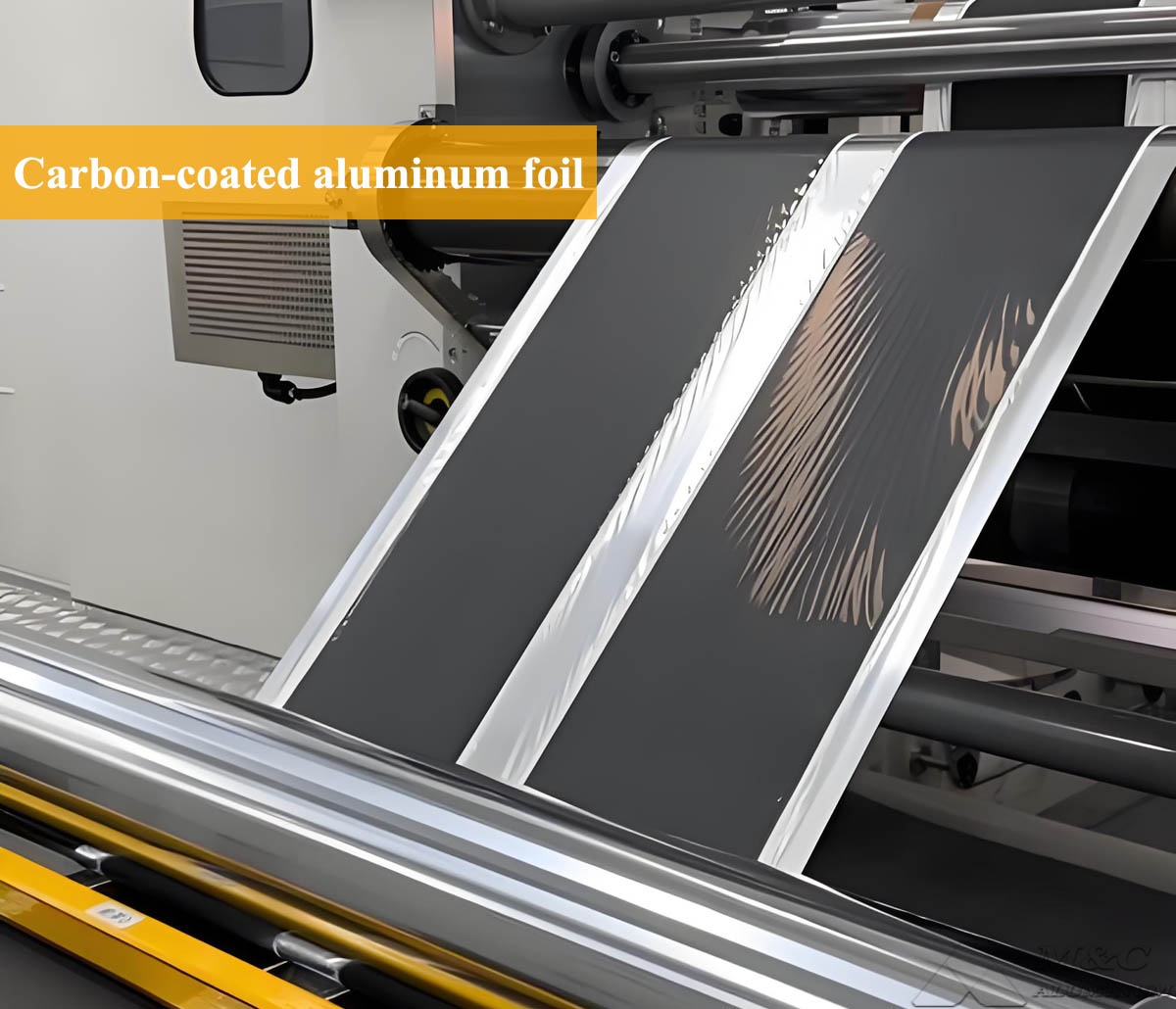
For carbon-coated aluminum foil, the base foil thickness commonly remains within the 12-20 micron range. However, the total thickness must account for the carbon coating layer. Buyers should clearly define whether the requested gauge refers to the bare aluminum substrate or the finished carbon-coated product.
| Product Type | Thickness Definition | Manufacturing Control Point |
|---|---|---|
| Bare battery aluminum foil | Aluminum substrate thickness only | Gauge uniformity across coil width and length |
| Single-side carbon-coated foil | Base foil plus one coating layer | Coating weight, adhesion, and surface resistance |
| Double-side carbon-coated foil | Base foil plus coatings on both sides | Total thickness, coating uniformity, and winding quality |
In our manufacturing and converting process, we confirm base foil gauge before surface coating and verify finished-product thickness after coating. This distinction is important because an electrode design based on a 15 micron substrate may have a higher finished thickness after conductive coating is applied.
Manufacturing Controls That Affect Thickness Consistency
Reliable battery electrode production requires more than a nominal foil thickness. We control the foil through rolling, annealing, slitting, inspection, and packaging stages to maintain consistent quality from the beginning to the end of each coil.
Key manufacturing controls include:
Online thickness measurement during rolling to monitor gauge variation.
Rolling-force and tension control to maintain stable transverse and longitudinal thickness distribution.
Annealing control to achieve the required temper and remove residual rolling oil.
Surface cleanliness inspection to minimize contamination that could affect slurry wetting or adhesion.
Slitting control to produce smooth edges with limited burr formation.
Coil winding inspection to reduce telescoping, loose coils, edge damage, and tension irregularities.
Sampling inspection for thickness, mechanical properties, surface condition, and dimensional conformity.
For battery manufacturers, a narrow thickness tolerance helps stabilize coating weight. If the foil thickness changes excessively, the electrode's total thickness and active-material loading can vary, affecting capacity consistency and cell assembly performance. We therefore align our inspection plan with the customer's tolerance limits and critical-to-quality requirements.
How to Specify Battery Cathode Aluminum Foil
When sending an inquiry to our factory, buyers should provide a complete specification rather than only stating the required thickness. This allows us to recommend a manufacturable configuration and prepare a consistent quotation and production plan.
The recommended specification should include:
Alloy, such as 1235 or 1100.
Foil thickness and permitted tolerance.
Temper or minimum tensile-strength requirement.
Foil width and width tolerance.
Coil weight, outer diameter, and inner diameter.
Bare foil or carbon-coated aluminum foil requirement.
One-side or two-side coating requirement, if applicable.
Surface cleanliness, wetting, roughness, or adhesion requirements.
Pinhole, edge burr, and visual inspection standards.
Packaging conditions for moisture protection and export transportation.
Our Products portfolio includes aluminum foil materials for industrial processing, and we can develop battery cathode foil specifications according to the customer's electrode equipment and cell design.
Conclusion
The standard thickness of aluminum foil for battery cathodes is generally 12-20 microns, while 15 micron and 16 micron aluminum foil are the most common selections for mainstream lithium-ion battery manufacturing. The optimum gauge depends on the target energy density, cathode loading, cell format, coating method, and required processing reliability.
As a battery aluminum foil manufacturer, we recommend selecting thickness together with alloy, temper, tolerance, surface condition, and coil configuration. A properly specified aluminum current collector foil supports stable cathode coating, efficient cell assembly, and consistent battery performance across production batches.