
Lithium-ion battery aluminum foil refers to aluminum and aluminum alloy foil used as the cathode current collector in lithium-ion batteries. Together with cathode materials such as lithium iron phosphate (LFP), lithium cobalt oxide (LCO), and lithium manganese oxide (LMO), it forms part of the lithium-ion battery cathode.
Pure aluminum refers to a metal with an aluminum mass fraction of no less than 99.00%, while an aluminum alloy refers to an alloy based on aluminum with an aluminum mass fraction of less than 99.00%. Lithium-ion battery aluminum foil is a rolled product with a rectangular cross-section, uniform thickness ranging from 0.008 mm to 0.020 mm, a width not exceeding 1,600.0 mm, and is generally supplied in coils.
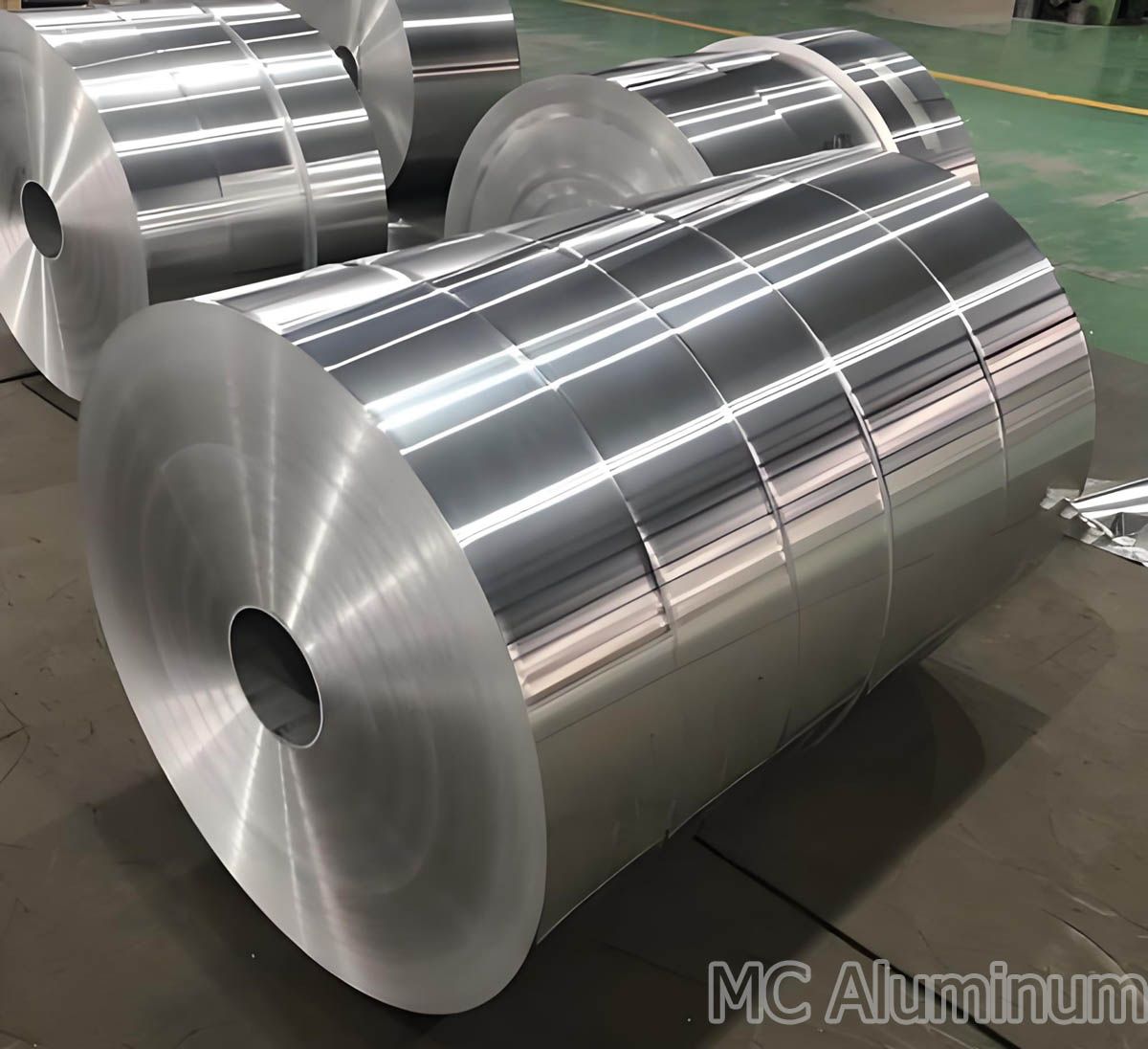
Main Uses of Aluminum Foil in Lithium-Ion Batteries
In lithium-ion batteries, aluminum foil is primarily used as the cathode current collector.
A typical battery structure is as follows:
Cathode Active Material → Conductive Additive → Binder → Aluminum Foil Current Collector → Separator → Anode → Copper Foil Current Collector
The main functions of aluminum foil include:
1. Collecting Electrons from the Cathode
During the charging and discharging process of a lithium-ion battery, cathode active materials generate or receive electrons. Aluminum foil efficiently collects and transfers electrons to the external circuit, improving battery charge-discharge efficiency.
2. Supporting the Cathode Coating
The cathode slurry must be uniformly coated onto the aluminum foil surface. Therefore, the foil must provide good surface adhesion to prevent the electrode coating from peeling off.
3. Improving Battery Safety
High-quality aluminum foil helps reduce defects such as pinholes, cracks, and impurities, thereby lowering the risks of internal short circuits and thermal runaway.
Aluminum Foil for Lithium Batteries
At present, the lithium battery industry generally uses rolled aluminum foil as the cathode current collector. Common alloy grades include 1000-series aluminum grades such as 1060, 1050, 1145, and 1235, with hard temper, particularly H18, being widely used. These alloys have a high aluminum content, with purity exceeding 99.00%.
Among them, 1235 aluminum foil is widely used for lithium-ion battery cathode current collectors due to its high purity, excellent electrical conductivity, good processing performance, and low impurity content.
1070 and 1060 aluminum foils have high aluminum content, generally ≥99.6%, and high conductivity. They are suitable for power battery applications with demanding electrical performance requirements.
According to manufacturing process and material structure, lithium-ion battery aluminum foil can be classified into:
Bare aluminum foil
Coated aluminum foil
Composite aluminum foil
Carbon-coated aluminum foil is produced by applying a conductive carbon layer to the aluminum foil surface. It can significantly reduce battery internal resistance, improve contact between active materials and foil, and enhance current conduction within the electrode. As a result, it can improve battery rate performance, low-temperature performance, cycle life, and storage performance.
Composite current collectors, on the other hand, use polymer films as substrates and are produced through processes such as vacuum metallization. They offer the potential advantages of high energy density and improved safety.
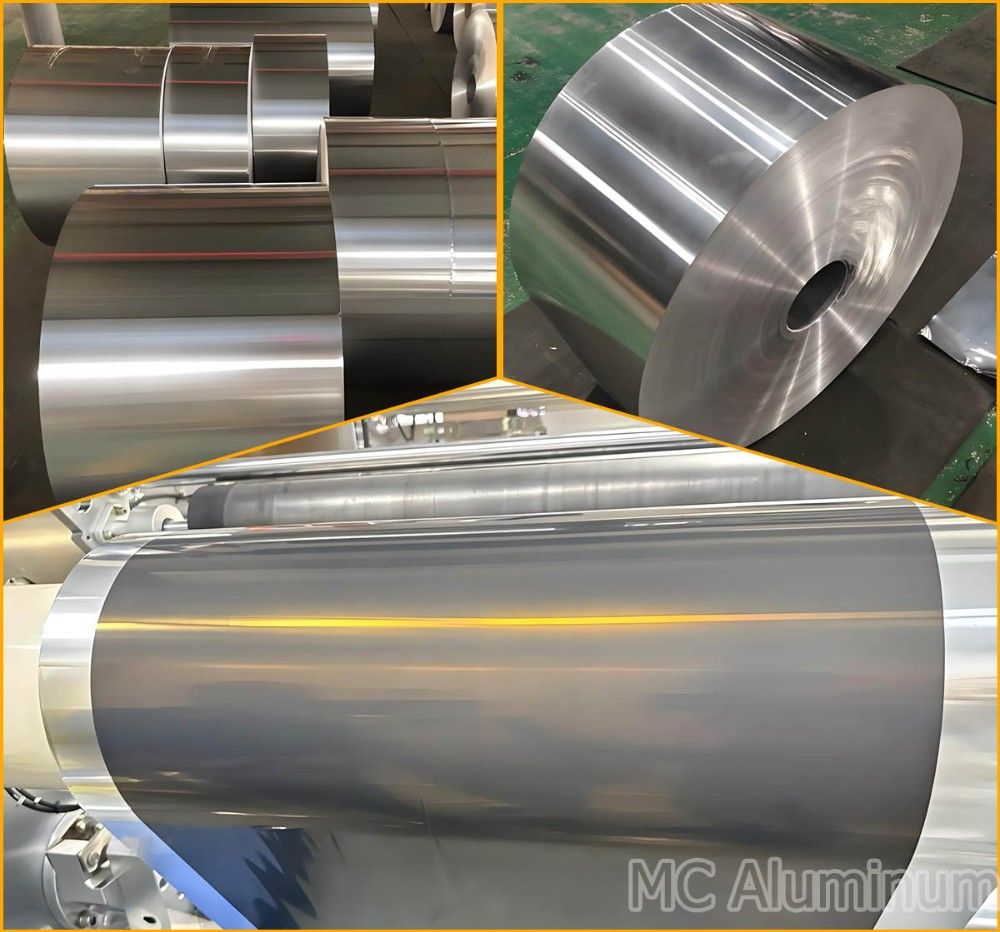
Battery Aluminum Foil Product Specifications
| Item | Parameters |
| Material | 1235, 1070, 1060, 1050 |
| Temper | O temper, H temper |
| Thickness | 8μm–20μm |
| Width | Customized according to customer requirements |
| Surface | Double-sided bright or single-sided bright |
| Packaging | Coil packaging, moisture-proof packaging |
Performance Advantages of Lithium-Ion Battery Aluminum Foil
High Electrical Conductivity
Manufactured from high-purity aluminum, battery aluminum foil offers excellent electrical conductivity. It can reduce battery internal resistance and improve charging and discharging efficiency.
High Strength and Good Elongation
It provides good mechanical properties and is less likely to break during high-speed coating, calendaring, and slitting processes, improving production stability.
Ultra-Thin, High-Precision Dimensions
With uniform thickness and high dimensional accuracy, aluminum foil can effectively reduce battery weight and increase battery energy density.
Excellent Surface Quality
A clean and flat surface enhances the adhesion of cathode material coatings, improving electrode consistency and overall battery performance.
Good Corrosion Resistance
Battery aluminum foil can withstand the internal electrolyte environment of lithium-ion batteries, ensuring stable performance during long-term cycling.
Good Processability
It has excellent rolling, stamping, and coating compatibility, meeting the mass-production requirements of power batteries, energy storage batteries, and other advanced battery applications.
High Safety and Reliability
Strict control of pinholes, impurities, and surface defects helps reduce the risk of internal short circuits and improves battery safety.
Performance Requirements for Aluminum Foil Used in Lithium-Ion Batteries
1. Dimensions and Thickness
Trend Toward Ultra-Thin Foil
Traditional battery aluminum foil generally has a thickness of 12μm to 15μm. With advances in rolling technology, mainstream power battery and energy storage battery applications have widely adopted ultra-thin aluminum foil in the 9μm to 10μm range. Some high-end products are even approaching the 8μm limit.
Extremely Tight Thickness Tolerance Requirements
As foil becomes thinner, thickness uniformity becomes increasingly critical. In general, thickness deviation across the same strip is required to be controlled within ±4%.
If thickness is inconsistent, the coated slurry thickness will vary, potentially causing localized current overload, uneven mechanical stress, and significant reductions in battery life and safety.
2. Mechanical Properties
Battery electrode manufacturing involves multiple processes, including high-speed coating, high-temperature drying, high-pressure calendaring, and repeated slitting. These processes require aluminum foil to have excellent mechanical strength.
High Tensile Strength
As electrode compaction density continues to increase, the calendaring process imposes substantial stress on the aluminum foil. Industry standards and leading battery cell manufacturers generally require battery aluminum foil to have a tensile strength of approximately 180 MPa to 200 MPa or above.
Some ultra-thin, high-strength aluminum foils may require tensile strength of 270 MPa to 280 MPa in order to prevent strip breakage during calendaring and high-speed tensioning.
Appropriate Elongation
If aluminum foil is too hard or brittle, it can crack or break during bending and winding. Therefore, elongation is generally required to be around 1.5% to 3.0%, ensuring adequate flexibility during cell assembly processes such as winding or stacking.
3. Surface Quality
Surface Cleanliness
The aluminum foil surface should have uniform color, high cleanliness, and good flatness. It should be free from obvious roll marks, pitting, pinholes, corrosion marks, wrinkles, mottling, bright lines, and other rolling defects.
There should be no noticeable color variation, oil contamination, strong oil odor, or visible oil stains. Requirements for foreign particles, including aluminum powder and iron powder, are particularly strict, generally controlled at ≤50 mg per 300,000 square meters.
Production is typically carried out in high-standard cleanroom environments.
Pinhole Control
Pinholes are one of the most critical defects in aluminum foil. High-end power battery foil generally requires no more than 0.7 pinholes per square meter. Some premium products may even require zero pinholes per square meter.
For certain advanced manufacturers, a pinhole count of fewer than 0.3 pinholes per square meter is already a target control level.
Surface Wettability: Dyne Value
To ensure coating quality, the aluminum foil surface dyne value is generally required to be no less than 32 dynes. Some high-end products require values of 34 dynes or even 36 dynes.
The dyne value indicates the surface wettability and adhesion performance of aluminum foil. It is critical for coating, lamination, and related battery manufacturing processes.
Pitting Limitations
The foil surface should not contain pits larger than 1 mm in diameter. Pits measuring between 0.5 mm and 1 mm should be limited to fewer than three per square meter, and pits of approximately 0.5 mm must not appear in concentrated clusters.
Differences in Aluminum Foil Requirements for Different Lithium Battery Types
| Consumer Electronics Batteries | Batteries used in mobile phones, tablets, laptops, wearable devices, and similar electronics generally prioritize thinness, light weight, and high energy density. | Thinner foil thickness Higher thickness consistency Good surface flatness Excellent coating compatibility Low pinhole rate Stable winding processability |
| Power Batteries | Electric vehicle power batteries have higher requirements for safety, cycle life, and batch-to-batch consistency. | High strength with appropriate elongation Stable supply in long coils Low burr levels and low strip-breakage risk Excellent corrosion resistance Compatibility with high-speed coating and high-speed winding Consistent performance between production batches Strict control of foreign materials and particles |
| Energy Storage Batteries | Energy storage batteries are generally produced at large scale and are designed for long operating cycles. They place greater emphasis on cost efficiency, long-term reliability, and supply-chain stability. | Cost control Long-cycle stability Consistent quality Large-volume supply capability Compatibility with mainstream cathode systems such as lithium iron phosphate Low defect rates and stable processing performance |
| High-Rate and High-Power Batteries | Electric tools, electric two-wheelers, hybrid vehicles, and certain specialized devices require batteries capable of high-current charging and discharging. | Low electrical resistance Excellent electrical conductivity Higher mechanical strength Good heat dissipation and interface stability Strong coating adhesion Corrosion resistance during high-rate cycling |