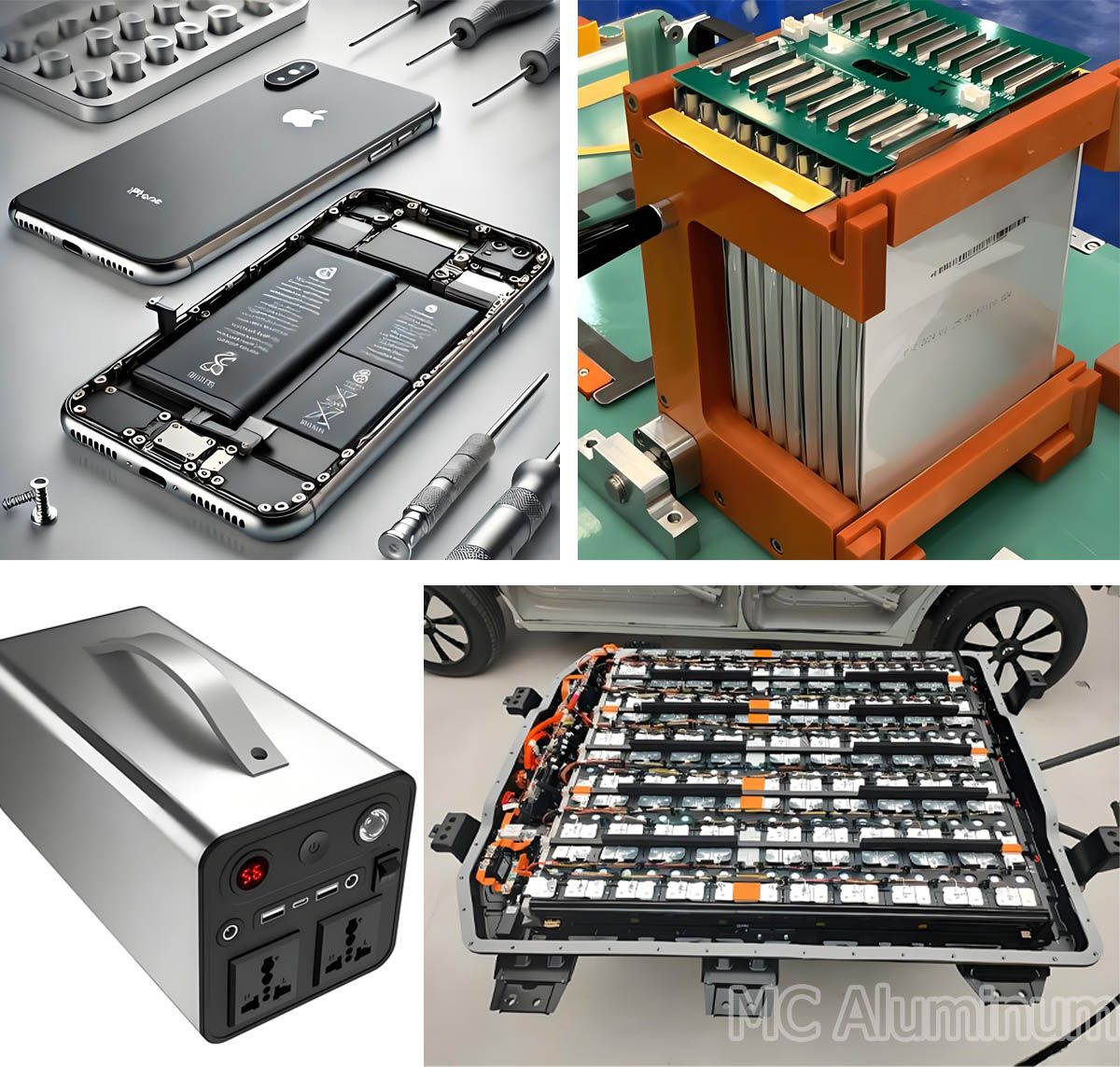
As the new energy vehicle market continues to expand, power batteries are subject to increasingly demanding requirements for safety, lightweight design, driving range, and product consistency. With advantages including low weight, high energy density, and flexible design, pouch lithium-ion batteries are widely used in new energy vehicles, energy storage systems, and high-end consumer electronics.
As an essential base material for pouch-cell aluminum-plastic film, 8021 aluminum foil has become an important choice in the battery packaging materials market.
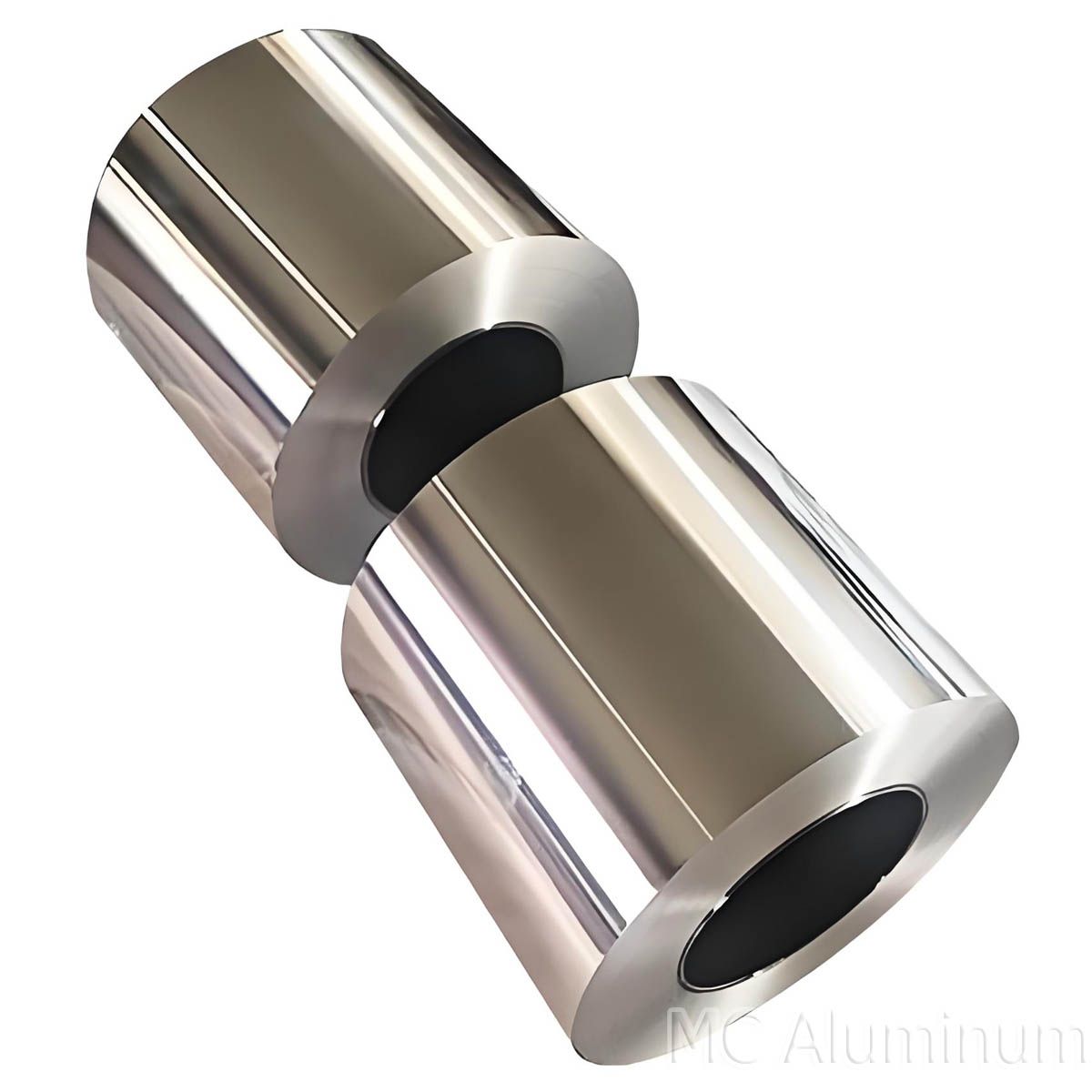
8021 Aluminum Foil for Battery Pouches
Common aluminum foil alloys used in battery pouch applications include 8021 aluminum foil. 8021 pouch battery aluminum foil features a clean, smooth, oil-free surface. Its elongation can reach 13%–18%, while the maximum Erichsen cupping value can reach 7.3 mm.
MC Aluminum is one of the limited number of domestic aluminum foil substrate manufacturers capable of fully meeting the processing requirements for lithium battery aluminum-plastic film.
8021 aluminum alloy belongs to the 8xxx aluminum alloy series. It is primarily aluminum-based and contains a certain proportion of alloying elements such as iron and silicon. Through optimized alloy design, rolling, and annealing processes, 8021 aluminum foil can achieve excellent strength, elongation, deep-drawing formability, and barrier performance.
Compared with 1235 pure aluminum foil, 8021 alloy offers significant advantages in several key areas:
1.Higher Mechanical Strength
O-temper 8021 aluminum foil typically has a tensile strength of 85–105 MPa, substantially higher than the 60–80 MPa range of pure aluminum foil. This means that, at the same thickness, it provides greater puncture resistance and burst strength.
2.Stricter Pinhole Control
Pinholes are a major potential cause of battery packaging failure. 8021 aluminum foil features a dense surface structure with strict pinhole control. Standard pinhole density can be controlled to ≤5 holes/m², while EV-grade products may achieve ≤1 hole/m² with a hole diameter of ≤0.03 mm. This helps ensure long-term barrier integrity during battery operation.
3.Better Corrosion Resistance
Lithium battery electrolytes, including LiPF₆ in organic solvents, can be highly corrosive. The synergistic Al-Fe-Si alloy system of 8021 aluminum foil provides excellent chemical corrosion resistance, helping ensure stable long-term battery operation.
During aluminum-plastic film production, 8021 aluminum foil typically serves as the intermediate aluminum layer and is laminated with polymer materials to form a multilayer structure. The aluminum layer provides superior barrier protection, while the outer and inner polymer layers perform functions such as external protection, printing, heat sealing, and electrical insulation.
Why Do New Energy Vehicle Pouch Batteries Use 8021 Aluminum Foil?
1. Excellent Water Vapor and Oxygen Barrier Properties
As the core barrier layer in aluminum-plastic film, 8021 aluminum foil effectively reduces the permeation of moisture and oxygen. It provides stable external protection for battery cells and helps improve storage stability and service reliability.
2. Good Deep-Drawing Formability
O-temper 8021 aluminum foil offers good ductility and flexibility, allowing it to adapt to the deep-drawing process used for aluminum-plastic film. This helps reduce the risk of cracking, wrinkling, and damage during stamping and forming.
3. Supports Battery Lightweighting
Compared with conventional rigid battery housings, pouch battery packaging is lighter and more flexible. While maintaining necessary barrier and protection performance, 8021 aluminum foil helps reduce packaging weight and supports lightweight power battery designs.
4. Electrolyte Corrosion Resistance
Battery packaging materials may be exposed to electrolyte during long-term battery operation. Aluminum foil must resist the continuous effects of corrosive substances such as LiPF₆. The Al-Fe-Si system in 8021 aluminum alloy offers better composite performance, heat-sealing stability, and corrosion resistance than pure aluminum foil, helping meet demanding power battery service-life requirements.
5. Stable Surface and Slitting Quality
High-quality 8021 aluminum foil has a uniform surface, good coil shape, and neat edges. These properties improve downstream lamination efficiency and reduce production issues such as strip breakage, wrinkling, and lamination defects.
6. Support for Customized Specifications
8021 aluminum foil for pouch batteries can be supplied in customized specifications according to customers’ actual processing requirements, meeting the needs of different pouch lithium-ion battery designs.
Technical Parameters of 8021 Battery Aluminum Foil
| Item | Typical Specification |
| Product Name | 8021 pouch battery aluminum foil / aluminum foil for aluminum-plastic film |
| Alloy | 8021 |
| Temper | O temper (annealed); negotiable according to requirements |
| Common Thickness | 0.025 mm–0.060 mm |
| Recommended Thicknesses | 0.030 mm, 0.035 mm, 0.040 mm, 0.045 mm, 0.050 mm |
| Common Width | 200 mm–1600 mm |
| Length | 1000 mm–16000 mm |
| Inner Diameter / Core ID | 152 mm, 300 mm, 505 mm, or as required |
| Tensile Strength | 80–110 MPa |
| Elongation | ≥10% |
| Surface Quality | Flat, clean surface with no obvious oil stains, dents, scratches, corrosion, or other defects |
| Pinhole Control | Strict control of pinholes and light-transmission defects; specific requirements available upon request |
| Edge Quality | Neatly slit edges, minimal burrs, and no obvious edge cracks or wavy edges |
| Wetting Tension | Can be controlled according to subsequent lamination-process requirements |
| Packaging | Moisture-proof paper, protective film, wooden cases, or pallet packaging suitable for sea freight and long-distance transportation |
| Applications | New energy vehicle pouch batteries, energy storage batteries, aluminum-plastic film, power tool batteries, consumer lithium batteries, etc. |
Applications of 8021 Aluminum Foil in New Energy Vehicle Pouch Batteries
8021 aluminum foil is primarily used to manufacture aluminum-plastic film for pouch lithium-ion batteries. A typical aluminum-plastic film structure can be described as follows:
Outer Protective Film + Adhesive Layer + 8021 Aluminum Foil + Adhesive Layer + Inner Heat-Sealing Film
In this structure, 8021 aluminum foil functions primarily as the metallic barrier layer.
Its main applications include:
a. Battery Pouch Packaging
Thanks to its excellent barrier and sealing-support properties, 8021 aluminum foil is widely used in pouch battery packaging. During production, it is laminated with polymer materials, such as nylon and CPP or PP-based heat-sealing films, to form aluminum-plastic film. This structure helps prevent moisture ingress, oxidation, electrolyte leakage, and external contamination, thereby supporting battery safety and stable performance.
b. Aluminum-Plastic Film Barrier Layer
In pouch battery aluminum-plastic film, 8021 aluminum foil serves as the primary moisture and oxygen barrier layer. It protects the internal electrochemical system from environmental exposure and is a critical material for maintaining the reliability of pouch cells.
c. Deep-Drawn Pouch Forming
8021 aluminum foil provides the ductility and strength required for deep drawing and forming battery pouches. It helps the aluminum-plastic film maintain structural integrity during cell packaging, transportation, assembly, and long-term use.
d. Lightweight Battery Packaging
As part of an aluminum-plastic laminate, 8021 aluminum foil helps reduce the weight of battery packaging compared with conventional rigid metal casings. This supports the lightweight design of electric vehicle battery systems and contributes to improved overall vehicle efficiency.
In new energy vehicle power batteries, aluminum-plastic film must withstand mechanical and environmental stresses during cell manufacturing, transportation, pack assembly, and long-term operation. In particular, during deep-drawing operations, the aluminum foil must provide adequate ductility and crack resistance.
Therefore, 8021 aluminum foil is not simply a metal packaging material; it is an important component that directly affects the reliability of pouch battery packaging.
Advanced Manufacturing and Quality Control
The production of battery-grade 8021 aluminum foil requires advanced manufacturing technology and strict quality management.
Precision Rolling
Advanced cold rolling mills equipped with Automatic Gauge Control (AGC) and Automatic Flatness Control (AFC) are used to ensure highly consistent thickness tolerances across the full coil width.
Surface Degreasing and Treatment
Specialized surface-treatment processes are used to remove residual rolling oil and achieve suitable wetting tension for subsequent polymer lamination.
Clean Processing and Inspection
Online optical pinhole inspection systems are used to detect defects. Products are packaged in controlled environments to prevent dust contamination, oxidation, or mechanical damage during transportation.
Main Applications of 8021 Pouch Battery Aluminum Foil
8021 aluminum foil can be used in a wide range of lithium battery packaging and composite material applications, including:
New energy vehicle power pouch batteries
Hybrid vehicle lithium-ion batteries
Energy storage pouch lithium-ion batteries
Power tool lithium batteries
Drone and smart-device batteries
Portable energy storage power supplies
Consumer electronics pouch lithium batteries
Aluminum-plastic film lamination and processing
Battery packaging material manufacturing
If you are looking for high-quality 8021 aluminum foil for battery packaging production, please contact our engineering team today. Samples, technical data sheets (TDS), and customized quotations are available for your next-generation pouch battery project.