
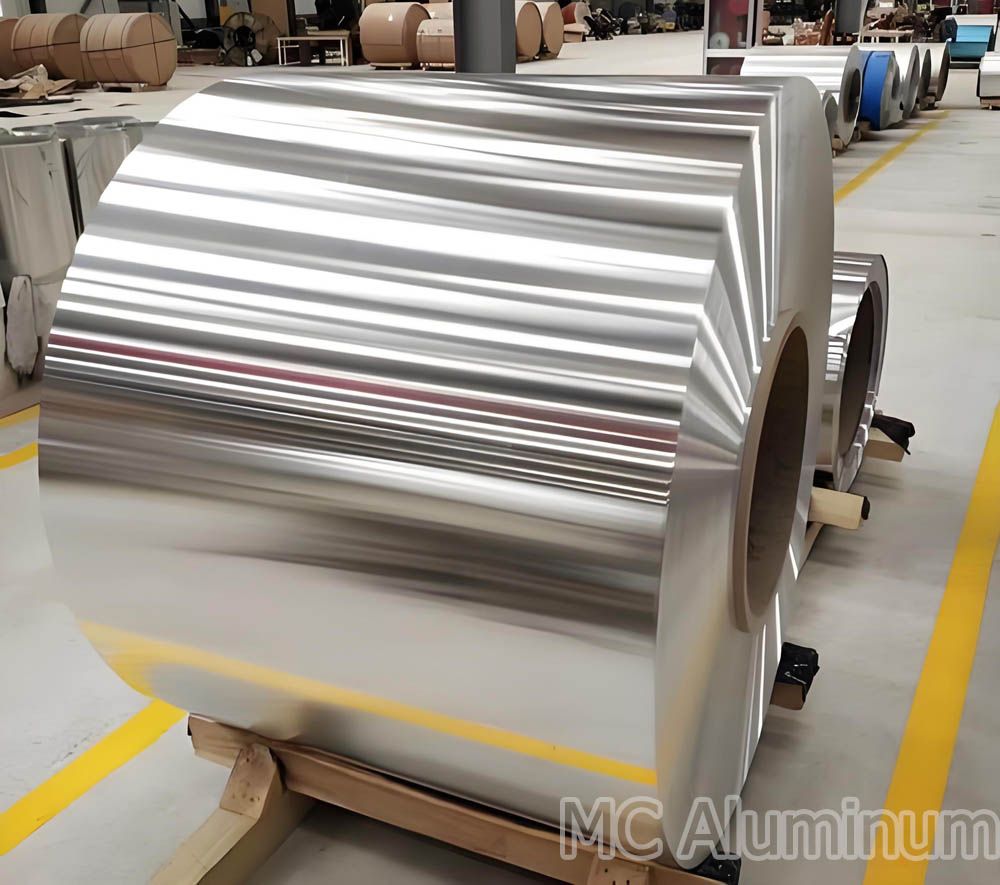
MC Aluminum produces 40 micron heavy duty aluminum foil (0.040 mm), an industrial-grade thick aluminum foil featuring high strength, excellent tear resistance, good formability, and thermal and shielding properties. It is widely used in commercial catering, industrial packaging, HVAC construction, and automotive applications.
The key factors determining the strength, toughness, and barrier properties of aluminum foil lie in its thickness; 40 micron heavy duty aluminum foil is a high-strength product with a thickness of approximately 0.04 millimeters. Compared to ordinary household aluminum foil (typically 10-15 microns) and standard heavy-duty foil (approximately 20-25 microns), aluminum foil of 40 microns or greater falls into the "Heavy Duty" or industrial-grade category, boasting exceptional mechanical strength, superior durability, and outstanding puncture resistance.
Aluminum Foil Thickness Classification
Foil specifications are usually defined by thickness, width, and length. While width and length are obvious on packaging, thickness is often labeled simply as "standard," "heavy-duty," or "extra-heavy-duty."
Thickness is precisely measured in mils (1 mil = 0.001 inches). Understanding this unit helps buyers accurately evaluate durability and suitability.
Standard: 0.00062 inches (~55 gauge); versatile for general food service
Heavy-duty: 0.0009 inches (~80 gauge); more resistant than standard foil
Extra-heavy-duty: 0.0013 inches (~135 gauge); suitable for freezing and high-temperature cooking
Alloy and Surface Treatment Selection
Not all 40-micron foils are "high-quality" or "heavy-duty." Alloy composition and surface treatment are equally important.
Common Alloy Grades: High-quality 40-micron aluminum foil available on the market typically utilizes 1235, 8011, 8021, or 3003 alloys. For instance, 8011 aluminum foil is renowned for its excellent moisture resistance and tensile strength, making it frequently used in food-grade and pharmaceutical packaging; conversely, 8021 aluminum foil is distinguished by its exceptionally high elongation (70% higher than conventional materials) and extremely low pinhole rate, rendering it particularly suitable for formed packaging applications that require deep drawing.
Surface finish:
Single-sided bright: one side shiny, one side matte; formed during the final rolling stages. In 40-micron foils, this is still common for applications requiring lamination or adhesive bonding (matte side adheres better).
Double-sided bright: both sides shiny, minimal surface defects, excellent thickness uniformity; used in high-end cooking or decorative applications.
Core Advantages of Heavy-Duty Aluminum Foil
1. Excellent Barrier Performance
Completely opaque, water-resistant, oxygen-proof, and odor-sealing, extending product shelf life.
2. High Puncture Resistance
Resists sharp objects like bones or metal parts, ideal for industrial and heavy-duty packaging.
3. Outstanding Temperature Resistance
Does not melt or become brittle at extremely high temperatures (~660°C melting point).
4. Excellent Thermal Conductivity
Rapid and even heat transfer, perfect for cooking and thermal processing.
5. Safe and Environmentally Friendly
Non-toxic, food-safe, and 100% recyclable. Aluminum recycling infrastructure is mature in many regions.
6. Shape Memory
Maintains a tight wrap without rebounding or loosening, keeping contents securely enclosed.
Applications
| Field | Typical Use |
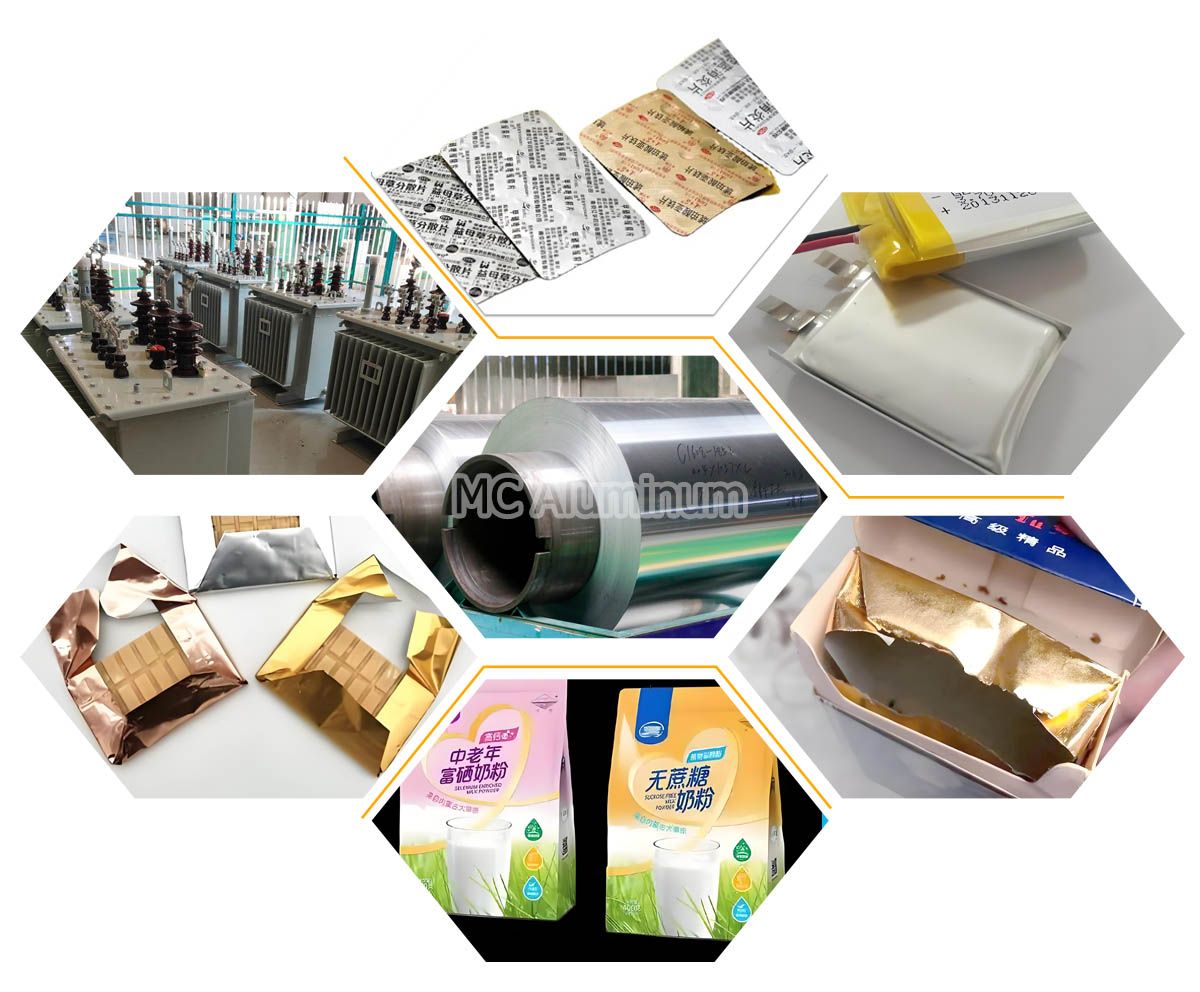
| Food Packaging | High-end snacks, ready-to-eat meals, meat, seafood, dairy; vacuum packaging, formed packaging, heat-sealed packaging |
| Pharmaceutical Packaging | Tablets, capsules, injectables; ensures efficacy and hygiene |
| Tobacco Products | Cigarettes and e-cigarette packaging; moisture-proof, light-proof, tamper-proof |
| Construction & Engineering | Insulation boards, fireproof panels, moisture barriers, roofing waterproofing, pipe insulation |
| Industrial Use | Insulation for motors and transformers, protective foil in high-temperature environments |
| Household | High-temperature baking, grilling, cooking, and storage boxes (more durable than standard household foil) |
| Arts & Crafts | Base or protective layer for metal crafts, decorative items |
Production Process of 40-Micron Aluminum Foil
High-quality heavy-duty aluminum foil undergoes multiple strict production steps:
1. Raw Material Preparation
Select high-purity aluminum ingots; melt and cast into slabs.
2. Hot Rolling
Slabs are hot-rolled into thinner sheets, preparing for cold rolling.
3. Cold Rolling
Multiple passes reduce sheet thickness to the target 40 microns.
4. Annealing
Improves ductility, making foil softer and easier to process.
5. Slitting and Packaging
Cut into various widths and coil diameters, then quality-checked and packed.
Strict quality control ensures uniform thickness, smooth surfaces, and stable performance.
Comparison with Ordinary Aluminum Foil
| Feature | 40 μm Heavy-Duty Foil | Ordinary Household Foil (10–20 μm) |
| Thickness | 0.040 mm | 0.010–0.020 mm |
| Strength | High; tear and puncture resistant | Low; easy to tear |
| Formability | Excellent; suitable for 3D containers/structural parts | Poor; mainly for wrapping |
| Applications | Industrial, commercial catering, construction insulation | Household wrapping, baking |
| Price | Medium–High | Low |
Production Quality Requirements
Surface Quality: Smooth, odorless, free from grease, visible aluminum flakes, or scratches; ensures food-grade hygiene and prevents tearing.
Pinhole Control: Nearly zero pinholes due to 40-micron thickness, providing excellent water/oxygen barrier and shielding.
Mechanical Properties: High tensile strength and good ductility (elongation ≥3%) to tightly wrap sharp or complex shapes without cracking.
Coil Quality: Proper winding tension, neat edges, no cracks, ensuring smooth operation on automated packaging lines.
Compliance & Certification: Use standard alloys such as 8011 or 1235, and comply with FDA, ROHS, ISO, or other food/pharmaceutical safety standards.