
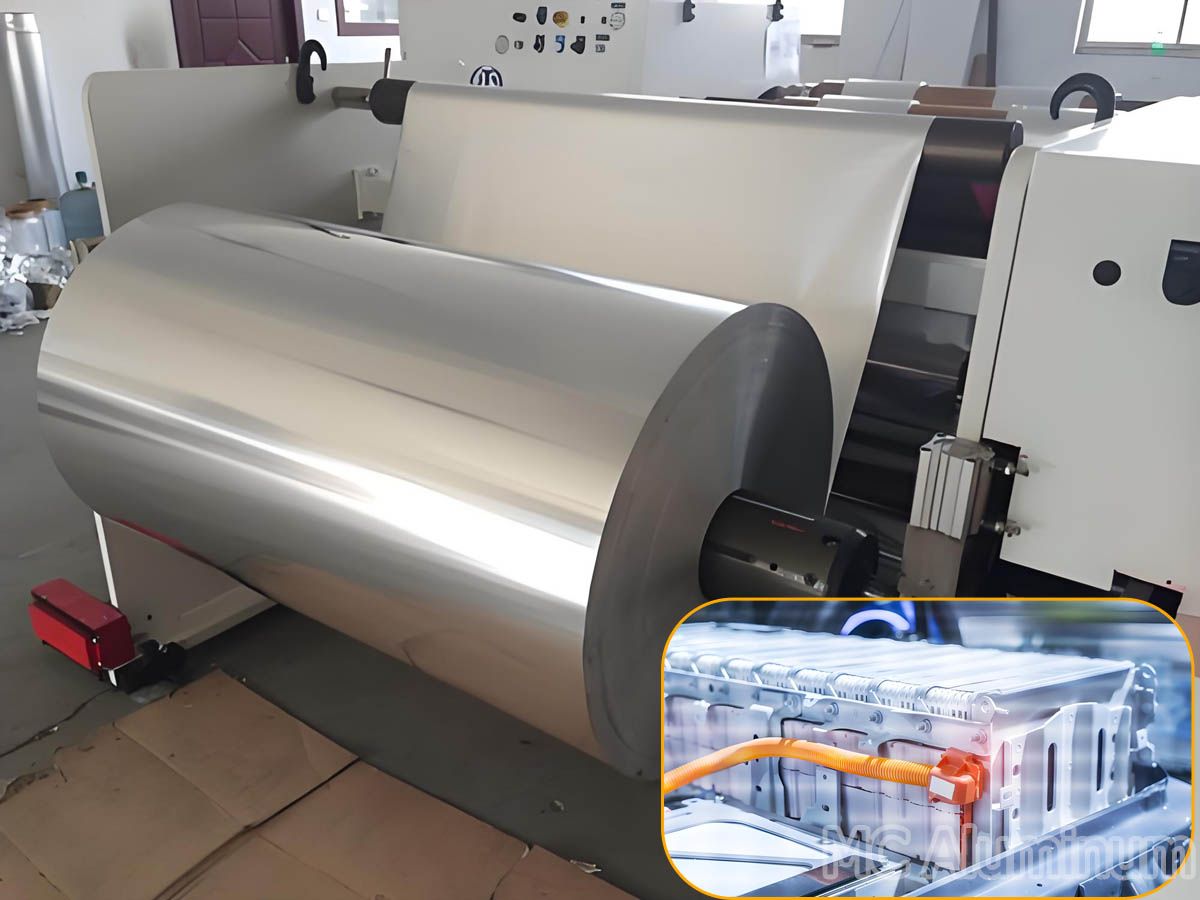
As an important material for lithium-ion battery cathode current collectors, aluminum foil not only conducts electrons but also directly affects battery internal resistance, energy density, cycle performance, and manufacturing efficiency.
MC Aluminum supplies 1050, 1060, 1070, and 1235 aluminum foil with high purity, good electrical conductivity, excellent ductility, and stable processing performance. Available thicknesses commonly range from 10–50μm, meeting the requirements of different battery chemistries and manufacturing processes.
Why Do Lithium-Ion Batteries Require High-Performance Aluminum Foil?
In a typical lithium-ion battery structure, cathode materials are coated onto aluminum foil, while anode materials are generally coated onto copper foil. The aluminum foil is positioned between the cathode active material and the external circuit and primarily functions as a current collector and electron-conducting medium.
Therefore, battery aluminum foil is not ordinary industrial aluminum foil. It is a functional material that must meet multiple stringent performance requirements.
1. Good Electrical Conductivity
Aluminum has good electrical conductivity, helping reduce resistance during electron transmission. For power batteries and energy storage batteries, stable electrical conductivity contributes to efficient charging and discharging.
2. Excellent Ductility
Battery aluminum foil typically undergoes coating, calendering, slitting, winding, or stacking processes. If the foil has insufficient plasticity, it may experience strip breakage or cracking during processing.
Therefore, good elongation and uniform mechanical properties are important indicators for battery-grade aluminum foil.
3. Stable Surface Quality
Cathode slurry must be uniformly coated onto the aluminum foil surface. Surface defects such as scratches, pinholes, oil contamination, and oxidation spots can affect coating uniformity and subsequently impact battery manufacturing quality.
Therefore, battery-grade aluminum foil generally requires a clean, smooth surface free from obvious defects.
4. Precise Thickness and Flatness Control
The 10–50μm thickness range represents relatively thin aluminum foil specifications. Manufacturing requires strict control of thickness tolerance, flatness, tension, and coil quality.
Especially in power and energy storage batteries, aluminum foil thickness directly affects the weight of the current collector and the overall energy density of the battery.
Battery Aluminum Foil Alloys: 1050, 1060, 1070 and 1235
1050 Aluminum Foil
1050 aluminum contains ≥99.50% Al. Among the four grades, it has the lowest aluminum purity, with relatively less stringent impurity limits. It offers moderate electrical conductivity and corrosion resistance.
Its cost advantage makes it suitable for some cost-sensitive energy storage applications and certain consumer electronics battery applications where extremely low internal resistance is not the primary requirement. Its share in some battery applications has gradually decreased as higher-performance grades become more widely adopted.
1060 Aluminum Foil
1060 aluminum contains ≥99.60% Al and is considered a highly versatile grade.
It provides a good balance of purity, electrical conductivity, electrolyte corrosion resistance, and rolling process stability. With an attractive cost-performance ratio, 1060 is widely considered for energy storage batteries and general-purpose power battery applications where performance and cost need to be balanced.
1070 Aluminum Foil
1070 aluminum contains ≥99.70% Al and is a high-purity aluminum foil.
Its impurity control is more stringent, and its electrical conductivity is excellent. Its relatively low electrical resistivity can help reduce battery internal resistance, making it suitable for high-rate and high-energy-density applications.
1070 aluminum foil is commonly considered for high-end consumer batteries and specialized power sources where extremely low internal resistance is important. Ultra-thin 10–12μm specifications are particularly relevant to high energy-density applications.
1235 Aluminum Foil
1235 aluminum contains ≥99.35% Al.
Some customers may wonder why 1235, despite having lower nominal aluminum purity than 1060, is widely used in large-scale battery production.
The objective of 1235 is not simply to maximize aluminum purity. Instead, the alloy is designed with controlled impurity levels and optimized rolling and elongation characteristics. It can provide favorable tensile strength, resistance to breakage, and stable welding performance, making it suitable for winding processes used in power batteries.
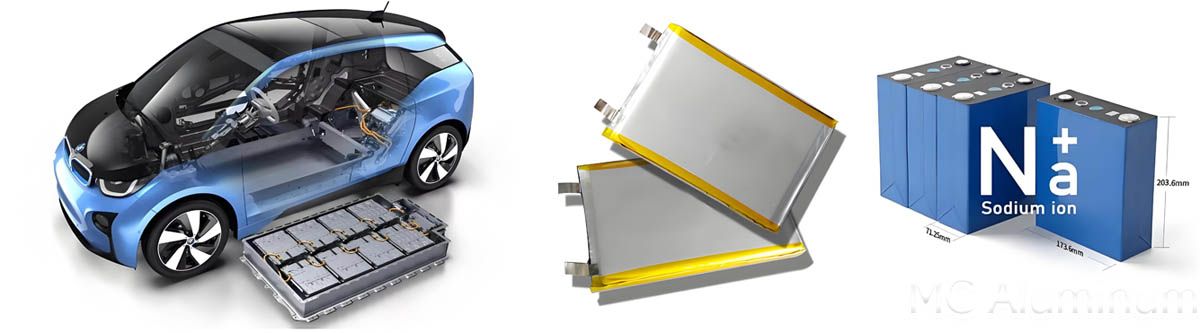
1235 aluminum foil is widely used in new energy vehicle power batteries and is also used in various sodium-ion battery applications.
Temper Conditions: O, H18 and H24
O Temper — Annealed
The softest condition, offering the best ductility and formability.
H18 — Full Hard
Provides the highest strength among these temper conditions, but with lower elongation.
H22 / H24 — Semi-Hard
Provides a balance between strength and elongation.
Power battery foil is commonly supplied in H18 or other higher-strength conditions, depending on the specific battery design and manufacturing requirements.
How to Choose the Right Thickness from 10–50μm?
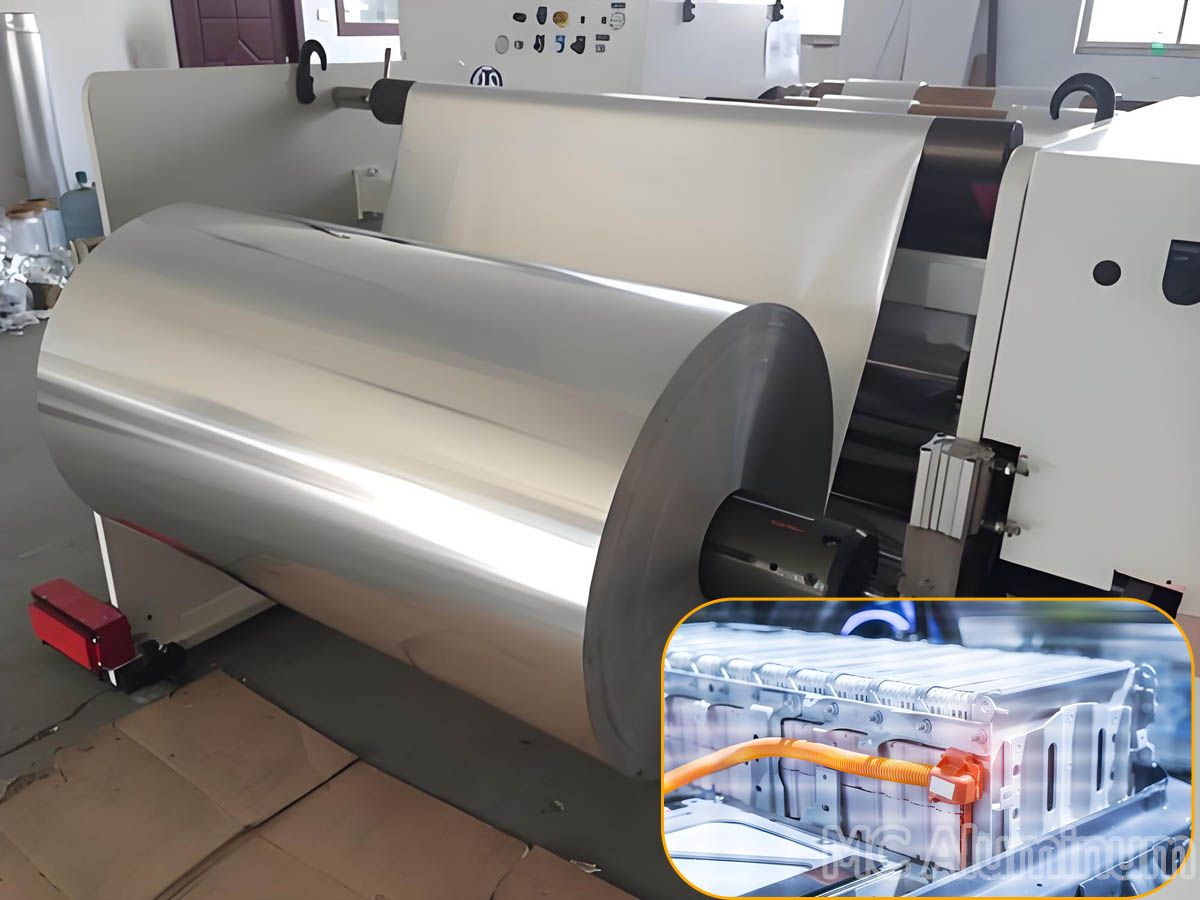
Mainstream aluminum foil for power batteries is concentrated in approximately 10–20μm, while 10–50μm represents a broader industrial thickness range. Different thicknesses involve trade-offs among energy density, mechanical strength, safety, and cost.
10–15 μm (Ultra-thin range)
Reducing weight and non-active material content to boost battery energy density is the prevailing trend in power lithium-ion batteries. As the foil becomes thinner, requirements regarding tensile strength, elongation, and pinhole control become increasingly stringent. Excessive pinholes in 10 μm-class foil can lead to localized micro-short circuits and risks of thermal runaway; furthermore, the foil is highly prone to breakage during coating and winding, placing high demands on both equipment capabilities and substrate quality.
Alloy selection: Primarily 1070 and 1235. Choose 1070 for lower internal resistance, or 1235 for superior processing reliability.
15–25 μm (Standard mainstream range)
Strikes a balance between strength and energy density; this is the "sweet spot" for thickness in energy storage batteries and most small-to-medium-sized lithium batteries. The risk of foil breakage is significantly reduced, and the material offers high process tolerance for coating and calendering, making it easier to ensure high yields. The 1060 alloy is the most widely used in this thickness range.
25–50 μm (Thicker aluminum foil)
Increased thickness adds weight to the foil itself, which displaces space for active materials and sacrifices energy density. However, the advantages include superior tensile and puncture resistance, reduced heat generation under high-current conditions, and excellent vibration and shock resistance. It is commonly used in high-power specialty power supplies, as a tab substrate for certain large battery cells, and in applications where mechanical reliability is the top priority.
Note: Greater thickness increases the overall weight of the battery cell and reduces energy density; therefore, thick aluminum foil should not be selected indiscriminately unless necessary.
Battery Aluminum Foil Quality Requirements
Battery aluminum foil has extremely stringent quality requirements and is significantly more demanding than conventional packaging aluminum foil.
Thickness tolerance: For thin foils, a tolerance of ±0.3–0.5 μm is required; significant thickness fluctuations can lead to uneven electrode sheet weight after coating and compromise cell consistency.
Surface quality: Uniform color, clean appearance, and flat profile; free from obvious roll marks, pitting, pinholes, or corrosion traces; free from rolling defects such as creases, mottling, or bright lines; and free from color variations.
Cleanliness: Surfaces must be free of oil, strong oily odors, and visible oil stains.
Wettability: Surface tension must be at least 32 dynes (verified via dyne pen test) to ensure good slurry adhesion.
Mechanical properties: High tensile strength and high elongation are core requirements. Standard-grade foil requires a tensile strength of ≥160–180 MPa, whereas aluminum foil for power batteries generally requires ≥180 MPa, with some applications demanding ≥200 MPa or even ≥300 MPa.
Application Scenarios for Battery Aluminum Foil
Consumer electronics batteries (mobile phones, Bluetooth headsets, laptops, etc.): 1070 aluminum foil is the preferred choice, prioritizing high electrical conductivity and low internal resistance. Ultra-thin specifications-around 0.03 mm-may be selected to enhance energy density.
Power batteries (new energy vehicles): 1235 aluminum foil is preferred; its strength and welding stability better withstand the mechanical stresses generated during charging and discharging. Typical thickness ranges from 12 to 15 μm.
Energy storage batteries: 1060 aluminum foil is the preferred choice, with a thickness of 18–20 μm offering a balance between performance and cost-effectiveness.
Battery tab applications: Common alloy grades for tabs are 1070 and 1235. Grade 1235 is preferred for resistance welding processes, while 1070 is often prioritized for ultrasonic or laser welding.
FAQ
Q1: Why must aluminum foil be used for the cathode of lithium-ion batteries instead of copper foil?
A: At high potentials, a dense, stable aluminum oxide (Al₂O₃) passivation layer forms on the surface of aluminum, providing corrosion and oxidation resistance. Copper foil, conversely, tends to oxidize and fail at high potentials; therefore, aluminum foil is the only mainstream choice for the cathode current collector.
Q2: Which alloy grade is most commonly used for power batteries, and what is the typical thickness?
A: Grade 1235 is the most widely used alloy in the power battery sector, with a typical thickness of 12–15 μm. Its strength and welding stability allow it to better withstand the mechanical stresses generated during charge and discharge cycles.
Q3: What is the greatest technical challenge in the production process?
A: Pinhole control. When the aluminum foil thickness is reduced to below 10 μm, the number of pinholes increases sharply, which is a primary factor reducing the product yield rate. Additionally, thickness tolerance and sheet flatness present core challenges.
Q4: What is the price of battery aluminum foil?
A: Higher purity entails higher production costs; the general price ranking is: 1070 > 1060 > 1050 > 1235 (with 1235 having the lowest purity and the best cost-performance ratio). However, actual pricing also depends on factors such as thickness, temper (material state), and procurement volume.