
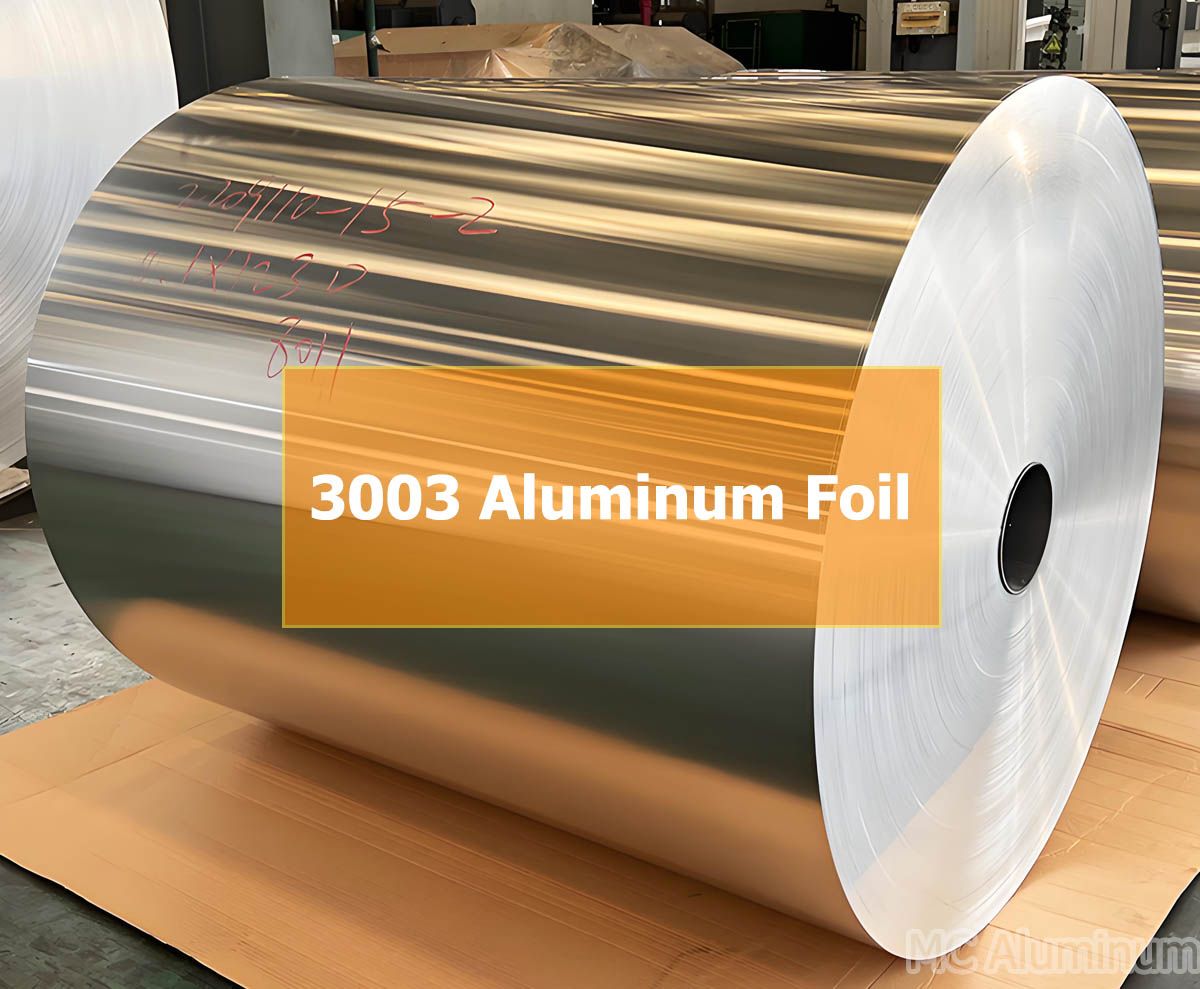
As a typical representative of Al-Mn aluminum-manganese alloy, 3003 aluminum foil is widely used in the market. When supplied in the H18 full-hard temper, it becomes a metal foil material that can withstand demanding forming processes, provides excellent corrosion resistance, and maintains uncompromising strength.
What Is 3003 H18 Aluminum Foil?
3003 aluminum foil belongs to the Al-Mn alloy series. Its main components are aluminum (Al) and approximately 1.0%-1.5% manganese (Mn). Its anti-rust performance is much better than that of 1000 series pure aluminum foil, so it is often called anti-rust aluminum.
H18 temper:
"H" stands for strain hardening, while "18" indicates the fully hard condition. This means the material has undergone a high degree of cold rolling deformation without final annealing afterward. It is one of the tempers of 3003 alloy with the highest tensile strength and hardness.
Chemical Composition, %
| Alloy | Si | Fe | Cu | Mn | Mg | Cr | Zn | Ti | Other:each | Other:total | Al |
| 3003 | 0.6 | 0.7 | 0.05-0.20 | 1.0-1.5 | - | - | 0.1 | - | 0.05 | 0.15 | remainder |
Product Technical Parameters
| Item | Parameter |
| Alloy Grade | 3003 |
| Temper | H18 |
| Thickness | 0.006–0.200 mm |
| Width | 100–1600 mm |
| Length | Customizable |
| Tensile Strength | ≥140 MPa |
| Yield Strength | ≥120 MPa |
| Elongation | ≤3% |
| Density | 2.73 g/cm³ |
| Electrical Conductivity | ≈40–45 %IACS |
| Thermal Conductivity | ≈160–180 W/m·K |
| Surface Quality | Free from oil stains, scratches, and with few pinholes |
| Coil Inner Diameter | 76 / 152 mm |
| Standard | ASTM B479 / EN 546 |
| MOQ | 1–3 tons |
Core Advantages of 3003 Aluminum Foil
1. Excellent Mechanical Strength and Rigidity
Compared with pure aluminum series such as 1100, the strength of 3003 aluminum foil is increased by about 10%. It has good hardness and load-bearing capacity, making it less likely to deform during processing and use.
2. Excellent Anti-Rust and Corrosion Resistance
The addition of manganese gives 3003 aluminum foil strong environmental adaptability. Whether in humid air, marine climates, industrial atmospheres, or some weak acid and weak alkaline environments, it can form a dense oxide protective film on the surface, effectively preventing the spread of corrosion.
3. Outstanding Barrier and Protective Performance
When used as a packaging or protective layer, 3003-H18 aluminum foil has a micron-level dense structure that can provide 100% barrier protection against moisture, gas, light, and bacteria.
At the same time, it has excellent thermal and electrical conductivity, making it suitable for working conditions involving alternating hot and cold environments.
4. Good Ductility and Processing Performance
3003 aluminum alloy has excellent plasticity and can easily meet the requirements of stamping, stretching, bending, and other deep processing operations. After cold working and heat treatment, it can still maintain good ductility, making it highly suitable for manufacturing products with complex shapes.
5. Flat Shape and Smooth Processing Surface
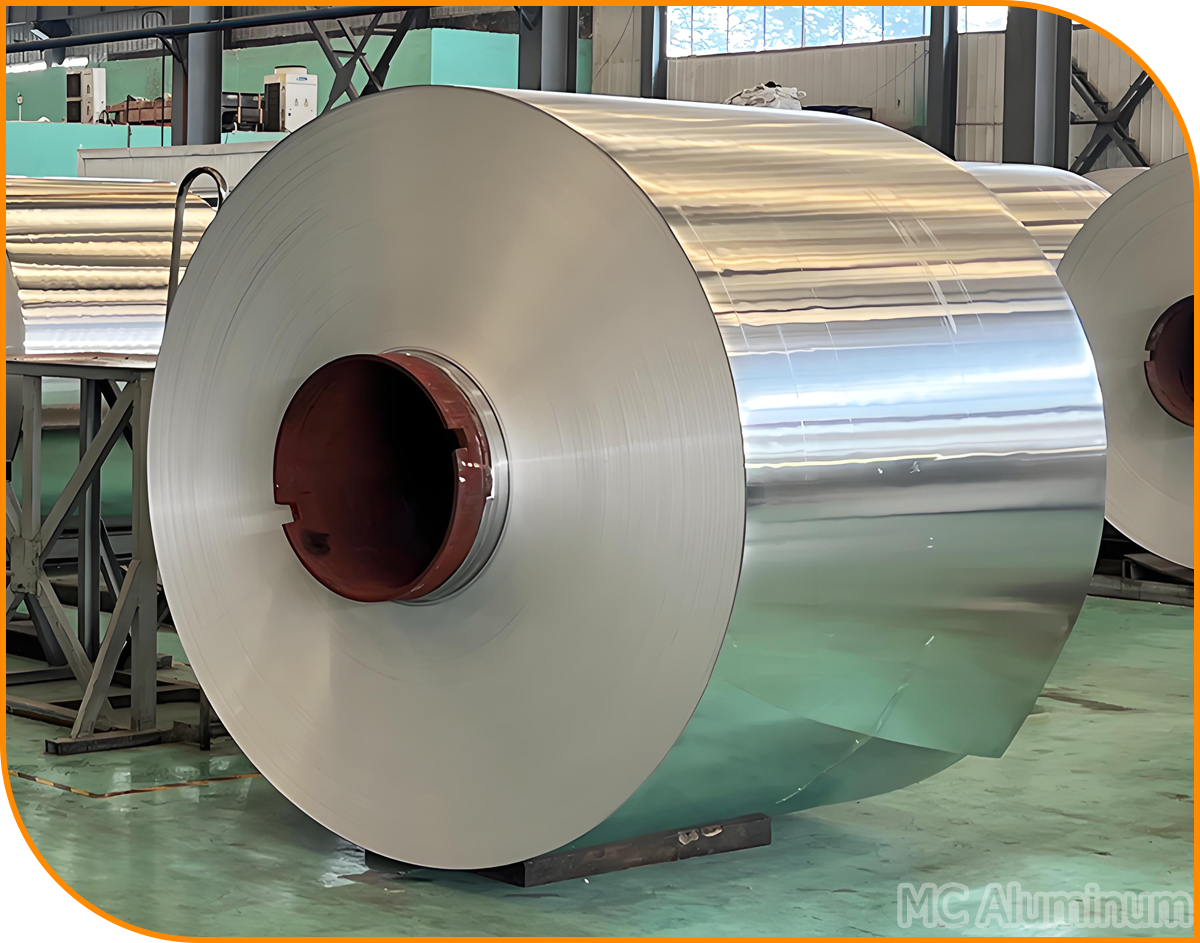
High-standard cold rolling technology gives 3003-H18 aluminum foil excellent surface quality - free from oil spots, scratches, and oxidation, with flat and uniform coiling.
This provides an excellent base material for subsequent lamination, coating, or mechanical processing.
6. Lightweight and Environmentally Recyclable
Its density is only about one-third that of pure iron, which can significantly reduce the weight of finished products.
In addition, aluminum is an environmentally friendly recyclable metal, with a moderate melting point and high recycling efficiency.
Equivalent Grades of 3003 Aluminum Alloy
| Standard / Country | AA/ASTM Aluminum Association, USA | UNS Unified Numbering System, USA | EN European Standard | EN Chemical Symbol | ISO International Standard | GB/T China | JIS Japan |
| Equivalent or Corresponding Grade | 3003 | A93003 | EN AW-3003 | EN AW-AlMn1Cu | AlMn1Cu / 3003 | 3003 | A3003 |
Applications of 3003 H18 Aluminum Foil
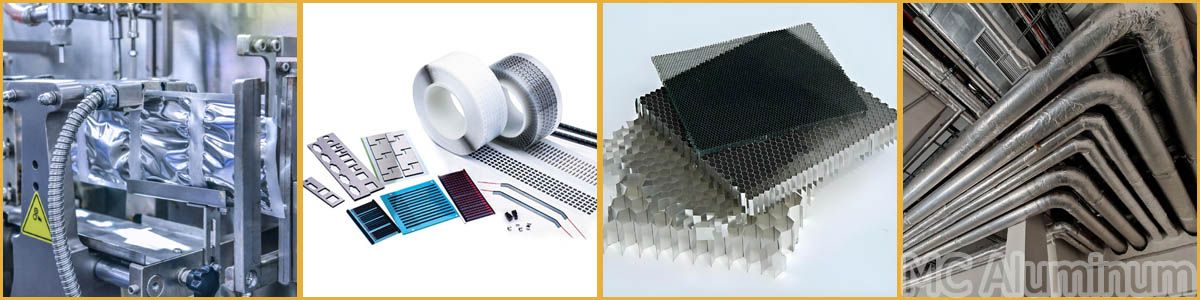
1. Food and Packaging Industry
Food aluminum foil composite film
Pharmaceutical blister packaging
Sealing lid materials, such as yogurt lids and beverage sealing films
2. Industrial and Building Thermal Insulation
Pipeline insulation layers
Building reflective insulation materials
Protective layers for HVAC systems
Air-conditioning fins
Heat sinks
3. Electronic and Electrical Applications
Electromagnetic shielding materials, EMI shielding
Capacitor foil
Battery current collectors
4. Aerospace and Transportation
Aircraft interiors
High-speed railway carriages
Building curtain walls
Comparison with Other Tempers
| Comparison Item | 3003-H18 | 3003-H14 | 3003-H24 |
| Temper Meaning | Strain hardened, full-hard temper | Strain hardened, 1/2 hard temper | Strain hardened and partially annealed to 1/2 hard temper |
| Hardness | Highest | Medium | Medium, close to H14 |
| Tensile Strength | Highest | Medium | Medium, close to H14 |
| Elongation | Lowest | Higher than H18 | Usually slightly better than or close to H14 |
| Formability | Poor; not suitable for deep drawing or complex bending | Good; suitable for general bending and stamping | Good; overall formability better than H18 |
| Springback | Relatively large | Medium | Medium |
| Flatness / Stiffness | Good, high stiffness | Relatively good | Relatively good |
| Deformation Resistance | Strong | Medium | Medium |
| Work Hardening Method | Hardened only by cold rolling | Hardened only by cold rolling | Properties adjusted by partial annealing after cold rolling |
| Typical Applications | Aluminum foil tape, air-conditioning foil, honeycomb aluminum foil, hard packaging foil, etc. | Food containers, general stamped parts, decorative materials, packaging materials, etc. | Packaging, containers, stamped parts requiring both formability and strength, etc. |
| Advantages | High strength, high hardness, good stiffness, not easy to deform | Good balance between strength and plasticity | Stable performance and relatively good plasticity |
| Disadvantages | Poor ductility, easy to crack, not suitable for large deformation processing | Lower strength than H18 | Lower strength than H18; sometimes slightly higher cost than H14 |
| Suitable Scenarios | Applications requiring high hardness and high stiffness | Applications requiring certain hardness and certain formability | Applications requiring good formability and stable performance |
Mechanical Properties
| Temper | Tensile Strength Rm / MPa | Yield Strength Rp0.2 / MPa | Elongation A / % |
| 3003-H18 | 180–220 | ≥160 | 1-3 |
| 3003-H14 | 140–180 | 110–150 | 3-8 |
| 3003-H24 | 140–180 | 100–145 | 4-10 |
How to Choose High-Quality 3003-H18 Aluminum Foil?
In B2B procurement or factory processing, to ensure that 3003-H18 aluminum foil delivers maximum value, the following process indicators should be carefully evaluated:
1. Thickness Tolerance
Precision manufacturing, such as honeycomb core production, requires thickness control within ±3%, or even stricter tolerances.
2. Surface Wetting Tension, Water Brush Test
The surface must reach Grade A or meet specific coating requirements to ensure perfect adhesion of glue or coating and prevent delamination.
3. Pinholes
Especially when used as barrier packaging, the number of pinholes must be strictly controlled below national or international standards to ensure absolute sealing performance.