
As an aluminum foil manufacturer, we produce rolled aluminum foil substrates for pouch cell packaging materials used in lithium-ion batteries, polymer batteries, and soft-pack battery systems. In pouch cell construction, aluminum foil functions as the metallic barrier layer within aluminum plastic film. It helps protect electrochemical materials from moisture, oxygen, external contamination, and mechanical damage during storage, assembly, and service.
Pouch cell packaging requires more than basic aluminum foil. The foil must provide stable thickness, clean surfaces, controlled mechanical properties, reliable formability, and consistent bonding performance with polymer films and adhesive layers. Our production process is designed to supply foil coils that meet the requirements of battery packaging film converters and battery material manufacturers.
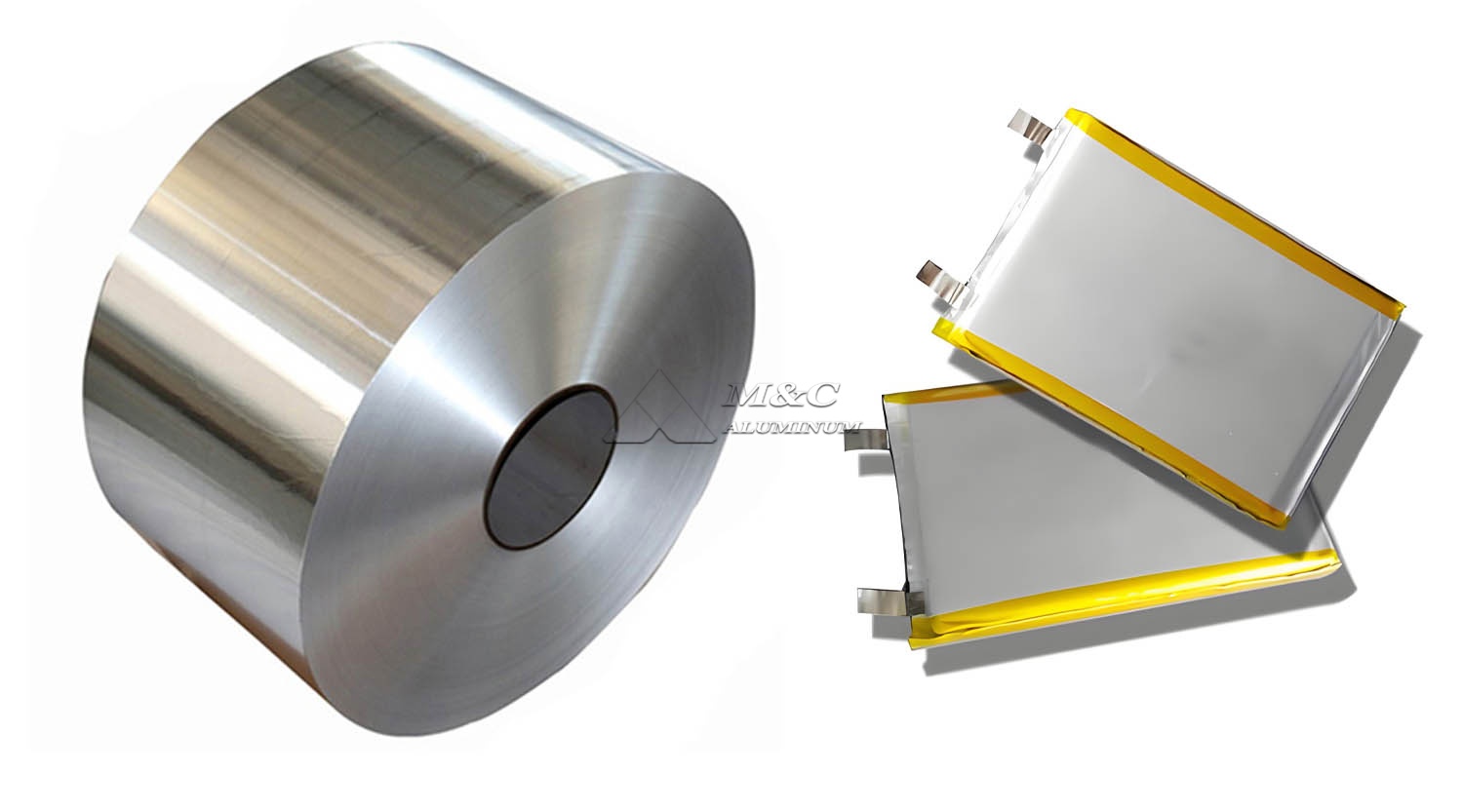
Role of Aluminum Foil in Pouch Cell Packaging
A typical pouch cell packaging material is a multilayer aluminum plastic film. Its structure generally includes an outer protective polymer layer, adhesive layers, an aluminum foil barrier layer, and an inner heat-sealable polymer layer. The aluminum layer is the core barrier component of this composite structure.
The foil is not normally used alone as the final pouch. Instead, it is laminated with nylon, PET, CPP, PP, or other polymer materials according to the converter's design. The performance of the finished aluminum plastic film depends substantially on the quality and consistency of the aluminum foil substrate.
For this application, our pouch cell aluminum foil is manufactured to support the following functions:
Provide a high barrier against water vapor and oxygen.
Improve protection of moisture-sensitive lithium battery materials.
Support deep drawing and forming during pouch fabrication.
Maintain integrity without pinholes, cracks, or delamination risks.
Offer a suitable surface for adhesive coating and polymer lamination.
Contribute to a lightweight packaging structure compared with rigid metal battery cans.
The combination of low weight, high barrier performance, and flexibility makes aluminum foil for pouch cell packaging materials suitable for consumer electronics batteries, energy storage cells, medical device batteries, and selected electric vehicle battery designs.
Recommended Alloys for Battery Pouch Foil
The most commonly selected alloys for aluminum plastic film are 8021 aluminum foil and 8079 aluminum foil. These alloys are widely used because they provide a balanced combination of softness, strength, elongation, and processing stability after annealing.
We manufacture foil in alloy and temper combinations selected according to thickness, forming depth, lamination method, and final pouch geometry. For applications requiring good ductility and stable deep-drawing performance, soft temper material is generally preferred.
| Parameter | 8021 Aluminum Foil | 8079 Aluminum Foil | Relevance to Pouch Cell Packaging |
|---|---|---|---|
| Typical temper | O, H22, H24 | O, H22, H24 | O temper is commonly selected for forming applications |
| Typical thickness | 30-50 microns | 30-50 microns | Selected according to laminate design and forming depth |
| Typical width | 200-1,600 mm | 200-1,600 mm | Slit to converter and laminator requirements |
| Tensile strength, O temper | 80-120 MPa | 80-120 MPa | Supports handling while retaining formability |
| Elongation, O temper | Typically 10% or above | Typically 10% or above | Important for stamping and deep drawing |
| Surface condition | One bright side, one matte side or specified finish | One bright side, one matte side or specified finish | Must be suitable for lamination and coating |
| Pinholes | Controlled according to thickness and customer standard | Controlled according to thickness and customer standard | Essential for barrier integrity |
| Coil inner diameter | 150 mm, 300 mm, 400 mm, or customized | 150 mm, 300 mm, 400 mm, or customized | Compatible with conversion equipment |
The values above are typical manufacturing ranges. Final specifications should be confirmed based on the aluminum plastic film structure, forming process, battery dimensions, and downstream quality standard.
For customers requiring a softer packaging foil for deep-drawn pouch designs, our 8021 Aluminum Foil can be supplied in controlled O temper with customized thickness tolerance and slit width. Where additional alloy options are required, 8079 Aluminum Foil is also available for battery packaging conversion.
Key Quality Requirements for Aluminum Plastic Film Foil
Battery pouch foil must be manufactured under stricter surface and dimensional controls than ordinary packaging foil. Small defects can affect adhesive coverage, lamination uniformity, barrier performance, or subsequent pouch forming. As a factory, we control the production stages from melting and casting through rolling, annealing, slitting, inspection, and packaging.
Thickness Uniformity
Consistent thickness is essential because battery pouch film is processed through coating, dry lamination, thermal lamination, and forming equipment. Excessive thickness variation may lead to uneven bonding, unstable forming behavior, or inconsistent finished pouch dimensions.
We use rolling process control and online measurement systems to manage gauge variation across the coil width and along the coil length. Tolerance requirements are agreed before production, particularly for thin foil specifications in the 30-40 micron range.
Surface Cleanliness and Wettability
The foil surface must be clean and suitable for bonding with adhesive systems. Residual rolling oil, dust, stains, scratches, and embedded particles can reduce lamination quality. Our annealing process is controlled to reduce residual oil and maintain a clean surface condition appropriate for downstream chemical treatment or adhesive application.
Surface wettability and dyne level requirements vary according to the customer's lamination process. We can provide material with controlled surface characteristics and retain inspection records for each production batch.
Pinholes and Surface Defects
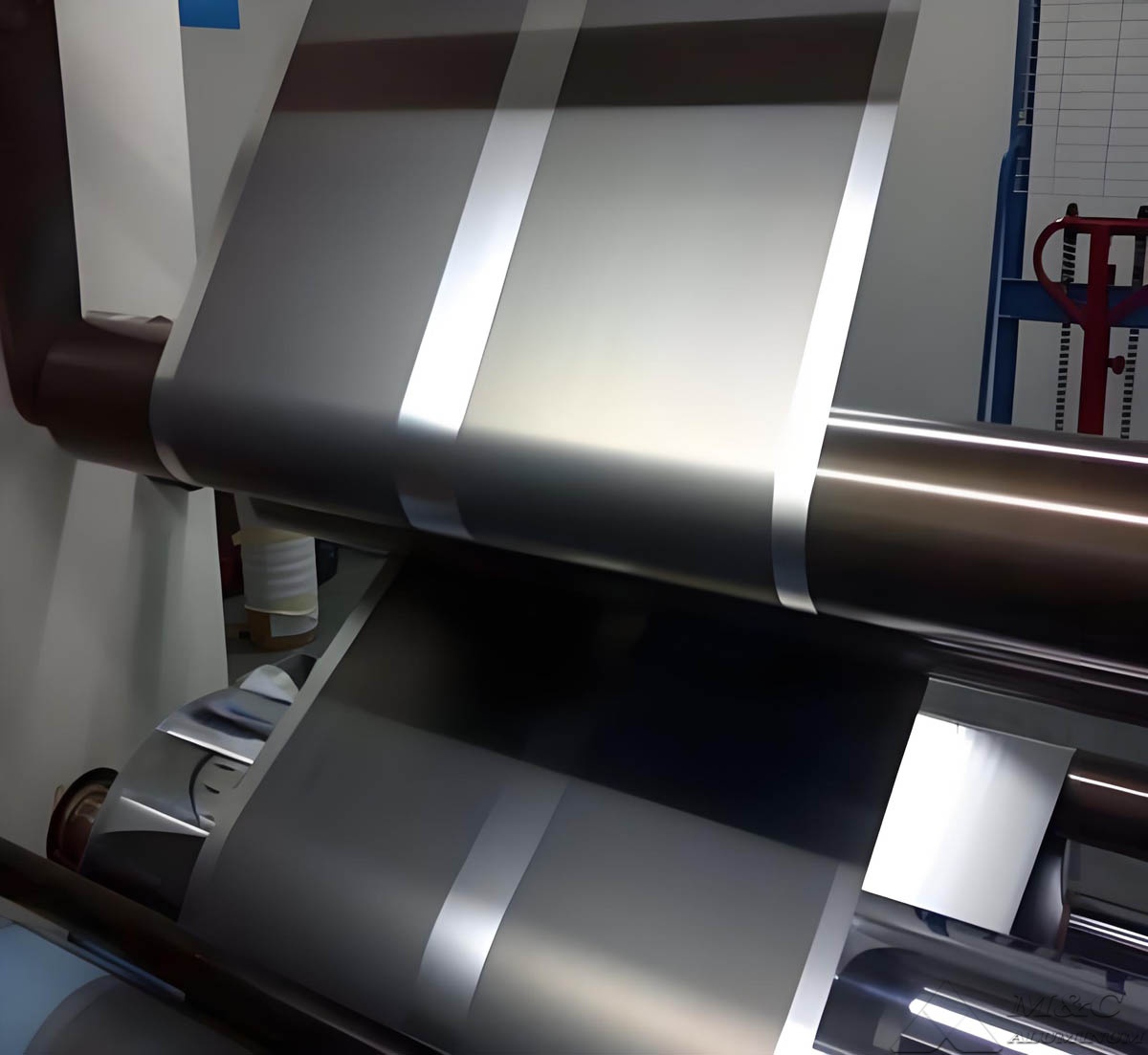
Pinhole control is a critical requirement for aluminum foil used as a barrier layer. Although the acceptable pinhole level depends on foil thickness and customer specifications, the objective is always to minimize defects that could compromise moisture resistance after lamination.
Our inspection procedures include visual examination, surface defect assessment, coil edge inspection, and process monitoring. We also control common defects such as scratches, oil marks, wrinkles, edge cracks, loose winding, telescoping, and adhesion between layers.
Mechanical Properties and Formability
Pouch cells often require forming around electrode stacks, tabs, and sealing areas. The aluminum foil must tolerate deformation during the pouch manufacturing process without cracking or creating weak points in the laminate.
Mechanical properties are controlled through alloy composition, cold rolling reduction, and final annealing. A properly annealed soft-pack battery foil provides the ductility needed for forming while retaining adequate handling strength during lamination and slitting.
Manufacturing Process for Pouch Cell Aluminum Foil
Our manufacturing process begins with controlled alloy preparation and continuous casting or hot rolling feedstock. The material then undergoes multiple cold rolling stages to reach the required foil gauge. Intermediate annealing may be applied to restore workability before final rolling.
After final gauge rolling, the foil is annealed according to the target temper. For O temper pouch cell aluminum foil, annealing parameters are managed to obtain stable elongation, softness, surface cleanliness, and coil flatness. The foil is then slit into customer-specified widths and wound under controlled tension.
Before shipment, each coil is inspected for dimensions, surface quality, winding condition, temper-related properties, and packaging integrity. Coils are protected with moisture-resistant wrapping and suitable supports to reduce the risk of deformation during sea, rail, or road transport.
Selection Considerations for Battery Manufacturers and Converters
Selecting aluminum foil for pouch cell packaging materials should be based on the complete laminate design rather than foil thickness alone. We recommend confirming the following items before production:
Alloy grade and temper required by the pouch film design.
Foil thickness and permitted tolerance.
Width, coil weight, inner diameter, and winding direction.
Bright and matte side requirements for adhesive application.
Surface cleanliness, residual oil, and wettability requirements.
Pinhole acceptance criteria and inspection method.
Required elongation and forming depth.
Final destination, packaging method, and transport conditions.
For high-volume battery projects, trial coils are useful for validating lamination strength, adhesive compatibility, deep drawing behavior, electrolyte resistance of the final laminate, and sealing performance. Our technical team supports specification alignment at the foil supply stage so that converters can reduce avoidable variation during downstream processing.
Difference Between Pouch Packaging Foil and Battery Current Collector Foil
Pouch cell packaging foil should not be confused with battery aluminum foil used as a cathode current collector. Current collector foil is usually made from high-purity aluminum alloys such as 1050, 1060, 1070, 1100, or 1235, with different thickness, conductivity, surface, and mechanical requirements.
The aluminum foil used in pouch packaging is designed primarily for barrier protection and formability within aluminum plastic film. By contrast, cathode current collector foil is designed to carry electrical current and support active material coating. These two products serve different positions in the battery cell and should be specified separately.
Conclusion
Aluminum foil for pouch cell packaging materials is a specialized barrier foil used in the manufacture of aluminum plastic film for soft-pack lithium batteries. Reliable performance depends on alloy selection, temper control, thickness uniformity, low pinhole levels, surface cleanliness, and stable mechanical properties.
As a manufacturer, we supply 8021 aluminum foil and 8079 aluminum foil for battery pouch film conversion in customized coil dimensions and controlled technical conditions. By aligning foil specifications with the customer's lamination and forming process, we help create a stable material foundation for high-quality pouch cell packaging.