
In air conditioners, refrigerators, and other refrigeration equipment, the heat exchanger acts as the heart of the cooling system. Inside it, ultra-thin aluminum foil fins play a crucial role in transferring heat efficiently.
Among various materials used for fin stock, 3104 hydrophilic aluminum foil has become one of the most widely adopted options due to its excellent forming ability, corrosion resistance, and stable hydrophilic coating performance. This article explains the key characteristics and advantages of 3104 hydrophilic aluminum foil used for fin applications.
What is 3104 Hydrophilic Aluminum Foil?
3104 hydrophilic aluminum foil refers to aluminum foil made from 3104 aluminum alloy that is coated with a hydrophilic layer on its surface after rolling.
3104 belongs to the Al-Mn alloy series, known for its good formability, moderate strength, and excellent corrosion resistance. These properties make it an ideal base material for heat exchanger fins in air conditioning systems.
During air conditioner operation, condensation inevitably forms on the surface of the fins. Untreated aluminum foil surfaces are naturally hydrophobic, meaning water droplets tend to form spherical beads. These droplets can accumulate between fins and create a "water bridge", increasing airflow resistance and reducing heat transfer efficiency.
Hydrophilic aluminum foil solves this issue through special surface treatment. The coating reduces the water contact angle to ≤10° (high-quality products ≤8°), allowing condensation to quickly spread into a thin film and flow downward along the fins. This prevents water bridging and ensures efficient cooling performance and energy savings.
Common Tempers
3104 aluminum foil typically adopts Hxx series tempers, meaning the material is strain-hardened and partially annealed (stabilized). This ensures the foil maintains stable mechanical properties even after hydrophilic coating and high-temperature curing.
3104 H14
Provides good strength and formability, suitable for standard air conditioner fin production.
3104 H16
Slightly higher strength than H14 while maintaining good processing performance. Suitable for heat exchanger fins requiring better structural stability.
3104 H18
Higher strength and rigidity, suitable for fins requiring higher stiffness and deformation resistance.
3104 H24
Partially annealed temper offering improved ductility, suitable for complex stamping processes.
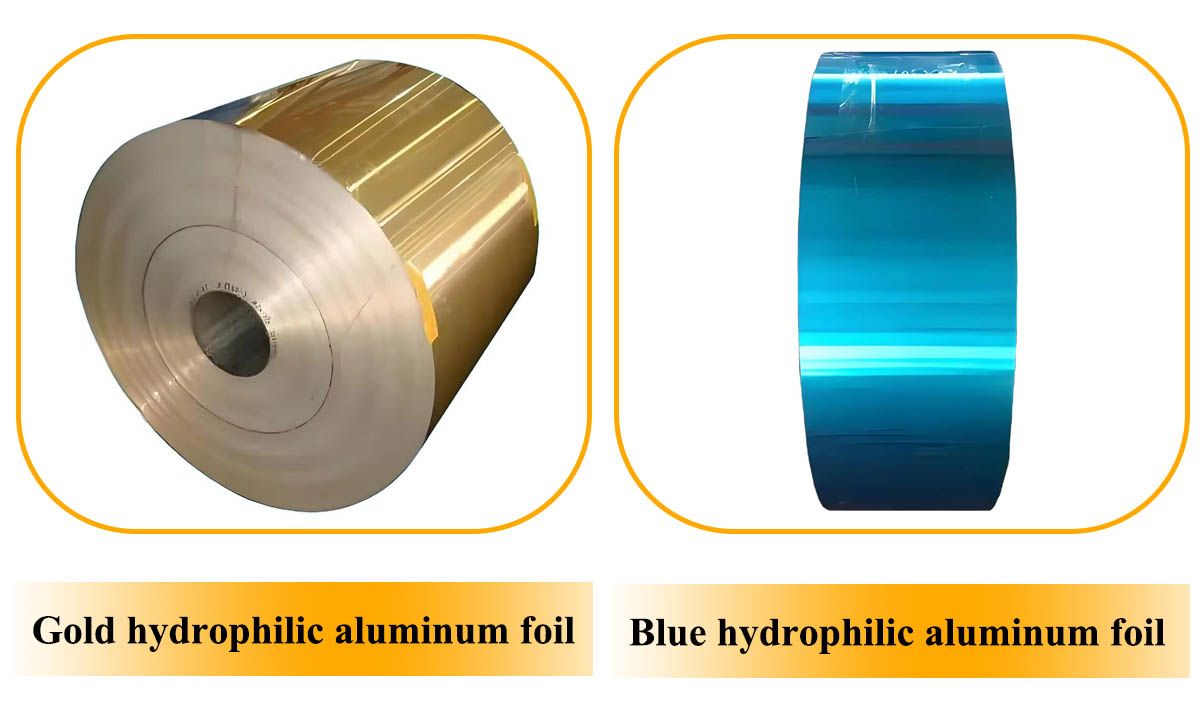
Technical Specifications of 3104 Aluminum Foil for Fin Stock
| Item | Specification |
| Alloy | 3104 |
| Temper | H14 / H16 / H18 |
| Thickness | 0.06 mm – 0.20 mm |
| Width | 200 mm – 1250 mm |
| Coating Type | Hydrophilic coating |
| Color | Blue / Gold / Natural |
| Coating Thickness | 1 - 3 μm |
| Surface Tension | ≤ 35 mN/m |
Performance Characteristics of 3104 Hydrophilic Aluminum Foil
1. Excellent Formability
During fin production, aluminum foil undergoes high-speed stamping, flanging, and corrugation forming.
3104 alloy offers good ductility and crack resistance, making it suitable for high-speed automated fin production lines.
2. Corrosion Resistance
3104 aluminum alloy has excellent atmospheric corrosion resistance. When combined with a hydrophilic coating, the corrosion protection is further enhanced, ensuring stable performance in humid and condensation environments.
3. Hydrophilic Performance
Special surface treatment gives the foil low surface tension, allowing condensation to spread quickly and preventing water bridging. This reduces noise and improves heat transfer efficiency.
4. Higher Strength
Compared with traditional 3003 aluminum foil, 3104 aluminum alloy provides higher strength, helping maintain fin spacing and improving the overall structural strength of heat exchangers.
5. Coating Adhesion
3104 aluminum foil has a uniform microstructure and stable surface quality. After surface treatment, the hydrophilic coating adheres firmly and maintains stability under long-term thermal cycling.
6. Environmental Safety
Modern hydrophilic coating technology uses water-based systems, reducing pollution associated with organic solvents.
Key Performance Indicators of Hydrophilic Coating
Contact Angle: Initial ≤10°, after humid aging (85°C / 85% RH, 500h) ≤15°
Coating Weight: Double side 1.5–3.0 g/m², tolerance ±0.3 g/m²
Adhesion: No peeling in cupping or 180° T-bend tests
Corrosion Resistance: Neutral Salt Spray (NSS) ≥800 h
Coastal / industrial environment recommendation: 1200–2000 h
Dyne Value: ≥38 mN/m to ensure coating compatibility
Heat Resistance: Short-term tolerance up to 180°C, suitable for brazing processes in heat exchanger manufacturing
Manufacturing Process of 3104 Hydrophilic Aluminum Foil
Casting / Hot Rolling → Cold Rolling into Foil → Stress Relief Annealing → Surface Degreasing & Cleaning → Chemical Conversion Coating (Chromate or Chromium-free Zirconium/Titanium Passivation) → Hydrophilic Coating Application (Acrylic or Inorganic Composite System) → Curing at 180–220°C → Slitting and Rewinding.
During subsequent processing, welding and heat input must be carefully controlled to avoid coating degradation.
Typical Applications of 3104 Hydrophilic Aluminum Foil
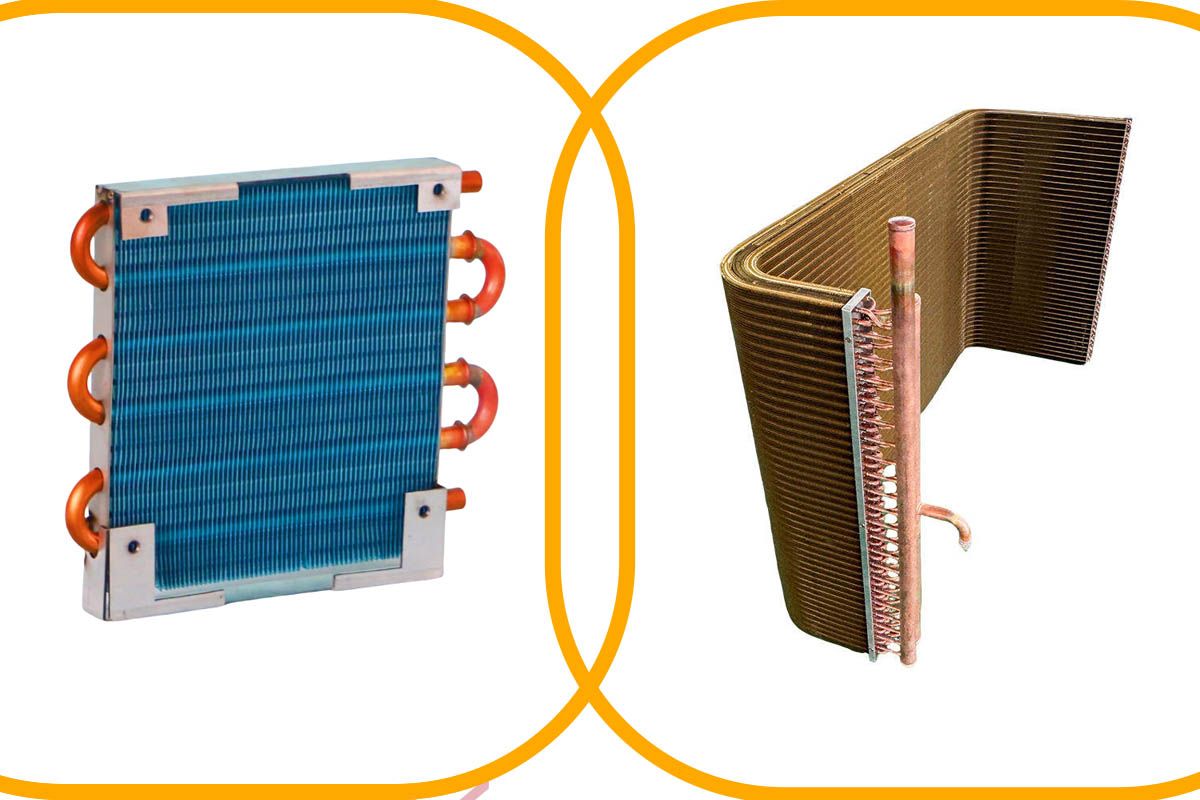
Due to its excellent performance, 3104 hydrophilic aluminum foil is widely used for heat exchanger fin materials, including:
Residential air conditioner evaporator fins
Air conditioner condenser fins
Commercial refrigeration heat exchangers
Refrigerator evaporator fins
Automotive air conditioner heat exchangers
Industrial cooling equipment heat exchangers
In modern HVAC systems, hydrophilic aluminum fins not only improve heat exchange efficiency but also enhance system reliability and stability.
Comparison of 3104 / 3102 / 8011 Hydrophilic Aluminum Foil for Fin Stock
In HVAC heat exchanger fin materials, the most common hydrophilic aluminum foil alloys include 3104, 3102, and 8011. Each alloy has its own characteristics in terms of strength, formability, and application.
| Item | 3104 Hydrophilic Aluminum Foil | 3102 Hydrophilic Aluminum Foil | 8011 Hydrophilic Aluminum Foil |
| Alloy Type | Al-Mn alloy | Al-Mn alloy | Al-Fe-Si alloy |
| Common Tempers | H14 / H16 / H18 / H24 | H14 / H16 / H24 | H18 / H22 / H24 |
| Strength | Higher | Medium | Lower |
| Formability | Excellent | Excellent | Good |
| Corrosion Resistance | Excellent | Good | Good |
| Fin Stability | Good | Good | Moderate |
| Coating Adhesion | Excellent | Good | Good |
| Typical Thickness | 0.06 – 0.20 mm | 0.06 – 0.15 mm | 0.06 – 0.12 mm |
| Main Applications | AC evaporator & condenser fins | HVAC heat exchanger fins | Standard air conditioner fins |