
Electric vehicle battery production depends on stable, consistent, and precisely controlled materials. As a battery aluminum foil manufacturer, we produce aluminum foil used as the cathode current collector in lithium-ion power cells. Our battery aluminum foil is engineered for EV manufacturers, battery cell producers, and electrode coating facilities that require reliable conductivity, surface quality, dimensional consistency, and process compatibility.
In an EV battery, aluminum foil carries current from the cathode active material to the external circuit. Although it is a thin component, its quality directly affects coating uniformity, electrode adhesion, internal resistance, energy density, and production yield. For this reason, battery aluminum foil must be specified and manufactured differently from general industrial or packaging foil.
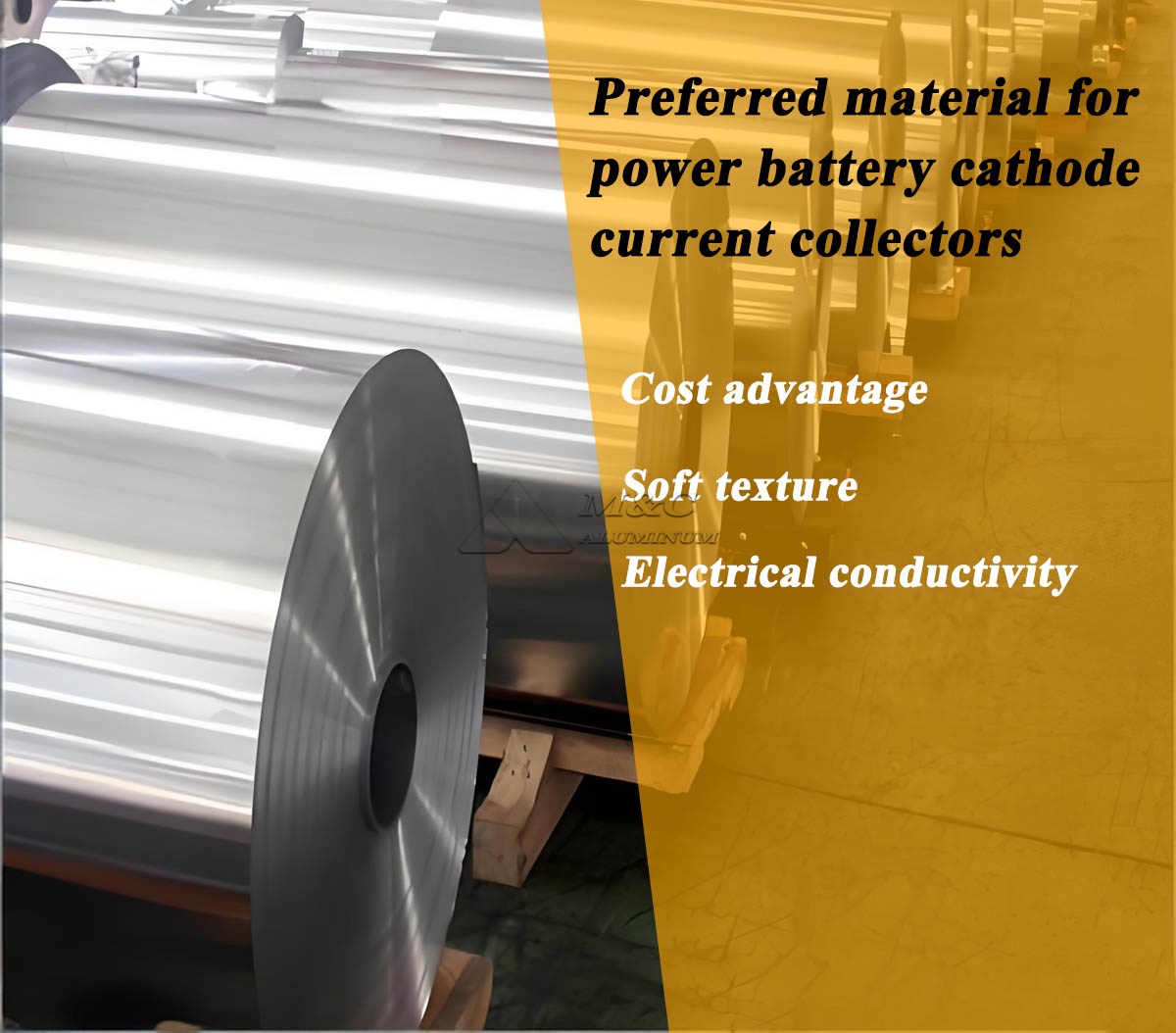
The Role of Aluminum Foil in EV Battery Cells
Lithium-ion battery cells generally use aluminum foil as the cathode current collector and copper foil as the anode current collector. The aluminum foil supports the cathode coating, which may contain lithium iron phosphate, nickel manganese cobalt oxide, lithium nickel cobalt aluminum oxide, or other cathode active materials.
During electrode manufacturing, the foil passes through slurry coating, drying, calendaring, slitting, and cell assembly processes. Each stage places specific demands on foil performance. A stable aluminum foil substrate helps manufacturers control coating weight, reduce defects, maintain electrode flatness, and improve line efficiency.
For EV applications, battery aluminum foil must provide the following core functions:
- Conduct electrical current efficiently across the cathode electrode.
- Support active material coating with consistent surface properties.
- Maintain flatness during high-speed coating and calendaring.
- Resist tearing, wrinkling, and edge damage during processing.
- Deliver controlled thickness and width throughout the coil.
- Meet low surface contamination requirements for battery production.
Our production process is designed around these functional requirements rather than general foil appearance alone.
Battery Aluminum Foil Alloys for EV Manufacturers
The most commonly used alloys for lithium-ion battery aluminum foil are 1235, 1050, 1060, and selected high-purity aluminum grades. The final choice depends on the battery chemistry, electrode design, thickness requirement, mechanical property target, and downstream coating process.
Among these options, 1235 aluminum foil is widely used for cathode current collector applications because of its high aluminum content, good conductivity, excellent formability, and stable rolling performance. We also manufacture 1235 Aluminum Foil for customers requiring thin-gauge foil with controlled surface and coil quality.
| Alloy | Typical Application | Main Characteristics | Notes for EV Battery Production |
|---|---|---|---|
| 1235 | Cathode current collector | High purity, good conductivity, stable rolling performance | Common choice for lithium-ion battery foil |
| 1050 | Cathode current collector | Good electrical conductivity and workability | Suitable for selected electrode designs |
| 1060 | Battery and industrial conductive foil | High aluminum content, good formability | Often selected where conductivity is prioritized |
| 1100 | Specialty conductive foil | Good corrosion resistance and processing properties | Used according to technical agreement |
Alloy selection should be confirmed with the battery cell design and electrode manufacturing parameters. We support specification review before production to help customers align foil characteristics with their coating, calendaring, and slitting conditions.
Typical Technical Parameters of Battery Aluminum Foil
Battery aluminum foil specifications vary according to cell format, including pouch cells, prismatic cells, and cylindrical cells. The following table shows typical supply ranges for EV battery aluminum foil. Final values are determined by the purchase specification and mutually agreed inspection standard.
| Parameter | Typical Range | Manufacturing Control Focus |
|---|---|---|
| Alloy | 1235, 1050, 1060, 1100 | Chemical composition consistency |
| Temper | H18, H19, H22, H24 | Strength and elongation balance |
| Thickness | 10-25 microns | Tight thickness tolerance across coil width |
| Common thickness | 12 microns, 15 microns, 16 microns, 20 microns | Matched to cathode design and coating weight |
| Width | 200-1,600 mm | Stable slit width and edge quality |
| Coil inner diameter | 76 mm, 150 mm, 300 mm, 505 mm | Compatible with customer equipment |
| Coil outer diameter | As agreed | Controlled for safe transport and unwinding |
| Tensile strength | Typically 150-230 MPa | Suitable for coating and rolling operations |
| Elongation | Typically 1.0-5.0 percent | Controlled according to temper and thickness |
| Surface condition | Clean, oil-controlled, no visible rolling defects | Supports coating adhesion and process stability |
| Pinhole level | Controlled by thickness and agreed standard | Reduced risk of coating and handling defects |
| Edge condition | Trimmed, burr-controlled, crack-free | Important for slitting and high-speed processing |
For ultra-thin battery aluminum foil, thickness stability is particularly important. Even small variations can influence coating weight distribution and electrode density after calendaring. Our rolling and inspection processes are configured to maintain uniformity from the beginning to the end of each coil.
Surface Quality and Cleanliness Requirements
Surface quality is one of the most important criteria for EV battery aluminum foil. The cathode slurry must wet the foil uniformly and form a stable bond after drying and calendaring. Surface contamination, excessive rolling oil, scratches, inclusions, or uneven roughness can affect electrode performance and increase manufacturing losses.
We control battery foil surface conditions through alloy preparation, rolling lubricant management, intermediate annealing, final rolling, tension control, and quality inspection. The objective is to provide a clean and uniform foil surface suitable for electrode coating.
Key surface-related controls include:
- Low and consistent residual rolling oil.
- No visible oil stains, oxidation marks, or dark streaks.
- Controlled surface roughness appropriate for coating adhesion.
- Minimal scratches, dents, roll marks, and mechanical damage.
- Controlled pinholes based on foil thickness and application requirement.
- Clean slit edges with low burr formation.
For customers using water-based or solvent-based cathode slurries, we can review the required surface condition and provide samples for coating trials before bulk production.
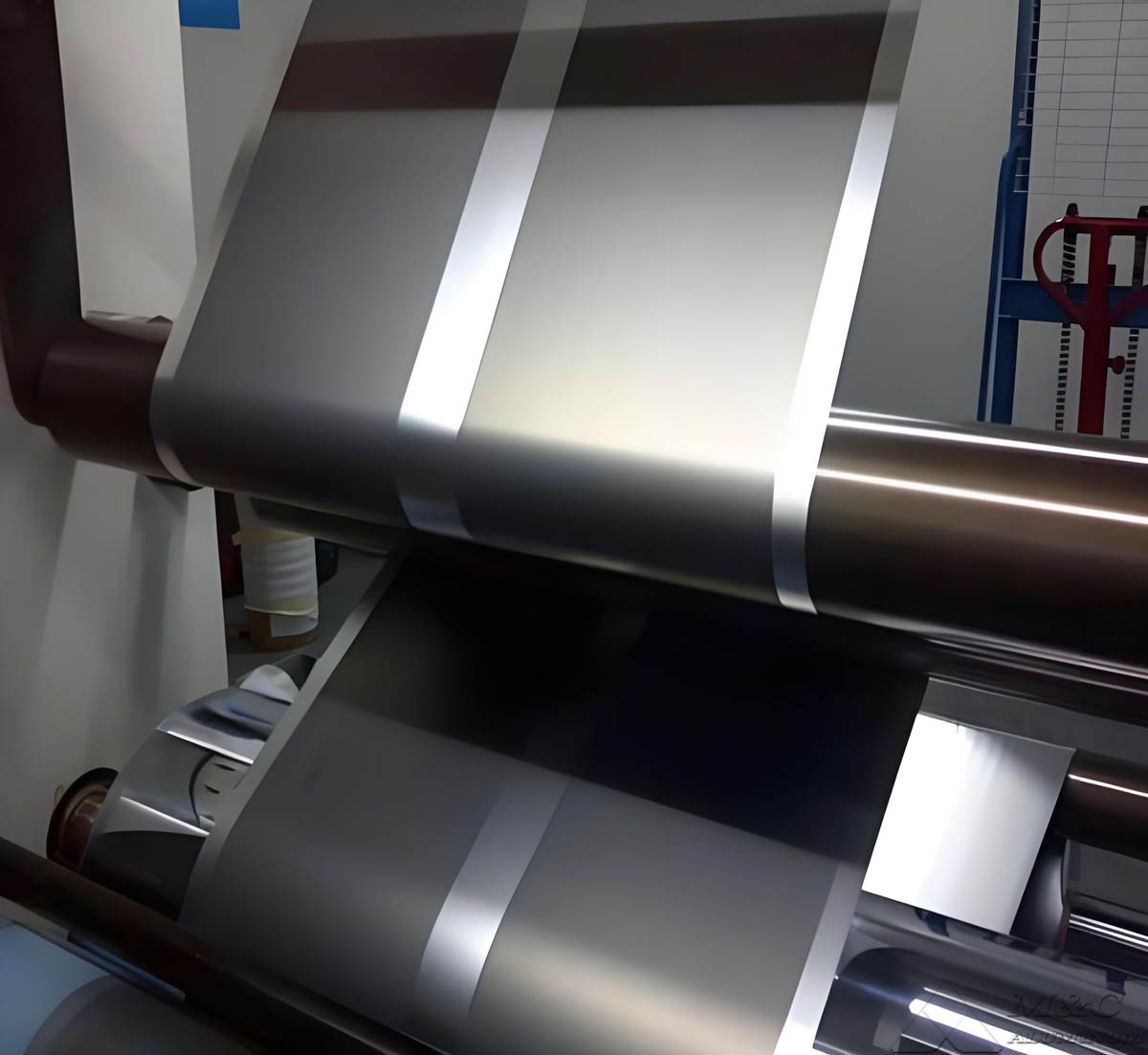
Carbon Coated Aluminum Foil for Advanced Cathode Designs
Carbon coated aluminum foil is an enhanced battery current collector with a conductive carbon layer applied to one or both sides of the aluminum substrate. It is used in selected battery designs where improved interfacial conductivity, lower contact resistance, and better adhesion between the active material layer and aluminum foil are required.
For EV battery manufacturers, carbon coated aluminum foil may support more stable electrode processing and improved electrical contact within the cathode structure. The coating formulation, coating weight, adhesion performance, and surface resistance must be aligned with the customer's active material and electrode process.
Our carbon coated aluminum foil can be produced according to agreed specifications for substrate alloy, foil thickness, carbon coating side, coating thickness, surface resistance, and coil dimensions. Because each battery chemistry and slurry formulation differs, technical confirmation is recommended before commercial production.
Manufacturing Process for EV Battery Aluminum Foil
As a manufacturer, we manage the battery aluminum foil process from raw material preparation through finished coil packaging. The process is designed to reduce variation and maintain traceability for each production batch.
The typical manufacturing sequence includes:
- Aluminum melting and alloy composition control.
- Casting and hot rolling to prepare the base material.
- Cold rolling to reduce thickness in controlled stages.
- Intermediate annealing where required by alloy and temper.
- Final rolling to achieve the specified foil gauge.
- Slitting, edge trimming, and coil rewinding.
- Surface inspection, dimensional inspection, and mechanical testing.
- Protective packaging for transportation and storage.
Process control is especially important during final rolling and slitting. Thin-gauge foil can be affected by tension variation, roll condition, lubricant cleanliness, and handling quality. We monitor these factors to help ensure stable unwinding performance at the customer's electrode coating line.
Quality Inspection and Traceability
EV battery material supply requires more than a basic certificate of analysis. We conduct inspections that focus on the conditions most relevant to battery electrode production. Depending on the order specification, inspection items may include thickness, width, tensile strength, elongation, surface quality, coil profile, edge quality, pinholes, residual oil, and chemical composition.
Each coil can be identified by production batch to support traceability through the manufacturing process. Test reports can be supplied according to the agreed commercial and technical requirements.
| Inspection Item | Purpose for Battery Production |
|---|---|
| Thickness measurement | Supports coating consistency and electrode design control |
| Width measurement | Ensures compatibility with coating and slitting equipment |
| Tensile and elongation testing | Verifies processing stability during unwinding and calendaring |
| Surface inspection | Identifies scratches, stains, holes, and rolling defects |
| Edge inspection | Reduces risks during slitting and high-speed line operation |
| Coil shape inspection | Helps prevent wrinkling, telescoping, and uneven tension |
| Chemical composition analysis | Confirms alloy compliance and material consistency |
Packaging and Delivery Considerations
Battery aluminum foil requires careful packaging because thin foil is sensitive to moisture, dust, impact, compression, and edge damage. We use protective packaging methods based on coil size, shipment method, and destination requirements. This may include moisture-resistant wrapping, protective end boards, reinforced outer packaging, palletized loading, and clear coil identification.
For export orders, we can coordinate packaging dimensions and loading plans to improve container utilization while maintaining coil protection. Storage conditions should remain dry, clean, and free from corrosive environments. Customers should allow coils to acclimate to production-area conditions before opening when significant temperature differences are present.
Working With an Aluminum Foil Manufacturer
Selecting a battery aluminum foil supplier should involve more than comparing nominal thickness and price. EV manufacturers and battery cell producers should assess manufacturing capability, quality stability, technical communication, inspection methods, sample validation support, and delivery consistency.
As a factory, we work directly with customers on alloy selection, temper, thickness tolerance, width, coil configuration, surface requirements, and packaging details. Our broader Products range also supports aluminum foil requirements across industrial and specialized applications.
For battery aluminum foil projects, we recommend beginning with a clear technical specification and trial coils. This allows both parties to confirm coating compatibility, mechanical processing behavior, and quality acceptance criteria before moving to regular-volume supply.
Conclusion
Battery aluminum foil for EV manufacturers is a critical cathode current collector material that requires precise control of alloy, thickness, temper, surface cleanliness, flatness, edge quality, and coil consistency. Whether the requirement is standard 1235 aluminum foil or carbon coated aluminum foil for an advanced cathode design, the material must be matched to the battery cell architecture and electrode manufacturing process.
Our factory supplies EV battery aluminum foil with specification-based manufacturing, controlled quality inspection, and export-ready packaging. We support technical discussions for lithium-ion battery foil projects where stable production performance and consistent material quality are required.