
Cathode aluminum foil for batteries is the current collector used on the positive electrode side of lithium-ion cells. As a specialized aluminum foil manufacturer, we produce battery aluminum foil with controlled thickness, surface condition, mechanical properties, and coil geometry for cathode electrode coating processes.
In lithium-ion batteries, the aluminum current collector supports the cathode active material layer and conducts electrons between the electrode coating and the external circuit. Its performance directly affects coating uniformity, electrode resistance, winding stability, cell consistency, and production yield. For this reason, battery foil must meet tighter requirements than general-purpose industrial aluminum foil.
Our cathode aluminum foil is manufactured for lithium-ion battery applications including cylindrical cells, prismatic cells, pouch cells, energy storage batteries, consumer electronics batteries, and automotive battery systems. We supply bare aluminum foil and carbon coated aluminum foil according to customer process requirements.
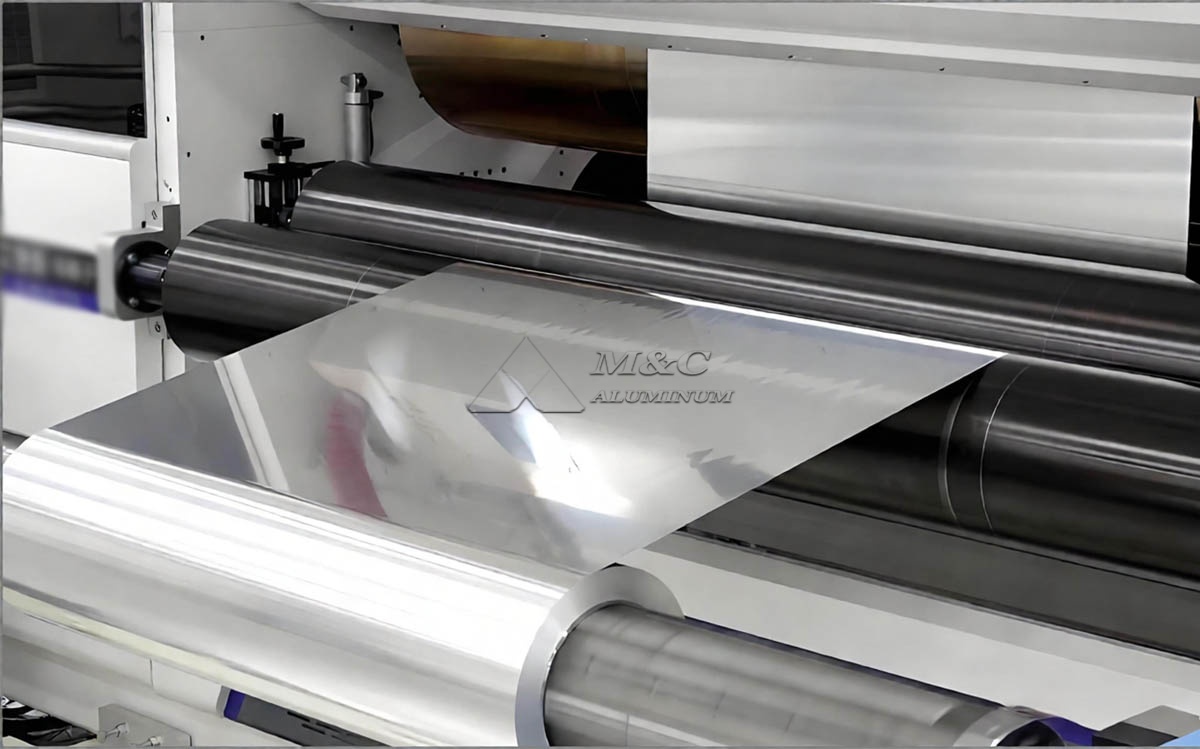
Role of Aluminum Foil in Battery Cathodes
In a lithium-ion battery, the cathode is typically composed of active material, conductive additive, binder, and aluminum foil current collector. Cathode materials may include lithium iron phosphate, lithium nickel manganese cobalt oxide, lithium nickel cobalt aluminum oxide, lithium manganese oxide, and other engineered compounds.
The cathode current collector foil does not store lithium ions directly. Its primary functions are to provide electrical conductivity, mechanical support, and a stable substrate for electrode coating. The foil must maintain consistent performance through slurry coating, drying, calendering, slitting, winding or stacking, electrolyte filling, and cycling.
A properly manufactured cathode aluminum foil for batteries provides the following benefits:
- Stable electrical conduction across the coated electrode.
- Consistent substrate thickness for uniform coating weight.
- Suitable surface condition for cathode slurry adhesion.
- Adequate tensile strength for high-speed coating and slitting.
- Good elongation for winding and cell assembly.
- Low surface contamination to reduce coating defects.
- Reliable coil shape for automated electrode processing.
Because aluminum has good electrical conductivity, low density, corrosion resistance within the cathode operating range, and favorable processing characteristics, it is the standard current collector material for most lithium-ion battery cathodes.
Alloy Selection for Battery Aluminum Foil
The most commonly used alloys for battery aluminum foil are high-purity 1xxx series aluminum alloys. These grades provide high conductivity, good formability, and dependable rolling performance. Common options include 1050, 1060, 1070, 1100, 1145, and 1235 aluminum foil.
Our production team selects the alloy based on foil gauge, target tensile strength, elongation, electrode line speed, coating design, and customer-specific battery application. For customers requiring an established high-purity substrate, our 1100 Aluminum Foil can be processed to appropriate battery foil specifications. We also manufacture 1235 Aluminum Foil for applications requiring stable thin-gauge rolling performance.
High-purity aluminum is preferred because excessive alloying elements may influence conductivity, surface behavior, and downstream electrode processing. However, alloy selection alone is not sufficient. Rolling schedule, annealing control, surface treatment, and inspection standards are equally important for lithium-ion battery current collector foil.
Typical Technical Parameters
The final specification of cathode aluminum foil should be determined by the battery design and electrode manufacturing process. The following table presents typical manufacturing ranges for bare battery aluminum foil.
| Parameter | Typical Range or Requirement | Manufacturing Importance |
|---|---|---|
| Alloy | 1050, 1060, 1070, 1100, 1145, 1235 | Supports conductivity and foil processability |
| Foil thickness | 10 to 25 micrometers | Determines weight, resistance, and electrode stability |
| Common thicknesses | 12, 15, 16, 18, 20 micrometers | Frequently used for lithium-ion cathode collectors |
| Width | 100 to 1,650 mm | Matched to coating, slitting, and cell production lines |
| Thickness tolerance | As agreed by specification | Supports stable coating weight and electrode consistency |
| Temper | O, H18, or customized | Balanced for strength, flatness, and downstream handling |
| Tensile strength | Typically 70 to 150 MPa | Helps prevent web breaks during coating and slitting |
| Elongation | Typically 1.0 to 8.0 percent | Supports winding and forming requirements |
| Surface condition | Clean, uniform, oil-controlled | Reduces pinholes, coating defects, and adhesion variation |
| Wettability | Controlled to customer requirement | Supports cathode slurry spreading |
| Pinholes | Controlled according to thickness and application | Important for coating integrity and current collector reliability |
| Coil inner diameter | 150 mm, 300 mm, 500 mm, or customized | Compatible with customer unwinding equipment |
| Coil weight | Customized | Matched to line loading capacity and production efficiency |
These values are reference ranges rather than a universal specification. For example, ultra-thin foil may require stricter pinhole control, while high-speed coating lines may prioritize tensile strength, flatness, and stable surface energy.
Manufacturing Process for Cathode Current Collector Foil
We manufacture battery aluminum foil through a controlled conversion process from aluminum ingot to finished coil. Each stage is managed to maintain consistent metallurgical and surface properties.
Melting, Casting, and Hot Rolling
Selected aluminum raw materials are melted and refined under controlled conditions. The melt is cast into slabs or coils suitable for subsequent rolling. Chemical composition is verified to ensure the alloy meets the required grade. Hot rolling reduces material thickness and develops an initial uniform structure for cold rolling.
Cold Rolling and Gauge Control
The material is progressively cold rolled to the required foil gauge. Automatic gauge control and rolling force monitoring are used to maintain thickness uniformity across the strip width and throughout the coil length. Gauge consistency is essential because small thickness variation can affect electrode coating mass, internal resistance, and battery cell uniformity.
Annealing and Mechanical Property Adjustment
Annealing controls the final temper, tensile strength, and elongation of the battery aluminum foil. Our process parameters are adjusted according to the target application. The purpose is to provide sufficient web strength during high-speed electrode coating while retaining the flexibility needed for slitting, winding, and cell assembly.
Slitting, Edge Control, and Coil Preparation
After final rolling and inspection, the foil is slit to customer width. Slit edges are checked for burrs, cracks, telescoping, and other defects that could affect automated electrode manufacturing. Coil winding tension is controlled to maintain stable coil shape and smooth unwinding performance.
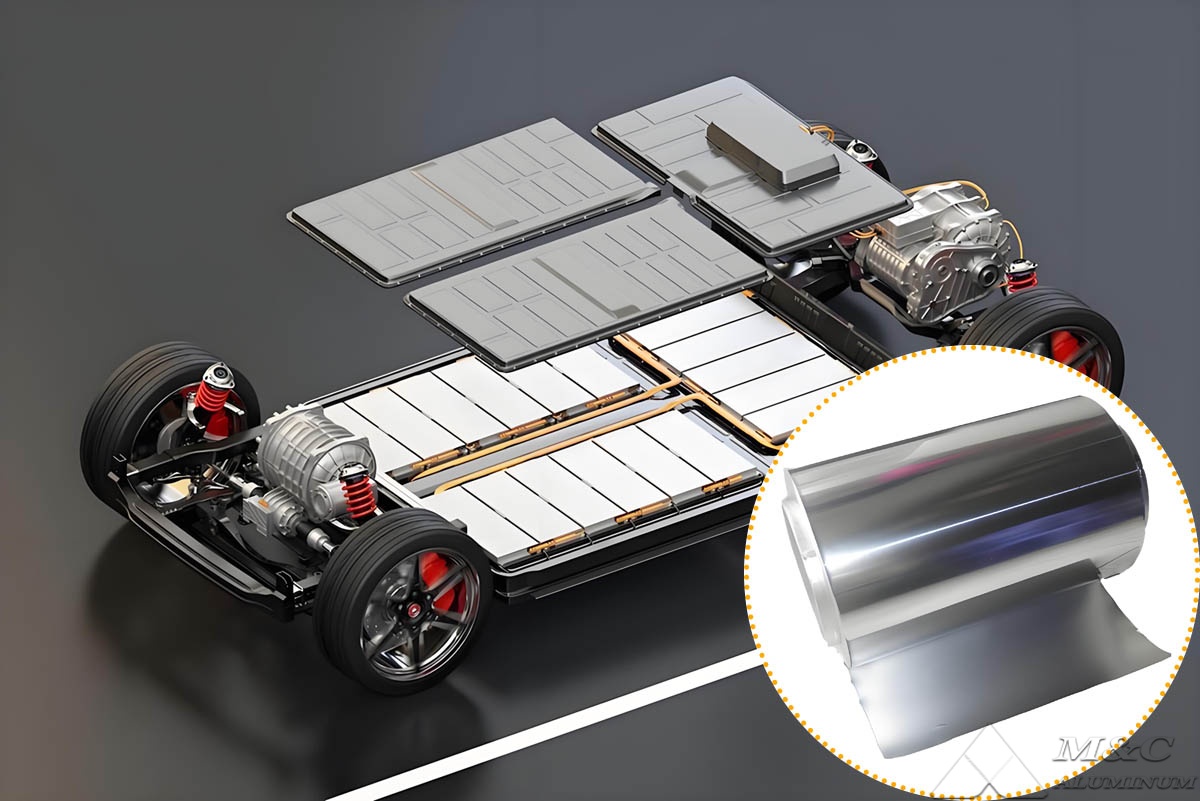
Surface Quality and Cleanliness Requirements
Surface quality is one of the most important factors for battery aluminum foil. The cathode slurry must spread evenly over the foil and develop reliable adhesion after drying and calendering. Residual rolling oil, embedded particles, scratches, oxide irregularities, and localized contamination can create coating defects or inconsistent electrode resistance.
Our quality control process evaluates surface cleanliness, visual appearance, roughness consistency, and wettability where required. We maintain production discipline to reduce oil residue and prevent contamination during rolling, slitting, packing, and storage.
For conventional bare foil, the surface is prepared to support customer cathode coating systems. For specialized electrode designs, carbon coated aluminum foil can provide an engineered surface layer that improves contact between the aluminum substrate and the cathode coating.
Carbon Coated Aluminum Foil for Batteries
Carbon coated aluminum foil is a battery current collector with a conductive carbon layer applied to one or both sides of the aluminum foil. The coating can improve interface conductivity, reduce contact resistance, enhance coating adhesion, and support electrode performance under demanding operating conditions.
We manufacture carbon coated aluminum foil with controlled coating uniformity, adhesion, surface resistance, and coating weight. It is used in selected lithium-ion battery cathodes, particularly where electrode designers require improved electrical contact or more stable interface behavior.
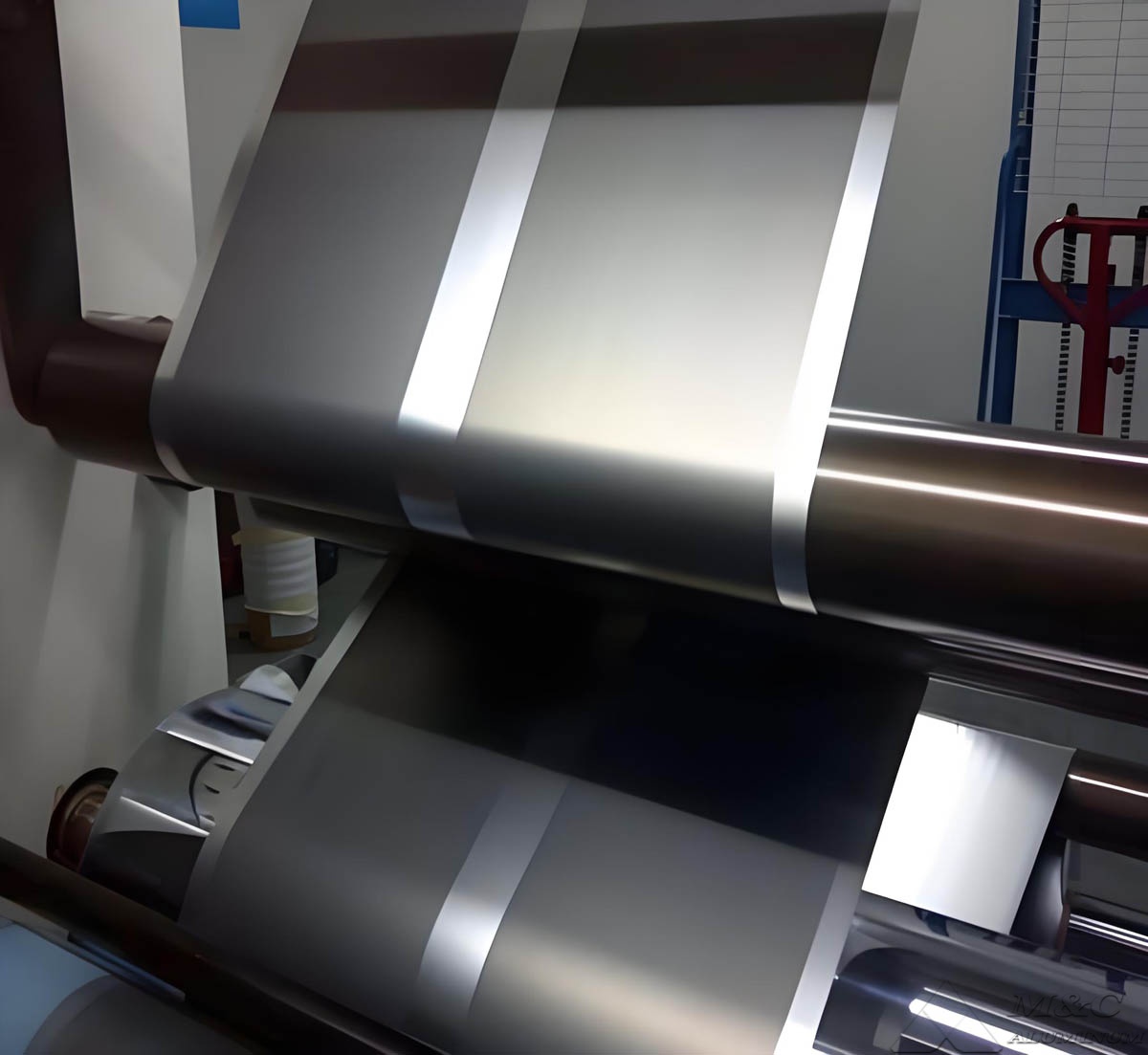
The appropriate choice between bare aluminum foil and carbon coated aluminum foil depends on cathode chemistry, coating formulation, electrode density, cell format, production process, and performance targets. Our technical team can review these requirements before production to align foil properties with the customer's electrode manufacturing conditions.
Quality Inspection and Traceability
As a battery aluminum foil manufacturer, we apply inspection controls from raw material receipt through final packing. Key inspection items may include chemical composition, thickness, width, tensile strength, elongation, surface appearance, coil shape, edge condition, pinholes, and packaging integrity.
Each coil can be identified through production records and batch traceability documentation. For export orders, we provide standard commercial documents and can support agreed inspection reports based on customer specifications. Packaging is designed to protect the foil from moisture, dust, mechanical damage, and deformation during international transportation.
Selecting the Right Cathode Aluminum Foil
When sourcing cathode aluminum foil for batteries, buyers should define the actual operating requirements rather than selecting only by alloy or thickness. Important information includes battery type, cathode chemistry, desired foil gauge, coating method, line speed, target tensile strength, width tolerance, coil dimensions, and whether a carbon coating is required.
A suitable battery aluminum foil should provide a stable combination of conductivity, thickness accuracy, surface quality, and mechanical performance. Consistency between coils is particularly important for large-scale battery manufacturing, where material variation can affect electrode yield and cell-to-cell performance.
Conclusion
Cathode aluminum foil for batteries is a precision aluminum product that performs a fundamental role in lithium-ion battery electrode construction. Its quality influences cathode coating uniformity, electrical conduction, production stability, and final cell reliability.
Our factory manufactures bare and carbon coated aluminum foil for battery cathode current collectors using controlled alloy selection, precision rolling, annealing, slitting, inspection, and export packaging. By aligning foil specifications with the customer's electrode process and battery design, we help support consistent and efficient battery manufacturing.