
As a manufacturer of aluminum foil for thermal management applications, we produce 3003 blue hydrophilic aluminum foil for fin stock used in air conditioners, evaporators, condensers, radiators, and related heat exchanger systems. This material combines the strength and corrosion resistance of 3003 aluminum alloy with a hydrophilic surface treatment designed to improve condensate drainage and support efficient heat transfer.
In heat exchanger production, the consistency of foil thickness, coating adhesion, wettability, and forming behavior directly affects downstream fin stamping and final unit performance. For this reason, our production process is built around alloy control, rolling accuracy, surface cleanliness, coating uniformity, and inspection at each stage. We supply 3003 blue hydrophilic aluminum foil in coil form according to customer requirements for thickness, temper, width, inner diameter, and coating performance.
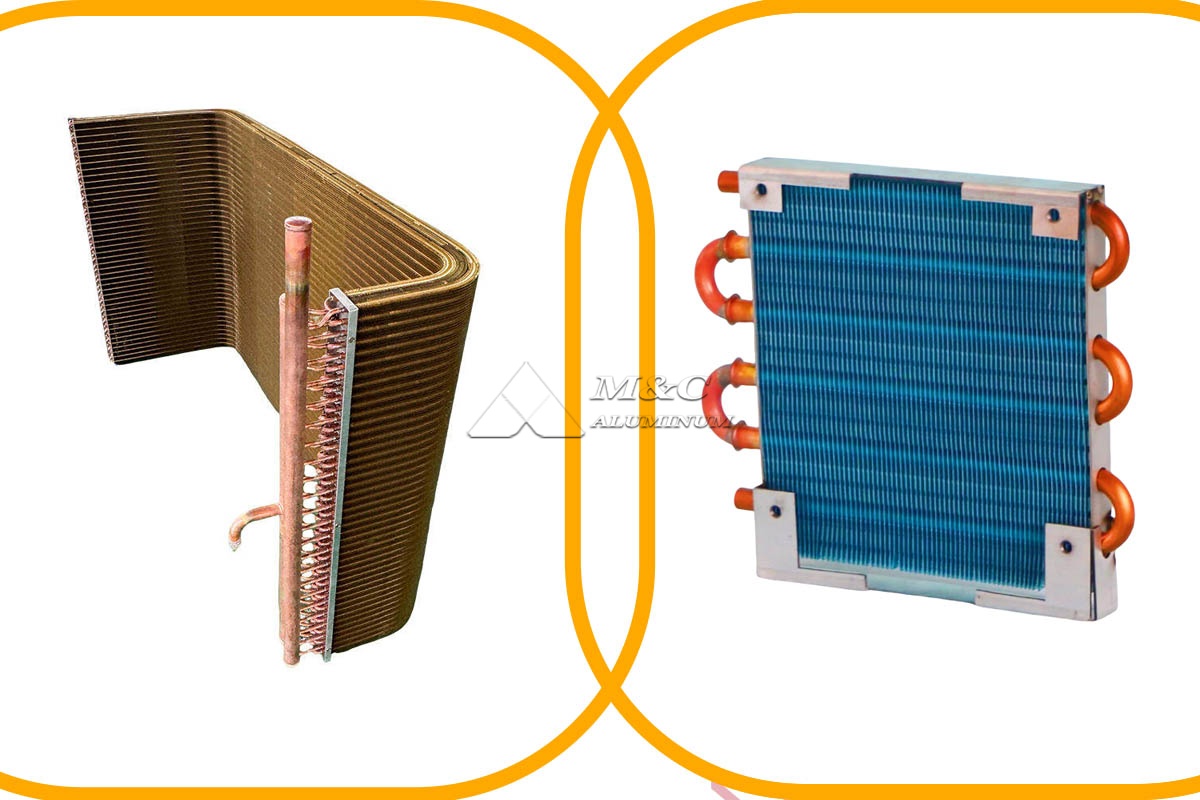
What Is 3003 Blue Hydrophilic Aluminum Foil
3003 aluminum foil blue hydrophilic is an aluminum fin material based on 3003 alloy and coated with a blue hydrophilic layer. The hydrophilic coating lowers the contact angle of condensed water on the foil surface, allowing moisture to spread into a thin film instead of forming droplets. This helps water drain more smoothly from the fin surface, reduces air flow blockage, and can limit the conditions that contribute to odor retention and frost bridging in some operating environments.
The blue coating also serves as a visible process layer, helping customers identify the treated side during fin processing and assembly. In practical manufacturing, this material is widely selected for HVAC heat exchangers because it offers a balanced combination of formability, moderate strength, corrosion resistance, and coating compatibility.
For buyers comparing alloy options, 3003 Aluminum Foil is commonly used where reliable fin forming and stable in-service performance are required.
Why 3003 Alloy Is Used for Hydrophilic Fin Foil
3003 is an Al-Mn alloy known for good workability and corrosion resistance. In heat exchanger fin applications, the alloy must tolerate high-speed stamping, collar formation, expansion, bending, and assembly without unstable cracking or excessive springback. At the same time, it should maintain suitable mechanical properties after coating and drying.
From a manufacturing perspective, 3003 hydrophilic aluminum foil offers several practical advantages:
Good formability for fin stamping and collaring
Stable mechanical properties across large coil volumes
Better corrosion resistance than some lower-alloy alternatives in humid service conditions
Good compatibility with hydrophilic and anti-corrosion coating systems
Suitable balance between strength and processability for HVAC fin stock
In addition to 3003 aluminum foil, our product range also includes other alloy grades suitable for various end-use applications: 3102 and 8011 aluminum foil.
Main Performance Characteristics
Hydrophilic Surface Behavior
The primary function of the blue hydrophilic coating is to improve water spreading. When condensation forms on untreated aluminum surfaces, droplets may accumulate between fins and reduce air passage efficiency. A properly applied hydrophilic coating promotes fast film drainage and more uniform moisture distribution.
Corrosion Resistance
Heat exchanger fins operate in environments that may include humidity, temperature fluctuations, and airborne contaminants. Our coating system and substrate control are designed to support corrosion resistance under common HVAC service conditions. The combined performance depends on alloy composition, degreasing quality, conversion treatment, coating structure, and curing control.
Forming Stability
Hydrophilic aluminum foil must not only perform in service but also run smoothly on customer equipment. We control foil flatness, tensile properties, elongation, and surface condition to support fin punching efficiency and reduce forming defects.
Coating Adhesion
Coating adhesion is critical for downstream fabrication and long-term performance. During manufacturing, we monitor pretreatment, coating weight, curing temperature, and line speed to maintain consistent adhesion between the blue hydrophilic layer and the aluminum substrate.
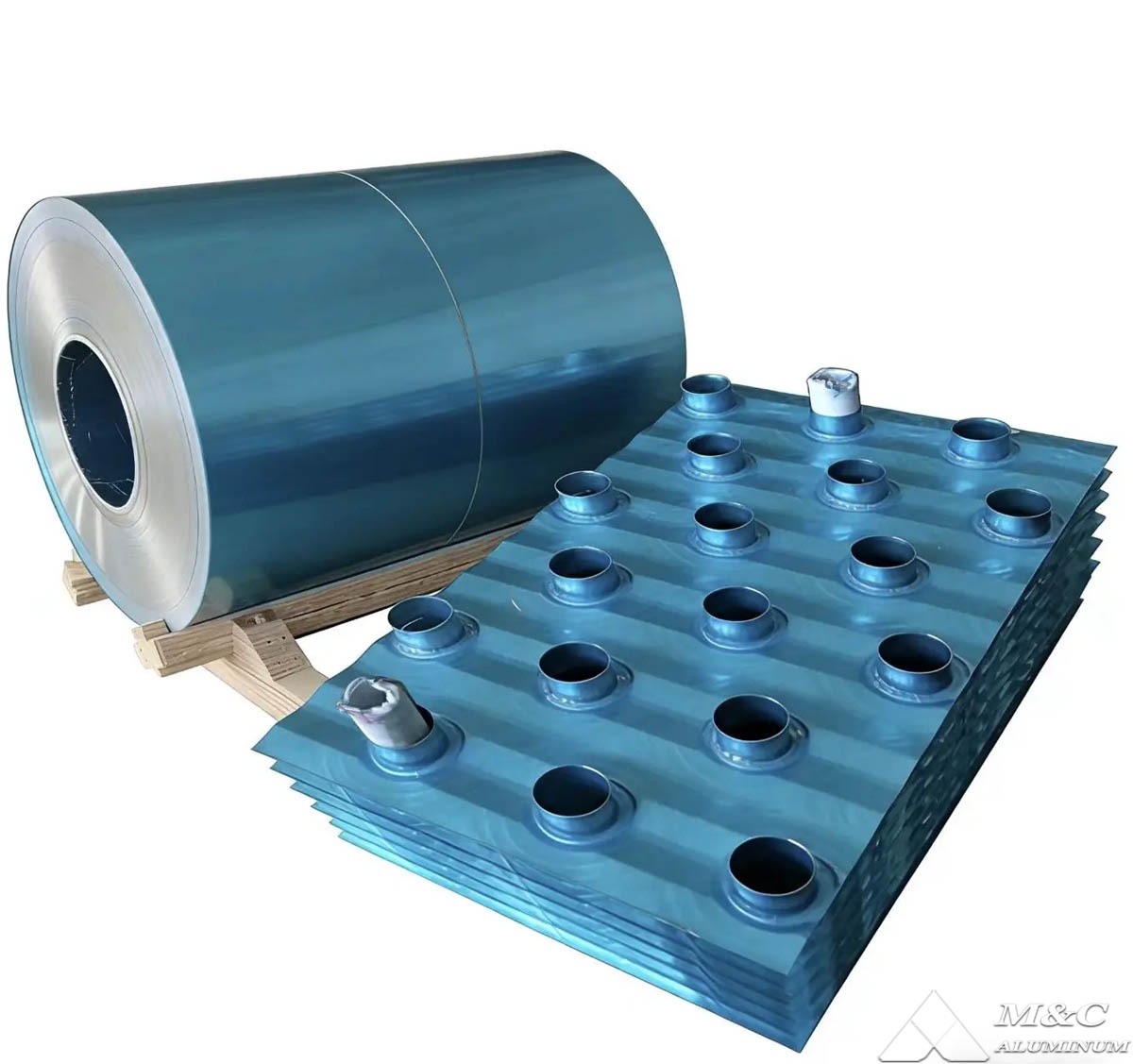
Technical Parameters
The following table shows typical supply ranges for our 3003 blue hydrophilic aluminum foil products. Exact values can be adjusted according to application and customer specification.
| Item | Typical Range / Specification |
|---|---|
| Alloy | 3003 |
| Temper | H14, H16, H18, H22, H24, O |
| Product type | Blue hydrophilic aluminum foil coil |
| Thickness | 0.05 mm - 0.20 mm |
| Width | 100 mm - 1250 mm |
| Coil inner diameter | 76 mm, 150 mm, 300 mm, 405 mm |
| Coil outer diameter | As per order and handling requirement |
| Surface | Single-side or double-side blue hydrophilic coating |
| Base metal surface | Clean, oil-controlled, suitable for coating and fin forming |
| Wettability | Hydrophilic, low contact angle as specified |
| Coating adhesion | According to agreed technical standard |
| Tensile strength | According to temper and customer specification |
| Elongation | According to temper and fin forming requirement |
| Corrosion resistance | According to customer test method or agreed standard |
| Application | Air conditioner fins, evaporators, condensers, radiators, HVAC heat exchangers |
| Packaging | Export seaworthy wooden pallet or wooden case |
| MOQ | 1-3 tons |
Our Manufacturing Process
As a factory, we control the production chain from base foil preparation to coating and final inspection. This is important because hydrophilic performance cannot be separated from substrate quality.
1. Alloy Melting and Rolling
We begin with controlled 3003 alloy production, followed by hot rolling and cold rolling to the target gauge. Thickness tolerance and profile control are essential for uniform fin stamping.
2. Annealing and Temper Adjustment
The foil is processed to the required temper according to the customer's fin design and forming speed. Mechanical properties are adjusted to achieve the balance needed for collar formation and handling strength.
3. Surface Cleaning and Pretreatment
Before coating, the foil surface must be clean and stable. We perform degreasing and pretreatment to improve coating adhesion and reduce the risk of coating defects.
4. Blue Hydrophilic Coating
The blue hydrophilic layer is applied under controlled line conditions. Coating weight, drying temperature, and curing parameters are monitored continuously to maintain consistency from coil to coil.
5. Inspection and Slitting
After coating, the material is inspected for appearance, thickness, width, adhesion, wettability, and winding quality. Coils are then slit to the ordered width and packed for export shipment.
Typical Applications
3003 blue hydrophilic aluminum foil is mainly used as aluminum fin foil in the following equipment:
Residential air conditioner evaporators
Commercial HVAC condensers
Heat pump heat exchangers
Automotive and industrial radiators
Dehumidification units
Refrigeration systems
In these applications, the objective is not only heat transfer but also stable condensate management under repeated operating cycles. This is why many fin manufacturers specify blue hydrophilic aluminum foil rather than bare foil.
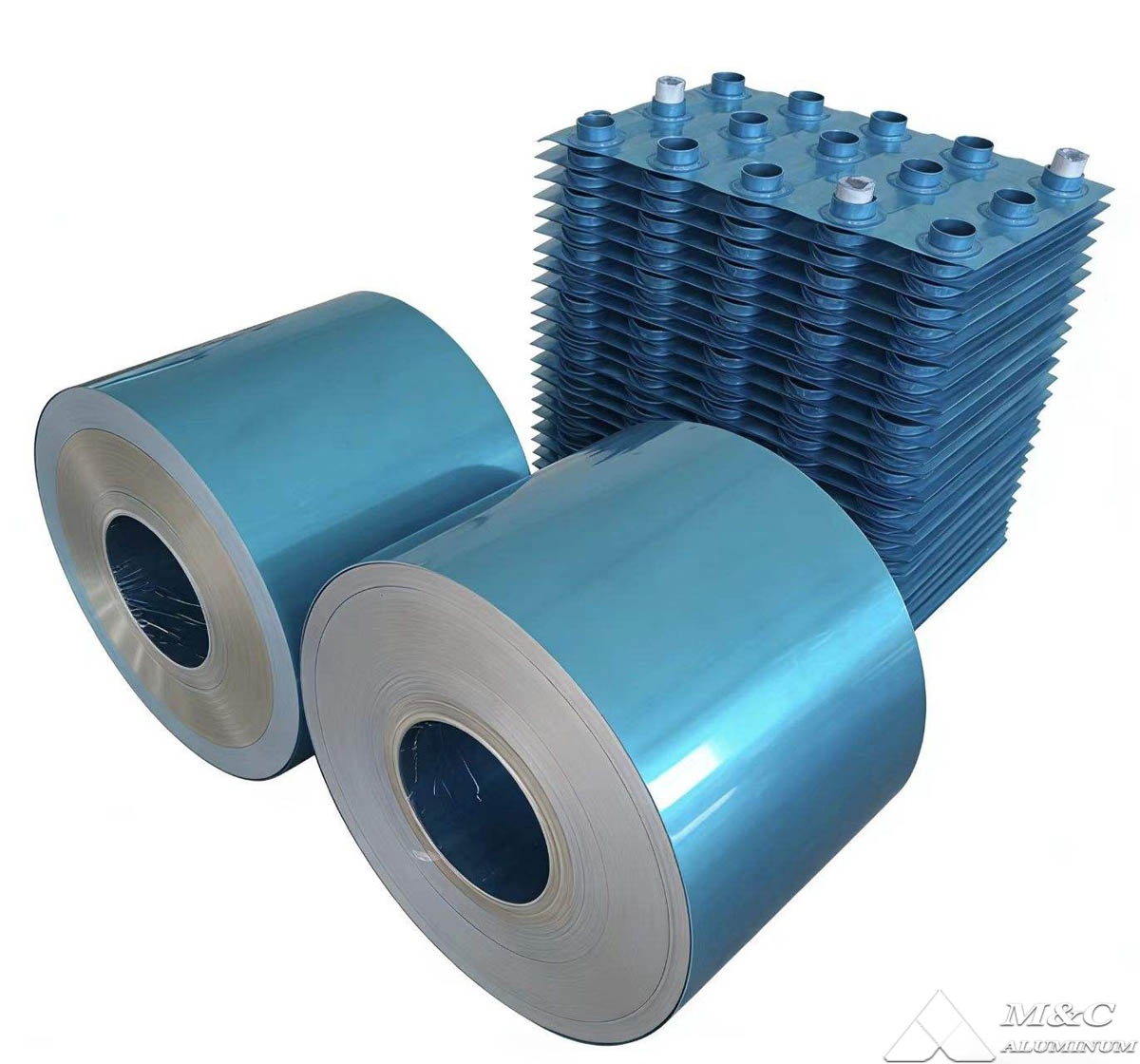
Quality Control in Factory Production
For export and OEM supply, consistency is often more important than nominal specification alone. Our quality control system focuses on the parameters most relevant to customer processing and end use.
Incoming and In-Process Control
Chemical composition verification of 3003 alloy
Thickness and width measurement during rolling and slitting
Surface cleanliness monitoring before coating
Coating line parameter control during production
Final Inspection
Visual inspection for scratches, coating marks, edge defects, and winding quality
Adhesion testing of hydrophilic coating
Wettability verification according to agreed method
Mechanical property testing when required
Packaging inspection before shipment
This process helps ensure that each coil is suitable for high-speed fin production and international transport.
Ordering Information
To quote 3003 aluminum foil blue hydrophilic accurately, we recommend that buyers provide the following details:
Alloy and temper
Thickness and width
Coating type, including single-side or double-side requirement
Blue shade or appearance requirement if applicable
Coil inner diameter and maximum coil weight
Intended application, such as evaporator or condenser fin stock
Any required test standard for wettability, adhesion, or corrosion resistance
Packaging and destination port
With clear technical input, we can align production parameters with the actual forming and service conditions of the customer's heat exchanger program.
Conclusion
3003 blue hydrophilic aluminum foil is a practical and established material for heat exchanger fin applications where forming reliability, corrosion resistance, and condensate drainage are required together. As a manufacturer, we focus on the full process, including alloy control, rolling precision, pretreatment, blue hydrophilic coating, and shipment inspection. This approach allows us to supply 3003 hydrophilic aluminum foil with stable quality for HVAC and thermal management customers in international markets.
If your project requires consistent aluminum fin foil in coil form, we can produce to your technical specification and support long-term supply with controlled manufacturing standards.