
The development of new energy vehicles relies heavily on power batteries, while the continuous advancement of power batteries also depends on aluminum foil as one of their key materials. The power source of a pure electric vehicle is its battery. Lithium-ion power batteries consist of positive and negative electrodes, and aluminum foil is typically used for the positive electrode.
Cathode materials have a significant impact on battery performance, referring to the lithium-based active materials coated onto the aluminum foil. The entire cathode structure is one of the most critical components of a battery.
What Is Single-Side Bright Aluminum Foil for Power Batteries?
Conventional industrial aluminum foil can generally be classified as double-side bright foil or single-side bright foil according to surface gloss.
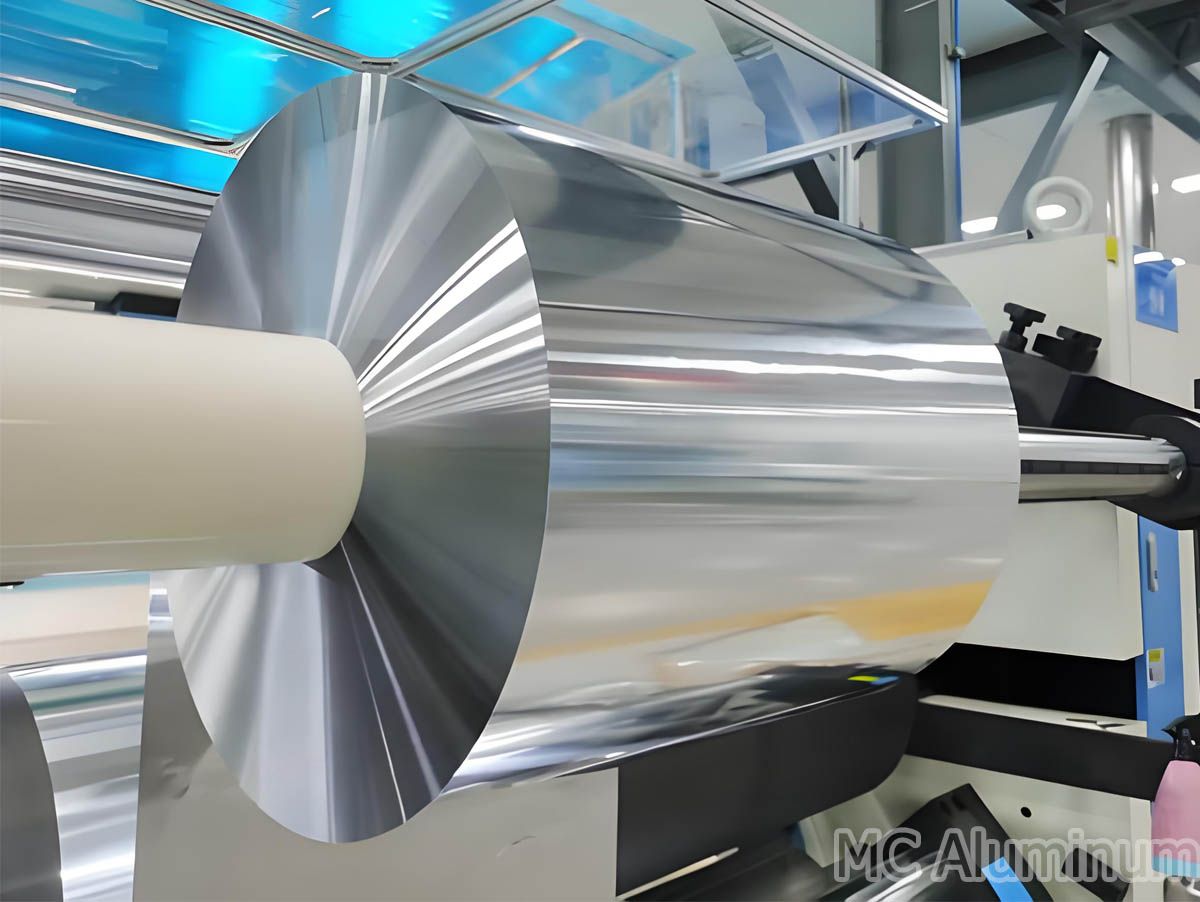
In the battery industry, single-side bright aluminum foil-also known as single-zero bright/matte foil-refers to aluminum foil with one bright, mirror-like surface and one matte surface with diffuse reflectivity.
This distinctive two-sided surface morphology is not created through a post-treatment process. Instead, it is naturally formed during the special double rolling process. The bright side is in direct contact with the precision rolling mill surface and is flattened and polished by the mirror-finished roll. The other side develops a surface condition associated with the rolling process.
For power battery aluminum foil, surface characteristics affect much more than appearance. They can also influence coating performance, adhesion, electrical conductivity, and stability during electrode processing.
Why Is Battery Aluminum Foil Commonly 12 Microns Thick?
The thickness of battery aluminum foil has continued to decrease over time. It has evolved from 16 microns in the early stage to 14 microns, and then to the current mainstream specification of 12 microns. MC Aluminum is now capable of mass-producing 10-micron and 9-micron products.
The driving force behind thinner foil is clear: improving battery energy density. Within the same volume, thinner aluminum foil allows more cathode active material to be coated onto the electrode. As a result, battery capacity can be increased.
At present, mainstream power battery aluminum foil typically ranges from 12 to 15 microns in thickness, with 12 microns being one of the most widely used specifications. Although the industry is moving toward 10 microns and below, 12-micron aluminum foil remains a mainstream market choice because it offers an excellent balance between performance and manufacturability.
Why Do Power Batteries Use Aluminum Foil as a Cathode Current Collector?
In lithium-ion batteries, the main role of the cathode current collector is to collect and conduct electrons while providing a stable substrate for cathode active materials. Aluminum foil has become the mainstream material for cathode current collectors for several important reasons.
1. Good Electrical Conductivity
Aluminum has good electrical conductivity and can effectively reduce electron transfer resistance within the cathode electrode. For power batteries, lower internal resistance helps improve charge-discharge efficiency and enhances power output performance under high-current conditions.
2. Lightweight Material That Helps Improve Energy Density
Power batteries require higher gravimetric and volumetric energy density. Compared with some conventional metal materials, aluminum has a relatively low density. It can reduce the weight of inactive materials while maintaining current collection performance, helping improve the overall energy density of battery cells.
3. Good Chemical Stability
Within the typical voltage range of lithium-ion battery cathodes, aluminum foil offers good chemical stability. It performs well in cathode systems such as lithium iron phosphate (LFP), ternary cathode materials, and lithium manganese oxide, making it suitable for long-term cycling applications.
4. Excellent Processability
Aluminum foil has good ductility and formability. It can be processed through rolling, slitting, coating, calendaring, and winding. For highly automated battery manufacturing lines, material processability and consistency are especially important.
Battery Aluminum Foil Alloy Selection
| Alloy Grade | Main Characteristics | Typical Applications |
| 1235 | High purity, good electrical conductivity, excellent rolling performance | Cathode current collectors for power batteries and energy storage batteries |
| 1060 | High aluminum content, good conductivity, excellent plasticity | Lithium-ion battery cathode aluminum foil |
| 1070 | High-purity aluminum, excellent conductivity, good ductility | High-performance battery current collectors |
Among these alloys, 1235, 1060, and 1070 are commonly used for battery aluminum foil. For ultra-thin 12μm foil, the specific alloy and temper should be selected according to the customer’s coating process, electrode design, and battery chemistry, rather than simply pursuing the highest possible aluminum purity.
Applications of 12 Micron Battery Aluminum Foil: From Power Batteries to Energy Storage
12 micron single-side bright aluminum foil for power batteries has a wide range of applications:
New Energy Vehicle Power Batteries
This is the largest application market. The foil is used as a cathode current collector in batteries for electric vehicles and hybrid electric vehicles.
Energy Storage Systems
With the rapid development of integrated solar, wind, and energy storage projects, demand for aluminum foil in energy storage batteries is growing quickly.
3C Consumer Batteries
High-quality battery aluminum foil is also required for consumer electronics, including smartphones, laptops, tablets, and other portable devices.

Specifications of Power Battery Aluminum Foil
| Item | Common Specification |
| Alloy | 1050, 1060, 1070, 1235 |
| Thickness | 12μm |
| Width | 200mm–1650mm |
| Common Widths | 300mm, 500mm, 800mm, 1000mm, 1200mm, 1300mm, etc. |
| Length | 1000mm–16000mm |
| Width Tolerance | Typically ±0.5mm to ±1.0mm, depending on the specific specification |
| Inner Core Diameter | 76mm, 150mm, 200mm, 300mm, or customized |
| Outer Coil Diameter | Generally no more than 1000mm, depending on equipment requirements and coil weight |
| Coil Weight | Customizable according to the customer’s equipment load capacity and production requirements |
| Slitting Form | Jumbo rolls, slit rolls, and narrow strips are available |
| Edge Condition | Neat edges, no obvious burrs, no severe edge cracking, and no wavy edges |
| Applications | New energy vehicle power batteries, energy storage batteries, lithium-ion batteries |
| MOQ | 3 tons |
Production Process of 12 Micron Aluminum Foil
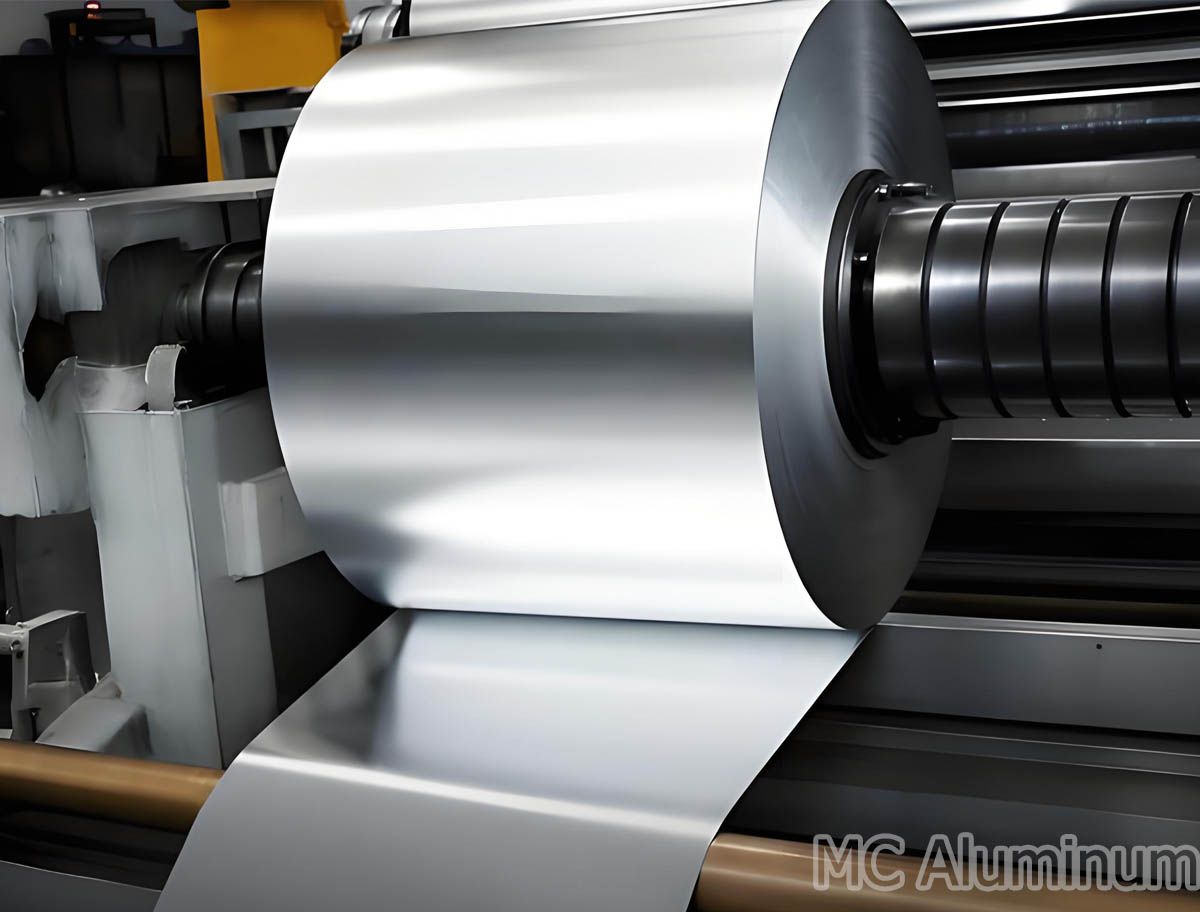
Battery aluminum foil is an industrial foil product that requires high quality consistency. Its production process generally includes melting, cast rolling or hot rolling, cold rolling, foil rolling, slitting, and inspection.
1. Aluminum Ingot Melting
First, suitable aluminum alloy compositions are selected according to product requirements. Melting and refining processes are then used to control the purity of the molten metal.
For battery-grade aluminum foil, metal purity and impurity control are extremely important.
2. Cast Rolling or Hot Rolling
The molten aluminum is processed into slabs or feedstock suitable for subsequent rolling. Homogenization and rolling processes are used to improve the material’s microstructure and performance.
A stable metallurgical structure is the foundation for producing ultra-thin foil.
3. Cold Rolling
During cold rolling, the thickness of the aluminum material is gradually reduced while flatness and surface quality are improved.
For a final thickness of 12μm, multiple precision rolling passes are required.
4. Foil Rolling
Foil rolling is the core process for producing ultra-thin aluminum foil.
High-precision rolling mills and strict process controls are used to further roll the aluminum material down to approximately 12μm. This process places high demands on rolling oil, roll surface condition, tension control, rolling speed, and flatness control.
5. Slitting
Large aluminum foil coils are slit into widths suitable for customer battery production lines.
During slitting, particular attention must be paid to edge quality, coil end-face flatness, and burr control.
6. Finished Product Inspection
Finished foil is typically inspected for thickness, width, tensile strength, elongation, surface quality, pinholes, flatness, and winding quality.
Through full-process quality control, the aluminum foil can meet the requirements of continuous power battery manufacturing.
How to Select Battery Aluminum Foil Thickness?
Different battery chemistries and manufacturing processes do not require exactly the same foil thickness.
| Aluminum Foil Thickness | Main Characteristics | Typical Considerations |
| 15μm and above | Higher mechanical strength and greater processing margin | Mature processes and high stability |
| Around 13μm | Balance between strength and lightweight design | Common demand in power batteries |
| 12μm | Better lightweight potential | High energy density and thinner battery design |
| 10μm and below | Higher degree of ultra-thin design | Higher requirements for equipment and foil quality |