
3003 Aluminum Foil Temper H14 H24
As an aluminum foil manufacturer, we produce 3003 aluminum foil temper H14 and H24 for industrial forming, packaging, heat transfer, and structural composite applications. 3003 is an Al-Mn series alloy with stable corrosion resistance, good workability, and higher strength than commercially pure aluminum foil grades such as 1050 and 1060. For many engineering projects, the key selection point is not only the alloy, but also the temper. H14 and H24 are both commonly specified for 3003 aluminum foil, yet their manufacturing routes and forming behavior are different.
This article explains the factory production logic, technical parameters, quality control points, and typical applications of 3003 H14 aluminum foil and 3003 H24 aluminum foil. The information is intended for international buyers, engineers, converters, and purchasing teams who require consistent coil performance and reliable supply from the original mill.
What Is 3003 Aluminum Foil?
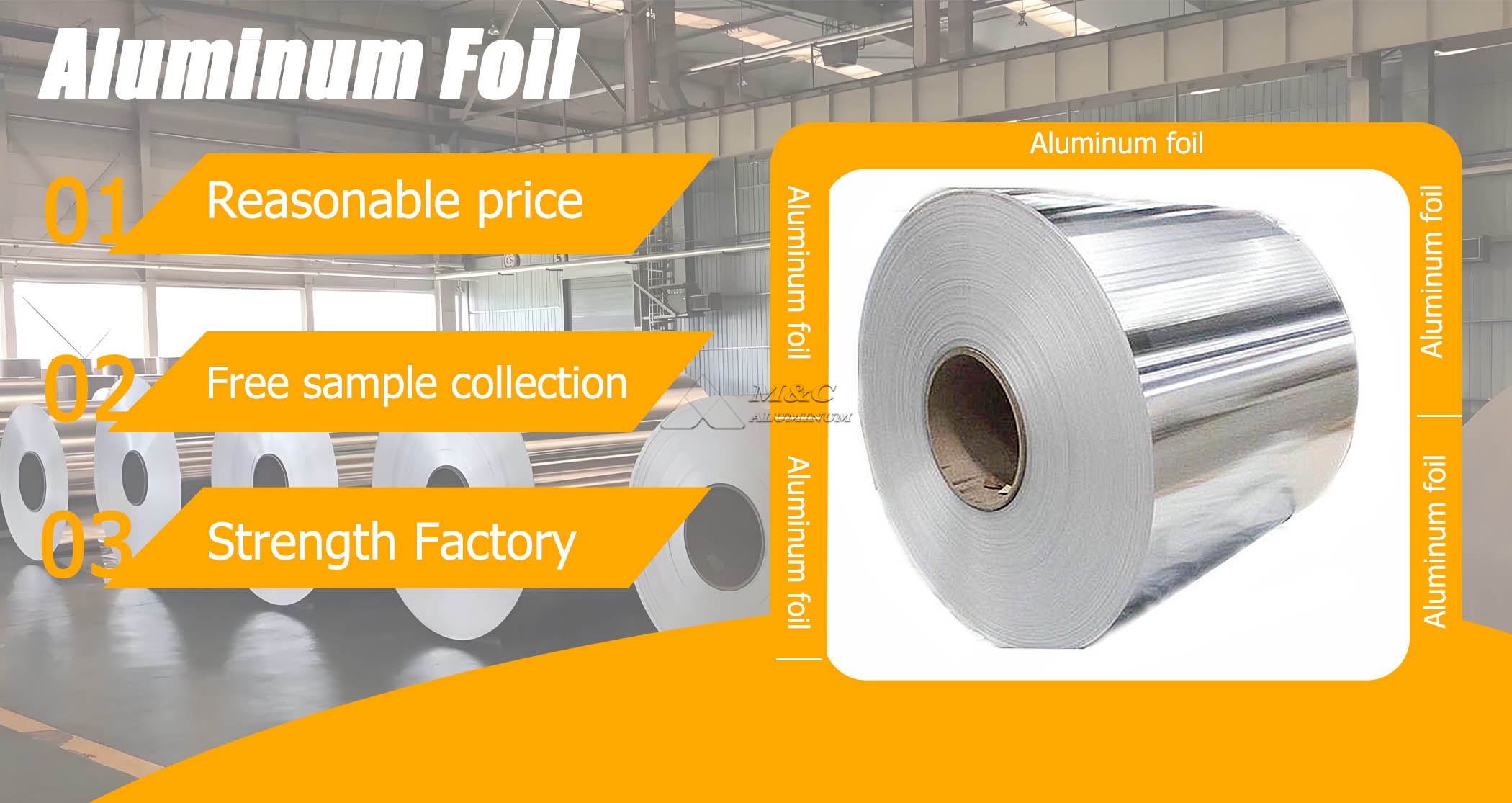
3003 aluminum foil is an aluminum manganese alloy foil. Manganese is the main strengthening element, normally improving mechanical strength while maintaining good corrosion resistance and processing stability. Compared with 1xxx series aluminum foil, 3003 aluminum foil provides better strength and deformation resistance. Compared with heat treatable alloys, it does not rely on solution treatment or artificial aging, so its properties are mainly controlled by cold rolling reduction, intermediate annealing, final annealing, and temper management.
In our factory, 3003 aluminum foil is produced from qualified cast-rolled or hot-rolled stock, followed by multiple precision rolling passes. According to the final application, we control thickness, width, surface finish, mechanical properties, pinhole level, edge quality, winding tension, and coil geometry. Finished coils can be supplied for further coating, printing, embossing, stamping, lamination, and container forming.
For product selection and inquiry, our standard 3003 Aluminum Foil range covers common industrial thicknesses and custom specifications based on confirmed technical requirements.
Understanding H14 and H24 Tempers
The temper designation describes the processing condition of aluminum after rolling and heat treatment. For 3003 aluminum foil, H14 and H24 are both half-hard tempers, but they are achieved through different routes.
H14 means strain hardened only. The foil reaches the required half-hard strength mainly through cold working. This temper provides good dimensional stability, firm mechanical response, and relatively uniform deformation resistance. It is often selected where higher stiffness, stable shape, and good handling strength are required.
H24 means strain hardened and partially annealed. The material is cold worked first, then partially annealed to reach the target half-hard condition. Compared with H14, H24 can offer more balanced formability and internal stress control, depending on thickness and production design. It is often used when the customer needs a combination of strength and improved forming behavior.
Both 3003 H14 aluminum foil and 3003 H24 aluminum foil can meet similar nominal mechanical property ranges, but actual performance in stamping, deep drawing, or folding can differ. For this reason, our technical team evaluates not only tensile strength and elongation, but also the forming process, tooling condition, lubrication method, and final product geometry.
Typical Chemical Composition
The chemical composition of 3003 aluminum foil must be controlled to ensure stable rolling performance and consistent mechanical properties. The table below shows typical composition ranges for reference. Final values follow the applicable standard and customer specification.
| Element | Typical Content, % |
|---|---|
| Si | 0.60 max |
| Fe | 0.70 max |
| Cu | 0.05 to 0.20 |
| Mn | 1.00 to 1.50 |
| Zn | 0.10 max |
| Al | Balance |
| Others, each | 0.05 max |
| Others, total | 0.15 max |
The manganese content is important because it contributes to the strength advantage of 3003 aluminum foil. At the same time, impurity control is essential for foil surface quality, pinhole control, and uniform rolling behavior.
Technical Parameters of 3003 Aluminum Foil H14 H24
As a factory, we adjust production parameters according to the final application, but the following table summarizes common supply capabilities and reference technical data.
| Item | 3003 H14 Aluminum Foil | 3003 H24 Aluminum Foil |
|---|---|---|
| Alloy | 3003 | 3003 |
| Temper | H14 | H24 |
| Thickness Range | 0.030 to 0.200 mm | 0.030 to 0.200 mm |
| Width Range | 100 to 1600 mm | 100 to 1600 mm |
| Tensile Strength | Typically 140 to 185 MPa | Typically 140 to 185 MPa |
| Elongation | Depends on thickness, normally 1% to 8% | Depends on thickness, normally 2% to 10% |
| Surface | Bright, matte, mill finish, degreased as required | Bright, matte, mill finish, degreased as required |
| Edge | Slit edge, trimmed edge | Slit edge, trimmed edge |
| Coil ID | 76 mm, 152 mm, 300 mm, 505 mm, or customized | 76 mm, 152 mm, 300 mm, 505 mm, or customized |
| Standards | ASTM B209, EN 546, GB/T, or agreed specification | ASTM B209, EN 546, GB/T, or agreed specification |
| Main Features | Higher stiffness and stable handling | Balanced strength and formability |
The values above are typical factory ranges. For critical applications, we recommend confirming the target thickness, tensile strength, elongation, surface oil level, pinhole requirement, and packing method before mass production.
Manufacturing Process in Our Factory
The production of 3003 aluminum foil temper H14 H24 begins with raw material inspection. We verify alloy composition, metallurgical quality, surface condition, and rolling stock dimensions. Qualified stock is then rolled through controlled passes to reduce thickness while maintaining flatness and coil stability.
For H14 temper, the final mechanical properties are achieved mainly by cold rolling. Rolling reduction, pass schedule, roll surface condition, rolling oil cleanliness, and winding tension must be carefully controlled. Excessive or uneven cold work can cause poor flatness, edge cracks, or unstable forming behavior. Therefore, our rolling operators and process engineers monitor each stage through thickness measurement, surface inspection, and coil tracking.
For H24 temper, the production route includes cold rolling followed by partial annealing. The annealing curve is designed to reduce internal stress and adjust strength to the specified half-hard range. Furnace temperature uniformity, heating time, coil placement, and cooling process all influence the final temper. This is why H24 production requires close coordination between rolling and heat treatment departments.
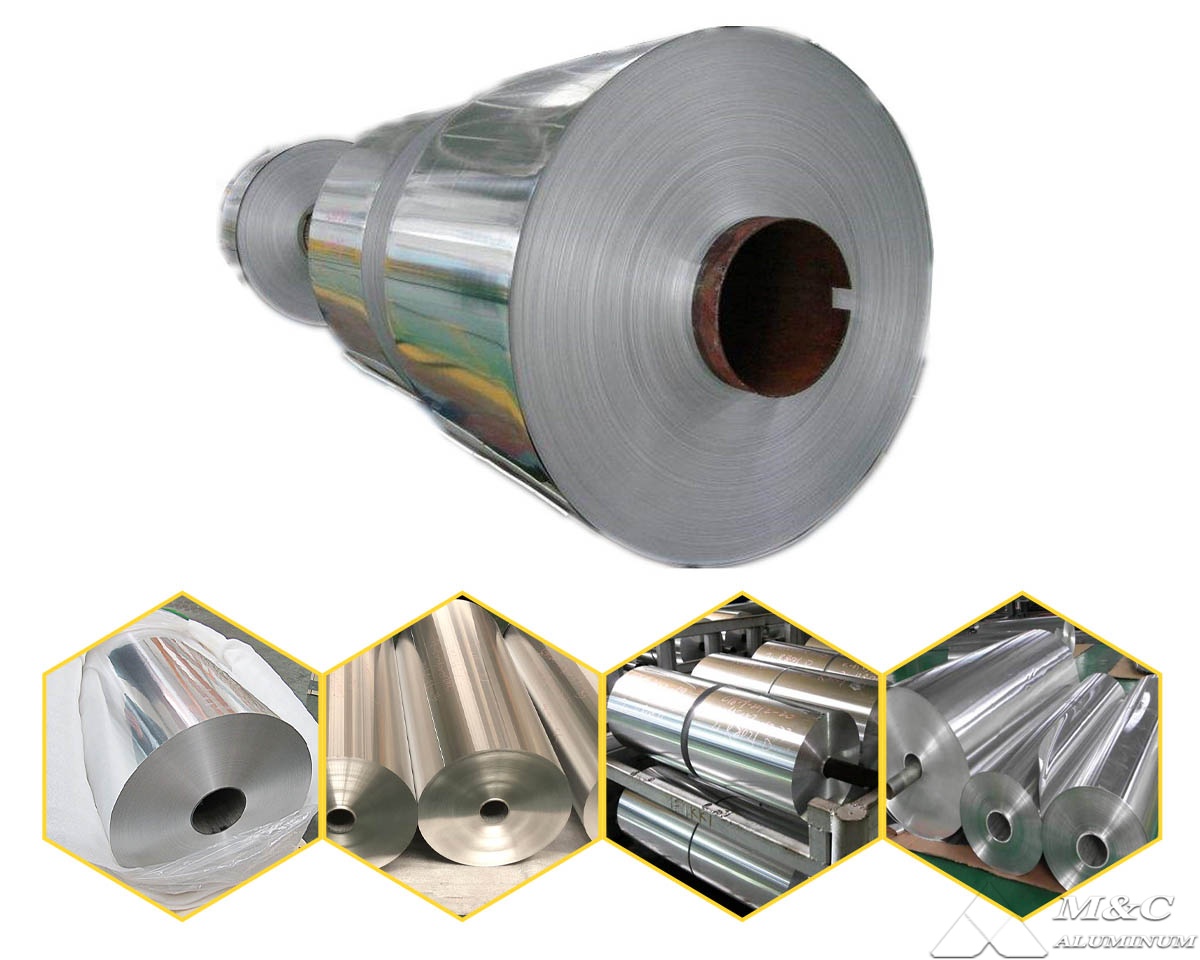
After rolling and heat treatment, the foil is slit to the required width. Slitting quality is critical for downstream equipment, especially for high-speed stamping, container forming, honeycomb bonding, and lamination lines. We inspect burrs, edge waves, telescoping, core alignment, and coil tightness before packing.
Difference Between 3003 H14 and 3003 H24 Aluminum Foil
Although both tempers are categorized as half-hard, their practical differences can be important.
3003 H14 aluminum foil is generally preferred when the customer requires firmer foil, good shape retention, and consistent feeding performance. It is suitable for components that must maintain dimensional stability during handling or assembly. In some stamping processes, H14 can provide a clean forming profile when the deformation is moderate.
3003 H24 aluminum foil is often selected for applications requiring a controlled balance of strength and ductility. Partial annealing can improve forming response and reduce residual stress compared with a purely strain-hardened route. For complex forming, repeated bending, or products with higher deformation depth, H24 may perform better, depending on tool design and foil thickness.
The choice between H14 and H24 should not be made only by comparing tensile strength. Engineers should consider forming depth, corner radius, lubrication, die clearance, production speed, surface requirements, and final service environment. As a manufacturer, we can provide trial coils and adjust mechanical targets within the agreed standard to help customers stabilize production.
Main Applications
3003 aluminum foil temper H14 H24 is used in a wide range of industrial and packaging fields. Its corrosion resistance, strength, and workability make it suitable for both formed products and composite structures.
One important application is food container production. 3003 foil is widely used for trays, dishes, lunch boxes, airline food containers, baking containers, and disposable packaging. For these products, foil strength, thickness tolerance, cleanliness, and forming consistency are essential. Customers who focus on formed packaging can also compare related specifications in our Container foil product range.
Another application is heat exchanger and fin material. 3003 aluminum foil has good thermal conductivity and corrosion resistance, making it suitable for certain fins, heat shields, insulation components, and HVAC-related structures. In these applications, flatness, surface condition, and precise temper control directly affect assembly and heat transfer efficiency.
3003 H14 and H24 foil can also be used for honeycomb core material, building decoration, insulation jacketing, composite panels, cable wrapping, and industrial gaskets. For honeycomb structures, bonding performance and flatness are important. For insulation and jacketing, coil handling, surface quality, and corrosion resistance are usually the main concerns.
Surface Quality and Tolerance Control
Surface quality is a critical factor for aluminum foil converters. Our 3003 aluminum foil is inspected for oil stain, black line, bright stripe, roll mark, scratch, corrosion spot, hole, wrinkle, and other defects that may affect processing or appearance. Depending on the application, we can provide mill finish, bright surface, matte surface, or degreased surface.
Thickness tolerance is controlled through online and offline measurement. Stable thickness is important for forming depth, product weight, sealing performance, and cost control. Width tolerance is controlled during slitting, while edge condition is checked to reduce the risk of web breakage during customer processing.
For foil used in food-related packaging, cleanliness and odor control are also important. We manage rolling oil, annealing cleanliness, and packaging protection to reduce contamination risk during transportation and storage.
Packing and Export Supply
As an export aluminum foil manufacturer, we pack 3003 H14 and H24 aluminum foil according to international shipping requirements. Standard packing normally includes moisture-proof wrapping, plastic film, desiccant when required, wooden case or wooden pallet, edge protection, and clear coil labeling. Labels can include alloy, temper, size, net weight, gross weight, coil number, production batch, and inspection status.
For each shipment, we can provide mill test certificate, packing list, commercial invoice, certificate of origin when required, and other documents according to the purchase contract. Traceability is maintained from raw material batch to finished coil, which helps customers manage quality claims, production records, and engineering approvals.
How to Specify 3003 Aluminum Foil Temper H14 H24
To obtain suitable material, buyers should provide complete technical information at the inquiry stage. The most useful details include alloy, temper, thickness, width, coil inner diameter, coil outer diameter or coil weight, surface requirement, edge condition, application, annual demand, packaging requirement, and applicable standard.
If the application involves deep drawing, sealing, bonding, coating, or contact with food, this should be stated clearly. Different downstream processes may require different oil levels, surface tension, mechanical property windows, or cleanliness standards. With complete information, we can recommend either 3003 H14 aluminum foil or 3003 H24 aluminum foil and produce coils that match the actual production line.
Conclusion
3003 aluminum foil temper H14 H24 is a practical material choice for customers who need stronger foil than pure aluminum grades while maintaining good corrosion resistance and formability. H14 provides stable strain-hardened performance and firm handling characteristics, while H24 offers a balanced temper achieved through strain hardening and partial annealing.
As a factory, our focus is on consistent alloy composition, accurate temper control, clean surface quality, precise slitting, reliable packing, and traceable export supply. By selecting the correct temper and confirming the detailed technical parameters before production, buyers can improve forming stability, reduce processing waste, and obtain aluminum foil coils suitable for demanding industrial applications.