
What Is 3003 H24 Heavy Duty Aluminum Foil?
3003 aluminum alloy belongs to the aluminum-manganese alloy series (Al-Mn). The addition of manganese, usually in the range of 1.0%–1.5%, is the key factor behind the excellent performance of 3003 alloy. Compared with pure aluminum, such as 1100 aluminum foil, 3003 aluminum alloy offers approximately 10% higher strength, while retaining the excellent rust resistance and thermal conductivity of aluminum.
Chemical Composition of 3003 Aluminum Alloy (%)
| Alloy | Si | Fe | Cu | Mn | Mg | Cr | Zn | Ti | Other:each | Other:total | Al |
| 3003 | 0.6 | 0.7 | 0.05-0.20 | 1.0-1.5 | - | - | 0.1 | - | 0.05 | 0.15 | remainder |
1. Material Characteristics of 3003 Aluminum Alloy Foil
(1). Higher Strength Than Pure Aluminum Foil
The addition of manganese in 3003 aluminum alloy significantly improves its strength compared with 1xxx series pure aluminum. For products that require load-bearing capacity, stamping, bending or shape retention, 3003 aluminum foil provides better structural stability.
(2). Good Corrosion Resistance
3003 aluminum foil has excellent oxidation resistance and corrosion resistance. It is suitable for food packaging, container manufacturing, thermal insulation materials and composite materials used in humid environments.
(3). Excellent Formability
Although 3003 H24 aluminum foil has a certain level of hardness, it still maintains good ductility and processability. It is suitable for various secondary processing methods, including stamping, embossing, coating, laminating, compounding and slitting.
(4). Good Weldability and Processing Adaptability
3003 aluminum alloy has good weldability and is also suitable for mechanical processing and surface treatment. This makes it highly flexible for industrial manufacturing applications.
2. H24 Temper
The H24 temper means that the material has been strain-hardened and then partially annealed. This treatment allows the aluminum foil to achieve an ideal balance between strength and ductility.
This is one of the main reasons why 3003 H24 aluminum foil is widely used in aluminum foil lunch boxes, food containers, packaging trays and industrial structural materials.
3. Heavy Duty Aluminum Foil
"Heavy duty aluminum foil" generally refers to aluminum foil products with a thickness of 0.05 mm or above, and in some cases up to 0.2 mm or even thicker.
Compared with ordinary thin aluminum foil, heavy duty aluminum foil has higher mechanical strength, better rigidity and stronger resistance to deformation.
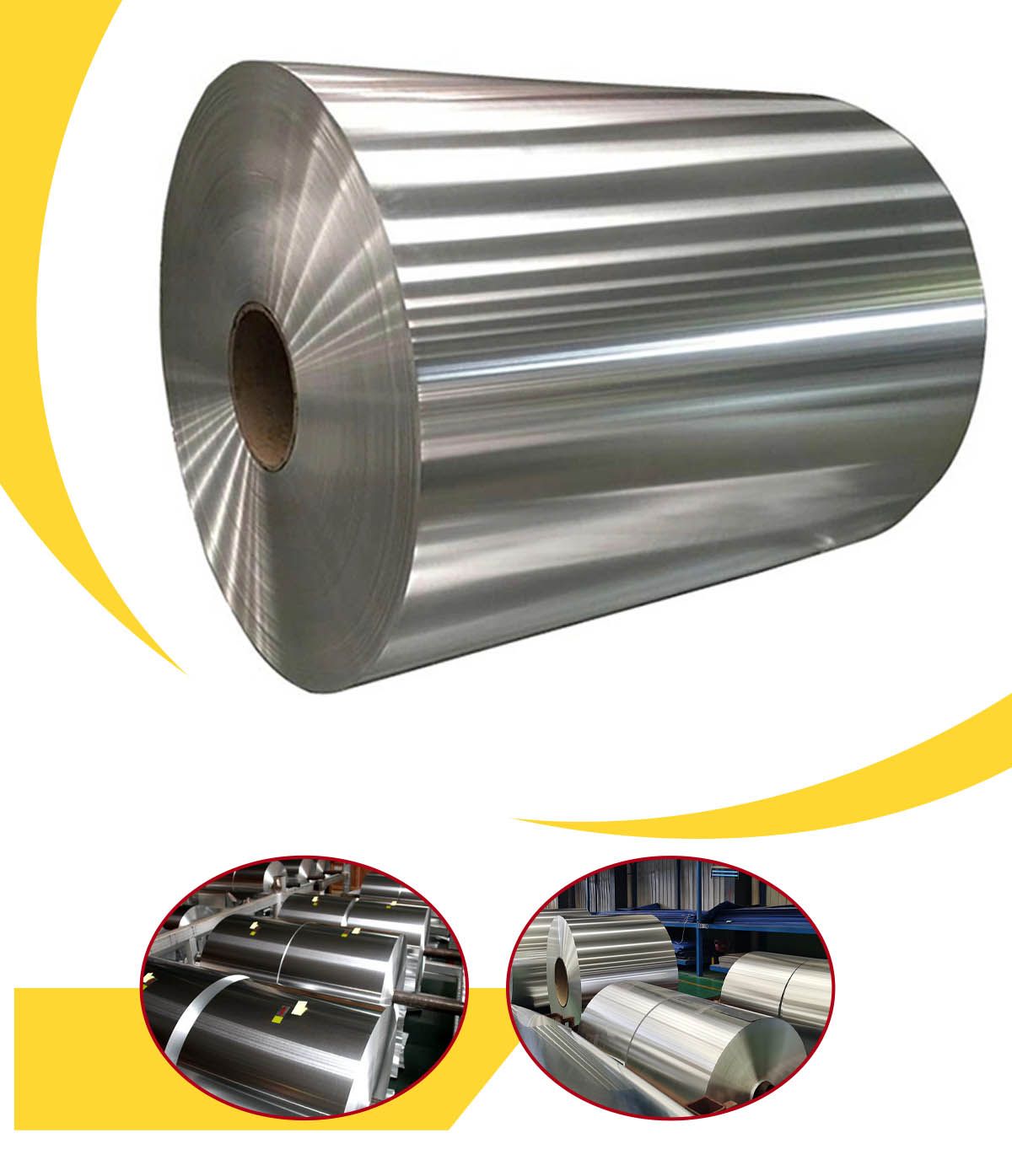
Technical Parameters of 3003 Aluminum Foil
| Item | Specification |
| Alloy | 3003 |
| Temper | H24 |
| Thickness | 0.02 mm – 0.50 mm |
| Width | 100 mm – 1600 mm |
| Length | 1000 mm – 16000 mm |
| Tensile Strength | 140 – 180 MPa |
| Yield Strength | ≥115 MPa |
| Elongation | ≥5% |
| Electrical Conductivity | 35–45% IACS |
| Temperature Resistance | -20℃ to 150℃ |
| Surface Treatment | Clean and degreased, no black spots, no bright lines, good flatness |
| MOQ | 1–3 tons |
Core Performance Advantages
1. Excellent Strength and Rigidity
The H24 temper gives 3003 aluminum foil higher tensile strength and yield strength, allowing it to perform reliably in deep processing and load-bearing applications without easy deformation.
2. Outstanding Forming Performance
3003 H24 aluminum foil combines moderate strength with good ductility. It is suitable for stamping, drawing, bending and other processing methods, especially for products with complex structures.
3. Excellent Corrosion Resistance
It offers good corrosion resistance in humid environments and mildly corrosive media, making it suitable for food, chemical and industrial applications.
4. Good Thermal Conductivity
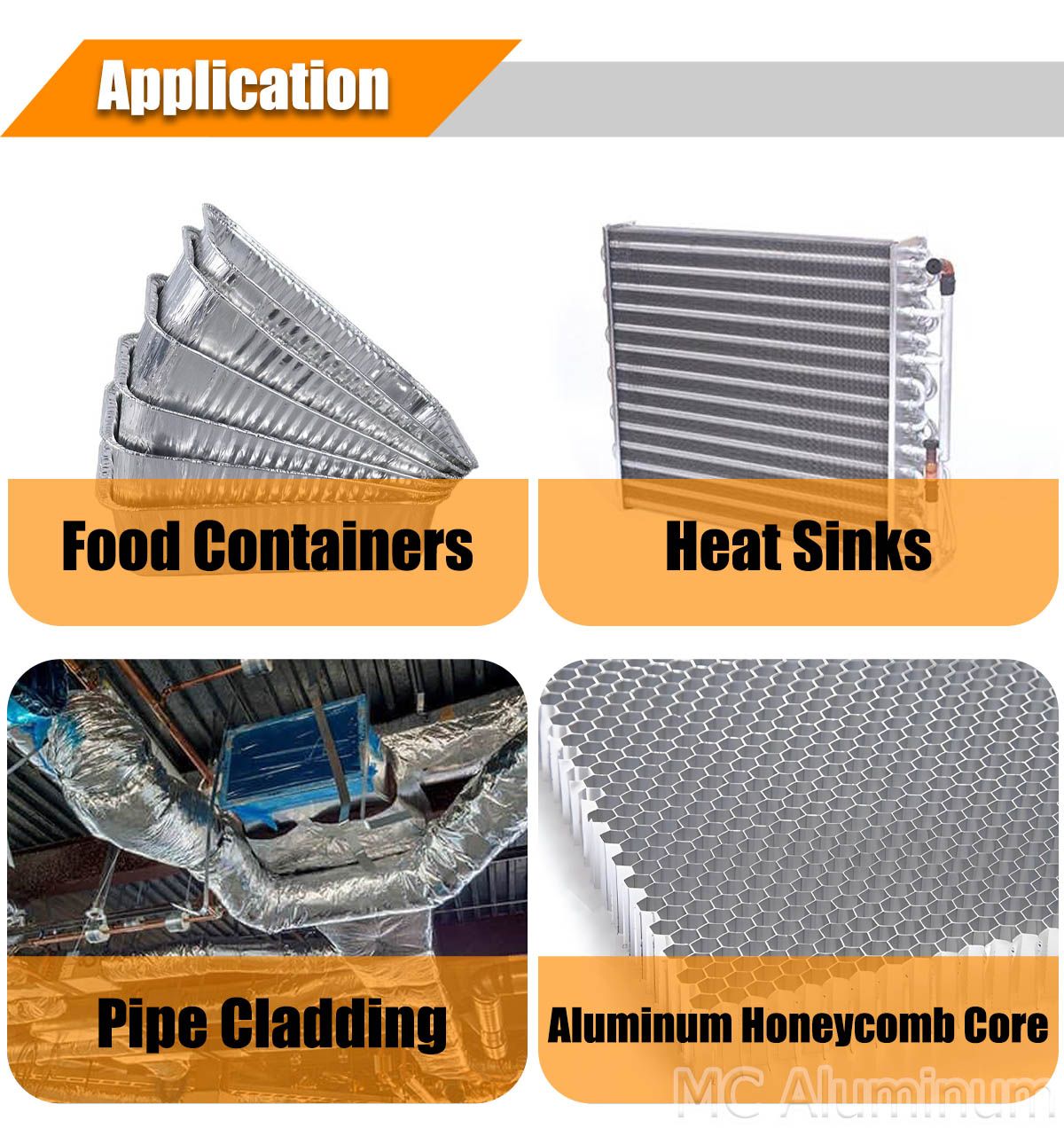
3003 aluminum foil is suitable for heat dissipation structures and heat exchange systems, such as air-conditioning heat exchangers and heat sink components.
5. Stable Surface Quality
The surface is flat, clean, oil-free and free from pinholes, making it suitable for subsequent coating, laminating or printing processes.
6. Food Grade Safety and Eco-Friendliness
3003 aluminum foil can meet food-grade safety requirements and is suitable for direct food contact applications without harmful substance migration. Meanwhile, aluminum foil is 100% recyclable, making it highly aligned with global plastic reduction policies and carbon neutrality trends.
7. Cost-Effective
Compared with higher-grade aluminum alloys such as 5052 and 6061, 3003 alloy has a lower raw material cost, offering an excellent balance between performance and price.
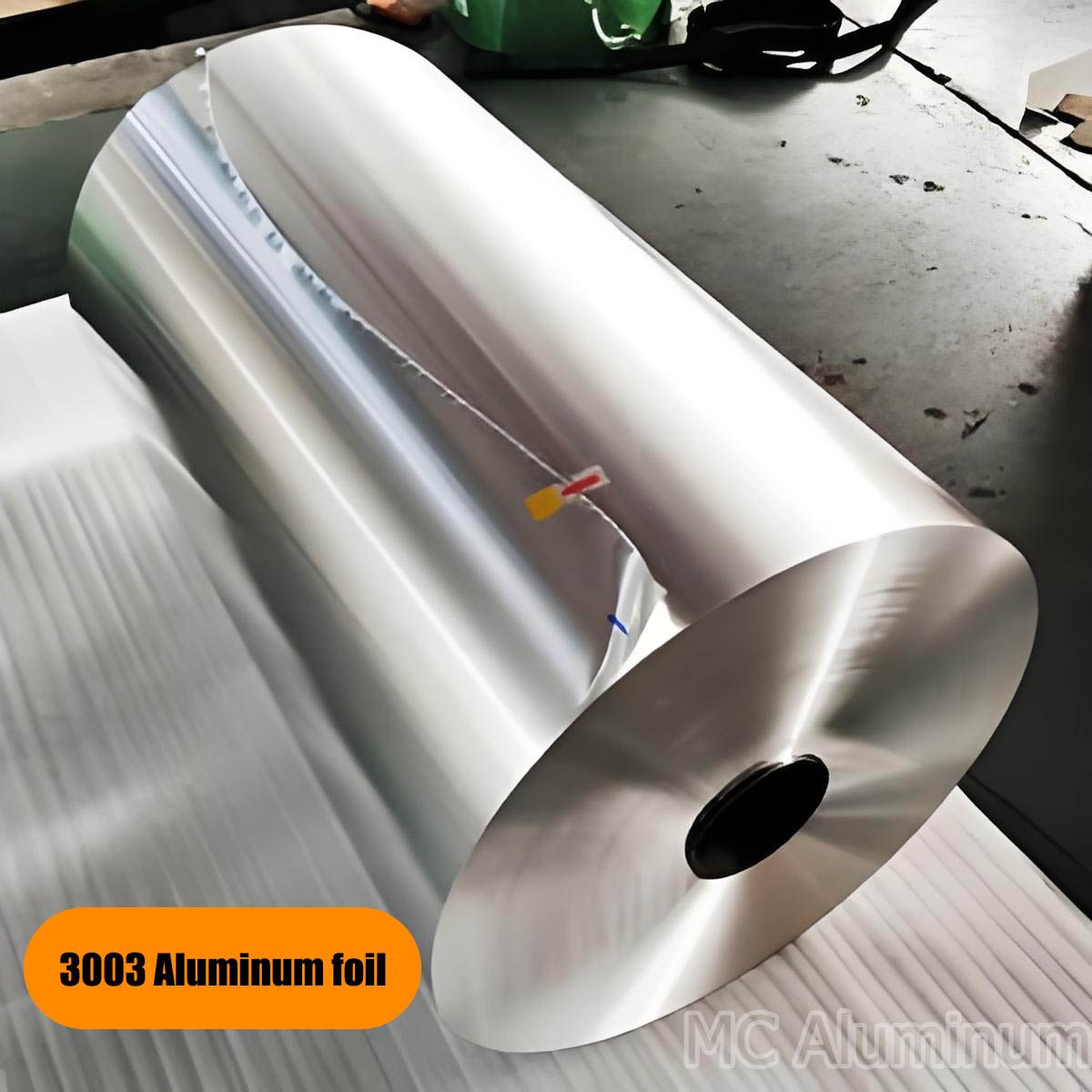
Applications of 3003 H24 Aluminum Foil
1. Food and Catering Packaging
Applications:
Airline meal containers
Disposable baking containers
Takeaway food containers
Semi-rigid sandwich trays
Fast food boxes
Advantages:
High temperature resistance
Non-toxic and odorless
Recyclable
Excellent barrier properties
Good shape retention and rigidity
2. Building and Decorative Materials
Applications:
Aluminum honeycomb panels, especially core materials for curtain walls
Aluminum corrugated panels
Building thermal insulation layers
Aluminum ceiling panels
Advantages:
Lightweight
High specific rigidity and structural stability
Sound insulation and thermal insulation
B1 fire resistance grade
Strong wind pressure resistance
3. Transportation
Applications:
Honeycomb composite materials for high-speed rail carriage floors
Heavy truck sleeper panels
Inner walls of refrigerated truck bodies
Marine compartment panels
Advantages:
Significantly reduces vehicle weight for energy saving and consumption reduction
Excellent shock resistance
Good thermal insulation performance
4. Electronics and Industrial Applications
Applications:
Electrolytic capacitor shells
Explosion-proof valves and explosion-proof aluminum foil for new energy vehicle batteries
Electronic tags
Outer packaging for vacuum insulation panels
Advantages:
High dimensional accuracy
Moderate strength
Easy to weld
Controllable burst pressure
Storage and Transport
Storage: Store in a cool, dry, well-ventilated, and clean environment at a temperature of 5–30°C and a relative humidity of ≤55%. Avoid exposure to moisture, direct sunlight, and corrosive acids or alkalis. Rolls must be stored in an upright position to prevent deformation caused by compression.
Transport: Use moisture-proof packaging and protect against rain, impact, and scratches. Handle with care during loading and unloading to prevent the rolls from unraveling or sustaining surface damage.
FAQ
Q: What is the difference between 3003 H24 heavy duty aluminum foil and ordinary aluminum foil?
A: 3003 H24 aluminum foil is an aluminum-manganese alloy. It has significantly higher strength than pure aluminum foil such as 1060 aluminum foil, along with better deformation resistance and corrosion resistance. It is suitable for higher-strength and industrial-grade applications.
Q: What is the thickness range of heavy duty aluminum foil?
A: Heavy duty aluminum foil generally refers to aluminum foil with a thickness of 0.05 mm or above. Common thicknesses in practical applications are usually 0.08 mm–0.15 mm, and specifications can be customized according to application requirements.
Q: Is 3003 H24 aluminum foil suitable for food-grade applications?
A: Yes. 3003 aluminum foil can comply with food contact material standards, depending on specific certifications. It is widely used in food containers, baking trays and other food packaging products.
Q: What types of deep processing can be performed?
A: 3003 H24 aluminum foil supports stamping, drawing, bending, laminating, coating and other processing methods. It is suitable for the production of industrial components and packaging containers.
Q: Which industries is it suitable for?
A: It is mainly used in food packaging, building insulation, HVAC systems, electronic heat dissipation and industrial manufacturing.
Q: Can customized specifications be provided?
A: Yes. Customized thickness, width, coil diameter and surface treatments, such as coating and embossing, are available to meet different customer requirements.