
In modern industrial production, aluminum foil is widely used due to its excellent barrier properties, lightweight nature, and good workability. Among these, heavy-duty aluminum foil-a high-strength, thick variant-plays an essential role in the power, battery, construction, food processing, pharmaceutical packaging, and composite material industries. Compared to regular household foil, industrial heavy-duty foil provides significantly improved thickness, strength, and functionality, making it a critical material in many industrial production processes.
What is Heavy-Duty Aluminum Foil?
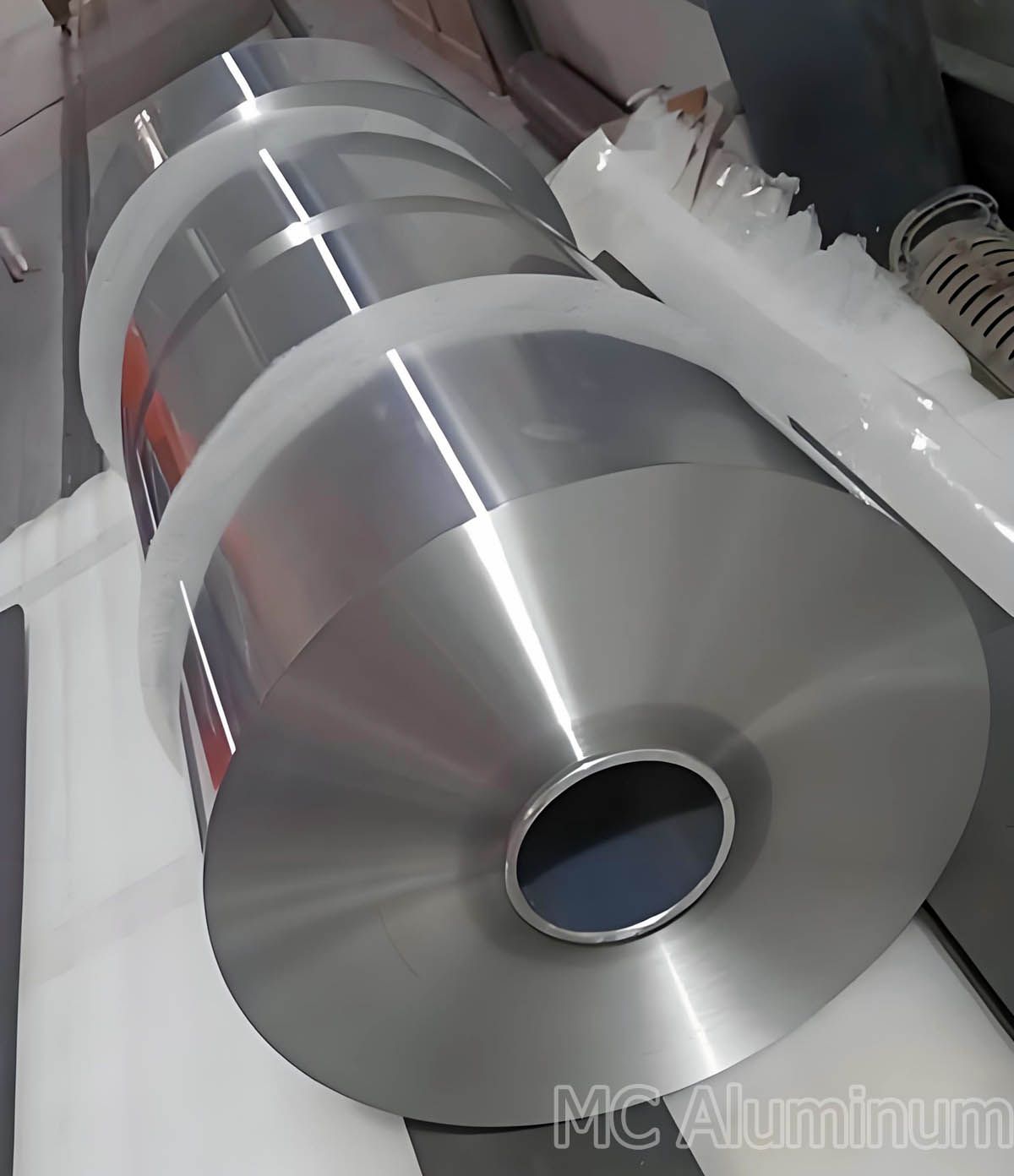
Unlike the aluminum foil commonly used in kitchens, industrial heavy-duty aluminum foil is thicker, mechanically stronger, and has higher tensile strength. Its thickness typically ranges from 0.01 mm to 0.2 mm, and it is delivered in jumbo rolls, with each roll weighing several hundred kilograms to several tons. This format facilitates large-scale automated production in downstream factories.
Common Industrial Aluminum Foil Alloys
8011 Aluminum Foil: Contains Fe and Si for higher strength; widely used in packaging and composite materials.
1235 Aluminum Foil: High-purity foil with ≥99.35% aluminum; excellent conductivity and flexibility; suitable for electronics and packaging industries.
3003 Aluminum Foil: Contains manganese; excellent corrosion resistance; widely used in deep-drawing products and HVAC heat exchangers.
8079 Aluminum Foil: Strength between 8011 and 3003; superior pinhole control, good heat-sealing performance and flexibility; suitable for high-end packaging.
1100 Aluminum Foil: ≥99% aluminum purity; better corrosion resistance than 8011; excellent workability; suitable for applications requiring long service life.
Why Choose Heavy-Duty Aluminum Foil in Industrial Applications?
1. Excellent Barrier Properties: Aluminum foil's dense metallic crystal structure can completely block light, water vapor, oxygen, and chemical odors, providing a natural protective barrier for sensitive industrial components and chemicals.
2. High and Low-Temperature Resistance: Maintains structural stability from -70°C to 600°C, without cracking or melting. Ideal for industrial thermal management systems.
3.Superior Workability: Despite its "heavy-duty" specifications, it retains aluminum's ductility. It can be laminated, coated, embossed, or cut to fit complex surfaces.
4. Non-Toxic: Safe for direct food contact (FDA-compliant).
5. Aesthetic & Printable: Can be printed or embossed for branding purposes.
6. Environmentally Friendly: Aluminum is one of the most recyclable metals on Earth. Industrial scrap can be reused, meeting modern ESG sustainability standards.
Product Specifications
| Parameter | Specification |
| Alloy Type | 1100, 1235, 3003, 8011, 8079, etc. |
| Temper | O, H16, H18, H20, H22, H24, H26, etc. |
| Thickness & Tolerance | 0.01 mm – 0.2 mm (±6%) |
| Width & Tolerance | 280 mm – 1500 mm (±1 mm) |
| Length | 1000 mm – 16000 mm |
| Surface | Natural, coated, embossed, printed |
| Typical Core ID | 76 mm, 152 mm |
| Core Material | Aluminum core |
| Mechanical Properties | Tensile Strength (UTS): 35–100 MPa |
| Elongation ≥0.5% | |
| Standards | ASTM B209, EN 573-1S |
| Packaging | Moisture-proof paper + plastic film; cardboard or wooden pallets for bulk rolls; customizable (vacuum-sealed, anti-static, labeled). |
| Payment | T/T, L/C, DP, PayPal |
| Delivery Time | Stock: 7–14 days; Custom: 3–6 weeks |
| Applications | HVAC, battery packaging, cigarette packaging, composite packaging, food packaging |
| MOQ | 1–3 tons |
Applications of Heavy-Duty Aluminum Foil
Construction and HVAC
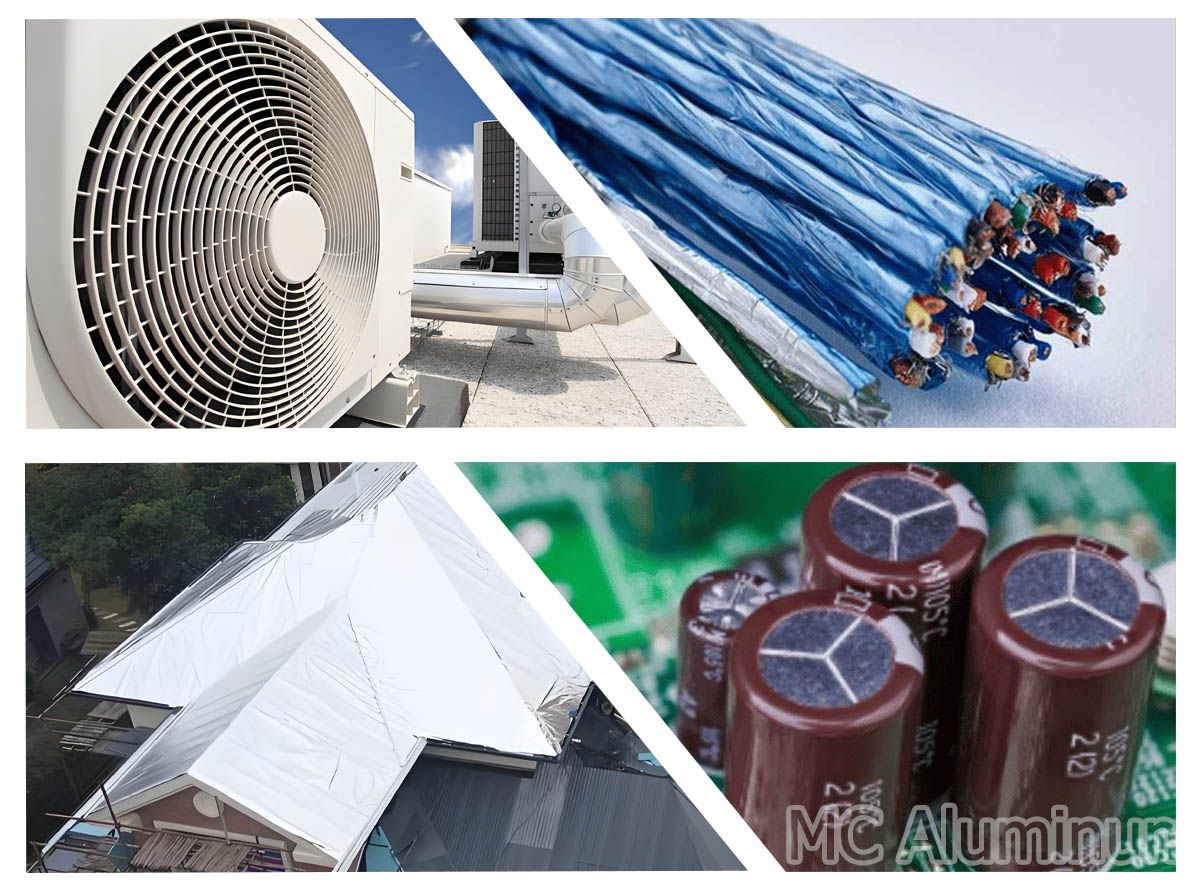
Used in duct insulation systems, heavy-duty aluminum foil is often laminated with glass wool or rock wool. It reflects over 95% of thermal radiation and serves as a moisture barrier, extending the lifespan of building equipment.Power and Telecommunications
Jumbo rolls of aluminum foil are essential in manufacturing cable shielding layers. They effectively block electromagnetic interference (EMI), ensuring stable data transmission and clean power delivery.Flexible Packaging and New Energy
In lithium-ion batteries, high-precision heavy-duty aluminum foil is used as the current collector. In transporting high-end chemicals, multilayer aluminum foil packaging prevents deterioration during long-distance sea shipping.Special Thermal Barriers
Used in automotive engine bay heat shields, building fire-proof layers, and aerospace ground test equipment, heavy-duty aluminum foil combined with glass fiber or ceramic fiber creates thermal barriers capable of reflecting heat fluxes above 500°C.
Quality Requirements for Heavy-Duty Aluminum Foil
1. Surface Quality: Industrial aluminum foil must be free of grease, pinholes, or scratches. A clean surface is essential for subsequent lamination or printing.
2. Flatness: Jumbo rolls must remain flat during unrolling, without waviness or wrinkles, ensuring smooth operation on automated production lines.
3. Mechanical Performance: Strict tensile strength and elongation tests guarantee the material does not break during high-speed cutting or stamping.
FAQ
Q1. What is the typical thickness of industrial aluminum foil jumbo rolls?
A:Thickness usually ranges from 30 μm to 200 μm. For example, packaging applications commonly use 50–80 μm, while battery applications use 12–20 μm.
Q2. What are the common alloy types for industrial aluminum foil jumbo rolls?
A:Common alloys include 8011, 1235, 3003, 8079, each differing in corrosion resistance, ductility, and conductivity.
Q3. What are the typical width and weight of jumbo rolls?
A:Widths range from 300 mm to 1600 mm, and roll weights range from 200 kg to 2000 kg, suitable for various automated production lines.
Q4. Which processing techniques are suitable for industrial aluminum foil jumbo rolls?
A:Techniques include stamping, slitting, laminating, coating, printing, and forming, meeting diverse industrial production requirements.
Q5. How is the barrier performance of industrial aluminum foil jumbo rolls?
A:Aluminum foil offers excellent resistance to moisture, air, light, and gas, making it ideal for food, pharmaceutical, and electronic packaging.
Q6. Can industrial aluminum foil jumbo rolls be used in battery applications?
A:Yes, aluminum foil with a thickness of 12–20 μm is commonly used as a current collector in lithium-ion batteries, requiring smooth surface and uniform thickness for conductivity and safety.