
As electronic components continue to evolve toward miniaturization, higher capacitance, and greater reliability, the performance of capacitor materials has become increasingly important. As a fundamental component for energy storage and filtering in circuits, capacitors depend heavily on the quality of their internal electrode materials.
Among these materials, 5 micron capacitor aluminum foil has become an important material for high-end aluminum electrolytic capacitors, as well as certain new-energy and consumer-electronics applications. Its extremely thin thickness, excellent electrical conductivity, and high processing precision make it particularly suitable for compact, high-performance capacitor designs.
What Is 5 Micron Capacitor Aluminum Foil?
Capacitor aluminum foil is a high-purity aluminum foil used to manufacture electrodes for aluminum electrolytic capacitors. It is commonly produced from 1235 aluminum alloy in fully annealed O temper and is one of the key specifications of ultra-thin, double-zero aluminum foil for capacitor applications.
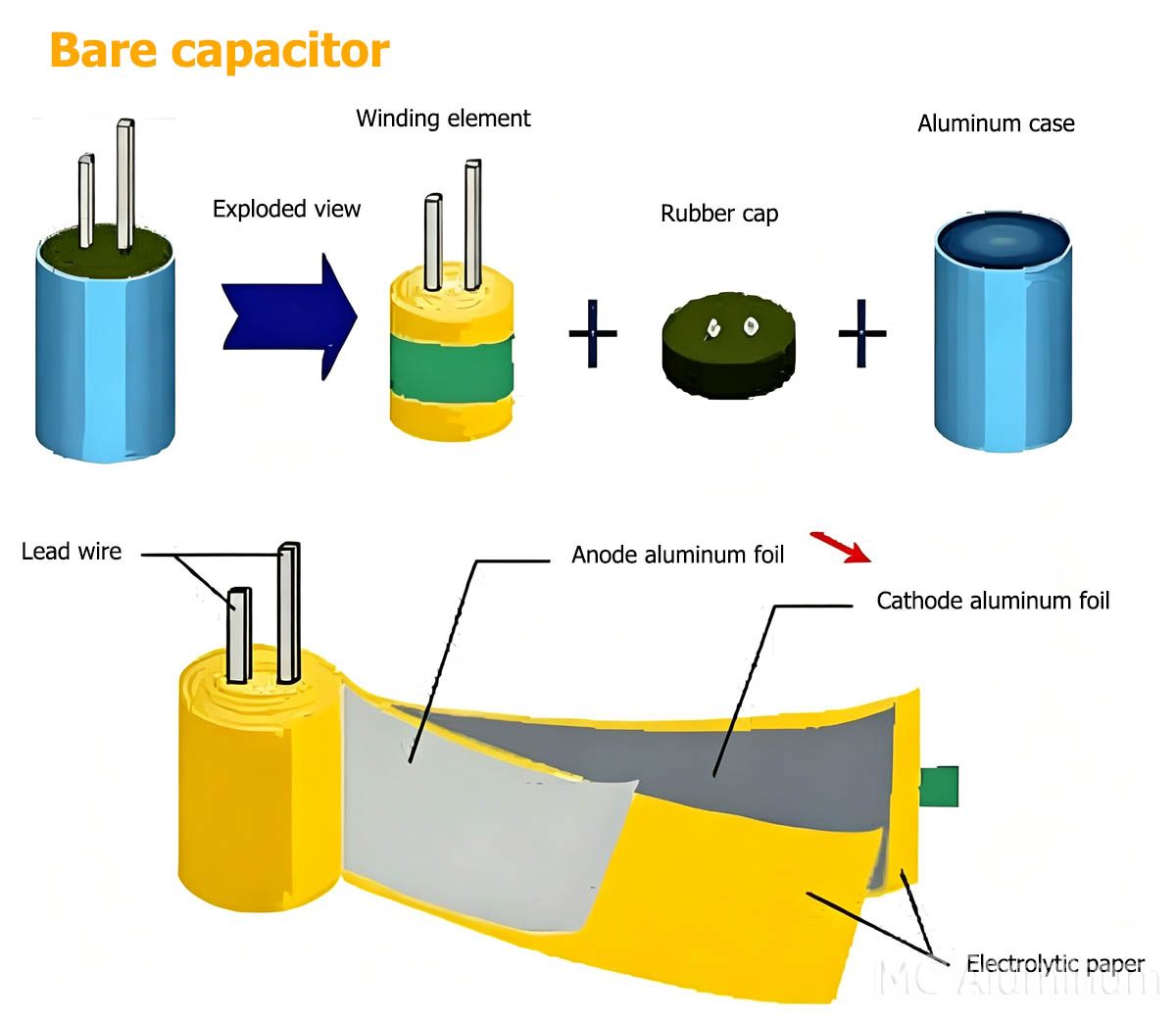
The anode and cathode of an aluminum electrolytic capacitor are made from aluminum foils that undergo different surface treatments:
The anode foil is formed through an anodizing process to create an aluminum oxide dielectric layer.
The cathode foil is etched to increase its surface area and improve electrical contact.
Together, these foils determine the capacitance, service life, and reliability of the capacitor.
The term "5 micron" refers to the thickness of the aluminum foil. For comparison, a standard sheet of A4 paper is approximately 100 microns thick. A 5 micron aluminum foil is therefore only about one-twentieth of the thickness of ordinary paper.
Producing aluminum foil at such an extremely thin gauge places highly demanding requirements on material purity, rolling accuracy, thickness control, and surface quality.
Electronic aluminum foil typically has a thickness range of approximately 5 to 20 microns, which is much thinner than ordinary packaging aluminum foil. At 5 microns, the foil is at the lower end of this range and represents an advanced level of ultra-thin aluminum foil rolling technology.
Compared with conventional capacitor materials, 5 micron capacitor aluminum foil offers several important advantages:
High capacitance density: Its thin thickness helps support compact capacitor structures with a high effective electrode area.
Low electrical resistance: Aluminum remains highly conductive even in ultra-thin foil form, helping reduce capacitor losses.
Good stability: High-quality 5 micron aluminum foil has a dense and uniform structure, supporting oxidation resistance and long-term reliability.
Cost efficiency: Compared with nanometer-scale materials, 5 micron aluminum foil is produced using a relatively mature manufacturing process and offers a practical balance between performance and cost.
Core Advantages of 5 Micron Capacitor Aluminum Foil
1. High Electrical and Thermal Conductivity for Lower Device Losses
High-purity aluminum has excellent electrical and thermal conductivity. Even at a thickness of 5 μm, the foil retains the inherent electrical properties of aluminum.
This helps reduce equivalent series resistance (ESR), minimize heat generation during capacitor operation, and improve energy efficiency in high-frequency AC operating conditions. It is particularly suitable for filtering, inverter, and power-conversion applications.
2. Ultra-Thin and Ductile for Compact, High-Density Winding
The fully annealed O temper provides good elongation and ductility. During high-speed winding, the foil can be tightly wound to create more electrode surface area within a limited capacitor housing.
Under the same capacitance requirements, capacitors manufactured with 5 micron aluminum foil can be significantly smaller than those made with thicker foil. This helps solve the space limitations commonly found in modern electronic equipment.
3. Stable Surface Quality for Long-Term Voltage Reliability
During capacitor operation, a dense aluminum oxide dielectric layer forms on the foil surface. Therefore, surface cleanliness and consistency are essential.
5 micron capacitor aluminum foil is manufactured with strict control of surface impurities, scratches, pinholes, and other defects. This helps reduce risks of localized leakage current and dielectric breakdown, minimizes capacitance drift, and supports a long service life.
It is suitable for applications with demanding reliability requirements, including industrial-grade and automotive electronic systems.
4. Balanced Mechanical Properties for High-Yield Production
Compared with 4 micron ultra-thin aluminum foil, 5 micron capacitor aluminum foil generally offers better tensile strength and lower risk of breakage during slitting, winding, and subsequent processing.
It provides a balance between ultra-thin performance and large-scale production yield, making it a cost-effective substrate for high-end miniaturized capacitors.
Specifications of Capacitor Aluminum Foil
| Item | Typical Specification / Description |
| Product Name | 5 Micron Capacitor Aluminum Foil |
| Thickness | 5 μm / 0.005 mm |
| Alloy | 1235 |
| Temper | O |
| Surface | Bright surface or surface suitable for capacitor processing requirements |
| Width | 100–1600 mm |
| Length | 1000–16000 mm |
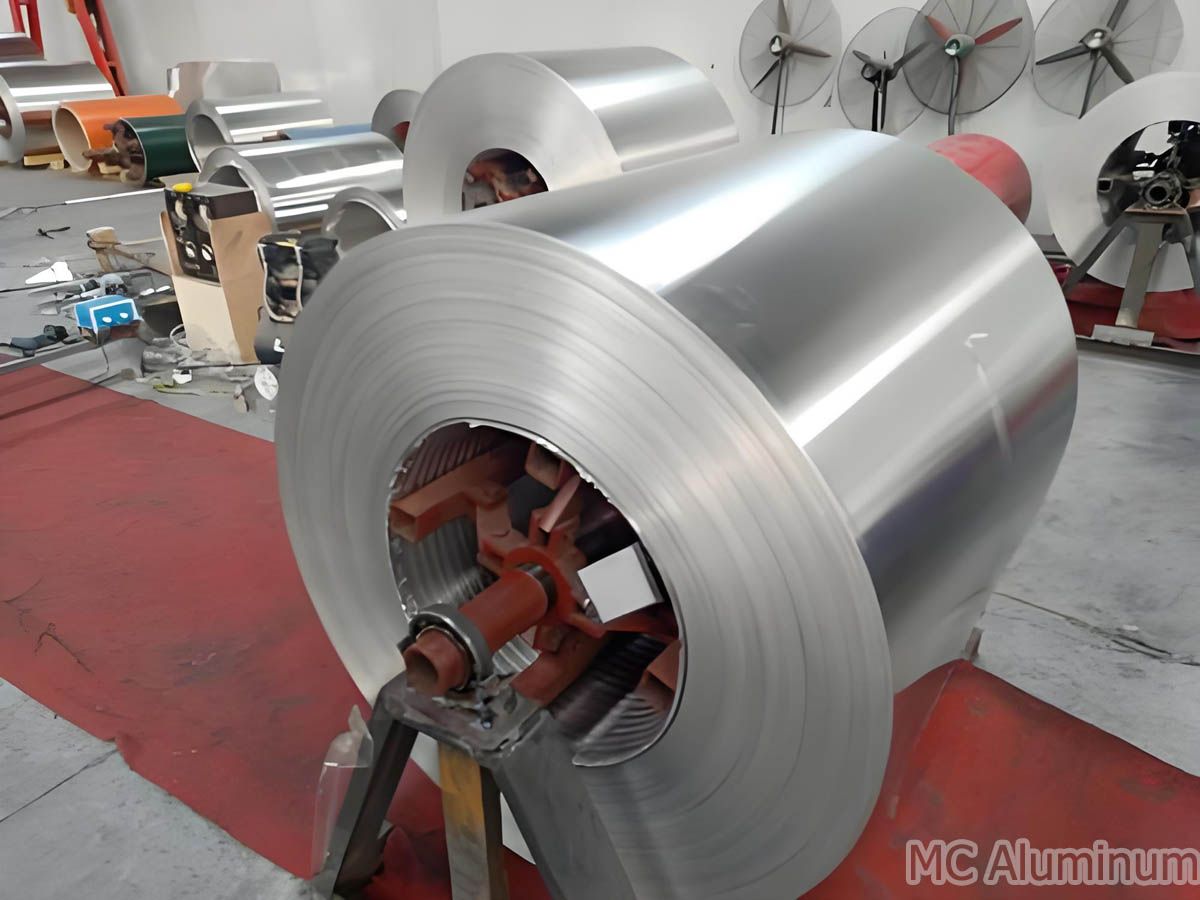
| Coil Form | Jumbo Roll / Slit Coil |
| Surface Quality | Free from obvious scratches, cracks, severe dents, and contamination |
| Main Production Process | Cold rolling, annealing, precision rolling, slitting, inspection, and packaging |
| Main Applications | Aluminum electrolytic capacitors, power capacitors, and electronic components |
| Packaging | Moisture-proof, contamination-proof, and mechanically protective packaging |
| MOQ | 3 Tons |
Production Process of 5 Micron Capacitor Aluminum Foil
1. Aluminum Ingot and Raw Material Preparation
The production process begins with the selection of aluminum raw materials that meet capacitor foil requirements. The alloy system, purity level, and impurity-control range are determined according to the target product specification.
For capacitor-grade foil, raw-material quality is particularly important because impurities and inclusions can affect rolling stability, surface quality, and electrochemical processing performance.
2. Continuous Casting or Hot Rolling
The aluminum material is processed through continuous casting or hot rolling to produce feedstock suitable for subsequent cold rolling.
At this stage, the uniformity of the internal material structure must be carefully controlled, providing a stable foundation for producing ultra-thin foil in later steps.
3. Multi-Pass Cold Rolling
Precision cold rolling is one of the most critical manufacturing stages for 5 micron aluminum foil.
The aluminum strip is progressively reduced in thickness through multiple rolling passes. During this process, manufacturers must closely control:
Rolling speed;
Rolling pressure;
Strip tension;
Roll gap;
Strip flatness;
Lubrication conditions.
Because the final thickness is only 5 μm, the performance of rolling equipment and the accuracy of process control have a decisive impact on final product quality.
4. Intermediate Annealing
Intermediate annealing may be carried out according to the production process. This step helps adjust the internal structure and mechanical properties of the aluminum foil.
A properly controlled annealing process improves ductility and provides a more stable metallurgical structure for subsequent rolling and electrochemical processing.
5. Final Precision Rolling to 5 μm
During the final precision-rolling stage, the foil thickness must be accurately controlled to the target range.
This stage places extremely high requirements on equipment stability, tension control, thickness measurement, and flatness control.
6. Slitting
Large aluminum foil rolls are slit into the specified widths required by the customer’s capacitor manufacturing equipment.
Slitting quality is important because clean edges, stable coil tension, and accurate width tolerances can directly affect downstream winding efficiency.
7. Inspection and Packaging
The finished foil is inspected for thickness, width, mechanical properties, surface quality, and other customer-specific requirements.
During packaging, moisture, contamination, impact, and mechanical damage must be prevented to ensure that the foil remains stable during transportation and storage.
Applications of 5 Micron Capacitor Aluminum Foil
Due to its high capacitance density and compact design potential, 5 micron capacitor aluminum foil is used in a wide range of electronic applications.
1. Consumer Electronics
In smartphones, tablets, laptops, and other consumer electronic products, capacitors made with 5 micron aluminum foil are widely used in power-management circuits and signal-processing circuits.
The compact size of these capacitors helps manufacturers meet the demand for thinner, lighter, and more highly integrated devices.
2. Automotive Electronic Systems
In automotive electronic systems, capacitors using ultra-thin aluminum foil can be used in key components such as motor-control units, sensor interfaces, power-conversion modules, and safety systems.
High reliability and stable electrical performance are particularly important in automotive environments.
3. Industrial Control Systems
In industrial automation and control systems, capacitors are used in applications such as current sensors, temperature sensors, communication interfaces, power modules, and control circuits.
The high stability of capacitor-grade aluminum foil supports reliable operation in demanding industrial environments.
4. Communication Equipment
In wireless communication equipment, capacitors are used in RF circuits, antenna systems, power supplies, and signal-processing modules.
High-quality aluminum foil contributes to stable capacitance performance and efficient power filtering.
5. Power Management Circuits
In power-management circuits, capacitors are essential components in filters, voltage regulators, converters, inverters, and energy-storage systems.
5 micron capacitor aluminum foil is well suited for applications that require compact size, low loss, and stable long-term performance.
FAQ
Q: Can you provide 5 μm aluminum foil in jumbo rolls?
A: Yes. 5 μm capacitor aluminum foil can be supplied in jumbo rolls or slit coils, depending on the customer’s production line requirements. Coil width, outer diameter, inner diameter, coil weight, and slitting width can be customized according to the customer’s equipment.
Q: Can the width of 5 μm capacitor aluminum foil be customized?
A: Yes. Foil width can be customized according to the customer’s capacitor winding equipment and production requirements. For narrow-width applications, jumbo foil rolls can also be slit into specified widths.
Q: What is the minimum order quantity for 5 μm capacitor aluminum foil?
A: The minimum order quantity depends on the required width, coil specification, material grade, production schedule, and customization requirements. For standard specifications, the MOQ may be more flexible. Customized ultra-thin foil products usually need to be confirmed according to the production schedule.
Q: Can you provide samples?
A: Yes. Sample availability can be discussed according to the required thickness, width, alloy or purity level, coil specification, and testing requirements. Samples help customers evaluate slitting, winding, corrosion resistance, and forming compatibility before placing bulk orders.
Q: How should 5 μm capacitor aluminum foil be stored?
A: Because 5 μm aluminum foil is extremely thin and sensitive to moisture and mechanical damage, it should be stored in a clean, dry environment away from water, condensation, dust, and physical impact.
The original packaging should remain intact until the material is ready for processing.