
HVAC systems are moving toward higher efficiency, lower energy consumption, and longer service life. As an important component of air conditioner evaporators and condensers, heat exchanger fin materials directly affect the unit's heat transfer efficiency, energy consumption, corrosion resistance, and overall lifespan.
Coated Aluminum Foil has gradually replaced ordinary bare aluminum foil thanks to its excellent thermal conductivity, corrosion resistance, and surface functional properties. It has become a preferred material for household air conditioners, central air conditioning systems, heat pumps, fresh air systems, and industrial refrigeration equipment.
So, what exactly is coated aluminum foil for HVAC systems? What types are available? Why are more and more air conditioning equipment manufacturers paying attention to it? This article will give you a comprehensive overview.
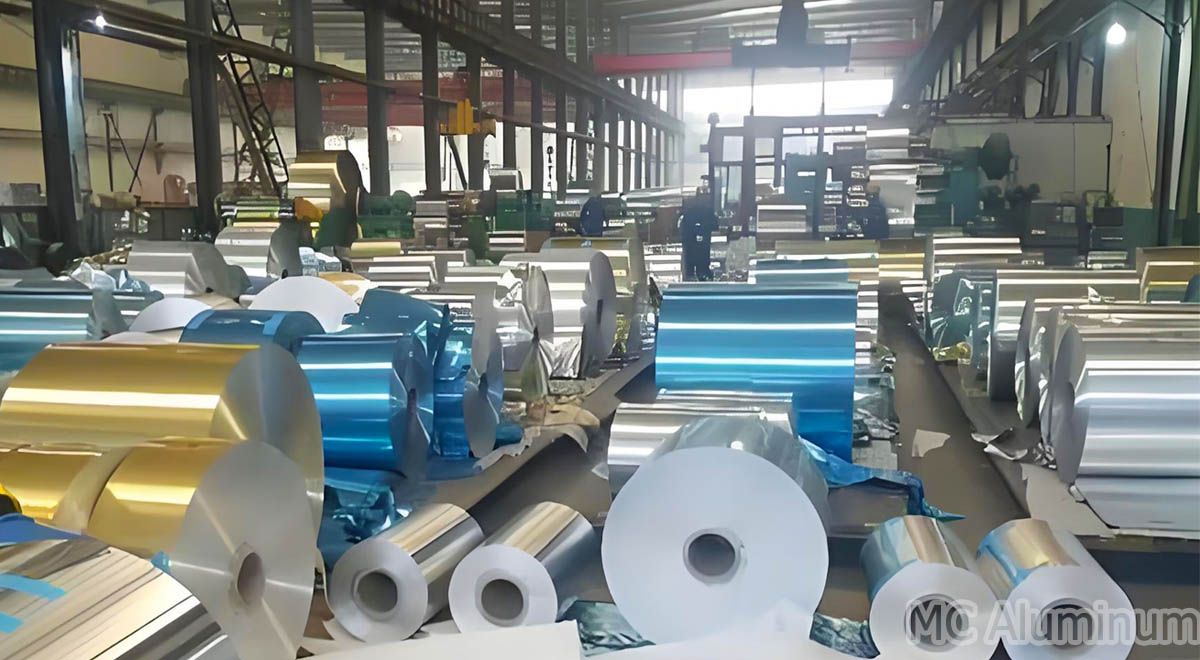
What Is Coated Aluminum Foil for HVAC?
Coated aluminum foil for HVAC is produced by applying a uniform functional coating onto the surface of high-quality aluminum foil through a continuous roller coating process, followed by high-temperature curing to form a stable protective layer.
Functions of Coated Aluminum Foil in HVAC Systems
Coated aluminum foil can provide multiple functions, including:
Hydrophilic drainage;
Anti-corrosion protection;
Antibacterial and anti-mildew performance;
Oil resistance;
High-temperature resistance;
Self-cleaning performance;
Improved processing performance;
Extended heat exchanger service life.
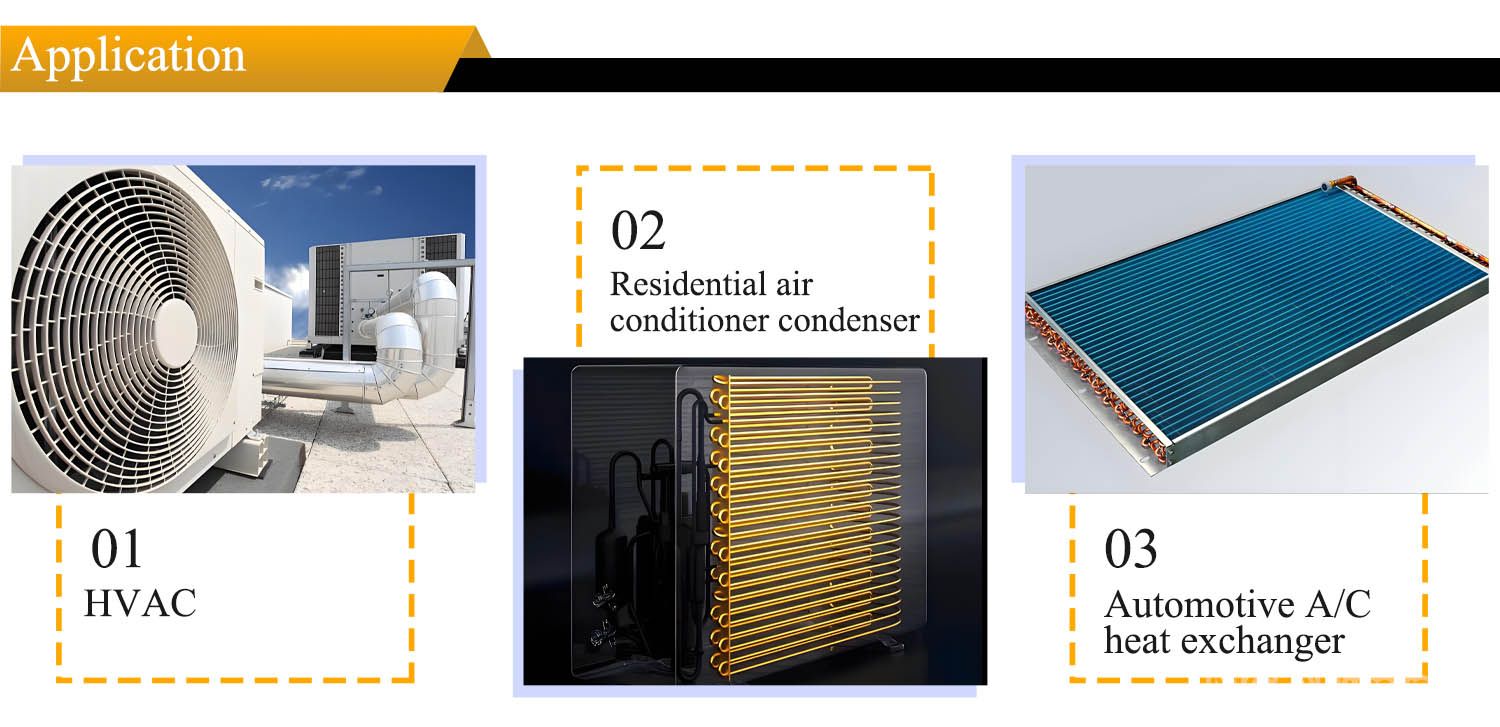
In HVAC systems, coated aluminum foil is mainly used for heat exchanger fins. Heat exchangers rely on fins to expand the heat exchange area between air and refrigerant, while the performance of the aluminum foil material directly affects the operating efficiency of the heat exchanger.
Working Principle of Coated Aluminum Foil
During air conditioner operation, water vapor in the air condenses on the surface of evaporator fins.
Ordinary aluminum foil is prone to:
Water droplet accumulation;
Condensate retention;
Increased air resistance;
Reduced heat transfer efficiency;
Growth of bacteria and mold.
After applying a functional coating:
Condensate spreads quickly and drains away;
Airflow becomes smoother;
Fins remain cleaner;
Heat exchange area is fully utilized;
Corrosion and oxidation are prevented.
As a result, the system achieves higher cooling and heating efficiency.
Common Coated Aluminum Foil Grades for HVAC
Different HVAC equipment has different requirements for aluminum foil strength, thermal conductivity, corrosion resistance, and processing performance. Therefore, different aluminum alloy grades are selected as base materials.
Currently, the most widely used HVAC coated aluminum foils include the following:
| Alloy Grade | Temper | Main Features | Typical Applications |
| 1100 | H22/H24 | High-purity aluminum, excellent thermal conductivity, good formability | General air conditioner fins, condensers |
| 1200 | H22/H24 | Good thermal conductivity and high cost-effectiveness | Commercial air conditioners, refrigeration equipment |
| 3003 | H22/H24/H26 | High strength and excellent corrosion resistance | Evaporator and condenser fins |
| 3102 | H22/H24/H26 | Excellent thermal conductivity and good weldability; mainstream material in the HVAC industry | Household and commercial air conditioner heat exchangers |
| 8011 | H22/H24 | Excellent formability and good corrosion resistance | Refrigeration equipment, heat exchangers |
| 8079 | O/H22 | Good flexibility, suitable for special processing requirements | Special refrigeration and heat exchange equipment |
Material Temper
The base material temper of coated aluminum foil is usually O, H22, H24, H26, etc.
O temper annealed state:
This temper has the highest elongation and the lowest strength, making it suitable for deep drawing and other complex forming processes.
H22/H24/H26 work-hardened tempers:
These tempers are treated with different degrees of work hardening, resulting in gradually increasing strength. H22 refers to strain-hardened and partially annealed material; H24 refers to quarter-hard material; H26 refers to half-hard material.
The proper temper should be selected according to the specific fin forming process, such as stamping speed, collar height, and forming complexity.
Core Advantages of Coated Aluminum Foil for HVAC Systems
1. Improved Heat Transfer Efficiency
High-quality coatings do not compromise the excellent thermal conductivity of aluminum foil. At the same time, they help improve airflow, reduce water droplet accumulation and dirt adhesion, and enhance heat transfer efficiency.
2. Excellent Corrosion Resistance
HVAC equipment operates for years in environments involving temperature fluctuations, humidity, and dust accumulation. Heat exchanger fins are highly susceptible to corrosion.
Coated aluminum foil forms a protective barrier on the surface of the aluminum foil, reducing direct contact between moisture, salt spray, acidic or alkaline substances, and the metal substrate. This effectively improves the durability of the heat exchanger.
3. Energy Saving and Consumption Reduction
By improving condensate drainage, reducing air resistance, and maintaining efficient heat transfer, coated aluminum foil helps HVAC systems operate more efficiently. This can reduce compressor and fan load, lower energy consumption, and improve overall system performance.
4. Improved Air Quality
Some high-end HVAC systems use antibacterial coatings to effectively inhibit the growth of bacteria and mold.
This helps:
Reduce odor generation;
Improve air cleanliness;
Enhance the indoor environment;
Increase user comfort.
5. Extended Service Life
Because the fin surface is protected by a functional coating, corrosion is slowed, oxidation is reduced, and the fins remain intact for longer. This reduces heat exchanger maintenance costs and effectively extends the service life of the entire unit.
Specifications of Coated Aluminum Foil
HVAC systems have different requirements for aluminum foil specifications depending on equipment type, heat exchange efficiency, and fin design. The following are common recommended specifications:
| Item | Parameters |
| Alloy | 3102, 3003, 8011, etc. |
| Temper | H22, H24, H26, etc. |
| Thickness | 0.08–0.20 mm |
| Common Thickness | 0.095 mm, 0.105 mm, 0.115 mm, 0.12 mm |
| Width | 100–1250 mm |
| Common Width | 300 mm, 500 mm, 800 mm, 1000 mm, 1200 mm |
| Coil Inner Diameter | 76 mm, 150 mm |
| Coil Outer Diameter | ≤1500 mm, customizable |
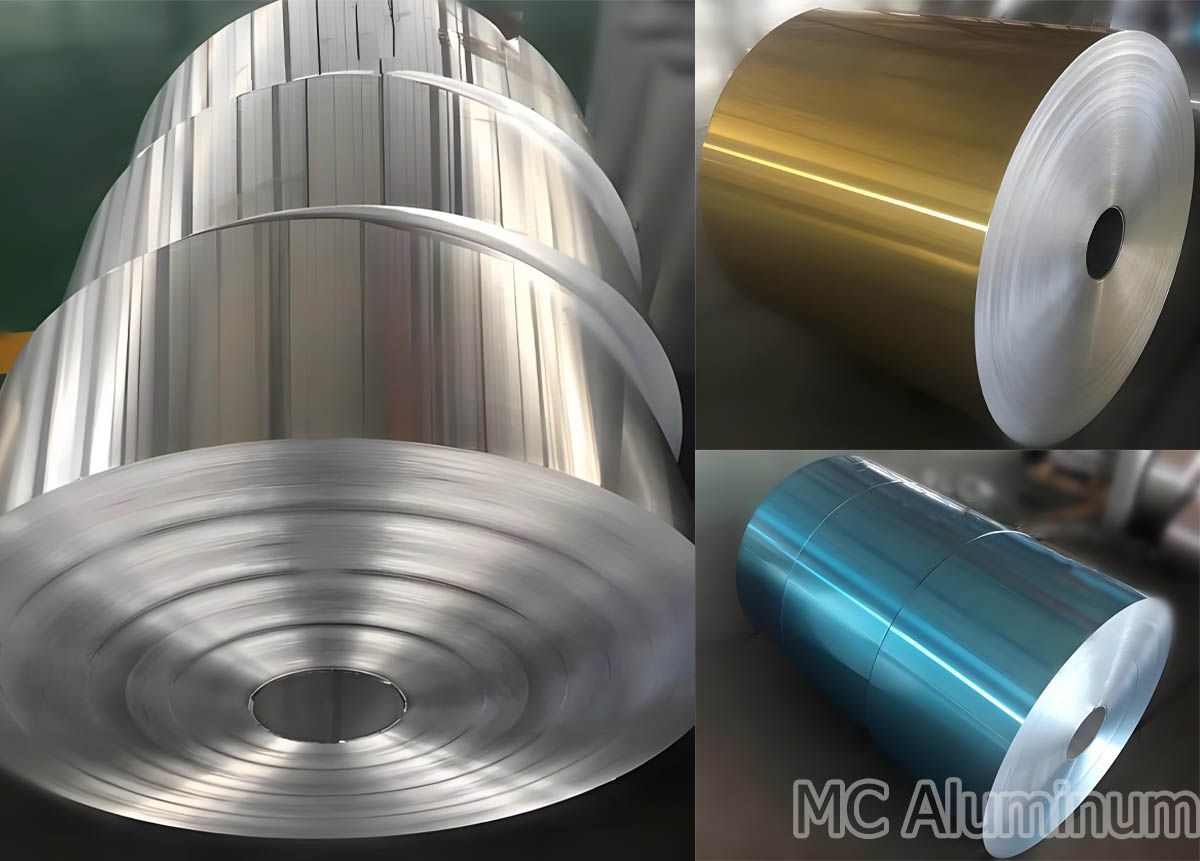
| Coating Color | Blue, gold, transparent, green |
| Coating Method | Single-side coating, double-side coating |
| Surface Condition | Clean, free from oil stains, scratches, and dents |
| MOQ | 3 Tons |
Coating Types for HVAC Coated Aluminum Foil
| Coating Type | Description | Advantages | Typical Applications |
| Hydrophilic Coating | Water-spreading coating | Quickly drains condensate and improves heat transfer efficiency | Evaporators |
| Hydrophobic Coating | Water-repellent coating | Rapid drainage and reduced dirt accumulation | Condensers |
| Anti-corrosion Coating | Corrosion-resistant coating | Excellent resistance to salt spray, humidity, and chemicals | Marine and industrial HVAC systems |
| Epoxy Coating | Epoxy resin coating | High chemical resistance | Industrial heat exchangers |
| PE Polyester Coating | Polyester coating | Economical and weather-resistant | General HVAC equipment |
| PVDF Coating | Polyvinylidene fluoride coating | Excellent UV resistance and weatherability | Outdoor air conditioning units |
Recommended Specifications for HVAC Applications
| Application | Recommended Alloy | Temper | Thickness mm | Recommended Coating |
| Household Air Conditioner Evaporator | 8011 | H24 | 0.095–0.105 | Hydrophilic |
| Household Air Conditioner Condenser | 8011 | H24 | 0.100–0.120 | Anti-corrosion |
| Commercial HVAC System | 3102 | H24 | 0.100–0.150 | Hydrophilic |
| Heat Pump Heat Exchanger | 8011 | H26 | 0.090–0.110 | Blue hydrophilic |
| Automotive Air Conditioner | 3102 | H26 | 0.080–0.100 | Hydrophilic |
| Marine or Coastal HVAC System | 8011 | H24 | 0.100–0.120 | High-performance anti-corrosion coating |
Key Performance Indicators of Coated Aluminum Foil
1. Hydrophilic Performance
Hydrophilic performance is extremely important for evaporator fins. It is usually evaluated by the contact angle. The smaller the contact angle, the easier water spreads on the surface, and the better the drainage performance.
However, long-term hydrophilicity is even more important. High-quality products should not only have excellent initial hydrophilicity but also maintain stable performance after repeated water washing, thermal cycling, and damp-heat aging.
2. Corrosion Resistance
Corrosion resistance is usually evaluated through salt spray tests, damp-heat tests, acid and alkali environment tests, and other methods. Different application scenarios require different levels of corrosion resistance.
For example, ordinary household indoor units have moderate corrosion resistance requirements, while coastal outdoor units, industrial environment equipment, and heat pump units require higher-grade anti-corrosion protection.
3. Coating Adhesion
The coating must firmly adhere to the aluminum foil surface. If adhesion is insufficient, problems such as peeling, powder shedding, and cracking may occur during stamping, collar forming, assembly, or long-term operation.
Coating peeling not only affects heat transfer performance but may also contaminate molds and equipment, increasing production failures.
4. Forming and Processing Performance
Air conditioner fins usually undergo complex processes such as high-speed stamping, stretching, and collar forming. Therefore, coated aluminum foil must have excellent processing adaptability.
High-quality coated aluminum foil should meet the following requirements:
No powder shedding during stamping;
No cracking during forming;
Moderate surface lubricity;
Low tendency to stick to molds;
Stable fin shape;
Suitable for high-speed automated production.
For air conditioner manufacturers, processing performance directly affects production efficiency and yield rate.
5. Water Resistance and Durability
Coated aluminum foil is exposed to condensate, humid air, and repeated heating and cooling cycles for a long time. If its water resistance is poor, the coating may gradually fail.
A high-quality coating should have good resistance to water washing, damp heat, and thermal cycling to ensure stable heat exchanger performance even after years of use.
6. Environmental Protection and Safety Performance
As environmental regulations become increasingly strict, the environmental performance of coated aluminum foil has also attracted growing attention.
Low-VOC coatings, water-based coatings, chromium-free treatment, and compliance with RoHS/REACH requirements are becoming important development trends in the industry.
For export products and high-end brands, environmental compliance is often an essential market entry requirement.
Quality Standards and Certifications
HVAC coated aluminum foil mainly follows the standards below:
YS/T 95.2-2025
Aluminum and Aluminum Alloy Strip and Foil for Air Conditioner Fins — Part 2: Coated Strip and Foil
This is the latest industry standard, specifying product classification, technical requirements, test methods, and other requirements for coated aluminum foil.
ASTM B209/B209M
American Society for Testing and Materials standard for aluminum and aluminum alloy sheet and plate.
EN 485
European standard for wrought aluminum and aluminum alloy products.
GB/T 3880
Chinese national standard for rolled aluminum and aluminum alloy plates, sheets, and strips.