
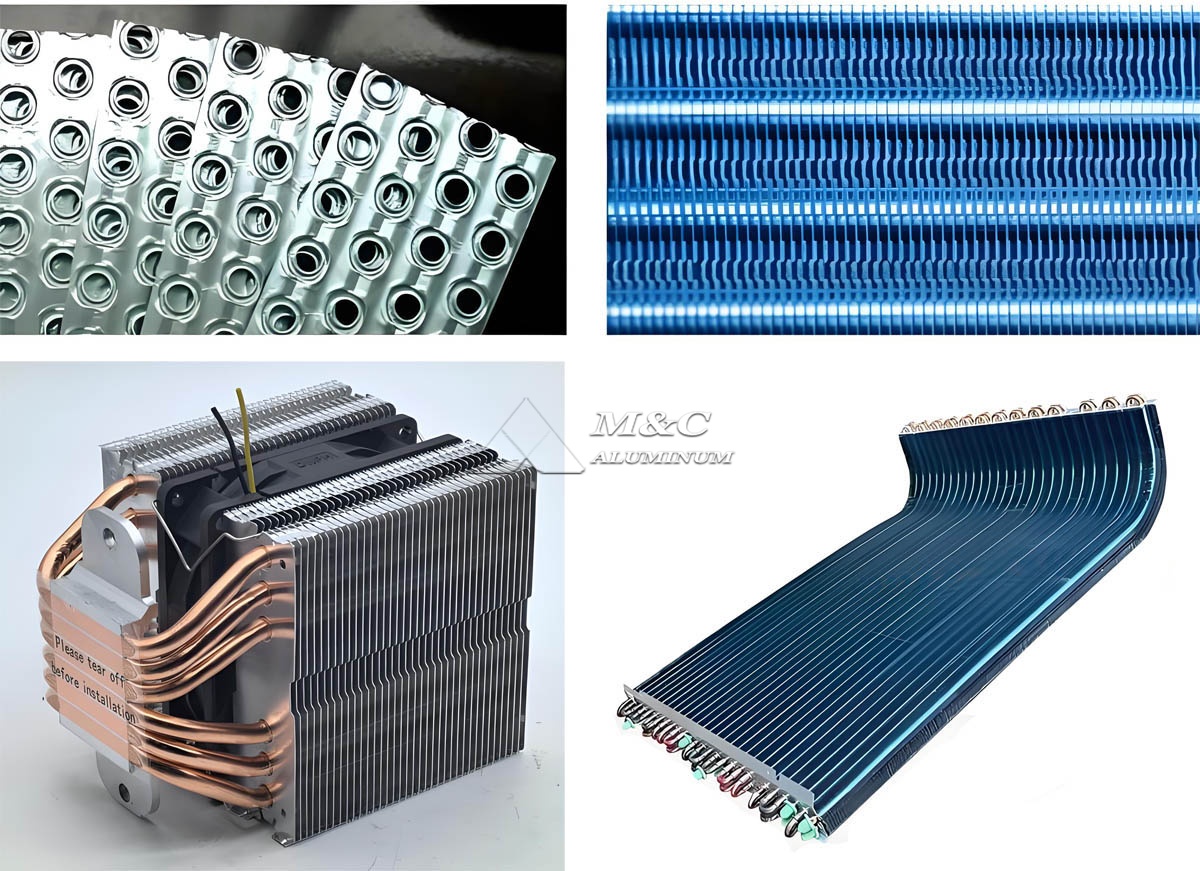
As an aluminum foil manufacturer, we produce 3003 aluminum foil for air conditioner fin applications with controlled alloy composition, stable mechanical properties, clean surface quality, and precise thickness tolerance. Air conditioner fins are critical components in evaporators and condensers. They require aluminum fin stock that can be stamped at high speed, maintain fin shape after forming, support efficient heat transfer, and work reliably under humid operating conditions.
3003 aluminum foil is widely used for HVAC heat exchanger fins because it offers a balanced combination of formability, corrosion resistance, thermal conductivity, and cost efficiency. Compared with pure aluminum grades such as 1050 or 1100, 3003 contains manganese as the main alloying element, which improves strength while retaining good processability. For fin manufacturers, this balance is important because the material must pass through uncoiling, lubrication, fin punching, collar forming, stacking, expansion, and assembly without cracking, tearing, or excessive burr formation.
Our Manufacturing Position
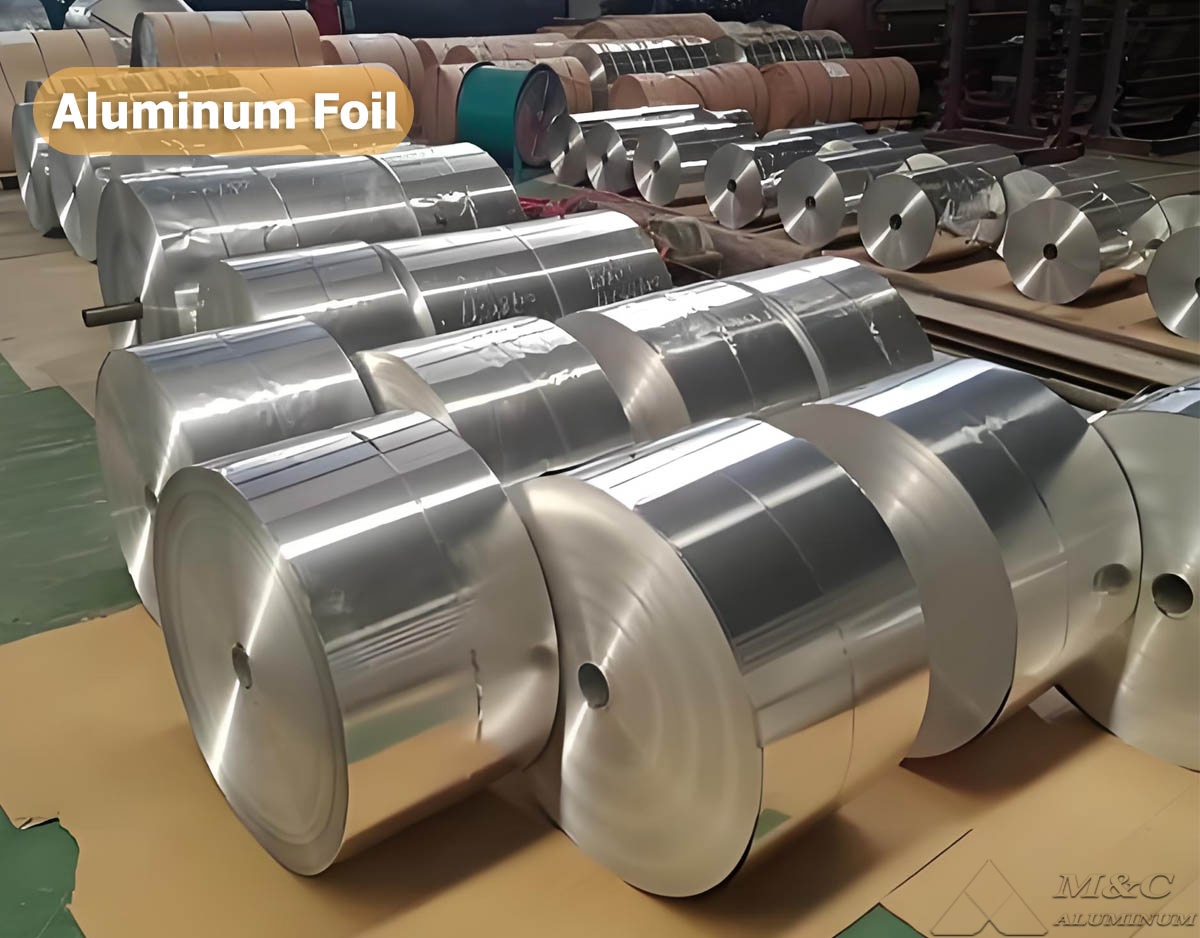
We manufacture aluminum foil from selected aluminum ingots and rolling stock through melting, casting or hot rolling, cold rolling, intermediate annealing, final rolling, slitting, surface inspection, and packaging. For air conditioner fin foil, our production focus is not only on nominal alloy grade, but also on coil flatness, gauge uniformity, surface cleanliness, edge quality, oil control, and coating compatibility.
For customers requiring uncoated fin stock, we supply bare 3003 aluminum foil in suitable tempers for downstream hydrophilic coating or direct fin forming. For customers requiring coated material, we can provide hydrophilic aluminum foil based on 3003 substrate, including blue, gold, or natural color coating systems according to the heat exchanger design and corrosion resistance requirements.
Our 3003 Aluminum Foil is produced for applications where consistent forming performance and stable heat exchange efficiency are required. Coil parameters can be adjusted according to fin press speed, fin pitch, collar height, and the final heat exchanger structure.
Why 3003 Aluminum Foil Is Used for Air Conditioner Fins
Air conditioner fins increase the heat exchange area between refrigerant tubes and surrounding air. The aluminum foil used for fins must be thin enough for efficient heat transfer and lightweight construction, but strong enough to withstand mechanical forming and assembly. 3003 aluminum foil is suitable for this role because its manganese content improves mechanical strength and anti-collapse performance while maintaining good elongation.
In practical HVAC production, fin foil is processed at high speed. The material must have uniform thickness across the width to prevent inconsistent fin height or deformation. It must also have good flatness to avoid feeding deviation during punching. Surface defects such as pinholes, black spots, scratches, pressure marks, and oil stains can affect coating adhesion, fin appearance, and long-term performance. For this reason, our inspection procedures focus on both metallurgical properties and surface quality.
3003 aluminum foil also provides good resistance to atmospheric corrosion. When used with a hydrophilic coating, the fin surface can reduce water bridge formation, improve condensate drainage, reduce air resistance, and maintain heat exchange efficiency during cooling operation. These factors make 3003 aluminum foil for air conditioner fin one of the common material choices for residential, commercial, and industrial HVAC equipment.
Typical Technical Parameters
The following parameters are common references for 3003 aluminum foil used in air conditioner fins. Actual specifications can be customized according to customer drawings, fin machine requirements, and coating process conditions.
| Item | Typical Specification |
|---|---|
| Alloy | 3003 |
| Temper | O, H22, H24, H26, or customized |
| Thickness | 0.08 mm to 0.20 mm, common range for fin stock |
| Width | 100 mm to 1600 mm, according to slitting requirement |
| Inner Diameter | 76 mm, 150 mm, 200 mm, 300 mm, or customized |
| Outer Diameter | According to coil weight and handling requirements |
| Surface | Bare, degreased, hydrophilic coated, corrosion resistant coated |
| Coating Type | Single side or double side hydrophilic coating available |
| Color | Natural, blue, gold, or customized coating appearance |
| Tensile Strength | According to temper and thickness, controlled by production standard |
| Elongation | Controlled for fin punching and collar forming performance |
| Thickness Tolerance | Precision control according to order requirement |
| Edge Quality | Slit edge, no severe burrs, cracks, or edge wave |
| Packaging | Export seaworthy wooden pallet or wooden case |
| Application | Evaporator fins, condenser fins, heat exchanger fins, HVAC fin stock |
Alloy Characteristics of 3003 Aluminum Foil
3003 aluminum belongs to the Al-Mn series. The addition of manganese improves strength compared with commercially pure aluminum while keeping good corrosion resistance and workability. For air conditioner fin foil, this means the material can be rolled to thin gauges and still maintain sufficient rigidity after fin forming.
The alloy has good thermal conductivity, which supports heat transfer in evaporator and condenser assemblies. Although pure aluminum grades may have slightly higher conductivity, 3003 offers improved mechanical performance, which is often more suitable for thin fin designs and high-density fin structures. The material can also accept surface treatment and coating well when the substrate is properly cleaned and controlled during rolling and degreasing.
For customers comparing different grades, 1100, 1050, 8011, and 3003 may all appear in aluminum fin stock discussions. However, 3003 aluminum foil is often selected where higher strength and better fin stability are required. For related pure aluminum foil options, our 1100 Aluminum Foil can also be supplied for applications with different forming and conductivity priorities.
Temper Selection for Fin Forming
Temper selection directly affects fin forming behavior. O temper provides maximum softness and high elongation, which can be useful for deep forming or special structures. H22 and H24 tempers are commonly used where a balance between strength and formability is needed. H26 provides higher strength, but the fin design and forming process must be matched carefully to avoid cracking or excessive springback.
As a manufacturer, we evaluate temper control through rolling reduction, annealing temperature, holding time, cooling conditions, and final mechanical testing. Stable temper control helps customers reduce machine adjustment frequency and improve finished fin consistency. For high-speed fin presses, small variations in tensile strength or elongation may lead to feeding instability, collar cracks, or inconsistent fin spacing. Therefore, we keep production batches traceable from raw material to finished coil.
Hydrophilic Coated 3003 Aluminum Foil
Hydrophilic aluminum foil is commonly used in air conditioner evaporators. During cooling operation, moisture in the air condenses on the fin surface. If the surface is not hydrophilic, water droplets can remain between fins and form water bridges, increasing air resistance and reducing heat exchange efficiency. A hydrophilic coating allows condensate to spread into a thin film and drain more easily.
We produce hydrophilic coated 3003 aluminum foil with attention to substrate cleanliness, coating uniformity, curing stability, adhesion, and surface appearance. Depending on customer requirements, the coating can provide hydrophilic performance, corrosion resistance, anti-odor properties, or enhanced durability in humid environments. The coating system must be compatible with subsequent fin punching and heat exchanger assembly.
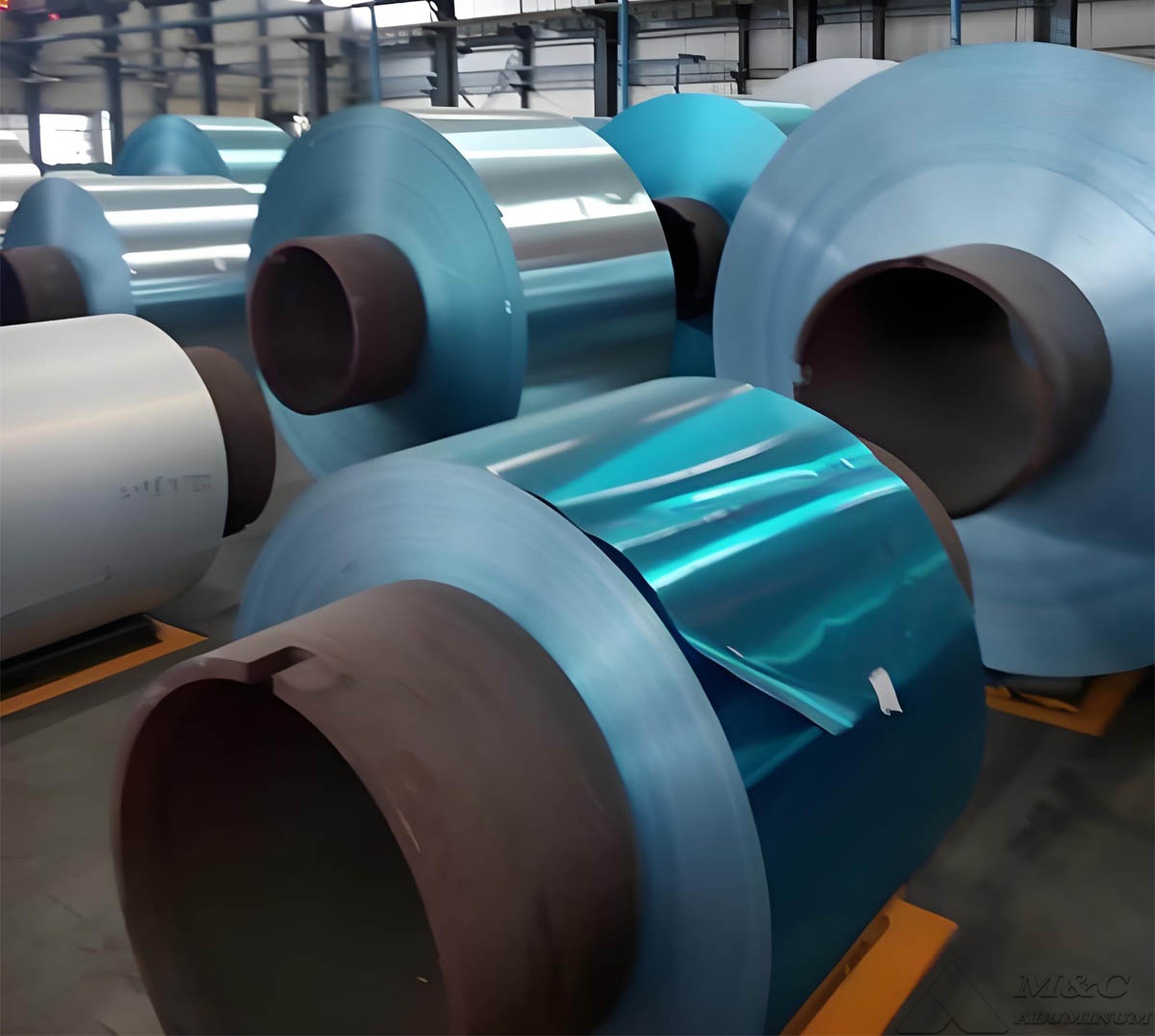
For coated fin stock, we normally control the following items: coating weight, color consistency, contact angle, adhesion after forming, resistance to water immersion, resistance to alkali or salt spray when required, and surface freedom from coating stripes, bubbles, peeling, or contamination. These controls help ensure that the foil performs consistently in air conditioner production and long-term service.
Surface Quality and Dimensional Control
Air conditioner fin foil is sensitive to surface and dimensional variation. Because the foil is thin, minor defects can become visible after fin punching or affect assembly. Our surface inspection focuses on rolling marks, scratches, dents, pinholes, oxidation marks, oil spots, color difference, coating defects, and foreign particles. For slitting, we control burr height, edge straightness, winding tension, and coil telescoping.
Thickness tolerance is another key factor. If the foil is too thin in certain areas, fins may deform or collapse. If it is too thick, material cost increases and forming load may rise. Uniform thickness also supports stable thermal performance and consistent fin density. We use rolling process control and inspection equipment to maintain thickness uniformity according to customer requirements.
Flatness is important for automatic feeding. Poor flatness can cause wrinkles, feeding deviation, or stamping defects. During production, flatness is controlled through rolling tension, roll shape, lubrication, annealing, and winding parameters. Finished coils are packed to prevent moisture, collision, and deformation during international transportation.
Production and Quality Control Process
Our production process for 3003 aluminum foil for air conditioner fin generally includes raw material inspection, rolling stock preparation, cold rolling, annealing, finishing rolling, surface treatment or coating, slitting, final inspection, and export packaging. Each stage is controlled according to the required final application.
Raw material quality is the foundation. We verify chemical composition and metallurgical consistency before further processing. During rolling, we control reduction ratio, rolling oil condition, surface cleanliness, and coil shape. Annealing is used to adjust temper and relieve internal stress. For hydrophilic coated foil, surface pretreatment and coating curing are carefully controlled to obtain stable adhesion and surface function.
Final inspection includes dimensional measurement, mechanical property testing, surface inspection, coating performance testing when applicable, and packaging verification. Mill test certificates can be provided with shipment. For customers with specific standards, inspection items can be adjusted according to purchase specification or technical agreement.
Packaging for Export Supply
As an export-oriented aluminum foil factory, we understand that coil protection is important for long-distance transportation. Finished coils are wrapped with moisture-proof materials, protected with edge guards, fixed on wooden pallets or packed in wooden cases, and labeled with alloy, temper, thickness, width, coil number, net weight, gross weight, and production batch information.
Proper packaging reduces the risk of oxidation, edge damage, coil collapse, and moisture exposure. For hydrophilic coated aluminum foil, packaging must also protect the coating surface from contamination and abrasion. We can design packaging according to container loading method, customer warehouse conditions, and handling equipment.
Application Scope
3003 aluminum foil for air conditioner fin is used in various heat exchanger products, including household air conditioners, commercial air conditioning units, heat pumps, refrigeration equipment, dehumidifiers, and ventilation systems. It can be used for evaporator fins, condenser fins, and other aluminum fin structures requiring stable forming and heat transfer performance.
Different application environments may require different surface solutions. Indoor evaporators often use hydrophilic coated foil to improve condensate drainage. Outdoor condensers may require corrosion resistant coating depending on climate, salt exposure, industrial atmosphere, or service life requirements. We support material selection based on forming method, operating environment, and final equipment design.
Ordering Information
To provide a suitable quotation and production plan, customers are recommended to specify alloy, temper, thickness, width, coil inner diameter, coil weight, surface type, coating requirement, mechanical property range, packaging method, and annual or monthly demand. If the material is used on an existing fin press, information such as fin pitch, collar height, die condition, and previous material performance can help us recommend a more suitable temper and tolerance range.
As a factory, our objective is to supply consistent 3003 aluminum foil for air conditioner fin production with stable quality and traceable manufacturing control. Whether the requirement is bare aluminum fin stock or hydrophilic aluminum foil, we focus on reliable process capability, practical technical communication, and compliance with international engineering expectations.