
As a dedicated aluminum foil manufacturer, we produce battery aluminum foil for prismatic batteries used as positive electrode current collector material in lithium-ion battery production. Prismatic cells are widely applied in electric vehicles, energy storage systems, industrial equipment, and consumer electronics because their rectangular structure supports efficient module integration and high space utilization.
For prismatic battery manufacturers, aluminum foil quality has a direct influence on cathode slurry coating stability, electrode density consistency, winding or stacking performance, and final cell reliability. Our production process is designed around these requirements, with controlled alloy chemistry, rolling precision, surface cleanliness, mechanical properties, and coil geometry.
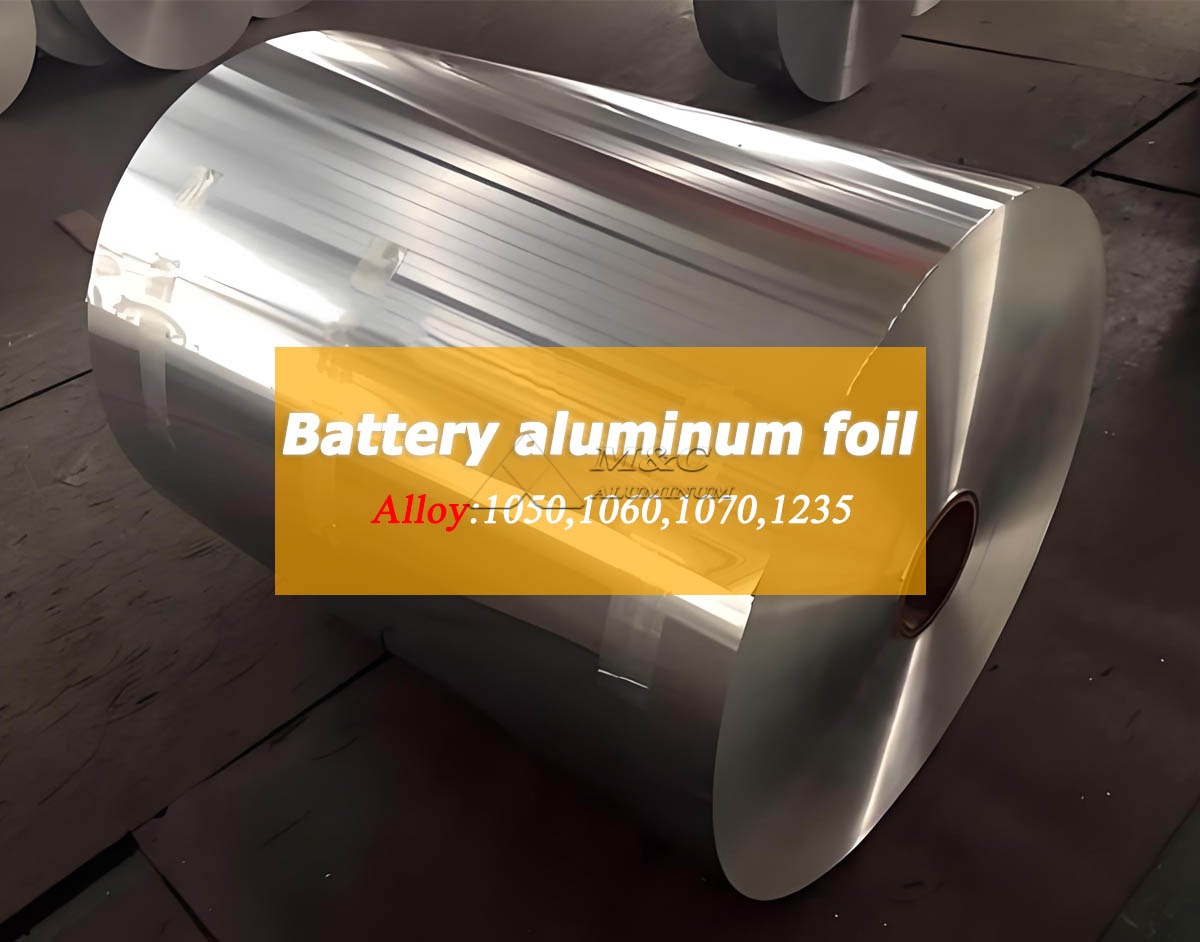
Role of Aluminum Foil in Prismatic Batteries
Battery aluminum foil is the current collector for the cathode of a lithium-ion battery. During electrode manufacturing, active materials, conductive agents, and binders are coated onto both sides of the foil. The foil carries electrical current between the cathode active layer and the battery terminal while providing a stable substrate for high-speed coating and calendering.
In prismatic battery production, the electrode sheet is generally stacked or wound before insertion into a rigid aluminum or steel cell housing. This manufacturing route places demanding requirements on foil flatness, edge quality, elongation, and thickness uniformity. Uneven foil can affect coating weight, lead to inconsistent electrode compaction, or create process instability during slitting and winding.
Our battery aluminum foil is manufactured for cathode current collector applications where low resistance, controlled surface characteristics, and stable mechanical performance are required. We supply foil in master coils or slit coils according to the customer's coating line, slitting equipment, and electrode width requirements.
Common Alloys for Battery Aluminum Foil
The most common aluminum alloys for lithium-ion battery cathode current collectors are 1235 and 1100 aluminum foil. These alloys offer high electrical conductivity, good ductility, and suitability for thin-gauge rolling.
We select the alloy and temper according to the target thickness, coating process, calendering pressure, and downstream cell design. For applications requiring high-purity aluminum and consistent thin-gauge performance, our 1235 Aluminum Foil is a suitable material option. For customers requiring a commercially pure alloy with stable processability, we also manufacture 1100 Aluminum Foil in battery-grade specifications.
| Alloy | Typical Aluminum Content | Main Characteristics | Typical Battery Application |
|---|---|---|---|
| 1235 | Minimum 99.35% | High conductivity, good ductility, suitable for thin foil rolling | Standard cathode current collector foil |
| 1100 | Minimum 99.00% | Good corrosion resistance, stable formability, good electrical performance | Cathode foil for selected cell designs |
| 1060 | Minimum 99.60% | Higher aluminum purity and conductivity | Specialized high-purity battery foil applications |
The final alloy selection should be confirmed based on the electrode formulation and processing conditions. Our technical team can review target specifications including foil gauge, width, hardness, surface treatment requirements, and coil dimensions before production.
Technical Parameters of Battery Aluminum Foil
The following table presents common production ranges for battery aluminum foil for prismatic batteries. Final values can be adjusted through technical agreement according to the customer's application requirements.
| Parameter | Typical Specification | Notes |
|---|---|---|
| Alloy | 1235, 1100, 1060 | Selected based on conductivity and processing requirements |
| Temper | H18, H19, or customized | Determined by coating, calendering, and handling conditions |
| Thickness | 12-20 microns | Common gauges include 12, 15, 16, 18, and 20 microns |
| Thickness tolerance | Customized by foil gauge and order specification | Tight thickness control supports stable coating weight |
| Width | 100-1,600 mm | Slit widths available according to electrode design |
| Width tolerance | Customized | Controlled for downstream slitting and coating alignment |
| Coil inner diameter | 150 mm, 300 mm, 505 mm, or customized | Selected for compatibility with customer equipment |
| Coil outer diameter | Customized | Determined by coil weight and handling requirements |
| Surface condition | Clean, uniform, oil-controlled | Suitable for cathode slurry coating |
| Surface roughness | Controlled according to agreement | Supports coating adhesion and coating uniformity |
| Edge condition | Smooth slit edge, low burr | Helps reduce coating and winding defects |
| Pinholes | Controlled according to thickness and standard | Inspected through production quality procedures |
| Tensile strength | Customized by alloy, temper, and thickness | Verified for processing stability |
| Elongation | Customized by material condition | Important for slitting, winding, and stacking operations |
Product Advantages of Aluminum Foil for Prismatic Batteries
1. Excellent electrical conductivity: Serving as the cathode current collector, it helps reduce internal resistance and improve current transmission efficiency.
2. Lightweight and low density: It helps reduce the overall weight of the battery, meeting the lightweighting requirements for power batteries.
3. Good mechanical properties: With appropriate tensile strength and elongation, it meets processing requirements such as coating, calendering, and slitting.
4. Superior surface quality: A flat surface and uniform thickness facilitate the even coating of cathode materials, enhancing consistency in battery production.
5. Good corrosion resistance: It maintains chemical stability within the electrolyte environments specified by battery designs.
6. High processing adaptability: Aluminum foil products can be customized in terms of alloy, thickness, and width to meet the specific design requirements of prismatic batteries.
Manufacturing Process for Prismatic Battery Aluminum Foil
We manufacture battery aluminum foil through a controlled sequence of melting, casting, hot rolling, cold rolling, intermediate annealing, final rolling, slitting, inspection, and packaging. Each stage contributes to the consistency required for battery electrode production.
Alloy Melting and Casting
We begin with controlled raw materials and alloy composition management. Chemical composition is monitored to maintain stable properties in the final foil. Clean melt practices and filtration support the production of aluminum strip with a consistent internal structure.
Rolling and Gauge Control
The cast slab is processed through rolling stages to reach the required foil thickness. Our rolling operations focus on thickness consistency across the full coil width and along the coil length. Stable gauge control is essential because small variations can influence cathode coating loading and electrode density.
Annealing and Mechanical Property Control
Annealing parameters are managed to achieve the specified temper and mechanical behavior. The balance between tensile strength and elongation is important for foil handling. Material that is too hard may be less tolerant during winding or bending, while material that is too soft may affect tension control in high-speed coating lines.
Slitting and Edge Finishing
After final rolling, the foil can be slit into customer-specific widths. We control slitting conditions to minimize edge burrs, telescoping, and uneven coil winding. Clean edges and stable coil geometry help maintain smooth operation during downstream electrode processing.
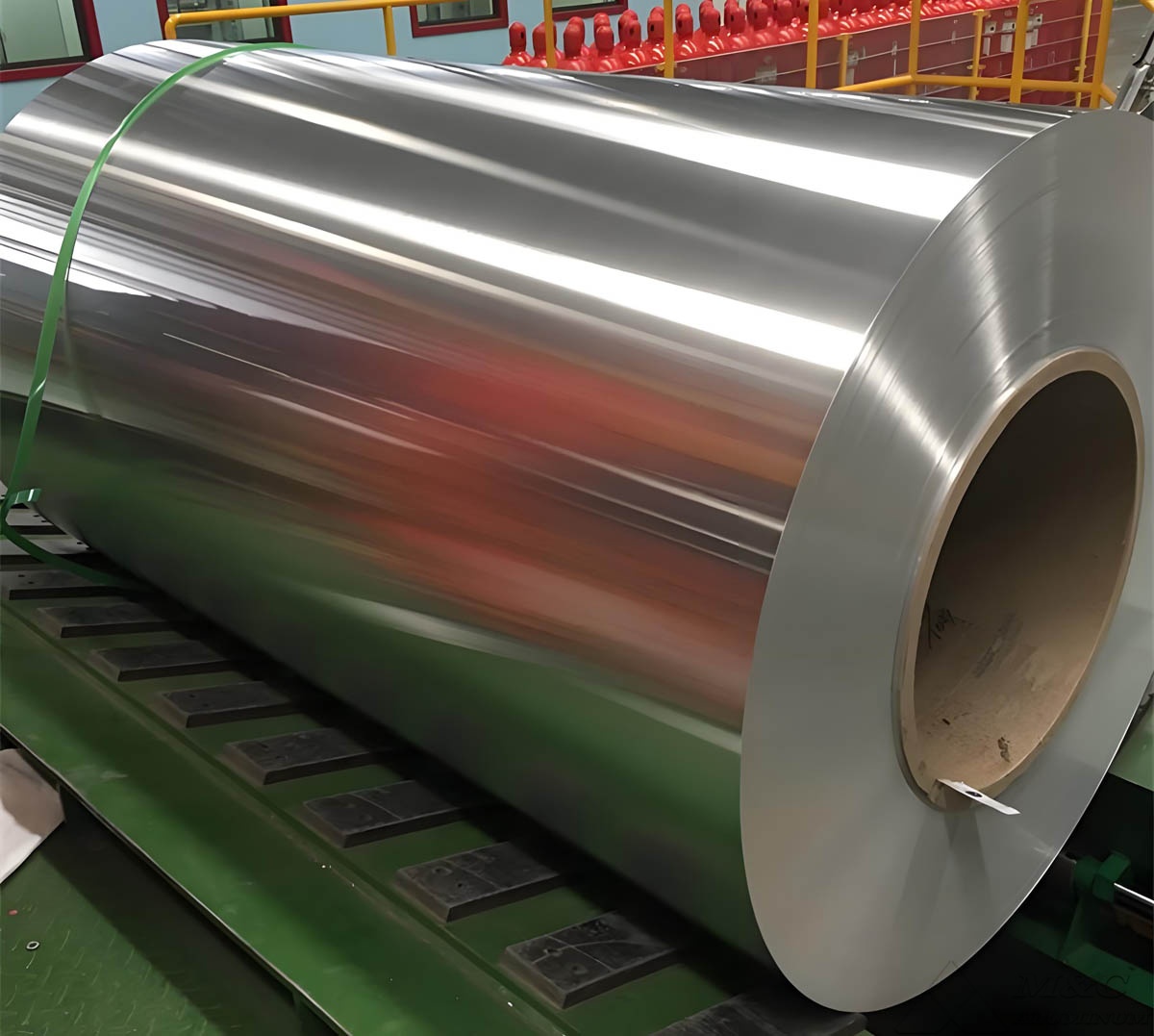
Surface Quality Requirements for Cathode Coating
The surface of battery aluminum foil must be compatible with cathode slurry coating. Contamination, excessive rolling oil, scratches, wrinkles, oxidation marks, or embedded particles may negatively affect coating adhesion and electrode consistency.
Our inspection process focuses on surface cleanliness and visual uniformity. Depending on the agreed specification, we evaluate surface appearance, oil control, rolling marks, edge condition, and defects that may affect coating performance. We also maintain careful coil handling practices to prevent damage during internal transport, slitting, packing, and shipment.
For battery customers, surface quality is not evaluated only by appearance. The important objective is repeatable behavior during coating, drying, calendering, slitting, and cell assembly. Therefore, we coordinate technical parameters with the customer's electrode production process rather than relying on a single general-purpose foil specification.
Quality Control and Inspection
Our quality control system for battery aluminum foil includes inspection during production and final release inspection before shipment. Test methods and acceptance criteria are agreed based on material specification, thickness, and application requirements.
Key inspection items include:
Alloy composition verification.
Thickness measurement across the coil width.
Width and edge quality inspection.
Coil shape, winding quality, and telescoping control.
Surface appearance and cleanliness evaluation.
Tensile strength and elongation testing.
Pinholes and defect inspection where applicable.
Coil weight, inner diameter, outer diameter, and packaging verification.
For customers with established battery qualification procedures, we can provide material certificates, inspection records, coil identification, and traceability information. This documentation supports incoming quality control and helps battery manufacturers maintain consistent material management across production batches.
Selecting Foil for Prismatic Cell Production
When selecting battery aluminum foil for prismatic batteries, purchasers should consider more than the nominal thickness. The correct foil specification depends on the cathode chemistry, slurry formulation, coating speed, drying conditions, calendering target, electrode design, and cell assembly route.
Key purchasing considerations include:
Foil thickness: Thinner foil can reduce inactive material weight, while thicker foil may provide greater handling stability. The suitable gauge depends on cell design and manufacturing capability.
Mechanical properties: Tensile strength and elongation should match the tension conditions of the coating and slitting lines.
Surface condition: Surface cleanliness and controlled roughness support uniform cathode coating and stable adhesion.
Width and coil geometry: Coil dimensions should fit unwinding equipment and reduce material loss during slitting.
Batch consistency: Stable properties between coils are important for continuous battery electrode production.
Packaging protection: Battery-grade foil should be protected from moisture, dust, impact, and deformation during transportation and storage.
Packaging and Delivery from Our Factory
We package battery aluminum foil in accordance with coil size, transportation method, and customer handling requirements. Coils are protected with suitable wrapping materials, edge protection, moisture barriers when required, and reinforced outer packaging. Each coil can be identified with key production information such as alloy, temper, thickness, width, net weight, coil number, and production batch.
For export orders, we prepare packaging to support sea, rail, air, or multimodal transportation. Our objective is to deliver aluminum current collector foil with the same coil shape, surface condition, and traceability status confirmed at final inspection.
Conclusion
Battery aluminum foil for prismatic batteries is a critical cathode current collector material that affects coating quality, electrode consistency, and production efficiency. As a foil manufacturer, we supply 1235, 1100, and related aluminum foil grades with controlled thickness, surface quality, mechanical properties, slit width, and coil configuration. By aligning foil specifications with the electrode manufacturing process, we help prismatic battery producers establish reliable and repeatable cathode production.