
As a manufacturer of battery grade aluminum foil, we produce 1070 battery aluminum foil for lithium-ion battery cathode current collectors. This high-purity aluminum foil is designed for electrode coating, calendaring, slitting, and cell assembly processes where electrical conductivity, thickness consistency, surface cleanliness, and coil stability are essential.
1070 aluminum foil contains a minimum aluminum content of 99.7 percent. Its high electrical conductivity and good processability make it a suitable current collector material for lithium-ion batteries, including power batteries, energy storage batteries, consumer electronics cells, and other rechargeable battery systems. We control the production process from aluminum melting and rolling through annealing, inspection, slitting, and export packaging to provide stable material for battery manufacturers and electrode processing plants.
What Is 1070 Battery Aluminum Foil?
1070 battery aluminum foil is a high-purity aluminum foil manufactured specifically for battery electrode applications. In a typical lithium-ion cell, aluminum foil serves as the cathode current collector. It supports the active coating layer, conducts electrons during charging and discharging, and contributes to the dimensional stability of the electrode sheet.
Compared with general-purpose industrial foil, battery aluminum foil requires tighter controls over thickness variation, pinholes, oil residue, surface defects, mechanical properties, and coil edge quality. These characteristics directly affect slurry coating uniformity, adhesion of active materials, electrode winding performance, and finished cell consistency.
Our 1070 aluminum foil is supplied in bare foil form or prepared for downstream carbon coating, depending on the electrode design and battery performance requirements. For customers requiring other high-purity foil options, our 1060 Aluminium Foil can also be evaluated according to the required conductivity, strength, and processing route.
Why 1070 Aluminum Foil Is Used for Battery Cathodes
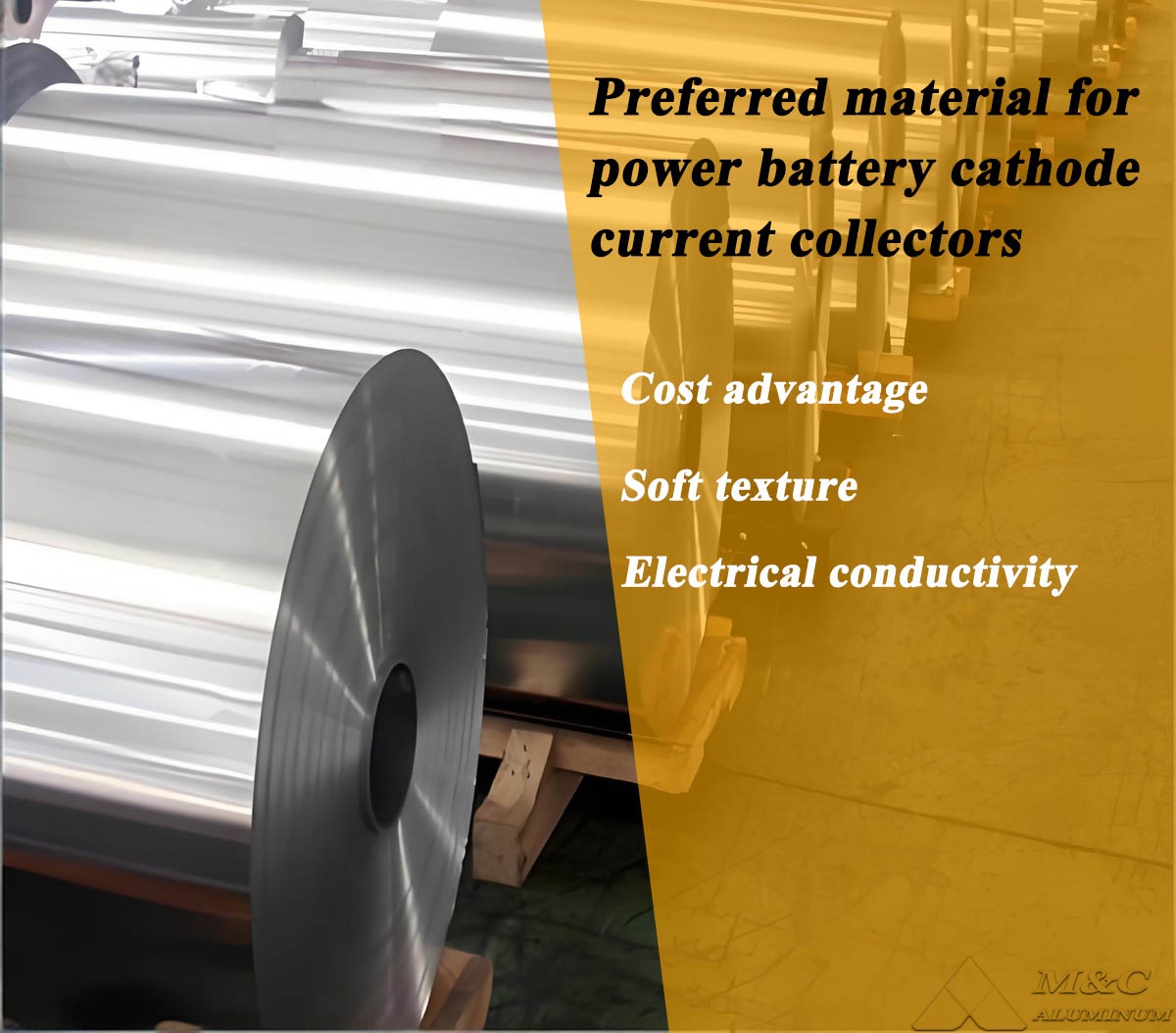
The cathode current collector must provide a stable conductive path without reacting adversely under the normal operating voltage of the cathode system. High-purity 1070 aluminum foil offers a balanced combination of conductivity, ductility, and formability for this purpose.
High Electrical Conductivity
The high aluminum content of 1070 alloy supports efficient electron transport across the cathode electrode. Stable conductivity is important for reducing internal resistance and maintaining uniform current distribution across coated electrode surfaces.
Good Coating Compatibility
Battery cathode materials are generally applied as slurry coatings containing active material, conductive additives, and binders. A clean, uniform foil surface helps support consistent slurry wetting and coating adhesion. We control rolling oil residue and surface condition to meet the requirements of electrode coating lines.
Controlled Mechanical Properties
Battery foil must be sufficiently flexible for winding or stacking while retaining adequate tensile strength for coating, drying, calendaring, and slitting. Through controlled annealing, we adjust the foil temper to suit specific downstream processing conditions.
Low Weight and High Formability
Aluminum foil provides a lightweight current collector solution for lithium-ion cells. Its low density supports battery weight reduction, while its formability enables use in cylindrical, prismatic, pouch, and large-format energy storage cell designs.
Typical Technical Parameters
The final specification of 1070 battery aluminum foil should be selected according to battery type, coating equipment, electrode design, and customer standards. The following table shows commonly available manufacturing ranges.
| Item | Typical Specification | Notes |
|---|---|---|
| Alloy | 1070 | Aluminum content minimum 99.7 percent |
| Product type | Bare battery aluminum foil | Carbon coating available upon request |
| Thickness | 12-20 microns | Other thicknesses subject to technical review |
| Thickness tolerance | Typically controlled to customer requirement | Based on foil thickness and width |
| Width | 100-1,650 mm | Slit coil widths available |
| Coil inner diameter | 150 mm, 300 mm, 505 mm | Custom cores can be discussed |
| Coil outer diameter | According to coil weight and equipment limits | Controlled for safe handling |
| Temper | O, H18, or customized | Selected for coating and calendering processes |
| Tensile strength | According to temper and thickness | Controlled batch by batch |
| Elongation | According to temper and thickness | Important for winding performance |
| Surface condition | Clean, smooth, oil-controlled | No serious scratches, dents, or edge cracks |
| Pinhole control | Inspected according to thickness and application | Critical for thin battery foil |
| Packaging | Export seaworthy packaging | Moisture protection and edge protection included |
Manufacturing Process for Battery Grade Aluminum Foil
Producing reliable 1070 battery aluminum foil requires more than reducing aluminum to a thin gauge. Each production stage affects the final performance of the current collector.
Melting and Casting
We begin with controlled high-purity aluminum raw materials. Chemical composition is checked to ensure compliance with the 1070 alloy requirement. The molten metal is cast into rolling stock with stable internal quality, minimizing risks associated with inclusions and compositional variation.
Hot Rolling and Cold Rolling
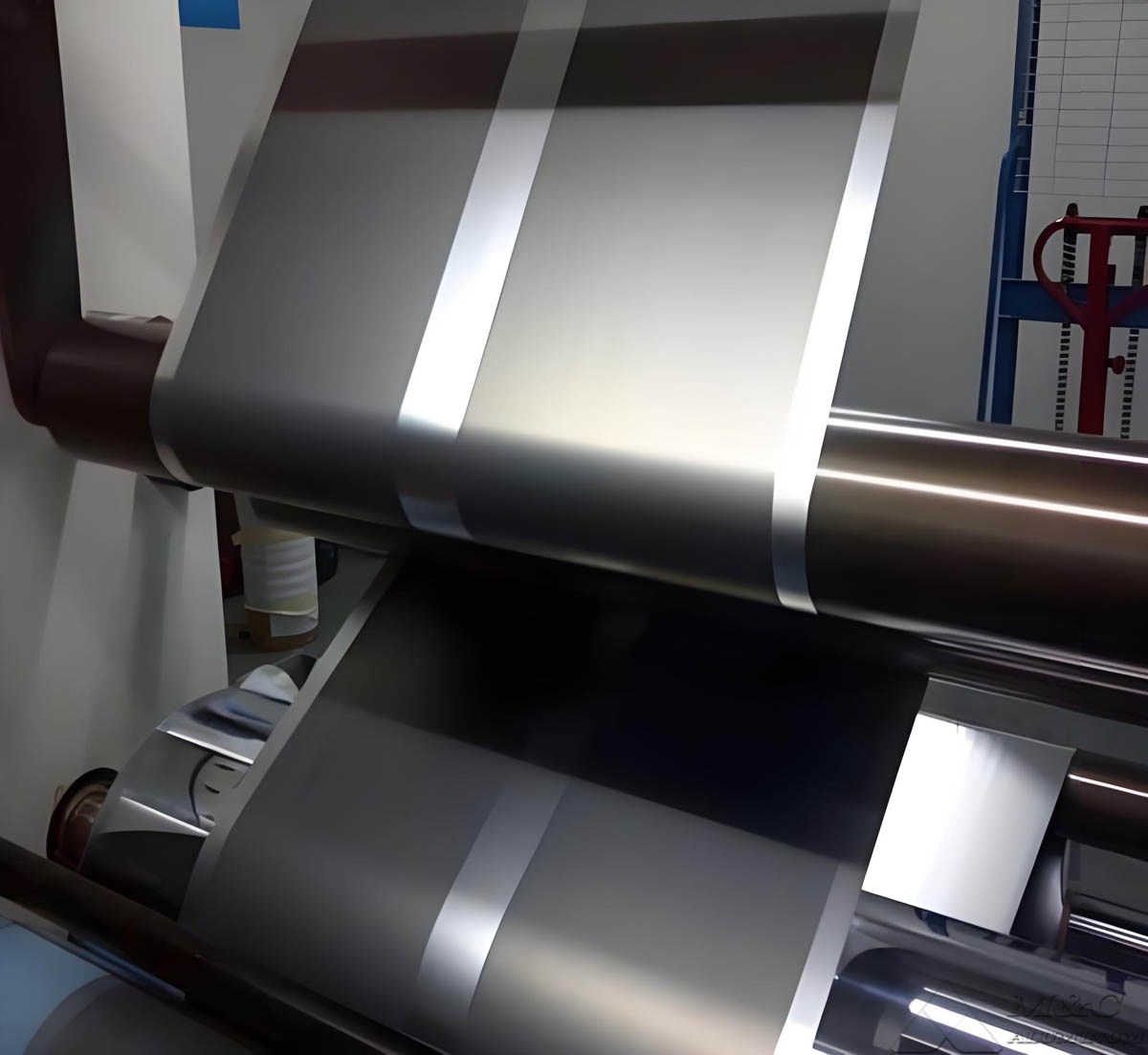
The cast material is processed through rolling stages to reduce thickness while maintaining flatness and surface integrity. Our rolling control focuses on gauge stability, profile consistency, and surface quality. These factors are particularly important when foil is later coated at high speed on automated electrode lines.
Foil Rolling and Annealing
Foil rolling brings the material to the required thin-gauge range. Annealing is then used to obtain the specified temper, mechanical properties, and cleanliness level. Proper annealing also supports stable elongation and reduces the risk of breakage during coating or winding.
Slitting and Final Inspection
After rolling and annealing, coils are slit to the required width. We inspect coil edges, burr level, thickness distribution, surface appearance, and winding quality. Finished coils are packed to prevent moisture exposure, deformation, dust contamination, and transport damage.
Surface Quality Requirements for Lithium-Ion Battery Foil
For lithium-ion battery foil, surface quality is a functional requirement rather than only an appearance standard. Surface defects can affect coating uniformity and may create processing instability in high-speed production.
Our quality control process addresses the following items:
Surface cleanliness and controlled rolling oil residue.
Uniform foil thickness across coil length and width.
Smooth surface without severe scratches, pits, stains, or roller marks.
Controlled pinholes appropriate for the specified foil thickness.
Clean, straight coil edges with minimized burrs.
Stable coil winding tension and telescoping control.
Traceable inspection records for supplied production batches.
For applications requiring improved interface performance between the current collector and active coating, carbon-coated foil may be selected. Carbon coating can improve conductivity at the electrode interface, support coating adhesion, and reduce contact resistance in selected cathode structures.
1070 Battery Aluminum Foil Applications
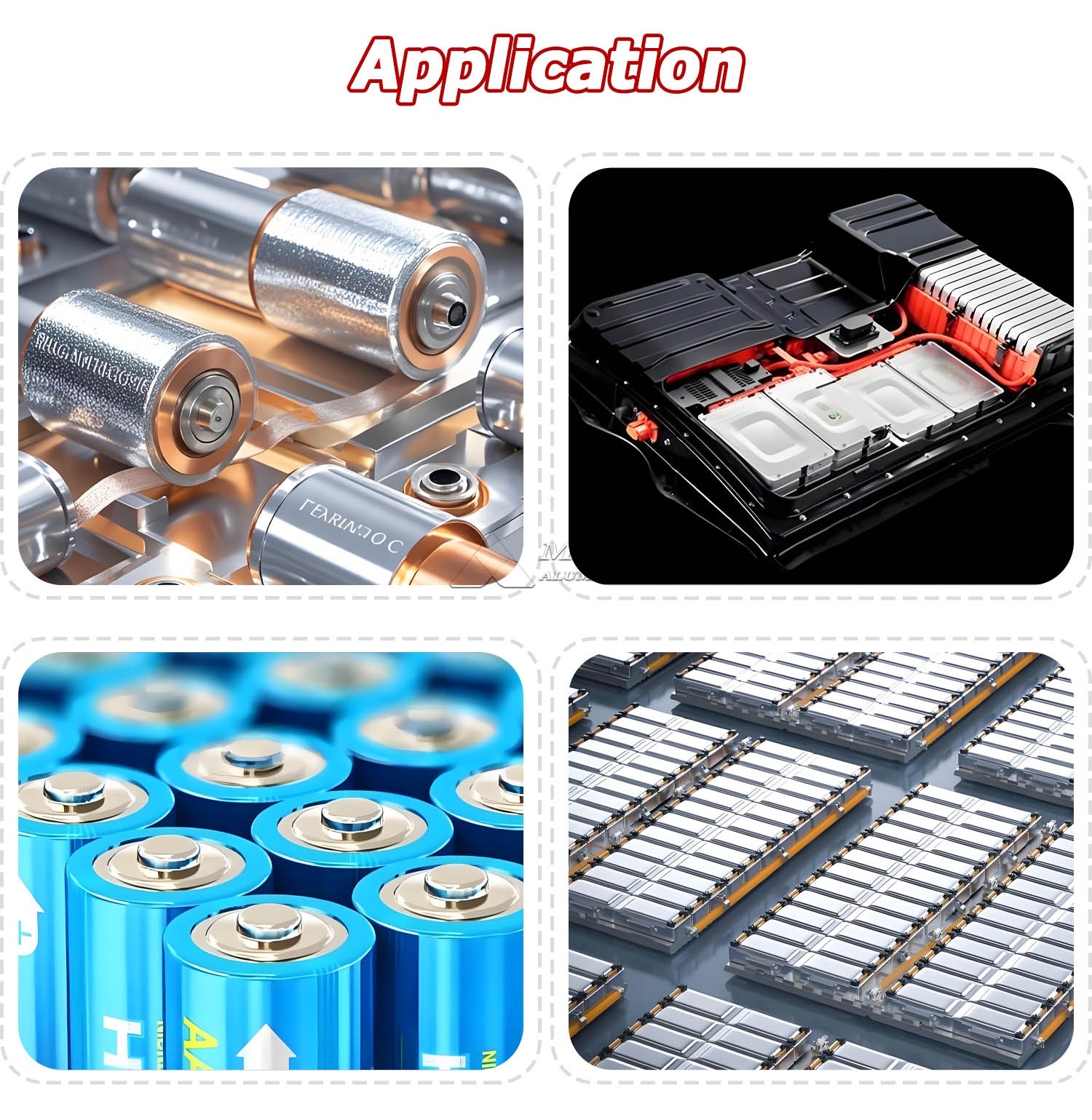
Our 1070 battery aluminum foil is primarily used as a cathode current collector in rechargeable battery manufacturing. It can be processed with cathode materials such as lithium iron phosphate, lithium nickel manganese cobalt oxide, lithium nickel cobalt aluminum oxide, lithium manganese oxide, and other battery active materials.
Typical applications include:
Electric vehicle and hybrid vehicle power batteries.
Stationary energy storage battery systems.
Consumer electronics lithium-ion batteries.
E-bike, electric tool, and light mobility batteries.
Battery modules for telecommunications backup power.
Industrial lithium battery systems.
While 1070 is often selected for high-conductivity cathode collector applications, alloy selection should always be based on the full electrode process. Thickness, temper, coating method, calendering pressure, cell format, and final battery performance targets must be considered together.
How We Support Custom Battery Foil Orders
As a direct aluminum foil manufacturer, we work with battery material companies and cell manufacturers on specification confirmation before production. This reduces the risk of mismatch between foil properties and downstream electrode equipment.
When preparing a quotation or technical proposal, we normally confirm the alloy, foil thickness, width, temper, coil weight, inner diameter, surface condition, allowable thickness tolerance, packaging method, and destination port. For special projects, we can also discuss carbon coating requirements, edge condition, surface treatment, and customer inspection standards.
Our broader Products range includes aluminum foil grades for battery, packaging, industrial, household, and specialty processing applications. However, battery foil production is managed with dedicated attention to cleanliness, gauge control, and coil consistency.
Packaging and Export Delivery
Battery aluminum foil is sensitive to moisture, dust, edge damage, and coil deformation. We use export-grade packaging designed to protect the foil during warehouse storage, container loading, and international sea or land transportation.
Each coil is protected with suitable wrapping materials, moisture barriers, edge guards, and reinforced pallet or wooden support where required. Coil identification labels can include alloy, thickness, width, temper, coil number, net weight, gross weight, and production batch information for customer traceability.
Conclusion
1070 battery aluminum foil is a high-purity aluminum current collector material developed for lithium-ion battery cathode production. Its conductivity, formability, clean surface, and controlled mechanical properties support stable coating and cell assembly processes.
Our factory produces 1070 aluminum foil with controlled alloy composition, thickness, surface quality, slitting accuracy, and export packaging. By confirming technical requirements before production, we help battery manufacturers obtain foil coils suited to their electrode processing conditions and quality standards.