
As a manufacturer of aluminum foil for electrical and electronic applications, we produce capacitor aluminum foil for use in electrolytic capacitors, power electronics, consumer devices, industrial controls, automotive systems, and energy equipment. This material is engineered to provide consistent purity, controlled grain structure, reliable surface quality, and stable performance during etching, forming, and winding.
Capacitors operate under demanding electrical, thermal, and mechanical conditions. The aluminum foil used inside them must therefore meet tighter requirements than general-purpose aluminum foil. Small variations in thickness, alloy composition, surface cleanliness, or coil shape may influence capacitance, etching uniformity, dielectric formation, and production efficiency. Our manufacturing process is designed to provide stable electronic aluminum foil that supports capacitor manufacturers in producing reliable components at scale.
What Is Capacitor Aluminum Foil?
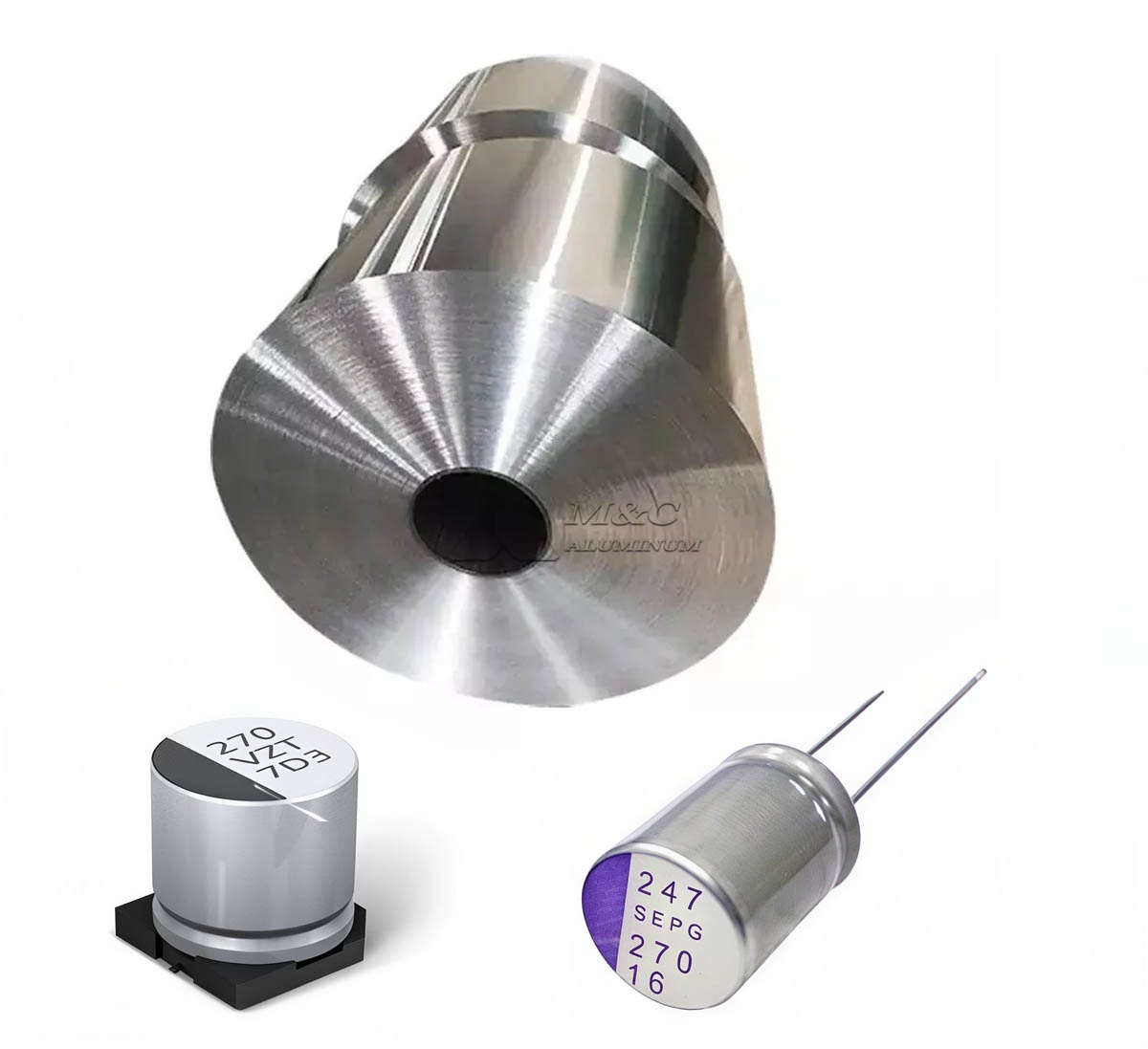
Capacitor aluminum foil is a high-purity aluminum foil used as the electrode material in aluminum electrolytic capacitors. Depending on the capacitor design, the foil may be processed as an anode foil or cathode foil. Before assembly, the foil is commonly etched to enlarge its effective surface area and then treated through chemical or electrochemical processes suitable for the intended capacitor type.
The performance of electrolytic capacitor foil depends on its ability to respond consistently to downstream processing. For anode applications, foil must support uniform tunnel etching and dielectric oxide formation. For cathode applications, surface characteristics and electrical conductivity are important for stable electrolyte contact and low equivalent series resistance. In both cases, the base material must exhibit controlled composition, low impurity content, and dependable mechanical properties.
We manufacture aluminum foil for capacitors in grades selected according to customer process routes, target voltage, etching method, and final application environment. High-purity 1070, 1100, and related aluminum foil solutions are commonly considered for electronic applications where conductivity and etching response are essential. Our 1100 Aluminum Foil capability supports customers requiring a commercially pure aluminum base material with controlled quality for further processing.
Why Material Consistency Matters in Electrolytic Capacitors
An electrolytic capacitor contains a tightly wound electrode system. The electrode foil directly influences capacitance volume efficiency, leakage current characteristics, dielectric stability, and service life. For this reason, capacitor manufacturers require more than a nominal alloy and thickness range. They need repeatable quality from coil to coil.
The key material factors include:
Chemical purity: High aluminum content and controlled trace elements help create predictable etching behavior and electrical characteristics.
Thickness uniformity: Accurate gauge control supports stable etching depth, coating consistency, and winding performance.
Surface cleanliness: Low residual rolling oil and reduced surface contamination are important for etching and conversion processes.
Surface appearance: A uniform, defect-controlled surface helps reduce process interruptions and local performance variation.
Mechanical properties: Appropriate temper and elongation enable smooth slitting, winding, and assembly without excessive breakage or wrinkling.
Coil geometry: Controlled edge condition, tightness, and flatness improve processing efficiency on high-speed capacitor production lines.
Our capacitor aluminum foil production is based on systematic control of raw material selection, melting, rolling, annealing, inspection, and final packaging. Each stage is managed to reduce variation that may affect the customer's etching or capacitor assembly process.
Technical Parameters of Capacitor Aluminum Foil
The following table presents typical technical ranges for capacitor aluminum foil. Final specifications can be adjusted according to the alloy, foil thickness, capacitor design, and downstream treatment method.
| Parameter | Typical Range or Requirement | Notes |
|---|---|---|
| Alloy | 1070, 1100, 1235, customized grades | Selected according to etching and electrical requirements |
| Aluminum purity | 99.0% to 99.99% | Higher purity options are available for specialized applications |
| Thickness | 0.015 mm to 0.150 mm | Common capacitor foil gauges are available on request |
| Width | 20 mm to 1,650 mm | Slit widths supplied according to winding equipment |
| Temper | O, H14, H18, customized | Determined by forming, etching, and handling requirements |
| Tensile strength | Customized by temper and thickness | Controlled for stable slitting and winding performance |
| Elongation | Customized by temper and thickness | Important for processability and coil handling |
| Surface condition | Clean, uniform, low oil residue | Suitable for subsequent etching and chemical treatment |
| Coil inner diameter | 150 mm, 300 mm, 505 mm, customized | Compatible with customer equipment requirements |
| Coil weight | Customized | Based on handling capacity and process efficiency |
| Edge quality | Slit edge or mill edge | Burr control available for narrow-width products |
| Packaging | Moisture-resistant export packaging | Designed to protect surface condition during shipment |
Technical values should be confirmed during inquiry and specification review. As a factory, we work with customers to align foil properties with their etching process, winding equipment, and final capacitor performance targets.
Manufacturing Process and Quality Control
Our manufacturing route for capacitor aluminum foil begins with controlled aluminum ingot and slab preparation. Chemical composition is verified to ensure the alloy meets the intended application requirement. After hot rolling and cold rolling, the material passes through intermediate annealing and final rolling stages to reach the specified thickness and temper.
During production, we focus on parameters that influence the quality of electronic aluminum foil:
Composition control: We monitor alloying elements and impurities that can affect conductivity, grain development, corrosion behavior, and etching response.
Rolling precision: Thickness control is maintained through process monitoring and inspection. Stable gauge is necessary for downstream chemical and electrochemical treatment.
Annealing management: The annealing process is controlled to develop the required microstructure and mechanical properties. This contributes to stable handling and processing performance.
Surface inspection: We inspect for rolling marks, scratches, pinholes, oil spots, edge defects, and other conditions that may interfere with capacitor manufacturing.
Coil quality verification: Coil shape, camber, telescoping, edge burr, and winding condition are checked before packing.
For customers with defined acceptance criteria, we can provide material documentation covering chemical composition, dimensions, temper, mechanical properties, and other agreed inspection items. This approach helps ensure that the supplied capacitor cathode foil or base foil is compatible with the customer's production controls.
Applications in the Electronics Industry
Capacitor aluminum foil is used across a wide range of electronics and electrical equipment. Aluminum electrolytic capacitors remain important because they provide high capacitance values in compact designs and can be adapted for different voltage and temperature requirements.
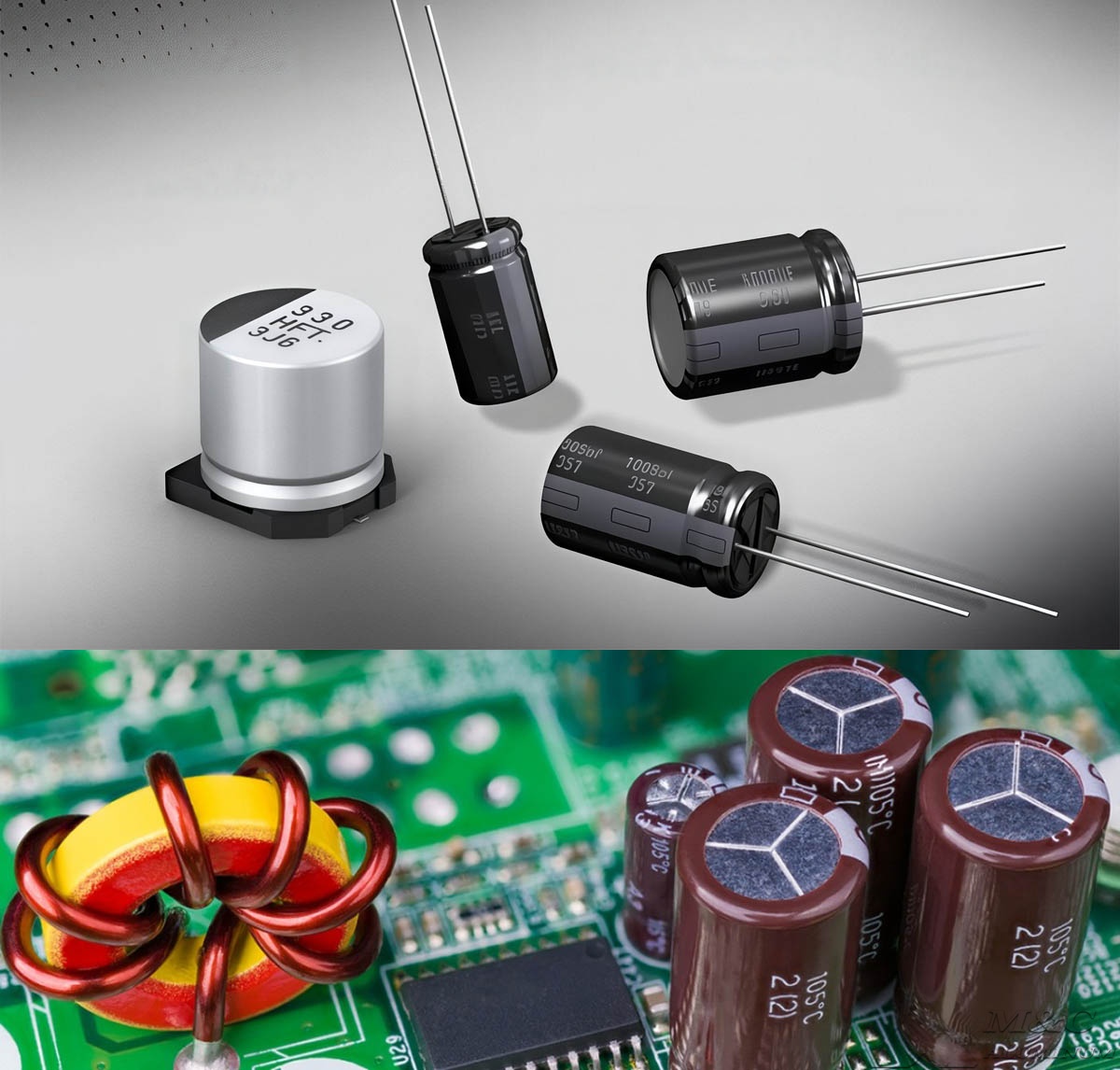
Typical applications include:
Switching power supplies and adapters
Telecommunications equipment
Industrial automation systems
Frequency converters and inverters
LED drivers and lighting power systems
Consumer electronics and home appliances
Automotive electronics and charging systems
Renewable energy inverters and energy storage equipment
Medical electronic devices
Railway and transportation electrical systems
In these applications, the capacitor must operate reliably under voltage fluctuation, temperature cycling, vibration, and long operating periods. The quality of the underlying aluminum foil is therefore an important part of the complete component design.
Selecting the Right Aluminum Foil for Capacitors
When sourcing capacitor aluminum foil, buyers should define requirements beyond alloy and thickness. The correct material selection depends on how the foil will be treated and used after delivery.
For example, low-voltage and high-voltage capacitor products may require different base foil characteristics because their etching structures and dielectric film requirements differ. Etching chemistry, line speed, electrolyte composition, target capacitance, and winding tension can also affect material selection.
We recommend confirming the following details before production:
Required alloy or aluminum purity level
Foil thickness tolerance and width tolerance
Required temper and mechanical property range
Surface treatment or cleanliness expectations
Coil inner diameter and maximum coil weight
Edge burr limits and slit quality requirements
Intended etching process and capacitor type
Packaging, labeling, and export documentation requirements
For applications requiring a broader pure aluminum foil selection, our 1235 Aluminum Foil range can also be evaluated according to the customer's processing and technical requirements.
Packaging and Export Supply
Capacitor foil requires careful protection because surface condition can be affected by moisture, dust, impact, and improper storage. We use export-oriented packaging designed to maintain coil integrity during transportation and warehouse handling. Standard packaging may include protective wrapping, moisture barriers, reinforced outer protection, palletized support, and clear product identification.
Each coil can be labeled with essential information such as alloy, thickness, width, temper, net weight, coil number, and production batch. This supports traceability for customers managing incoming quality control and production scheduling.
We supply capacitor aluminum foil to international B2B customers with specifications adapted to their equipment and process requirements. Our production team reviews technical details before order confirmation to reduce avoidable inconsistencies between the supplied foil and the intended application.
Conclusion
Capacitor aluminum foil is a specialized material that must combine high purity, stable thickness, clean surface condition, controlled temper, and reliable coil quality. These characteristics support effective etching, dependable winding, and consistent performance in aluminum electrolytic capacitors.
As a dedicated aluminum foil manufacturer, we provide electronic aluminum foil solutions based on defined technical requirements rather than generic supply standards. By controlling the manufacturing process from raw material to finished coil, we help capacitor manufacturers obtain stable base foil for demanding electronics industry applications.