
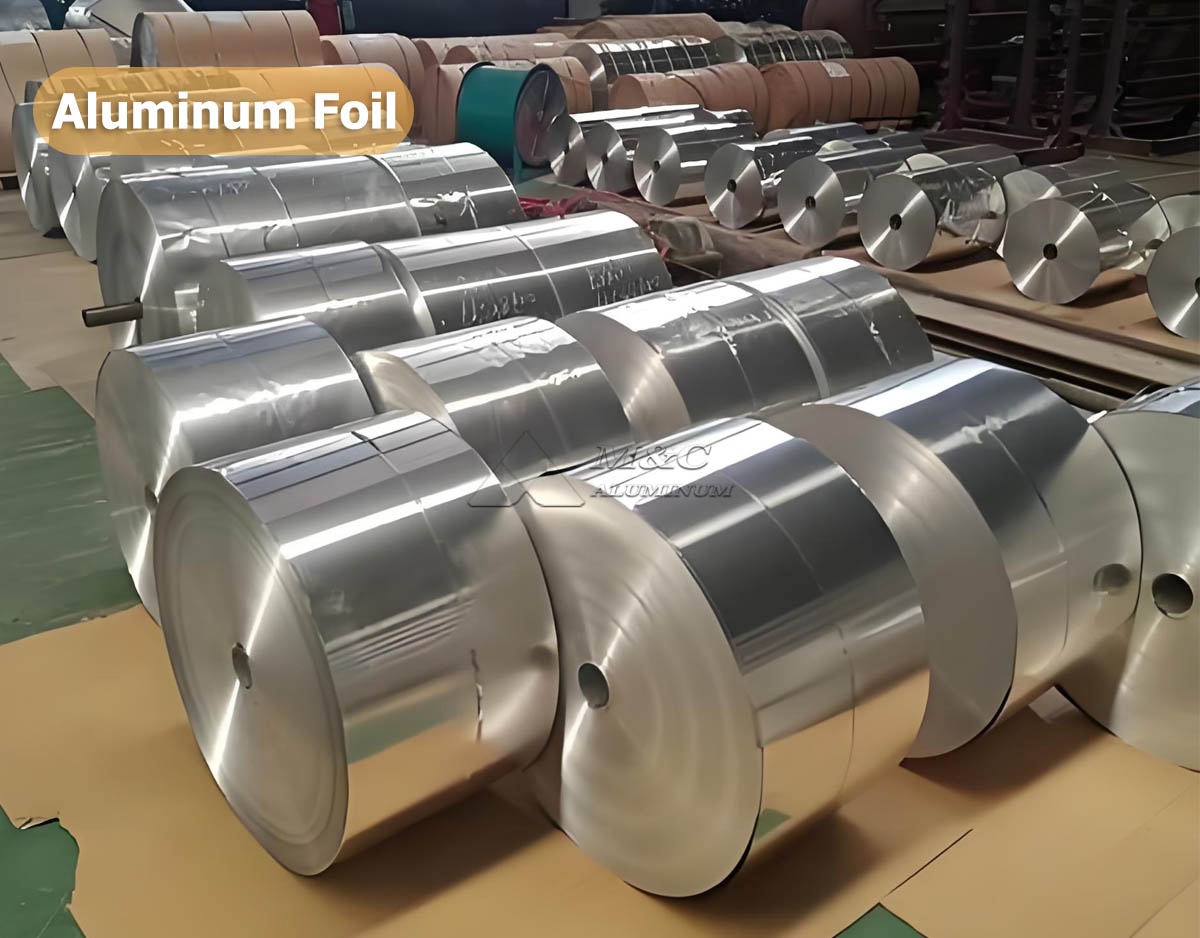
As a manufacturer of aluminum foil for HVAC and refrigeration applications, we produce 3003 aluminum foil for heat exchangers where a balance of formability, corrosion resistance, thermal conductivity, and stable coating performance is required. This alloy is widely used as aluminum fin stock for air conditioners, condensers, evaporators, radiators, heat pumps, and commercial refrigeration equipment.
3003 aluminum foil is an Al-Mn alloy containing manganese as its primary alloying element. Compared with pure aluminum foil grades, it offers higher strength while retaining the ductility necessary for fin pressing, collar drawing, louver forming, and high-speed assembly. Through controlled melting, rolling, annealing, slitting, and surface treatment, we supply heat exchanger aluminum foil in bare, hydrophilic, hydrophobic, and corrosion-resistant coated conditions.
Why 3003 Aluminum Foil Is Used in Heat Exchangers
Heat exchanger fins must transfer heat efficiently while maintaining their shape during forming and service. The foil must also perform under humid conditions, repeated temperature changes, airborne contaminants, and condensate exposure. 3003 alloy foil is selected because it provides practical mechanical and processing properties for these operating conditions.
The manganese content in 3003 aluminum foil improves strength compared with 1050 or 1100 aluminum foil. This increased strength supports the production of thin fin structures with narrow fin spacing and complex louver geometries. At the same time, the alloy remains suitable for stamping and drawing processes when supplied in the appropriate temper.
For manufacturers of air conditioning coils and refrigeration equipment, 3003 aluminum foil provides several functional advantages:
Good formability for fin stamping, louvering, and collar formation.
Higher mechanical strength than commercially pure aluminum foil.
Reliable corrosion resistance in general atmospheric and condensate environments.
Consistent thickness and width control for automatic fin press lines.
Compatibility with hydrophilic and anti-corrosion conversion coatings.
Stable surface quality for coil processing and fin assembly.
Our 3003 Aluminum Foil is manufactured with controlled metallurgical composition and rolling parameters to meet the requirements of heat exchanger fin production.
Commonly Used Tempers
For 3003 aluminum foil used in heat exchangers, the most common tempers are O and H14.
Depending on specific performance requirements, other tempers such as H16, H18, H22, H24, and H26 may also be selected.
The performance characteristics of each temper are as follows:
O temper (annealed/soft): Offers the highest ductility, with elongation reaching 30%–40%; ideal for complex deep drawing and stretch forming.
H14 temper (1/2 hard): Provides a good balance between strength and formability; a common choice for heat exchanger applications.
H16 temper (3/4 hard): Features increased hardness and strength; suitable for applications requiring higher strength.
H18 temper (full hard): Offers the highest strength (tensile strength of approx. 200 MPa) but the lowest ductility; suitable for structural components requiring little to no subsequent forming.
H22/H24/H26 tempers: These apply to materials that have undergone partial annealing; a higher number indicates greater strength, often chosen to meet specific trade-offs between strength and formability.
Typical Applications of 3003 Heat Exchanger Aluminum Foil
3003 aluminum foil is primarily used as fin material rather than tube material. The thin aluminum fins enlarge the heat transfer area of a coil, allowing refrigerant systems to exchange heat efficiently with surrounding air. Depending on equipment design and operating conditions, we can supply foil with suitable temper, gauge, coating, and slit width.
Common applications include:
Residential and commercial air conditioner condenser fins.
Evaporator fins for split air conditioning systems.
Refrigerator and freezer evaporator components.
Automotive heat exchanger fin assemblies.
Heat pump outdoor unit fins.
Dehumidifier and fan coil unit heat exchangers.
Industrial refrigeration coil fins.
Ventilation and air handling unit heat transfer components.
In humid climates, hydrophilic aluminum foil is often preferred for evaporator applications. The hydrophilic coating helps condensate spread into a thin water film instead of forming droplets. This supports more effective drainage, reduces water bridging between fins, and can help maintain airflow through the heat exchanger.
Technical Parameters of 3003 Aluminum Foil
The exact specification of 3003 aluminum foil for heat exchangers depends on the fin geometry, stamping method, coil design, and coating system. We confirm key parameters with customers before production, including thickness tolerance, coil inner diameter, outer diameter, width, temper, and surface treatment.
| Parameter | Typical Range or Requirement | Notes |
|---|---|---|
| Alloy | AA 3003 | Al-Mn alloy for improved strength and formability |
| Temper | H14, H16, H18, O | Selected according to forming depth and fin design |
| Thickness | 0.070-0.200 mm | Common heat exchanger fin gauges vary by application |
| Width | 100-1,300 mm | Slit to customer coil and press-line requirements |
| Coil inner diameter | 150 mm, 300 mm, 505 mm | Other IDs available by agreement |
| Coil outer diameter | Up to 1,800 mm | Subject to thickness, width, and shipping limits |
| Tensile strength | Approx. 110-180 MPa | Varies by temper and final processing condition |
| Elongation | Approx. 2-18% | Depends on thickness and temper |
| Surface condition | Bare, degreased, hydrophilic coated | Coating selected for operating environment |
| Coating type | Hydrophilic, anti-corrosion, epoxy based | Customized according to coil application |
| Surface quality | Clean, flat, oil-controlled, defect-controlled | Suitable for continuous fin pressing |
The values above are typical reference ranges. Final mechanical properties and tolerances are defined by the agreed technical specification, applicable standards, and the customer's forming requirements.
Hydrophilic Coated 3003 Aluminum Foil
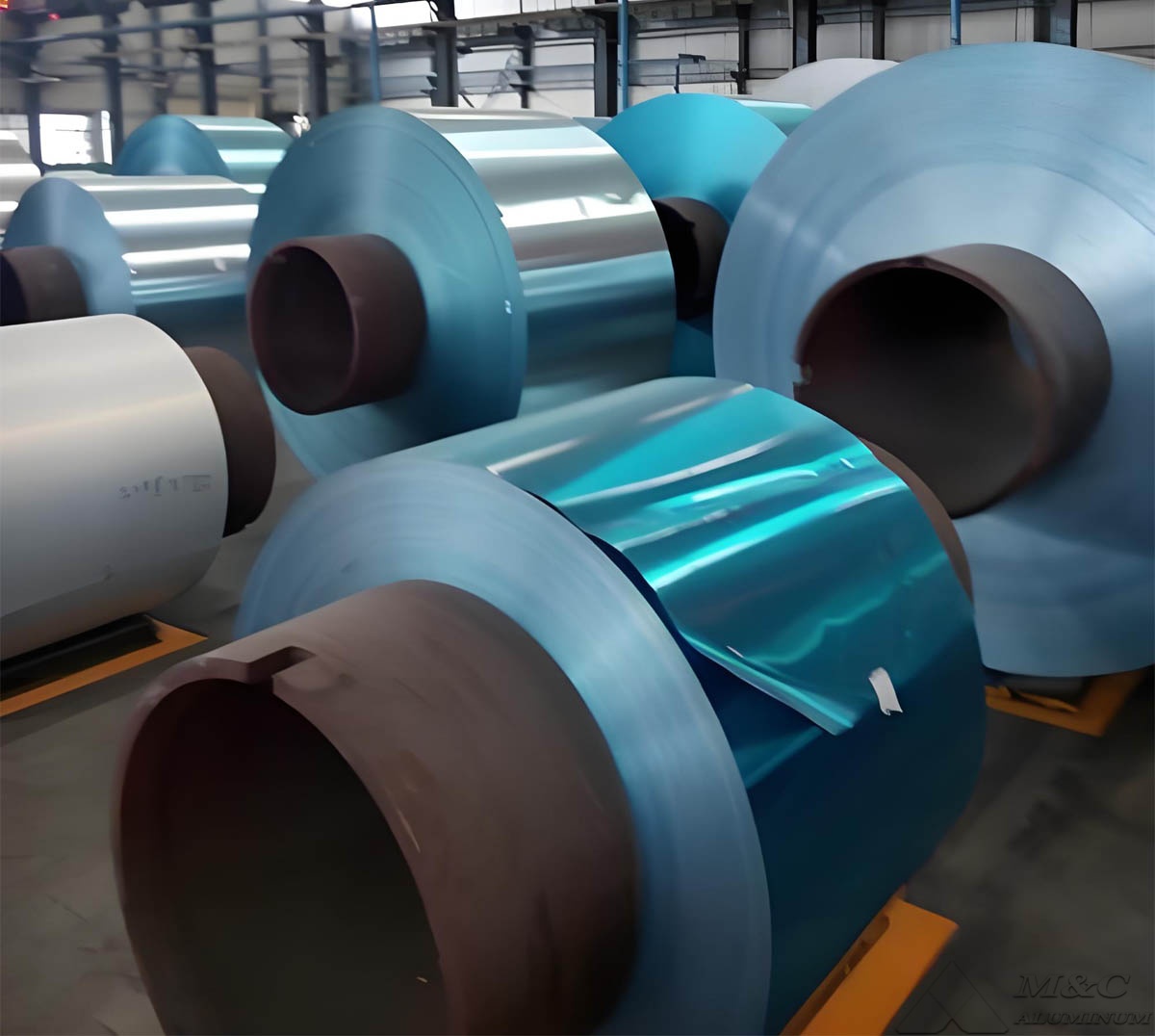
Hydrophilic aluminum foil is a major product category for evaporator and air conditioning heat exchangers. After the base 3003 foil is rolled, cleaned, and chemically treated, a hydrophilic coating is applied to improve condensate behavior on the fin surface.
During cooling operation, moisture in the air condenses on evaporator fins. On untreated surfaces, water can form droplets that bridge adjacent fins and restrict airflow. A hydrophilic coating reduces the contact angle of water on the aluminum surface, encouraging uniform water film formation and faster drainage.
From a manufacturing perspective, coating consistency is essential. We control coating weight, curing conditions, adhesion, wettability, and surface uniformity to support downstream fin stamping. The coating must remain continuous after deformation at louvers and collars without excessive powdering, cracking, or loss of adhesion.
For customers requiring additional protection, we can provide coated aluminum fin stock designed for improved resistance to salt spray, humid air, industrial pollutants, and condensate exposure. Coating selection should be based on the local environment, service temperature, cleaning chemicals, and expected equipment lifetime.
Manufacturing Process and Quality Control
The performance of 3003 aluminum foil in heat exchangers starts with controlled production. As a foil manufacturer, we manage the process from alloy preparation through finished coil inspection. Each stage influences forming behavior, surface cleanliness, and coating suitability.
Our standard manufacturing process includes the following steps:
Alloy melting and casting: Aluminum ingots and alloying materials are melted under controlled conditions to achieve the required 3003 chemical composition.
Homogenization and hot rolling: Cast material is processed to improve microstructure consistency and prepare the coil for cold rolling.
Cold rolling: The strip is rolled to the required foil gauge with controlled flatness, thickness accuracy, and surface quality.
Annealing: Thermal treatment is applied to achieve the specified temper and forming characteristics.
Surface cleaning: Residual rolling oil and contaminants are controlled to ensure stable coating adhesion where coated foil is required.
Coating and curing: Hydrophilic or corrosion-resistant coatings are applied and cured under monitored process conditions.
Slitting and recoiling: Coils are slit to the required width with burr control and stable edge quality.
Final inspection and packing: Thickness, width, mechanical properties, surface appearance, coil geometry, and packaging are checked before shipment.
Key quality control points include thickness deviation, pinhole control, flatness, camber, edge condition, coating adhesion, wettability, and coil winding quality. For heat exchanger producers operating automated fin presses, stable coil performance is as important as nominal alloy composition. Uneven thickness, excessive residual oil, poor flatness, or unstable temper can negatively affect stamping efficiency and fin geometry.
Selecting the Right Temper and Thickness
The correct 3003 aluminum foil temper depends on the fin design and forming operation. Softer tempers generally provide greater elongation for deeper drawing or more complex collar forming. Harder tempers can provide improved rigidity for designs requiring stronger fins or tighter fin spacing.
For example, thinner foil may be used where lightweight construction and high heat transfer surface area are priorities. However, reduced thickness also requires careful control of press tooling, coating flexibility, and handling conditions. Thicker material may be preferred for industrial equipment, demanding environments, or designs requiring greater structural strength.
When evaluating aluminum fin stock, buyers should provide the following information:
Required alloy and temper.
Nominal thickness and permitted tolerance.
Finished slit width and coil dimensions.
Bare or hydrophilic coated surface requirement.
Fin pitch, louver design, and collar height.
Stamping speed and press conditions.
Corrosion resistance or salt spray test requirements.
Packaging, pallet, and export delivery requirements.
This information allows us to recommend a 3003 aluminum foil specification that matches the actual production process instead of supplying a generic coil.
Packaging and Export Supply Considerations
Heat exchanger aluminum foil requires packaging that protects coil edges, surfaces, and coating quality during handling and international transport. We use export-oriented packaging based on coil dimensions and shipping conditions. Typical protection includes moisture-resistant wrapping, protective paper or film, steel or plastic banding, wooden pallets, and reinforced outer packaging when required.
For coated products, preventing moisture ingress and surface abrasion is particularly important. Coils should be stored in a dry, ventilated warehouse and protected from condensation before processing. Customers should also allow the foil to acclimate to the production environment when there is a significant temperature difference between storage and the stamping area.
Conclusion
3003 aluminum foil for heat exchangers is a reliable fin material for HVAC, refrigeration, heat pump, and industrial cooling applications. Its combination of moderate strength, formability, corrosion resistance, and coating compatibility makes it suitable for a broad range of condenser and evaporator fin designs.
As a manufacturer, we supply 3003 heat exchanger aluminum foil with controlled alloy composition, precision rolling, stable temper, slit width customization, and optional hydrophilic coating. By matching the foil specification to the fin geometry and operating environment, heat exchanger producers can improve forming stability, condensate management, and long-term coil performance.