
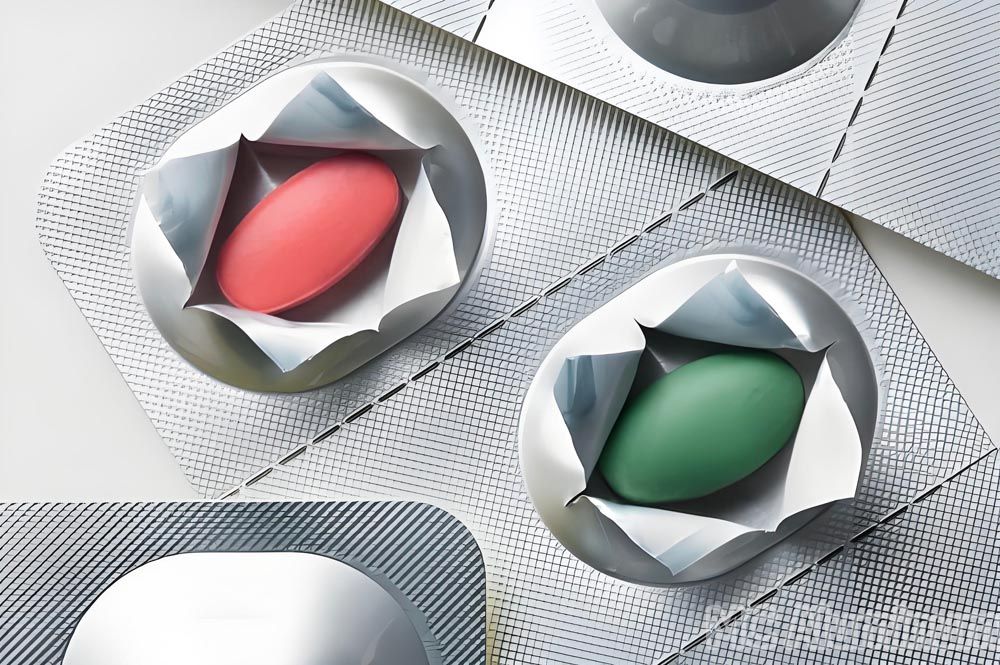
In the pharmaceutical packaging industry, PTP (Press Through Package) blister aluminum foil is one of the most widely used formats for tablets and capsules. As a critical material that directly affects drug safety, packaging efficiency, and patient experience, PTP foil places extremely stringent requirements on alloy selection.
Among various aluminum alloys, 8011 alloy, supported by decades of industrial application, stable comprehensive performance, and excellent process compatibility, has become the globally recognized first-choice material for pharmaceutical PTP aluminum foil.
As a long-term supplier of pharmaceutical packaging foil, we provide a systematic analysis of why 8011 alloy stands out across multiple dimensions.

Overview of 8011 Alloy
Pharmaceutical products-especially effervescent tablets and capsules-are extremely sensitive to moisture, oxygen, and light. Once oxidation or moisture ingress occurs, drug efficacy can rapidly degrade or even fail.
8011 belongs to the 8xxx series aluminum alloys, primarily alloyed with iron (Fe) and silicon (Si). Compared with pure aluminum (1xxx series), its crystal structure is more compact. Even at thicknesses as low as 20-30 microns, it delivers excellent moisture resistance, gas barrier performance, and light shielding, ensuring drug stability over shelf lives of 2-3 years.
In the H18 temper (full hard), 8011 achieves significantly higher yield strength than pure aluminum, allowing thinner gauges to meet stiffness and protection requirements, which is essential for high-speed blister packaging.
Core Chemical Composition of 8011 Alloy
| Alloy | Fe | Si | Cu | Mn | Mg | Zn | Other | Al |
| 8011 | 0.6 - 1.0 % | 0.5 - 0.9 % | ≤ 0.1 % | ≤ 0.2 % | ≤ 0.1 % | ≤ 0.1 % | ≤ 0.15 % | remainder |
The precise Fe-Si ratio forms fine intermetallic compounds that significantly enhance strength and anti-wrinkling performance without sacrificing ductility.
Low impurity levels ensure exceptional material cleanliness, fundamentally eliminating pinhole defects, this is the physical foundation of high barrier performance.
8011 PTP Aluminum Foil Specifications
| Alloy | 8011 |
| Temper | H18 |
| Thickness | 0.018 - 0.030 mm |
| Width | 300 - 1200 mm |
| Length | C |
| Inner Diameter (ID) | 76 mm / 152 mm |
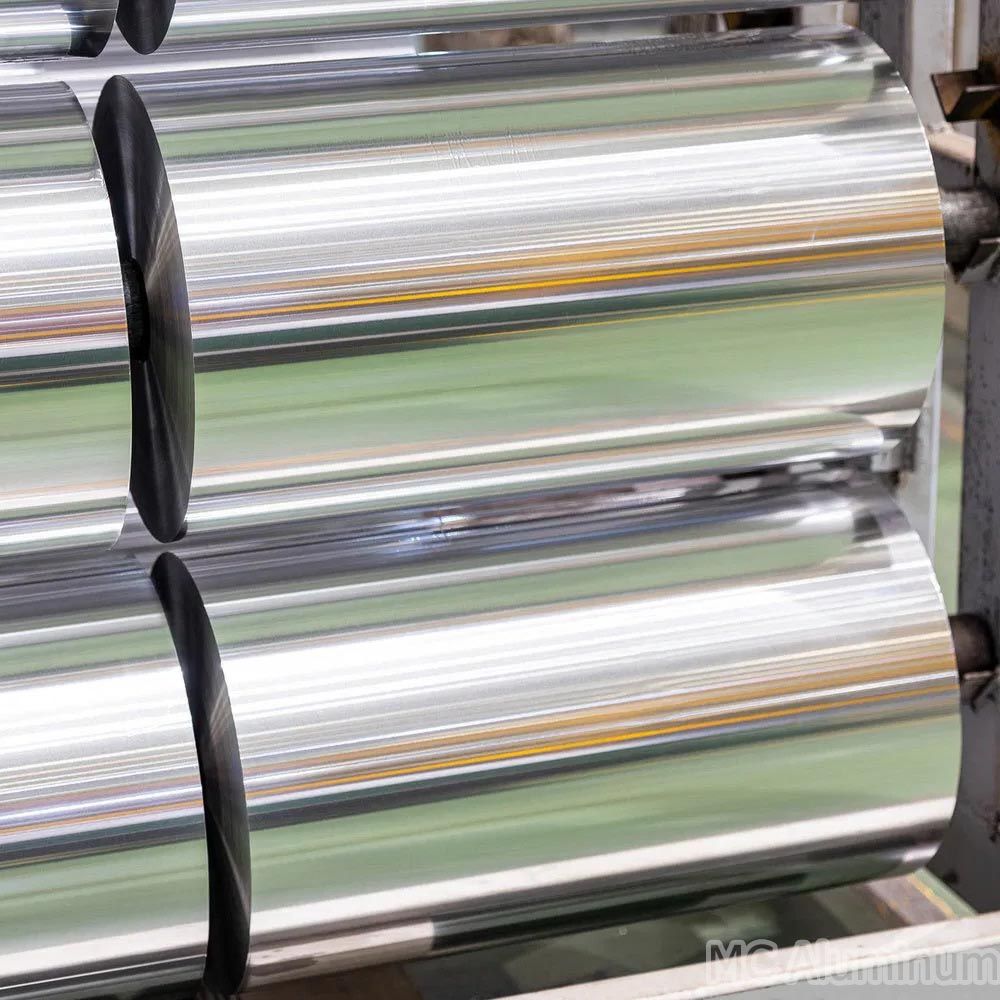
| Supply Form | Jumbo rolls / Slitted rolls |
| Surface | One bright side / one matte side (standard for PTP) |
| MOQ | 1-3 tons |
| Property | Value | |
| Physical Properties | Density | 2.70 g/cm³ |
| Thermal Conductivity | 160-180 W/m·K | |
| PTP Thickness Range | 20-30 μm | |
| Oxygen Transmission Rate | ≤ 0.5 cm³/(m²·24h·0.1MPa) | |
| Mechanical Properties | Ultimate Tensile Strength | 120-150 MPa |
| Yield Strength | 40-60 MPa | |
| Elongation at Break | ≥ 15 % | |
Surface Properties | Surface Roughness | Ra ≤ 0.3 μm |
Core Applications of 8011 PTP Aluminum Foil
1. Blister Packaging
Role: Lidding foil (push-through backing material)
Advantages:
Provides near-perfect barrier protection against moisture, oxygen, and light. Bonds easily with PVC, PVDC, PP, and PET blister films while maintaining controlled push-through performance for patient use. Soft temper foil ensures crack-free sealing during blister forming.
2. Laminated Pouches and Stand-Up Bags
Role: Intermediate barrier layer in composite structures
Advantages:
When laminated with PET, PE, or PP via dry or solvent-free lamination, aluminum foil provides ultra-high barrier performance for moisture- and oxygen-sensitive pharmaceuticals such as biologics, antibiotics, and ophthalmic solutions. It also enhances overall package strength and durability.
3. Sealing Foils and Bottle Liners
Role: Sealing material for pharmaceutical bottles, tubes, and containers
Advantages:
Ensures absolute sealing and tamper evidence prior to opening. Typically supplied in H18 temper for rigidity and coated with heat-seal lacquer for strong adhesion to container openings.
4. Medical Device and Diagnostic Packaging
Role: Sterilization pouches and light-shielding bags
Advantages:
Capable of withstanding steam sterilization, high-pressure processes, and ETO sterilization while maintaining package integrity and barrier performance throughout the product's shelf life.
PTP Aluminum Foil Manufacturing Process
Step 1: Melting and Casting
High-purity aluminum ingots are alloyed with Fe and Si according to the 8011 composition and refined in sealed furnaces. After degassing and filtration, the melt is cast into slabs approximately 6-8 mm thick.
Step 2: Cold Rolling and Intermediate Annealing
The slabs undergo multi-pass cold rolling. Rolling force, speed, and cooling are precisely controlled to achieve target mechanical properties. Intermediate annealing may be applied to adjust ductility.
Step 3: Foil Rolling
Using high-precision foil rolling mills, the material is reduced to final thickness (e.g., 0.025 mm). Thickness tolerance is strictly controlled within ±3% or tighter for pharmaceutical-grade foil.
Step 4: Annealing (If Required)
For O temper or specific hardness requirements, annealing is performed in protective atmosphere furnaces to relieve internal stress and ensure uniform properties.
Step 5: Surface Treatment and Coating
In cleanroom environments, functional coatings are applied:
Printing layers
Protective lacquers
Heat-seal coatings (critical for bonding with blister films)
Step 6: Slitting and Inspection
Foil is slit to customer-specified widths. Continuous online and offline inspections ensure compliance before clean packaging.
Core Advantages of 8011 Alloy in PTP Foil
High Strength and Structural Stability
Resists deformation and rupture during transport and stacking.Excellent Formability
Stable performance in deep-drawing and complex forming applications.Superior Barrier Performance
Effectively blocks moisture and oxygen when combined with functional coatings.Lightweight and Cost Efficiency
Higher strength allows thinner gauges, balancing material cost and performance.Excellent Surface Treatment Compatibility
Supports printing, coating, and surface finishing without compromising strength.Non-Toxic, Odorless, and Sterile
Fully compliant with FDA, EU, and Chinese pharmaceutical packaging regulations.
Pharmaceutical-Grade Quality Control
Cleanliness Control: Strict control of dust and oil contamination
Performance Consistency: Tight tolerances on thickness and mechanical properties
Chemical Safety: Compliance with FDA CFR 21, EU 10/2011, and pharmacopeia standards
Surface Treatment Quality: Reliable sealing strength and lamination performance
Typical Application Scenarios
Standard tablet and capsule blister packaging
Moisture- and oxygen-sensitive pharmaceuticals
Child-resistant packaging designs
High-clarity printed pharmaceutical packaging