
Blister packaging has become one of the most widely used pharmaceutical packaging formats in the pharmaceutical industry. By individually sealing unit-dose medicines in formed plastic cavities and covering them with aluminum foil or other lidding materials, blister packs provide multiple functions including physical protection, anti-counterfeiting, and convenient dispensing. They offer significant advantages in terms of drug stability, resistance to microbial contamination, and extended shelf life.
Basic Structure of Blister Packaging
Blister packaging is formed by heat-sealing a forming material (blister cavity) with a lidding material (backing), creating independent, hermetically sealed units.
(1) Blister Forming Materials
PVC (Polyvinyl Chloride):
The most commonly used material due to low cost and excellent formability. It provides moderate moisture and oxygen barrier properties and is transparent, allowing visual inspection of the drug.PVC/PVDC Composite:
Significantly improves moisture and oxygen barrier performance, making it suitable for drugs sensitive to humidity.Cold Formed Aluminum (Alu):
A multilayer aluminum-plastic composite offering complete barriers against moisture, oxygen, and light. Commonly used for highly sensitive drugs such as probiotics and hormones.
(2) Lidding Materials
Pharmaceutical Aluminum Foil (PTP Aluminum Foil):
The mainstream choice, offering excellent moisture and oxygen resistance, light shielding, easy push-through performance, and airtight sealing after heat sealing.Aluminum-Plastic Laminates:
Used in applications requiring enhanced protection levels.
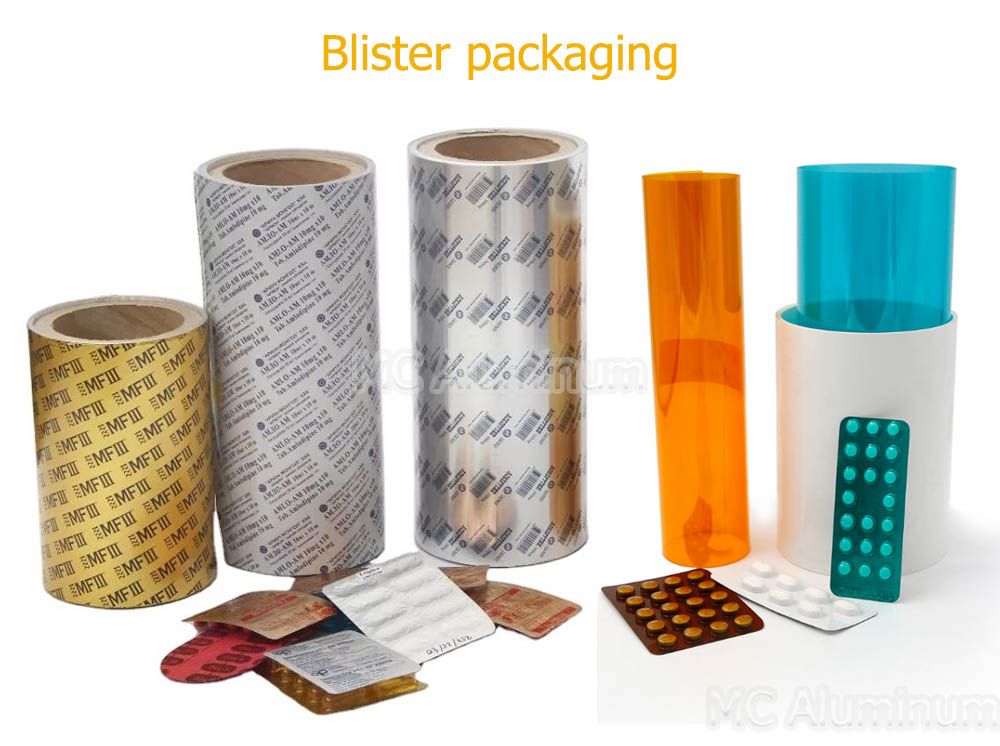
The Role of Aluminum Foil in Blister Packaging
Aluminum foil is a metallic material with outstanding barrier properties. In blister packaging, lidding materials commonly use 8011 aluminum foil or 8021 aluminum foil, which perform multiple critical functions:
1.Oxygen Barrier:
Aluminum foil has an extremely low pinhole rate, reducing oxygen transmission to <0.1 cc/m²·day, effectively slowing oxidation and extending drug shelf life.
2.Moisture Resistance:
Its very low water vapor permeability helps maintain humidity levels below 10% RH, preventing moisture absorption and degradation.
3.Light Protection:
Aluminum foil strongly reflects and absorbs light, reducing UV exposure and protecting photosensitive drugs.
4.Heat-Sealing Performance:
Aluminum foil bonds well with plastic blister films, forming strong seals at temperatures of 120-180 °C, ensuring package integrity.
5.Anti-Counterfeiting and Traceability:
The foil surface can be laser-marked or printed to incorporate anti-counterfeiting features and batch traceability information.
Thanks to these properties, aluminum foil serves as the most reliable protective layer in blister packaging, especially for pharmaceuticals requiring long-term storage.
Mechanisms by Which Blister Packaging Protects Medicines
Physical Barrier:
The combination of plastic blister film and aluminum foil forms a physical barrier that isolates drugs from dust, bacteria, fungi, and other contaminants, preventing microbial contamination.Chemical Barrier:
The low permeability of aluminum foil significantly reduces the ingress of oxygen and water vapor, slowing oxidation and hydrolysis reactions and enhancing chemical stability.Light Barrier:
The reflective surface of aluminum foil blocks most ultraviolet and visible light, protecting photosensitive pharmaceuticals from photodegradation.Thermal Buffering:
The sealed blister structure helps moderate temperature fluctuations, reducing thermal stress on drugs, particularly during transportation.Anti-Counterfeiting and Traceability:
Anti-counterfeiting marks and batch information on the aluminum foil help prevent counterfeit drugs from entering the supply chain and support pharmaceutical traceability.
Common Types and Application Scenarios
| Type | Structure | Protection Level | Suitable Pharmaceuticals |
| PVC / Aluminum Foil | Transparent PVC blister + aluminum foil backing | ★★★☆☆ | Most tablets and capsules (e.g., antihypertensives, cold medicines) |
| PVC/PVDC / Aluminum Foil | High-barrier PVC composite + aluminum foil | ★★★★☆ | Moisture-sensitive and easily oxidized drugs |
| Cold Formed Aluminum / Aluminum Foil (Alu-Alu) | Aluminum-formed cavity + aluminum foil backing | ★★★★★ | Highly sensitive drugs (probiotics, hormones, biologics) |
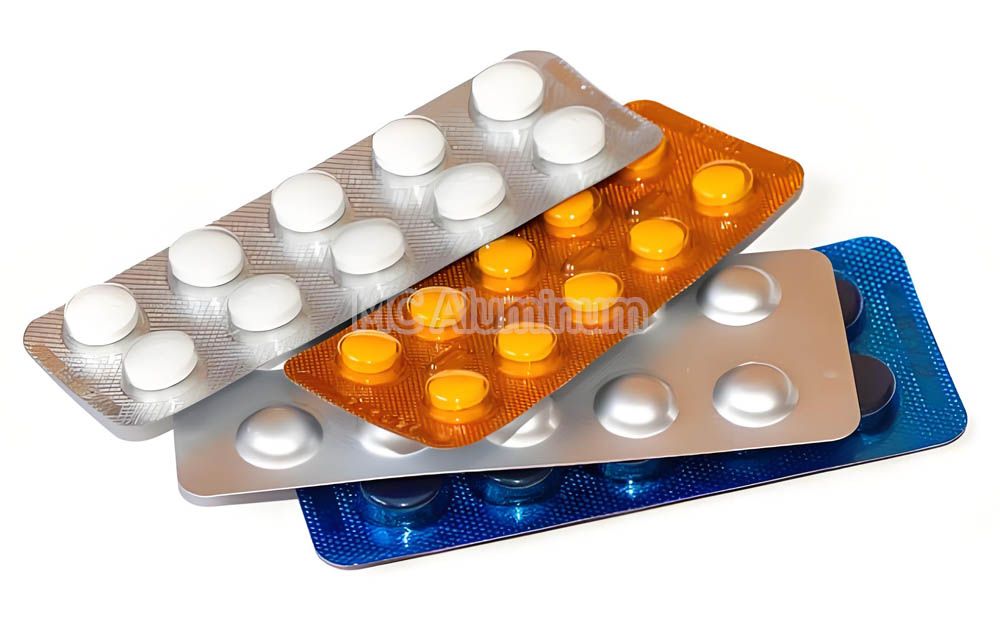
Blister packaging is a convenient and highly effective method for protecting pharmaceuticals. It is easy to handle, compact, and portable. With the use of aluminum foil, each dose is individually sealed and protected from external influences until consumption, ensuring drug safety, stability, and efficacy throughout its lifecycle.