
In the fields of food packaging, disposable meal boxes, airline meal containers, baking trays, takeaway containers, and ready-meal packaging, aluminum foil containers are increasingly adopted by enterprises due to their advantages such as lightweight, hygiene, excellent barrier performance, recyclability, and resistance to high and low temperatures. As the core raw material for aluminum foil containers, 3003 aluminum foil, 8011 aluminum foil, and 1235 aluminum foil are commonly used materials in the market.
Why Is Aluminum Foil Suitable as a Raw Material for Food Containers?
Aluminum foil containers are widely used mainly because of the comprehensive performance of aluminum itself.
1. Excellent Barrier Properties
Aluminum foil can effectively block light, oxygen, moisture, and odors, helping maintain food flavor and extend shelf life. Good barrier performance is especially important for cooked food, baked goods, frozen food, and ready-meal packaging.
2. High- and Low-Temperature Resistance
Aluminum foil containers can be used in freezing, refrigeration, baking, steaming, and other scenarios. Compared with some plastic containers, aluminum foil has better dimensional stability in high-temperature environments and is less likely to deform.
3. Good Formability
Aluminum foil materials such as 3003, 8011, and 1235 offer excellent stamping, drawing, and wrinkle-forming performance. They are suitable for high-speed automated production lines to process meal boxes, trays, cup-shaped containers, baking molds, and other products.
4. Lightweight
Aluminum foil has a low density. Containers made from aluminum foil are lightweight, easy to transport, stack, and carry, helping reduce logistics costs.
5. Recyclable
Aluminum has high recycling value and meets the trend of green packaging and sustainable development. As environmental requirements continue to increase, aluminum foil containers have broad application prospects in the food packaging industry.
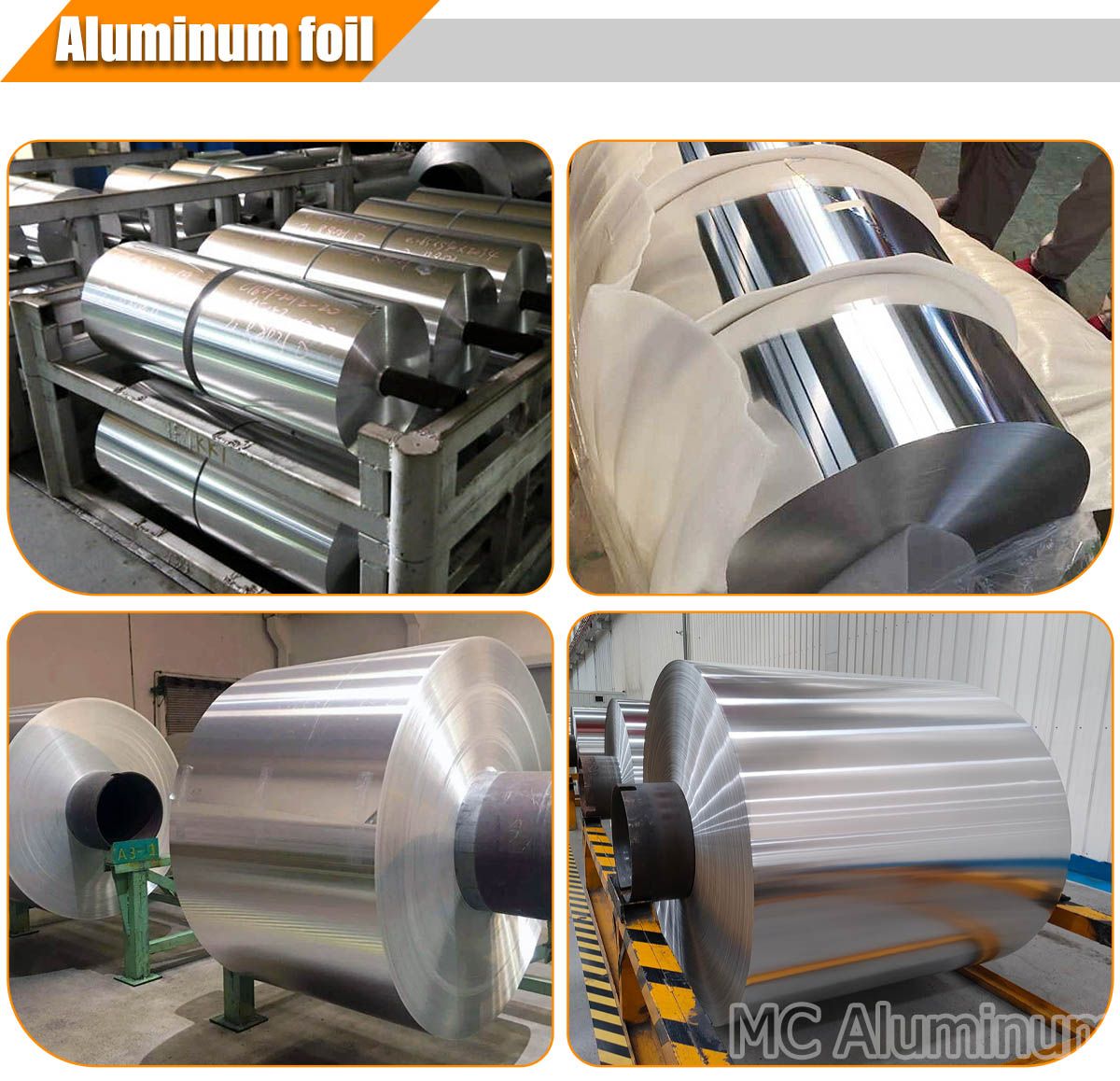
Core Material Details
1. 1235 Aluminum Foil — High-Purity Packaging Aluminum Foil
1235 belongs to the 1xxx series high-purity aluminum, with an aluminum content of ≥99.35% and extremely low impurity content. It features high material purity and is a classic packaging-grade pure aluminum foil. This aluminum foil contains no alloy strengthening elements. The base material is soft, bright in color, and clean on the surface, fully meeting food contact safety standards. It is one of the earliest basic aluminum foil materials used for container packaging. With mature production technology, low cost, and stable mass production, it is a highly cost-effective option.
Common tempers of 1235 aluminum foil include: O, H18, H22, H24.
Among them, 1235-O aluminum foil has excellent softness and is often used for laminated packaging. H18 temper has higher hardness and is suitable for certain packaging applications requiring flatness and strength.
2. 8011 Aluminum Foil — Special Alloy Aluminum Foil for Food Packaging
8011 belongs to the 8xxx series aluminum-iron alloy and is an improved material specially developed for food packaging and aluminum foil containers. Through precise control of trace iron and silicon elements, it retains the advantages of pure aluminum such as high cleanliness, non-toxicity, and odorlessness, while effectively refining the grain structure. This improves the shortcomings of pure aluminum such as low strength, easy tearing, and poor pinhole resistance. It offers a balance of plasticity and strength, making it a widely used material for aluminum foil meal boxes, fresh-keeping containers, and sealing films.
Common tempers of 8011 aluminum foil for food containers include:
8011-O: Soft, with good flexibility, suitable for complex forming or packaging applications
8011-H22: Moderate hardness, balancing strength and formability
8011-H24: Higher strength, suitable for containers requiring good stiffness
In the food packaging industry, 8011 aluminum foil is a typical general-purpose material, especially suitable for customers who require both good processing performance and cost control.
3. 3003 Aluminum Foil — Aluminum-Manganese Anti-Rust High-Strength Alloy Foil
3003 belongs to the 3xxx series aluminum-manganese alloy and is a high-strength upgraded material among container aluminum foils. The addition of manganese greatly improves the structural strength, tensile resistance, and deformation resistance of aluminum, while also providing excellent anti-rust, humid-heat resistance, and fatigue resistance. Its overall hardness, rigidity, and stamping resistance are far superior to 1235 and 8011. After forming, it offers strong support and is mainly used for high-end, thick-wall, heavy-duty, and reusable aluminum foil containers.
Common tempers of 3003 aluminum foil for container production include: H22, H24, O.
Among them, H22 and H24 tempers offer good hardness and forming stability, making them suitable for stamping meal boxes, trays, and other products. O temper is softer and suitable for packaging or special forming applications requiring higher flexibility.
Technical Parameters of Aluminum Foil for Food Containers
| Item | Specification |
| Alloy | 3003, 8011, 1235 |
| Temper | O, H22, H24, H18, etc. |
| Thickness | 0.03–0.20 mm, customizable |
| Width | 100–1600 mm, slitting available |
| Length | 100–8000 mm |
| Surface | Single bright side, double bright side, clean oil-free or lightly oiled |
| Inner Diameter | 76 mm, 152 mm, 300 mm, etc. |
| Packaging | Wooden case, wooden pallet, moisture-proof packaging |
| Applications | Meal boxes, trays, sealing, laminated packaging, baking containers |
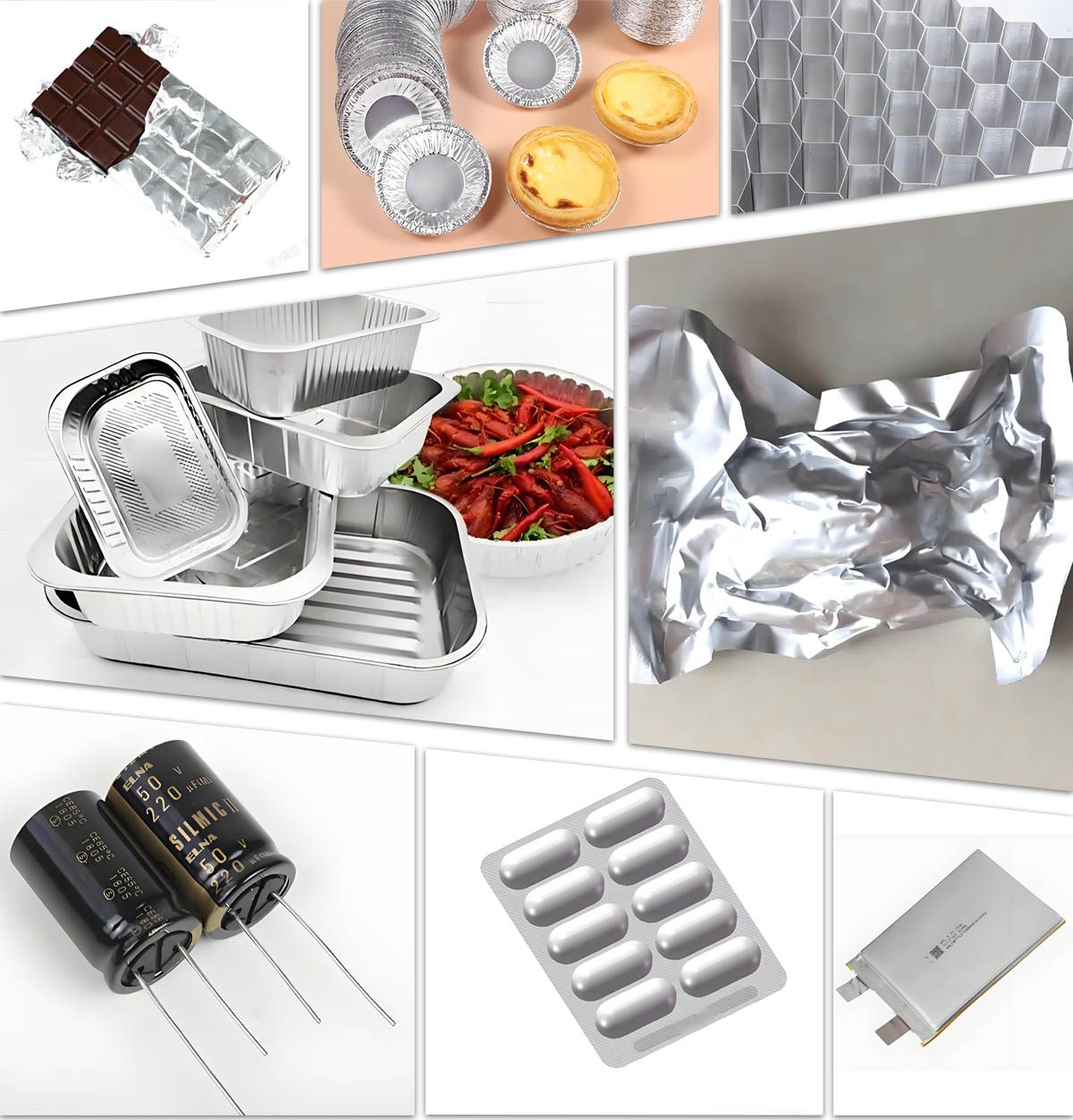
Main Applications of Food Aluminum Foil
| Application Field | Typical Products | Thickness Range |
| Food Containers | Airline meal boxes, baking trays, takeaway boxes | 0.03–0.08 mm |
| Pharmaceutical Packaging | Tablet blister packaging, medical composite film | 0.02–0.03 mm |
| Lithium Batteries | Positive electrode current collector, battery foil | 0.01–0.02 mm |
| Electronic Capacitors | Electrolytic capacitor foil | 0.006–0.015 mm |
| High-End Food Packaging | Chocolate wrapping, tea bags | 0.006–0.015 mm |
| Composite Materials | Aluminum-plastic composite film, barrier layer for beverage packaging | 0.006–0.015 mm |
| Aluminum Honeycomb Core | Building sound insulation materials, high-speed rail carriage flooring | 0.02–0.06 mm |
Quality Control Points for Container Aluminum Foil
High-quality aluminum foil raw materials can enhance container formability and minimize production waste. When sourcing, particular attention should be paid to the following quality indicators.
1. Thickness Tolerance
The thickness of aluminum foil should be uniform and stable. Excessive thickness fluctuation may lead to inconsistent forming and affect the strength and appearance of the container.
2. Surface Quality
Aluminum foil for food containers should have a clean surface. The surface must meet Grade A water brushing standards, with no obvious oil stains, black spots, scratches, indentations, corrosion spots, or foreign contamination.
3. Pinhole Control
The thinner the aluminum foil, the more important pinhole control becomes. Excessive pinholes will affect barrier performance and packaging safety.
4. Flatness and Shape
The aluminum foil should have good flatness and shape, without obvious waves, wrinkles, loose coils, telescoped rolls, and other defects, so as to ensure stable operation during high-speed stamping or lamination production.
5. Mechanical Properties
Aluminum foil in different tempers should have stable tensile strength and elongation. Insufficient strength may lead to poor container stiffness, while insufficient elongation may cause cracking during stamping.
6. Coil Quality
Aluminum foil coils should be wound neatly with flat end faces, without obvious misalignment, collapsed coils, or loose winding. The inner diameter and coil weight should match the customer’s production equipment.
7. Food Safety Documents
FDA, SGS, or food-contact-grade non-toxic safety certifications complying with national standards must be provided to ensure that heavy metals and other indicators fully meet regulatory requirements.
How to Choose Suitable Aluminum Foil for Containers?
1. Choose According to Container Type
For ordinary disposable meal boxes and takeaway boxes, 8011-H22 or 8011-H24 aluminum foil can be selected.
For airline meal boxes, large trays, baking pans, or ready-meal containers, 3003-H24 aluminum foil can be considered.
For lidding film, sealing materials, or laminated packaging, 1235-O or 8011-O aluminum foil can be selected.
2. Choose According to Forming Depth
Deep-drawn containers require higher material elongation. Aluminum foil with good forming performance should be selected. If the material is too hard, cracking, wrinkling, or edge breakage may occur during stamping.
3. Choose According to Load-Bearing Requirements
For containers with high load-bearing requirements, materials with higher strength and better stiffness should be selected, such as 3003 aluminum foil or harder temper 8011 aluminum foil.
4. Choose According to Food Contact Requirements
For food container aluminum foil, attention should be paid to material cleanliness, surface quality, heavy metal control, oil residue, and compliance with food contact material requirements. If the products are intended for export, the regulatory standards of the target market should be confirmed in advance.
5. Choose According to Subsequent Processing
If the aluminum foil requires coating, printing, lamination, or heat sealing, aluminum foil with stable surface quality, good wettability, and fewer pinholes should be selected.
What Parameters Should Be Provided When Purchasing 3003, 8011, and 1235 Aluminum Foil?
To obtain a more accurate quotation and material recommendation, it is recommended to provide the following information when purchasing:
Alloy grade: 3003, 8011, or 1235
Temper: O, H22, H24, H18, etc.
Thickness and width
Inner diameter, outer diameter, or single coil weight
Application: meal box, tray, lidding film, sealing, laminated packaging, etc.
Surface requirements: single bright side, double bright side, oil-free, lightly oiled, etc.
Whether food-grade test reports are required
Whether coating, printing, or lamination processing is required
Packaging method: wooden case, wooden pallet, moisture-proof packaging, etc.
Monthly consumption or order quantity
The clearer the parameters, the better the supplier can match suitable materials and avoid production losses caused by improper temper or thickness selection.
MC Aluminum, as a professional aluminum foil manufacturer, provides food-grade aluminum foil in alloy grades such as 3003, 1235, and 8011. The product end faces must be neat, with no misalignment, burrs, or edge collapse. We offer factory-direct supply, stable quality, competitive prices, and exports to many countries and regions. Sample testing is available. If you have any purchasing requirements, please feel free to contact us at any time.