
As a manufacturer of precision rolled aluminum foil, we produce 1235 aluminum foil for battery pouch cell applications requiring stable thickness, clean surfaces, and consistent electrode processing performance. Our 1235 aluminum foil is commonly supplied as a cathode current collector foil for lithium-ion pouch cells, polymer batteries, and related rechargeable battery systems.
In pouch cell production, aluminum foil is an essential conductive substrate for cathode coating. Its quality directly influences slurry adhesion, coating uniformity, winding behavior, electrical resistance, and the consistency of the finished battery electrode. For these applications, we control alloy composition, temper, gauge tolerance, surface cleanliness, pinholes, and coil geometry throughout the rolling and finishing process.
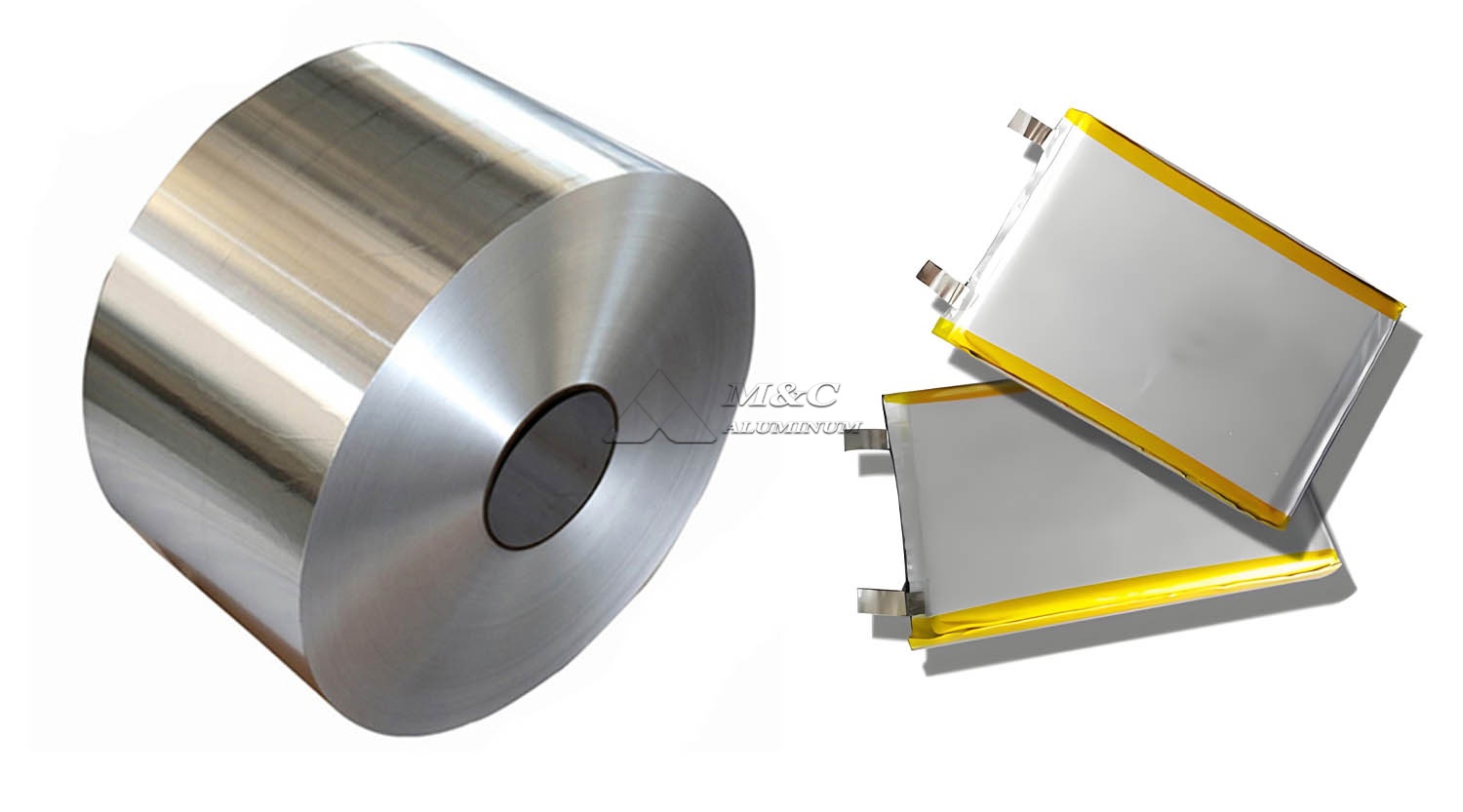
The Role of 1235 Aluminum Foil in Battery Pouch Cells
1235 aluminum foil is a high-purity aluminum alloy containing not less than 99.35 percent aluminum. It has good electrical conductivity, low density, high ductility, and reliable rolling performance. These characteristics make it suitable for thin-gauge battery electrode foil production.
For lithium-ion pouch cells, 1235 aluminum foil is generally used as the cathode current collector. The foil provides a conductive path between the active cathode material and the external tab connection. During electrode manufacturing, the foil is coated with a cathode slurry that may contain lithium metal oxides, conductive carbon, binders, and solvents. A uniform foil surface and stable substrate properties are important to support reliable coating and drying.
It is important to distinguish battery electrode foil from pouch packaging laminate. The aluminum layer in a pouch cell packaging film typically requires high barrier performance and may use other aluminum alloys, such as 8021 or 8079 aluminum foil. By contrast, 1235 aluminum foil for battery pouch cells is mainly selected for its conductivity, process stability, and suitability for cathode electrode coating.
Why 1235 Alloy Is Suitable for Battery Electrode Foil
The 1235 alloy has a controlled iron and silicon content that supports good foil rolling performance. After multiple cold rolling stages and annealing, the material can be manufactured into thin, soft foil with stable mechanical characteristics. For battery customers, the main advantages include:
High aluminum purity for dependable electrical conductivity.
Good ductility for slitting, winding, and electrode handling.
Smooth surface suitable for cathode slurry coating.
Low surface contamination after degreasing and final annealing.
Stable thickness control across wide coils.
Consistent coil shape for automated coating and winding lines.
Our 1235 Aluminum Foil can be produced according to the customer's electrode design, coating equipment requirements, and downstream slitting conditions. We support coil specifications for battery material converters and cell manufacturers that require reliable batch consistency.
Typical Technical Parameters
The following table shows common specifications for 1235 aluminum foil used as a battery cathode current collector. Final values can be adjusted according to application requirements, order quantity, and processing route.
| Item | Typical Specification | Remarks |
|---|---|---|
| Alloy | 1235 | Aluminum content not less than 99.35 percent |
| Temper | O, H18 | O temper is common for battery electrode processing |
| Thickness | 0.012 mm to 0.020 mm | Common gauges include 12 um, 15 um, 16 um, and 20 um |
| Width | 100 mm to 1,500 mm | Customized slit width available |
| Thickness tolerance | Typically +/- 3 percent to +/- 5 percent | Subject to gauge and width |
| Coil inner diameter | 150 mm, 300 mm, 505 mm | Customized core sizes available |
| Coil outer diameter | Up to customer requirement | Based on handling and equipment capacity |
| Surface | Mill finish, degreased | Clean and suitable for electrode coating |
| Pinholes | Controlled according to thickness | Inspection standard agreed before production |
| Tensile strength | According to temper and gauge | Confirmed in mill test documentation |
| Elongation | According to temper and gauge | Supports slitting and winding operations |
| Electrical conductivity | High-purity aluminum level | Suitable for cathode current collection |
The values above are reference ranges rather than fixed universal specifications. Battery cell manufacturers should define the required foil thickness, coating method, winding tension, and final electrode design before confirming the material grade and temper.
Manufacturing Process for Battery Grade 1235 Aluminum Foil
Our production process begins with qualified aluminum melt and rolling stock. Chemical composition is monitored to ensure the 1235 alloy meets the required purity range. The material then passes through hot rolling, cold rolling, intermediate annealing, final rolling, slitting, inspection, and packaging stages.
For thin battery aluminum foil, rolling stability is particularly important. We use controlled rolling schedules to achieve the required thickness while maintaining uniform gauge distribution across the foil width. Final rolling oil management and thermal treatment are also carefully controlled because residue, surface defects, and uneven annealing can affect subsequent cathode coating.
After final rolling, the foil undergoes inspection for surface quality, pinholes, thickness variation, edge condition, coil shape, and contamination. For customers using automatic coating lines, stable coil tension and accurate slit edges are necessary to reduce web breaks, coating defects, and handling interruptions.
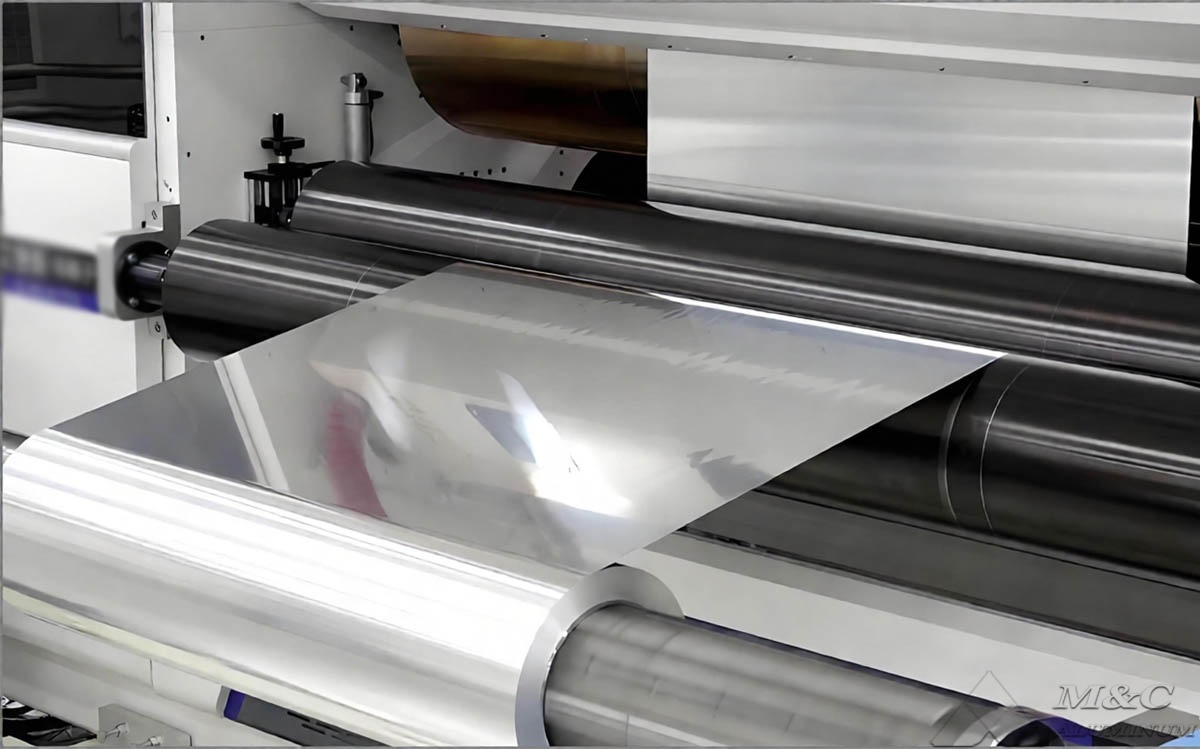
Surface Quality and Cleanliness Requirements
Battery electrode coating requires a clean aluminum foil surface. If the surface contains excessive rolling oil, particles, scratches, wrinkles, or oxide-related defects, the cathode slurry may show poor wettability or uneven adhesion. This can negatively affect coating uniformity and may create downstream quality concerns.
Our factory controls surface quality through rolling oil filtration, process cleanliness, annealing control, and final inspection. We assess foil appearance under suitable lighting conditions and inspect coils for visible defects that may affect coating, winding, or cell assembly.
Typical controlled surface conditions include:
No heavy oil stains or visible contamination.
No cracks, severe scratches, creases, or holes affecting use.
No loose coil layers or major telescoping.
Stable edge quality after slitting.
Controlled burr level based on customer requirements.
Uniform mill finish suitable for further electrode coating.
For battery applications with stricter cleanliness targets, we can discuss additional inspection items, packaging methods, and lot traceability requirements during technical confirmation.
Quality Control and Test Documentation
As a 1235 aluminum foil manufacturer, we maintain traceability from production order to finished coil. Each batch can be supplied with relevant mill test documentation covering alloy, temper, thickness, width, coil weight, and inspection results.
Our quality control process may include the following checks:
Chemical composition verification for 1235 alloy compliance.
Thickness measurement at multiple positions across the foil width.
Width and edge inspection after slitting.
Tensile strength and elongation testing where required.
Surface appearance inspection.
Pinholes inspection for thin-gauge foil.
Coil inner diameter, outer diameter, and winding quality verification.
Packaging inspection before shipment.
For export supply, coils are normally protected with moisture-resistant wrapping, protective boards, steel or plastic strapping, and palletized packing where applicable. Packaging is selected to reduce the risk of oxidation, edge damage, coil deformation, and moisture exposure during international transport.
Processing Considerations for Pouch Cell Electrode Production
Before selecting 1235 aluminum foil, battery manufacturers should evaluate the relationship between foil thickness and electrode design. Thinner foil can reduce inactive material weight and support higher energy density, but it also requires tighter control during coating, drying, calendaring, slitting, and winding. Thicker foil may provide improved handling stability but can increase the total electrode mass.
The most suitable thickness depends on the cathode chemistry, coating loading, line speed, coating method, and mechanical requirements of the finished cell. Common battery foil gauges range from 12 um to 20 um, although the appropriate choice should be validated through production trials.
Customers should also confirm the preferred temper. O temper 1235 aluminum foil is widely used where flexibility and stable processing are required. Harder tempers may be considered for specific processing routes, but electrode compatibility must be evaluated carefully.
For applications requiring higher strength or different forming characteristics, our 3003 Aluminum Foil may also be reviewed for relevant industrial foil requirements. Material selection should always be based on the actual battery design and production process.
Custom Supply Options From Our Factory
We supply 1235 aluminum foil in master coils, slit coils, and customer-defined widths. Our technical team can work with purchasers, battery material processors, and cell manufacturers to confirm critical specifications before production.
Customizable items include:
Foil thickness and thickness tolerance.
Coil width and slit width.
Temper requirement.
Coil inner diameter and maximum coil weight.
Surface cleanliness level.
Packaging method for export transport.
Test items and certificate requirements.
Sample coil and trial order arrangements.
Clear technical communication before production helps ensure the aluminum foil matches the customer's coating line, slitting equipment, and electrode manufacturing process.
Conclusion
1235 aluminum foil for battery pouch cells is a reliable cathode current collector material when produced with controlled gauge, clean surface condition, stable temper, and consistent coil quality. As a factory manufacturer, we provide battery-grade 1235 aluminum foil tailored to electrode coating, winding, and conversion requirements. Through controlled rolling, inspection, and export packaging, we support stable material supply for lithium-ion pouch cell production.