
You have probably experienced this before: when you feel unwell and need to take medication, you pick up a blister pack, gently press the transparent plastic bubble with your thumb, and with a crisp, satisfying "pop," the tablet breaks through the silver backing foil and falls into your palm.
This seemingly simple, one-second action is actually the result of sophisticated and precise packaging engineering. That easily punctured silver layer-push-through aluminum foil (PTP aluminum foil)-is the unsung hero safeguarding drug safety and ensuring pharmaceutical stability.
What Is "Push-Through" Aluminum Foil?
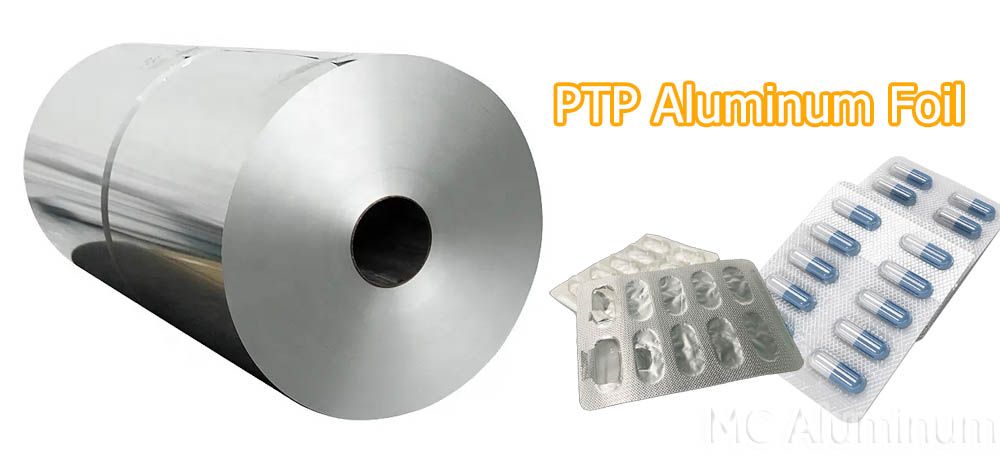
Push-through aluminum foil is a composite packaging material specifically designed for blister packaging. During use, patients simply press the tablet through the blister cavity with their finger to access the medication, hence the name "push-through aluminum foil."
Core Structure and Material Composition of PTP Aluminum Foil
| Layer | Material & Function | Key Parameters |
| Protective Layer (OP) | Organic coating (e.g., acrylic resin) to protect ink, prevent oxidation and contamination | Coating weight: 1 ± 0.5 g/m² |
| Printing Layer | Pharmaceutical-grade ink carrying drug name, batch number, expiry date, etc. | Single- or double-sided, up to 8 colors |
| Aluminum Foil Base | 8011 / 8079 alloy providing barrier properties, rigidity, and controlled breakability | Thickness: 20-25 μm (typical), extremely low pinhole rate |
| Heat-Seal Coating (Adhesive Layer) | Polyurethane-based VC lacquer for heat sealing with PVC / PVDC films | Coating weight: 4 ± 0.5 g/m², compliant seal strength |
Key Performance Characteristics and Advantages
1. Barrier Performance:
The aluminum foil base provides near-total protection against moisture, oxygen, and light, preventing deliquescence, oxidation, and photodegradation of pharmaceuticals, significantly extending shelf life.
2. Mechanical and Push-Through Performance:
Optimized brittleness allows adults to release tablets with a push force of approximately 10-20 N, while maintaining puncture and tear resistance to ensure integrity during transportation and storage.
3. Heat-Sealing and Hermeticity:
The heat-seal coating forms a strong, reliable seal with rigid plastic films, preventing leakage and contamination. Seal strength must comply with pharmacopeial requirements.
4. Safety and Regulatory Compliance:
All inks and coatings are pharmaceutical-grade, non-migratory, and compliant with GMP and biocompatibility standards.
5. Identification and Anti-Counterfeiting:
The surface supports high-quality printing for batch numbers, QR codes, and traceability information, enhancing product identification and security.
6. Excellent Production Compatibility:
Fully compatible with high-speed automatic blister packaging machines, enabling efficient mass production and easy in-line inspection.
Technical Specifications of PTP Aluminum Foil
| Alloy | 8011 / 8021 |
| Temper | O (soft) |
| Typical Thickness | 20 μm / 25 μm |
| Structure | Printing layer / aluminum foil base / heat-seal coating |
| Heat-Seal Coating Type | Compatible with PVC / PVDC / PP |
| Heat-Seal Temperature | 160-220 °C (depending on forming film) |
| Heat-Seal Strength | ≥ 6 N / 15 mm (customizable) |
| Push-Through Performance | Uniform, controlled force; resistant to accidental rupture |
| Barrier Properties | Complete barrier to moisture, oxygen, and light |
| Surface Treatment | Single- or double-sided coating |
| Printing Method | Gravure printing |
| Printing Colors | 1-6 colors (customizable) |
| Surface Tension | ≥ 38 dyn/cm |
| Packaging Type | Pharmaceutical blister packaging |
| Applicable Drugs | Tablets, capsules, lozenges, chewable tablets, etc. |
| Supply Form | Rolls |
| MOQ | 1-3 tons |
Design Variants of Pharmaceutical PTP Aluminum Foil
Easy-Open Type:
Pre-designed tear lines or cuts in the foil for easier opening.Child-Resistant Type:
Special materials and structures requiring dual actions (e.g., press and twist) to access medication.Braille Marking:
Embossed Braille on the foil surface to enhance accessibility and human-centered design.Eco-Friendly Type:
Development of thinner yet higher-performance aluminum layers or mono-material structures with improved recyclability.
Application Fields of Push-Through Aluminum Foil
Push-through aluminum foil is widely used for packaging various oral solid dosage forms, including but not limited to:
Tablets (plain tablets, film-coated tablets, effervescent tablets)
Hard capsules and soft capsules
Lozenges and chewable tablets
Single-dose nutraceutical and dietary supplement products
PTP aluminum foil has become a standard solution in hospital dispensing, retail pharmaceuticals, OTC medicines, and export pharmaceutical packaging.
Manufacturing and Application Processes
Production Process
Aluminum ingot melting → casting and rolling → cold rolling → annealing → coating (OP + heat-seal lacquer) → printing → slitting → finished product.
All steps are carried out under controlled clean conditions with continuous in-line inspection.
Blister Packaging Process
(1)Preheating rigid plastic film
(2)Thermoforming or pressure forming blister cavities
(3)Filling tablets or capsules
(4)Covering with PTP aluminum foil
(5)Heat sealing with precise control of temperature, pressure, and speed
(6)Punching into unit-dose blister packs
Quality Control of PTP Aluminum Foil
Pinhole Control:
Pinholes are the greatest threat to barrier performance. Even microscopic pinholes formed during rolling can compromise protection instantly. High-quality PTP aluminum foil must maintain an extremely low pinhole rate in accordance with industry standards.Seal Strength:
This requires a delicate balance. Insufficient sealing may cause tablets to fall out or allow air ingress during transport, while excessive sealing may make tablets difficult or painful to push out. Achieving the optimal seal strength is critical.Residual Solvents:
Since inks and heat-seal coatings are used during production, all organic solvents must be fully volatilized to prevent residue migration into pharmaceuticals, ensuring patient safety.