
As a manufacturer of precision rolled aluminum foil, we produce conductive aluminum foil for battery current collectors used in lithium-ion batteries, lithium polymer cells, sodium-ion battery systems, supercapacitors, and related electrochemical energy-storage products. Our battery aluminum foil is designed to provide stable electrical conductivity, low weight, uniform thickness, clean surface condition, and reliable compatibility with cathode coating processes.
In rechargeable battery manufacturing, aluminum foil is commonly used as the positive electrode current collector. Its function is to collect and transfer electrons between the active cathode material and the external terminal while supporting the electrode coating layer during calendaring, winding, stacking, and cell assembly. For this reason, conductive aluminum foil must be controlled not only for chemical composition and electrical properties, but also for surface quality, edge condition, mechanical consistency, and coil geometry.
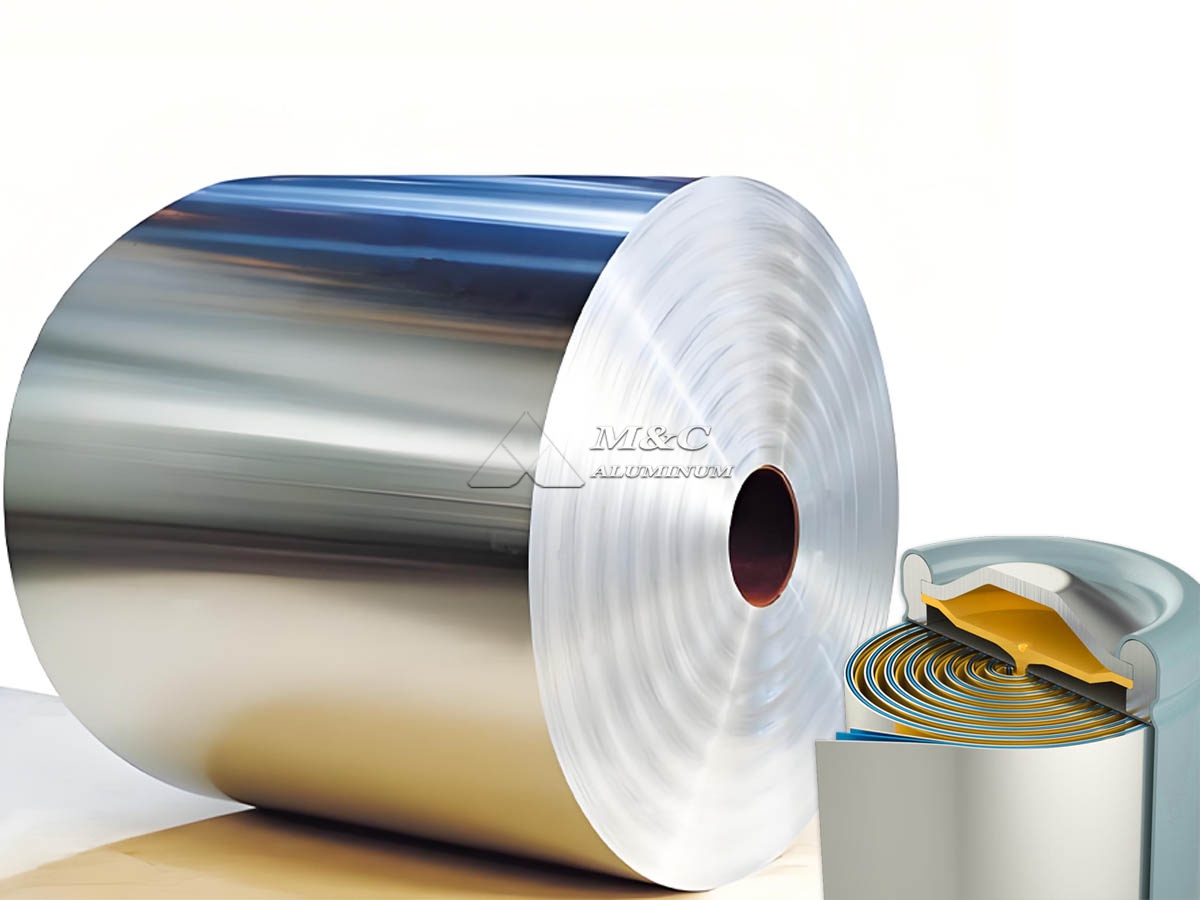
The Role of Aluminum Foil in Battery Current Collectors
A battery current collector is a conductive metallic substrate coated with active electrode materials. In most lithium-ion battery cathodes, aluminum foil is selected because it combines good electrical conductivity with corrosion resistance under normal positive-electrode operating conditions. Compared with heavier conductive substrates, aluminum offers a practical balance of mass, cost, formability, and electrochemical stability.
Conductive aluminum foil for battery current collectors must support several manufacturing requirements at the same time:
Efficient electron transport across the electrode structure.
Uniform adhesion of slurry coatings containing active material, binder, and conductive additives.
Stable thickness during coating, drying, calendering, slitting, and winding.
Low surface contamination to reduce coating defects and local electrical resistance.
Controlled mechanical properties to prevent tearing, wrinkling, or edge cracking.
Consistent coil quality for high-speed automated battery production lines.
The term conductive aluminum foil generally refers to high-purity or low-alloy aluminum foil with controlled resistivity. Depending on the cell design, the foil may be supplied as bare aluminum foil or as a substrate for subsequent carbon coating, ceramic coating, or other functional surface treatments performed by the battery-material producer.
Aluminum Alloys for Battery Aluminum Foil
The most suitable alloy depends on the electrode design, target thickness, required tensile strength, and processing route. We manufacture battery current collector foil primarily from high-purity aluminum grades selected for conductivity and rolling stability.
Alloy 1235 is widely used for thin battery foil because of its high aluminum content, stable conductivity, and favorable cold-rolling performance. Our 1235 Aluminum Foil can be processed for battery-related applications where low thickness variation and clean surface quality are essential. For applications requiring different strength or handling characteristics, 1050, 1060, and selected 1xxx-series alloys can also be evaluated according to the customer's technical specification.
| Parameter | Typical Manufacturing Range | Notes |
|---|---|---|
| Alloy | 1235, 1050, 1060, customized 1xxx series | Selected according to conductivity and processing requirements |
| Aluminum content | 99.35% minimum for 1235 alloy | Higher purity grades available upon request |
| Thickness | 10-25 um | Common battery foil thicknesses include 12 um, 15 um, 16 um, and 20 um |
| Width | 100-1,650 mm | Slit widths supplied according to electrode production requirements |
| Temper | O, H18, customized | O temper is commonly used for coating and winding processes |
| Electrical resistivity | Typically 2.65-2.85 uohm cm | Final value depends on alloy and temper |
| Tensile strength | Typically 70-140 MPa | Controlled according to thickness and temper |
| Elongation | Typically 1%-8% | Adjusted for handling and forming requirements |
| Surface condition | Mill finish, clean, oil-controlled | Suitable for electrode coating processes |
| Coil inner diameter | 150 mm, 300 mm, 400 mm, 500 mm | Customized to customer equipment |
| Coil outer diameter | As specified | Managed according to weight and line compatibility |
The listed values are typical production ranges rather than fixed universal limits. We confirm final technical parameters with the battery manufacturer before production, particularly for ultra-thin foil, high-speed coating lines, and automated winding applications.
Manufacturing Process for Conductive Aluminum Foil
Our conductive aluminum foil production begins with controlled alloy preparation and melt treatment. Chemical composition is checked to ensure that impurity levels remain within the specified range, since elements such as iron and silicon can influence conductivity, rolling behavior, and mechanical properties.
After casting, the aluminum slab is homogenized and hot rolled to establish a stable starting structure. We then use multi-pass cold rolling to reduce the material to the required foil gauge. Thickness control is maintained throughout rolling by process monitoring, roll-gap adjustment, tension management, and inspection of intermediate coils.
Annealing is a critical stage for battery aluminum foil. It determines temper, residual rolling oil level, mechanical behavior, and coil flatness. For soft annealed foil, the thermal cycle is managed to obtain a uniform recrystallized structure while minimizing surface residues. This is particularly important for cathode current collector foil because excessive rolling oil or inconsistent annealing can affect slurry wetting and coating adhesion.
Following annealing, coils are slit to the specified width. During slitting, we control burr height, edge profile, telescoping, and winding tension. Clean and stable edges are necessary to reduce the risk of electrode defects, separator damage, and line interruptions during downstream battery production.
Surface Quality and Coating Compatibility
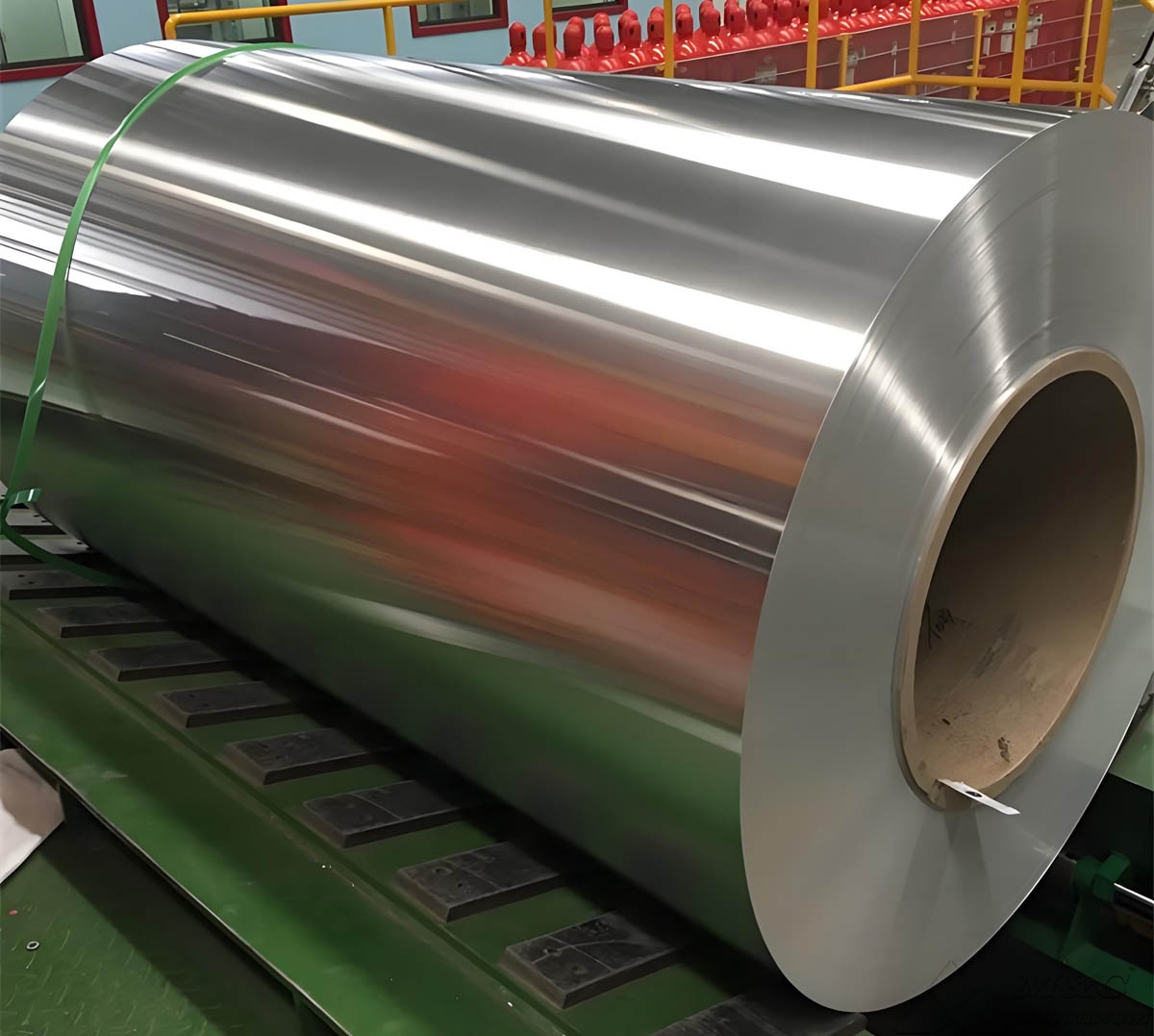
The surface of aluminum foil for lithium-ion batteries has a direct influence on electrode coating quality. A battery cathode slurry must spread evenly over the foil and maintain adequate adhesion after drying and calendering. Surface contamination, pinholes, scratches, oil spots, embedded particles, or uneven roughness can create coating discontinuities and affect cell consistency.
Our factory controls surface quality through rolling-oil management, annealing control, visual inspection, and coil handling procedures. We supply foil with a clean mill-finish surface suitable for standard water-based or solvent-based cathode slurry systems. When customers require specific surface tension, roughness, or residual oil limits, these criteria can be incorporated into the production and inspection plan.
For customers producing coated current collectors, the base aluminum foil must also maintain stable dimensional behavior under coating, drying, and compression. We monitor flatness and coil tension to support smooth passage through continuous coating lines. For applications requiring a different base material format, our 1060 Aluminium Foil may also be considered according to the required conductivity and mechanical profile.
Key Quality Controls in Our Factory
Battery-grade conductive aluminum foil requires more than a nominal thickness measurement. Our quality-control process covers the characteristics that affect both electrode manufacturing efficiency and final cell performance.
Thickness and Width Control
We inspect foil thickness across the strip width and along the coil length. Uniform gauge helps maintain consistent active-material loading and reduces variation in electrode capacity. Width tolerances are controlled according to the customer's slitting, coating, or winding equipment.
Electrical Performance
Electrical resistivity is monitored by alloy selection and process control. Lower and more stable resistivity supports efficient current collection and helps reduce electrical losses in the electrode structure.
Surface Inspection
Surface inspection includes checks for scratches, dents, oil stains, pinholes, dark lines, edge cracks, and foreign particles. Inspection standards can be aligned with the customer's battery foil acceptance criteria.
Mechanical Properties
Tensile strength and elongation are tested where required. Proper mechanical balance is important because foil must remain intact during unwinding, coating, drying, calendering, slitting, and cell winding or stacking.
Coil Geometry and Packaging
We inspect coil tightness, telescoping, edge alignment, inner diameter, outer diameter, and net weight. Finished coils are protected with moisture-resistant packaging and suitable supports to reduce damage during storage and export transportation.
Selecting the Right Battery Current Collector Foil
When selecting conductive aluminum foil, buyers should define the application conditions rather than choosing only by alloy name or nominal thickness. The following information allows us to recommend an appropriate manufacturing specification:
Battery chemistry and cathode material, such as LFP, NMC, NCA, LCO, or sodium-ion cathode systems.
Required foil thickness and permitted thickness tolerance.
Foil width, coil inner diameter, maximum coil weight, and outer diameter limitations.
Required temper, tensile strength, and elongation range.
Surface requirements, including cleanliness, residual oil, roughness, and coating compatibility.
Edge-burr limits and slitting requirements.
Inspection method, sampling plan, and documentation requirements.
For ultra-thin aluminum foil, process stability becomes increasingly important. A small variation in thickness can influence electrode loading, while poor flatness can reduce coating-line efficiency. We therefore review the complete conversion process before confirming production parameters for thin-gauge current collector foil.
Applications of Conductive Aluminum Foil
Our battery aluminum foil is manufactured for use in several energy-storage applications:
Lithium-ion battery cathode current collectors.
Lithium polymer pouch-cell electrodes.
Cylindrical-cell and prismatic-cell cathode production.
Sodium-ion battery cathode current collectors.
Supercapacitor electrode substrates.
Carbon-coated aluminum foil base material.
Laboratory and pilot-scale electrode development.
The final foil specification should match the customer's electrode manufacturing route, including slurry formulation, coating speed, drying temperature, calendering pressure, and cell assembly method.
Factory Supply and Technical Support
As an aluminum foil manufacturer, we manage alloy preparation, rolling, annealing, slitting, inspection, and export packaging within a controlled production process. This enables us to provide traceable coil information and coordinate technical details directly with battery-material manufacturers and cell producers.
Before mass production, we can arrange sample coils or trial quantities for coating and electrode validation. Once the technical requirements are confirmed, production is organized according to the agreed alloy, temper, thickness tolerance, width, coil configuration, and quality standard.
Conductive aluminum foil for battery current collectors is a precision material that directly supports electrode consistency and manufacturing efficiency. By controlling composition, gauge, surface cleanliness, mechanical properties, and coil quality, we produce battery aluminum foil designed for reliable downstream processing and stable current collection in modern energy-storage systems.