
As a manufacturer of precision rolled aluminum foil, we produce battery aluminum foil for cylindrical cells used as cathode current collector material in lithium-ion battery production. Our foil is designed for electrode coating, calendaring, slitting, winding, and cell assembly processes for cylindrical formats including 18650, 21700, 26650, and large-format cylindrical cells.
Battery aluminum foil is a functional material rather than a general packaging foil. Its thickness consistency, tensile strength, surface cleanliness, pinhole control, and winding quality directly influence slurry coating uniformity and electrode manufacturing stability. For this reason, our production process is controlled from alloy selection and melting through rolling, annealing, inspection, and final slit-roll packing.
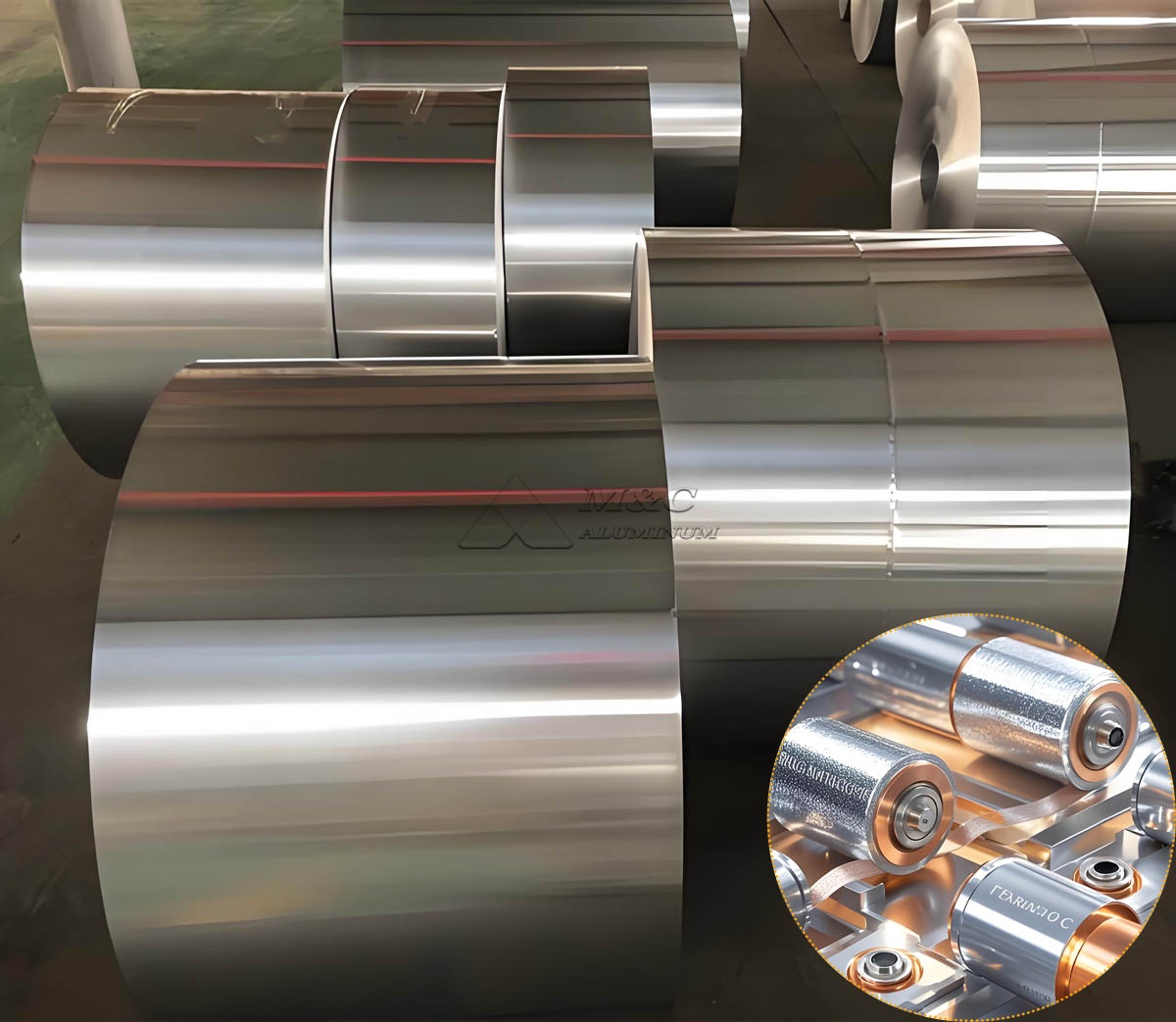
Role of Aluminum Foil in Cylindrical Lithium-Ion Cells
In a cylindrical lithium-ion battery, aluminum foil is normally used as the positive electrode current collector. The cathode active material slurry, commonly based on lithium iron phosphate, nickel manganese cobalt oxide, nickel cobalt aluminum oxide, or similar materials, is coated onto one or both sides of the foil. After drying and calendering, the coated electrode is slit and wound with the separator and anode electrode to form the jelly roll.
The current collector must provide stable electrical conductivity while maintaining adequate mechanical strength during high-speed coating and winding. Battery aluminum foil for cylindrical cells must also have a clean, uniform surface to support reliable adhesion between the foil and electrode coating.
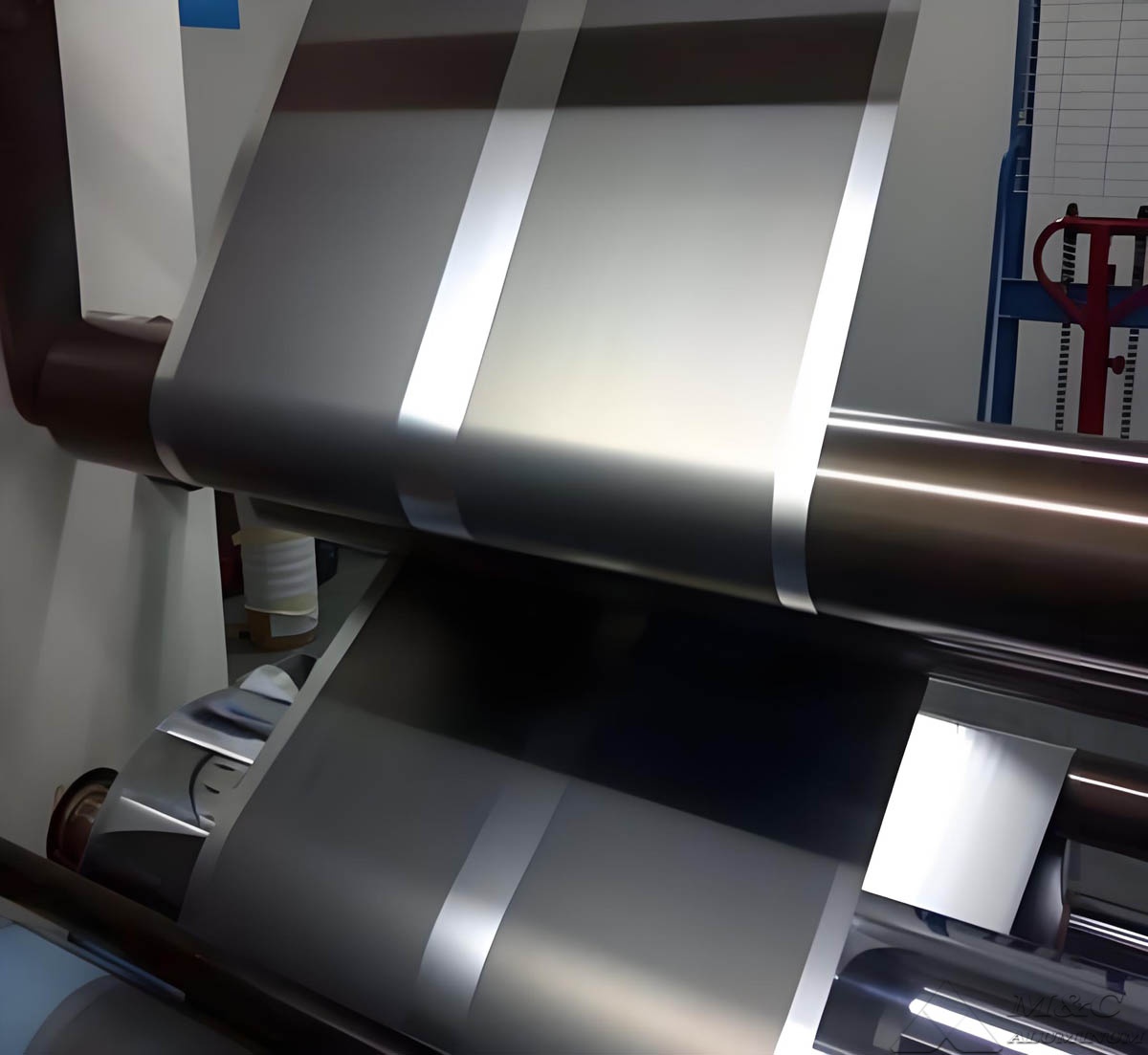
Our cylindrical cell current collector foil is supplied in bare aluminum foil and carbon coated aluminum foil configurations. The suitable material depends on the cathode chemistry, coating formulation, production line capability, and cell performance targets.
Suitable Alloys for Battery Aluminum Foil
We manufacture battery-grade aluminum foil primarily from high-purity aluminum alloys selected for electrical conductivity, rolling performance, and surface consistency. Alloy selection is confirmed according to the customer's electrode design and processing conditions.
| Alloy | Typical Application | Main Characteristics |
|---|---|---|
| 1235 aluminum foil | Standard lithium-ion cathode current collector | High aluminum purity, stable rolling quality, good conductivity |
| 1070 aluminum foil | High-conductivity battery foil | High aluminum content and low impurity level |
| 1060 aluminum foil | General battery electrode foil | Good formability and balanced cost-performance |
| 1100 aluminum foil | Selected cathode collector applications | Good corrosion resistance and processing stability |
For applications requiring conventional high-purity foil, our 1235 Aluminum Foil can be processed to battery-grade thickness, slit width, and coil specification. The final alloy recommendation should consider the cathode material, coating weight, electrode width, and operating requirements of the cylindrical battery cell.
Technical Parameters of Battery Aluminum Foil
The following table shows common production ranges for battery aluminum foil for cylindrical cells. Actual specifications are customized according to electrode coating equipment, cell format, and customer quality standards.
| Parameter | Typical Specification | Notes |
|---|---|---|
| Alloy | 1235, 1070, 1060, 1100 | Selected according to conductivity and process needs |
| Temper | H18, H19, O | H18 is commonly used for electrode coating and winding |
| Thickness | 12 to 20 microns | 12, 15, 16, 18, and 20 microns are common options |
| Thickness tolerance | Controlled by agreed specification | Precision gauge control is essential for coating uniformity |
| Width | 100 to 1,600 mm | Supplied as jumbo rolls or slit coils |
| Inner diameter | 76 mm, 152 mm, 300 mm, or customized | Matched to coating and slitting equipment |
| Outer diameter | Customized | Determined by roll weight and equipment capacity |
| Surface condition | Clean, oil-controlled, flat, wrinkle-free | Suitable for electrode slurry coating |
| Pinhole control | Inspected according to thickness and agreement | Important for thin-gauge foil reliability |
| Joint requirement | No joints or controlled joints | Defined according to continuous coating needs |
| Coating option | Bare foil or carbon coated foil | Carbon coating can improve adhesion and contact behavior |
Manufacturing Process for Cylindrical Cell Aluminum Foil
Our manufacturing process begins with controlled raw material preparation and alloy melting. Chemical composition is monitored to ensure the selected aluminum alloy meets the required purity and impurity limits. The cast material is then hot rolled, cold rolled in multiple passes, annealed as required, and finished to the target foil gauge.
During precision rolling, we control thickness profile across the foil width. Stable transverse thickness distribution is particularly important for wide rolls used on continuous electrode coating lines. Significant variation can affect wet coating weight, drying behavior, calendering pressure distribution, and final electrode density.
After rolling, the foil is slit to the required width. Edge quality is checked to reduce burrs, cracks, telescoping, and loose winding. Cylindrical cell manufacturers commonly require stable roll geometry because uneven tension or poor edge condition can cause tracking issues during coating, slitting, or electrode winding.
Before shipment, each batch undergoes inspection for dimensions, surface appearance, mechanical properties, coil condition, and packaging integrity. We provide mill test documentation and can align inspection items with the buyer's technical agreement.
Carbon Coated Aluminum Foil for High-Performance Electrodes
Carbon coated aluminum foil is an aluminum current collector with a thin conductive carbon layer applied to one or both sides. This material can be used where improved contact between the cathode active material and aluminum substrate is required. It is especially relevant for certain lithium iron phosphate electrode designs and other applications that require enhanced interface conductivity or coating adhesion.
The carbon layer must be uniform, firmly bonded, and compatible with the customer's coating process. Excessive coating weight, inconsistent carbon distribution, or poor adhesion can affect electrode resistance and slurry coating performance. As a manufacturer, we control the substrate foil quality before carbon coating because the base foil flatness, cleanliness, and surface condition influence the final coated product.
For cylindrical cells, carbon coated aluminum foil may support more stable electrode processing where the cathode formulation and production design benefit from improved conductive contact. However, the selection between bare battery aluminum foil and carbon coated foil should be based on validated cell design requirements rather than material preference alone.
Critical Quality Requirements for Cylindrical Cell Production
Cylindrical battery manufacturing involves continuous, high-speed processing. Therefore, battery aluminum foil must remain stable through multiple downstream operations. We focus on the following quality factors during production.
Thickness Consistency
Uniform gauge supports consistent slurry loading and calendered electrode thickness. For thin foil used in high-energy-density cylindrical cells, precision thickness control is essential for reducing variation across long coating runs.
Surface Cleanliness and Wettability
The foil surface must be free from visible oil stains, scratches, oxidation marks, embedded particles, and other defects that may interfere with coating adhesion. Controlled surface condition supports even slurry wetting and reduces the risk of localized coating defects.
Mechanical Strength and Elongation
The foil requires enough tensile strength to withstand line tension during unwinding, coating, drying, slitting, and winding. At the same time, the foil must maintain appropriate ductility to avoid cracking or tearing during processing.
Flatness and Coil Geometry
Poor flatness can cause coating streaks, web handling instability, and uneven drying. Tight coil winding, controlled edge alignment, and suitable roll hardness help maintain reliable unwinding performance on automated electrode lines.
Pinhole and Defect Control
Pinhole control is particularly important for thin battery aluminum foil. We inspect foil surface quality through process monitoring and final inspection procedures appropriate to the agreed gauge and application requirements.
Selecting Foil for 18650, 21700, and Large Cylindrical Cells
The cell diameter and electrode design influence the required foil width, roll length, thickness, and mechanical properties. For 18650 and 21700 cells, manufacturers often prioritize stable winding behavior and narrow-width slitting accuracy. Larger cylindrical cells may require wider electrode designs, higher productivity coating lines, and carefully controlled foil flatness across broader widths.
The appropriate thickness is determined by the balance between energy density, mechanical robustness, coating loading, and process yield. Thinner foil can reduce inactive material weight, while thicker foil can provide improved handling strength in certain production conditions. Our engineering team reviews the required gauge together with the customer's coating speed, cathode formulation, and cell structure.
For non-battery applications requiring standard industrial aluminum foil, our 1100 Aluminum Foil is also available in customized thicknesses and coil dimensions.
Packaging and Delivery Control
Battery aluminum foil is packed to protect it from moisture, dust, impact, and coil deformation during international transportation. Rolls are wrapped with protective materials, secured on suitable pallets or supports, and labeled for traceability. Packaging details, including core protection, pallet dimensions, roll orientation, and export marking, can be specified in the purchase agreement.
We recommend storing aluminum foil in a clean, dry warehouse with stable temperature conditions. Before electrode coating, rolls should be allowed to equilibrate when transferred from a significantly different storage environment to reduce the risk of condensation.
Conclusion
Battery aluminum foil for cylindrical cells is a critical cathode current collector material that affects electrode coating consistency, winding stability, and cell manufacturing efficiency. Through controlled alloy selection, precision rolling, clean surface treatment, accurate slitting, and systematic inspection, we manufacture aluminum foil suitable for cylindrical lithium-ion battery production.
Whether the requirement is bare 1235 aluminum foil, high-purity current collector foil, or carbon coated aluminum foil, we can manufacture to specified thickness, width, temper, coil weight, and quality requirements for cylindrical cell electrode lines.