
In the rapidly developing fields of modern food packaging and industrial manufacturing, aluminum foil containers occupy an important position due to their lightweight nature, good thermal conductivity, recyclability, and excellent barrier properties. Among various aluminum foil materials, 3003 aluminum alloy has become the preferred material for manufacturing lunch boxes, baking trays, and semi-rigid containers thanks to its good formability and moderate strength.
Why Choose 3003 Aluminum Foil?
3003 aluminum foil belongs to the typical Al-Mn aluminum-manganese alloy series. Compared with 1000 series pure aluminum foil and conventional container foils such as 8011 and 8006, 3003 aluminum foil demonstrates stronger overall adaptability. While maintaining good processability, it significantly improves mechanical properties and is widely recognized as a high-quality raw material for food containers.
Commonly used 3003 H24 aluminum foil has moderate hardness and good ductility. It offers excellent tensile resistance and bending resistance, making it suitable for complex forming processes in container production, such as stamping, flanging, curling, and embossing. After forming, the container has a regular outline, full corners, and is less likely to suffer from cracking, wrinkling, deformation, or other defects.
Features of 3003 Aluminum Foil
Excellent Tensile Strength and Stamping Stability
The addition of manganese in 3003 alloy increases its strength by approximately 10% compared with pure aluminum foil. This higher strength enables it to resist tearing and wrinkling during deep drawing in complex molds.
Excellent Elongation and Formability
The folding and crimping of container edges, as well as the stretching of container walls, require aluminum foil to have excellent flexibility. After proper annealing, such as H22, H24, or O temper, 3003 aluminum foil can perfectly fit the mold contour, ensuring clear container edges and a stable structure.
Outstanding Corrosion Resistance, Safety, and Hygiene
The surface of aluminum foil naturally forms a dense oxide film. 3003 aluminum foil is non-toxic and odorless. It can effectively block light, moisture, and gases, while also resisting corrosion caused by weak acids and alkalis in food, helping maintain food quality during long-term storage.
Why Does Container Foil Need Lubrication?
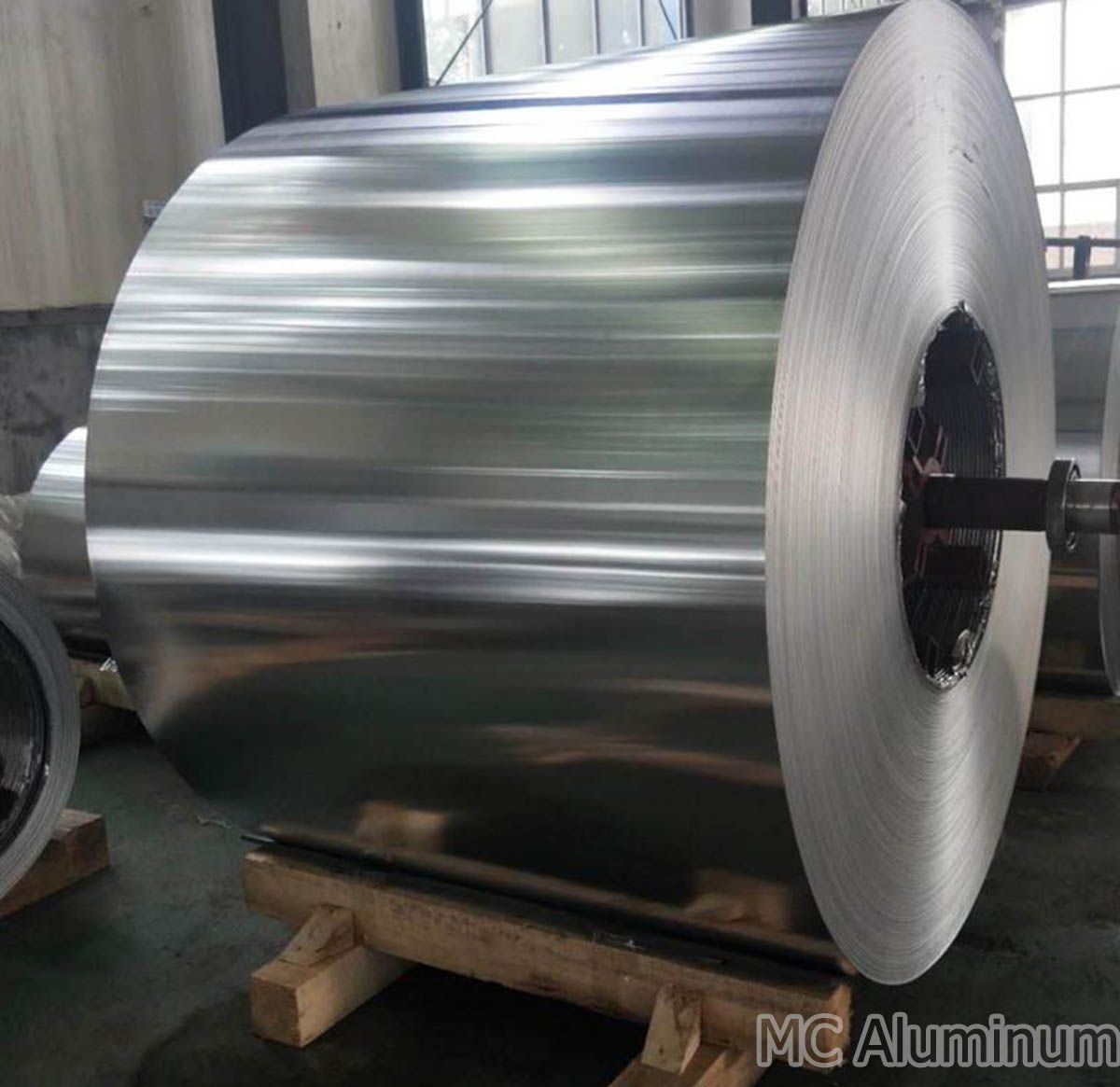
Semi-rigid container foil is generally made from single-zero foil. In order to produce containers of various shapes, aluminum foil must be stamped into the desired form. However, if the aluminum foil is not treated before stamping, friction during the forming process may cause scratches and abrasions on the foil surface, reducing product quality.
Therefore, surface oiling treatment is applied to aluminum foil before stamping. The lubricating effect of the oil protects the aluminum foil surface from damage and improves the final product quality.
Theoretical Basis of Lubrication
1.Reducing Friction
The lubricant forms a physical barrier between the foil and the mold, reducing the coefficient of friction and allowing the material to flow more smoothly during forming.
2.Heat Dissipation
Lubricants help remove heat generated by cutting and friction, preventing local overheating and avoiding foil deformation or accelerated oxidation.
3.Surface Protection
Some lubricants contain extreme-pressure additives, which can prevent plastic deformation and adhesion under high pressure.
4.Oxidation Resistance
Lubricants containing antioxidant components can slow down oxidation and keep the aluminum foil surface smooth.
Aluminum Foil Oiling Process
The lubrication effect depends not only on the type of oil used, but also on the coating amount and uniformity. The oil coating amount is usually measured in milligrams per square meter, mg/m². For 3003 container foil, the single-side oil coating amount is generally controlled at around 200–300 mg/m².
Oiling Methods
(1)Roller Coating
The aluminum foil passes through the gap between a metering roller and a coating roller to achieve uniform oil transfer. This is currently the most commonly used method. The oil film thickness is adjusted by a scraper or doctor blade.
(2)Electrostatic Spraying
An electrostatic field is used to make charged oil droplets adhere to the foil surface. This method creates a more uniform oil film and saves lubricant, making it especially suitable for applications with high precision requirements.
Application Fields of 3003 Pre-Oiled Aluminum Foil
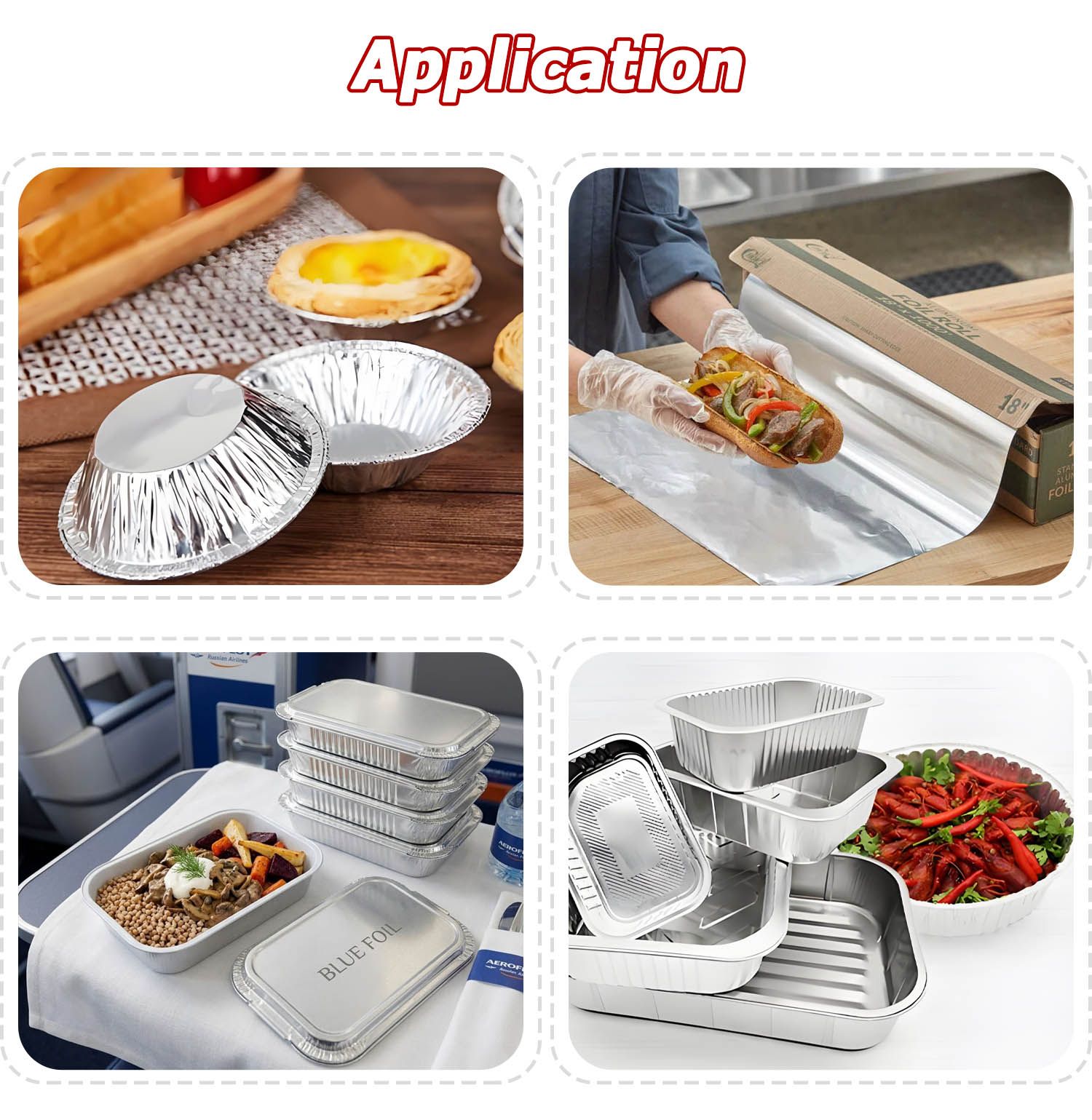
3003 pre-oiled aluminum foil is widely used in:
Disposable aluminum foil food containers, suitable for takeaway and fast-food industries;
Aluminum foil baking trays, used for cakes, roasted meat, pizza, and other foods;
Airline meal containers, lightweight and resistant to high and low temperatures;
Frozen food packaging containers, suitable for low-temperature storage environments;
High-end food packaging boxes, combining aesthetics and practicality.
Product Advantage Analysis
1. Excellent Deep-Drawing Performance
3003 lubricated aluminum foil can maintain stable forming even under complex mold conditions, helping reduce scrap rates.
2. High Surface Cleanliness
The lubricating layer is uniform and does not affect food safety. It complies with food contact material standards.
3. Suitable for High-Speed Automated Production
It is especially suitable for large-scale continuous processing on modern container production lines.
4. Customizable Production
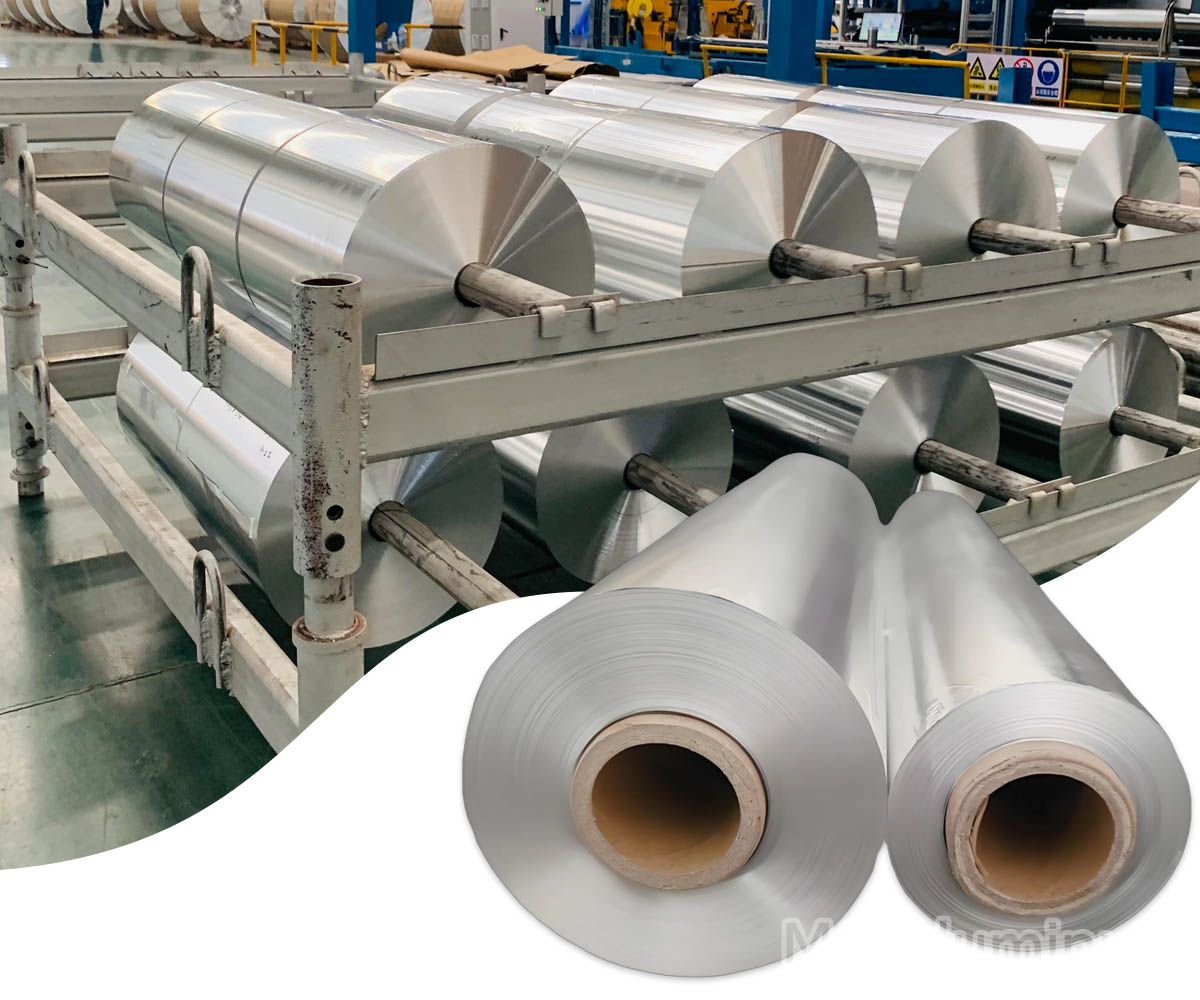
Different thicknesses, widths, and lubrication types can be supplied according to customer requirements. Common thickness ranges include 0.03 mm–0.20 mm.
Aluminum Foil Quality Control and Standards
High-quality 3003 container aluminum foil usually needs to meet the following requirements:
Precise thickness tolerance control;
Surface free from oil stains, scratches, and black spots;
Uniform and stable lubricating coating;
Compliance with food-grade safety certifications, such as FDA and EU standards.
A strict quality control system ensures product stability and safety during both processing and final use.
FAQ
Q1: What is the difference between lubricated 3003 aluminum foil and ordinary 3003 aluminum foil?
A: Lubricated 3003 aluminum foil is pre-coated with a uniform lubricating layer on the surface. It can significantly reduce friction during stamping, improve deep-drawing performance, reduce cracking and wrinkling, and extend mold service life. Ordinary aluminum foil usually requires additional oiling before processing.
Q2: Does this product comply with food-grade safety standards?
A: Yes. Our lubricated 3003 aluminum foil complies with international food contact material standards, such as FDA and EU regulations. It is non-toxic and odorless, making it safe for food packaging and container manufacturing.
Q3: What is the common thickness range? Can it be customized?
A: The regular thickness range is 0.03 mm–0.20 mm, or 30–200 microns. Customized thickness, width, and coil weight are also available according to customer requirements.
Q4: Does lubricated aluminum foil need to be cleaned before use?
A: Usually, no cleaning is required. Our lubricating layer is specially optimized and can be directly used for stamping production. It does not affect food safety and will not contaminate subsequent processing.
Q5: What types of aluminum foil containers is it suitable for?
A: It is suitable for a wide range of products, including disposable food containers, baking trays, airline meal containers, frozen food containers, and takeaway packaging boxes.
Q6: Is the product suitable for high-speed automated production lines?
A: Yes, it is highly suitable. Lubricated 3003 aluminum foil has stable surface performance and excellent formability, meeting the continuous production requirements of high-speed stamping equipment and improving production efficiency.
Q7: What is the minimum order quantity, MOQ?
A: The MOQ usually varies depending on specifications, generally around 3–5 tons. Specific requirements can be flexibly negotiated according to customer needs.
Q8: Do you support sample testing?
A: Yes. We can provide free samples or small-batch samples for customers to conduct stamping tests and performance verification.
Q9: How long is the delivery time?
A: For regular specifications, the delivery time is generally 15–25 days. Customized products may vary slightly depending on order requirements.
Q10: Do you provide OEM or private label services?
A: Yes. We support OEM services, including packaging customization, label design, and brand printing, helping customers enhance their market competitiveness.